Kitchen Conversion Chart: Cups to Grams, Oven Temps and Can Sizes
One page for every kitchen conversion: cups to grams for common ingredients, oven temperatures in F, C and gas mark, can sizes, pan sizes and candy stages.
A US recipe calls for 2 cups of flour, your scale shows grams, and your oven dial only has gas marks. Conversion mismatches are one of the most common reasons a good recipe fails in a different kitchen. This page puts every conversion in one place: volume, weight, cups to grams for common ingredients, oven temperatures, can sizes, pan sizes and candy stages.
Read This First: Why Cups Are Unreliable
A cup measures volume, but baking depends on weight. One cup of flour can weigh 120 g if you spoon it in and level it, or 140 to 150 g if you scoop straight from the bag. That 20 to 30 g gap is enough to turn a soft cake into a dry one. A kitchen scale solves it, and it also makes recipes easier to scale and macros easier to track.
The gram values below are averages from commonly published ingredient charts. They can vary by a few grams depending on the brand and how you pack the cup. When a recipe lists grams, always use them.
Volume Conversions (US)
- 1 teaspoon (tsp): 5 ml
- 1 tablespoon (tbsp): 3 tsp = 15 ml
- 1 fluid ounce: 2 tbsp = 30 ml
- ¼ cup: 4 tbsp = 60 ml
- ⅓ cup: 5 tbsp + 1 tsp = 80 ml
- ½ cup: 8 tbsp = 4 fl oz = 120 ml
- ⅔ cup: 10 tbsp + 2 tsp = 160 ml
- ¾ cup: 12 tbsp = 6 fl oz = 180 ml
- 1 cup: 16 tbsp = 8 fl oz = 240 ml
- 1 pint: 2 cups = 16 fl oz = 480 ml
- 1 quart: 4 cups = 2 pints = about 950 ml
- 1 gallon: 4 quarts = 16 cups = about 3.8 liters
Strictly, a US cup is 236.6 ml, and nutrition labels round it to 240 ml. The rounded numbers above work for all home cooking. A metric cup is 250 ml, and it is used in Australia, New Zealand and some Canadian recipes. An Australian tablespoon is 20 ml, not 15 ml, so check where a recipe comes from before measuring spoons.
Weight Conversions
- 1 ounce (oz): 28 g
- 4 oz: 113 g (a quarter pound)
- 8 oz: 227 g
- 1 pound (lb): 16 oz = 454 g
- 100 g: 3.5 oz
- 500 g: 1.1 lb (about 1 lb 2 oz)
- 1 kilogram: 2.2 lb
Ounces measure two different things. A fluid ounce is volume (1 cup = 8 fl oz), and a weight ounce is mass (1 cup of flour weighs about 4.25 oz). Recipes that list "oz" for dry ingredients mean weight, and "fl oz" means liquid volume.
Cups to Grams: Flour, Grains and Starches
- All-purpose flour: 1 cup = 120 g, ¾ cup = 90 g, ½ cup = 60 g, ⅓ cup = 40 g, ¼ cup = 30 g
- Bread flour: 1 cup = about 125 g
- Whole wheat flour: 1 cup = about 115 g
- Cake flour: 1 cup = about 115 g
- Cornstarch: 1 cup = about 125 g
- Cocoa powder: 1 cup = about 85 g
- Rolled oats: 1 cup = about 90 g
- White rice, uncooked: 1 cup = about 185 g
- Rice, cooked: 1 cup = about 160 g
- Quinoa, uncooked: 1 cup = about 170 g
- Dried lentils: 1 cup = about 190 g
- Dried chickpeas: 1 cup = about 200 g
Cups to Grams: Sugar and Sweeteners
- Granulated sugar: 1 cup = 200 g, 1 tbsp = about 12 g
- Brown sugar, packed: 1 cup = about 215 g
- Powdered sugar: 1 cup = about 115 g
- Honey: 1 cup = about 340 g, 1 tbsp = about 21 g
- Maple syrup: 1 cup = about 315 g
- Molasses: 1 cup = about 340 g
Cups to Grams: Fats and Dairy
- Butter: 1 cup = 2 sticks = 227 g. 1 stick = 8 tbsp = 113 g. 1 tbsp = 14 g
- Vegetable or olive oil: 1 cup = about 215 g, 1 tbsp = about 14 g
- Milk or water: 1 cup = about 240 g
- Heavy cream: 1 cup = about 240 g
- Plain yogurt or Greek yogurt: 1 cup = about 245 g
- Sour cream: 1 cup = about 230 g
- Shredded cheddar: 1 cup = about 113 g
- Grated Parmesan: 1 cup = about 100 g
- Peanut butter: 1 cup = about 260 g, 1 tbsp = about 16 g
Cups to Grams: Nuts, Chocolate and Add-ins
- Whole almonds: 1 cup = about 140 g
- Chopped walnuts: 1 cup = about 115 g
- Chocolate chips: 1 cup = about 170 g
- Raisins: 1 cup = about 150 g
Small Measures: Salt, Leavening and Eggs
- Table salt: 1 tsp = about 6 g
- Diamond Crystal kosher salt: 1 tsp = about 3 g
- Morton kosher salt: 1 tsp = about 5 g
- Baking powder: 1 tsp = about 4 g
- Baking soda: 1 tsp = about 5 g
- Instant or active dry yeast: 1 packet (2¼ tsp) = 7 g
- 1 large egg (no shell): about 50 g, or roughly 3 tbsp. The white is about 30 g and the yolk about 18 g
- 1 pinch: about ⅛ tsp
Salt is the one to watch. A teaspoon of table salt is twice as salty as a teaspoon of Diamond Crystal, so a recipe written for one brand can ruin a dish made with another. Weigh salt in grams when you can.
Oven Temperature Conversions
- 250°F: 120°C, gas mark ½. Very low, for drying and slow cooking
- 275°F: 140°C, gas mark 1
- 300°F: 150°C, gas mark 2. Slow roasting, braising, cheesecake
- 325°F: 160°C, gas mark 3. Cakes, rich custards
- 350°F: 175°C (often rounded to 180°C), gas mark 4. The standard baking temperature
- 375°F: 190°C, gas mark 5. Muffins, cookies, casseroles
- 400°F: 200°C, gas mark 6. Roasting vegetables, chicken pieces
- 425°F: 220°C, gas mark 7. Browned roasting, potatoes
- 450°F: 230°C, gas mark 8. Pizza, bread, high-heat roasting
- 475°F: 240°C, gas mark 9. Very hot, for pizza and flatbreads
- 500°F: 260°C. Maximum on many US ovens
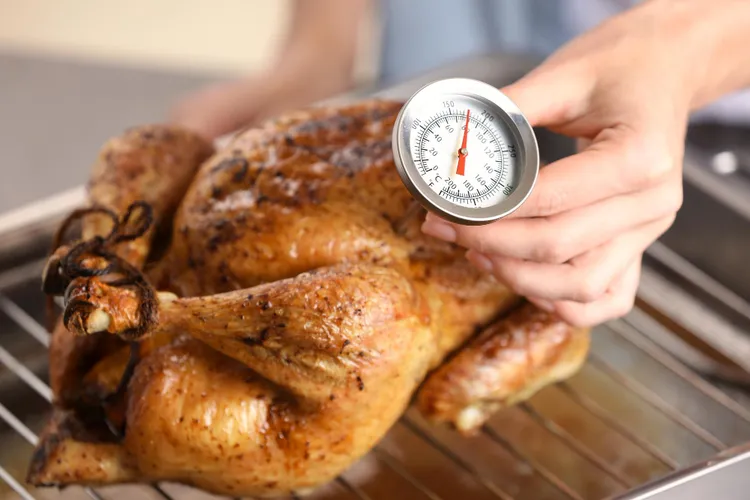
The formulas are: °C = (°F - 32) x 5/9, and °F = (°C x 9/5) + 32. For fan or convection ovens, lower the temperature by 25°F (15 to 20°C), or shorten the time by about 20%. Oven dials are often off, so an inexpensive oven thermometer is worth having. It shows the real temperature, which can differ from the dial by 15 to 25°F.
Can and Jar Sizes
US recipes often call for cans by ounces, while many other countries sell the same products in 400 g and 800 g tins. A 14 oz (400 g) tin and a 15 oz (425 g) can are interchangeable in nearly every recipe.
- 6 oz can tomato paste (170 g): about ¾ cup
- 8 oz can tomato sauce (227 g): about 1 cup
- 14.5 oz can diced tomatoes (411 g): about 1¾ cups. A 400 g tin is a direct swap
- 15 oz can beans or chickpeas (425 g): about 1½ cups drained, or about 250 g drained beans
- 15 oz can corn or pumpkin puree: about 1¾ cups
- 28 oz can crushed tomatoes (800 g): about 3½ cups
- 10.75 oz can condensed soup (305 g): about 1¼ cups
- 12 fl oz can evaporated milk (354 ml): about 1½ cups
- 14 oz can sweetened condensed milk (397 g): about 1¼ cups
- 13.5 fl oz can coconut milk (400 ml): about 1¾ cups
Canned beans to dried: one 15 oz can equals about ½ cup (100 g) of dried beans, once soaked and cooked. In reverse, 1 cup of dried beans yields roughly 2½ to 3 cups cooked, or about two cans.
Common Pan Sizes
- 8-inch round: 20 cm
- 9-inch round: 23 cm
- 8 x 8-inch square: 20 x 20 cm
- 9 x 13-inch rectangle: 23 x 33 cm
- 9 x 5-inch loaf pan: 23 x 13 cm
- 10-inch skillet: 25 cm
- 12-inch skillet: 30 cm
If you only have a 22 or 24 cm tin for a recipe that calls for a 9-inch pan, use it. The difference is small enough that you only need to check the cake a few minutes early. A noticeably larger pan spreads the batter thinner, so it bakes faster and may come out drier.
Candy and Sugar Syrup Stages
- Thread: 230 to 235°F (110 to 112°C). Syrups
- Soft ball: 235 to 245°F (112 to 118°C). Fudge, fondant
- Firm ball: 245 to 250°F (118 to 121°C). Caramels
- Hard ball: 250 to 265°F (121 to 129°C). Nougat, marshmallow
- Soft crack: 270 to 290°F (132 to 143°C). Taffy
- Hard crack: 300 to 310°F (149 to 154°C). Brittle, lollipops
Fridge, Freezer and Water Temperatures
- Refrigerator: 40°F (4°C) or below
- Freezer: 0°F (-18°C)
- Water freezes: 32°F (0°C)
- Water boils: 212°F (100°C) at sea level. It boils at a lower temperature at altitude
Scaling a Recipe Up or Down
Halving or doubling is easy until a fraction gets awkward. These are the ones that trip people up:
- Half of ⅓ cup: 2 tbsp + 2 tsp
- Half of ¾ cup: 6 tbsp
- Half of ⅔ cup: ⅓ cup
- Half of 1 tbsp: 1½ tsp
- Half of ¼ tsp: ⅛ tsp (a generous pinch)
- Half an egg: beat the egg and use about 2 tbsp
- Double ⅓ cup: ⅔ cup
- Double ¾ cup: 1½ cups
When you scale a baking recipe by more than double or less than half, the bake time changes, and so does the pan size. Check early. Spices and salt do not always scale linearly, so start with a bit less than the math says and adjust by taste.
Why Grams Matter for Tracking Macros
If you track calories or macros, volume measures can mislead you by a lot. A scooped cup of flour can weigh 140 to 150 g instead of 120 g, which adds roughly 70 to 110 kcal. A heaping tablespoon of peanut butter can hold well over 20 g instead of 16 g. Rice is worse: one cup of uncooked rice weighs about 185 g, while one cup of cooked rice weighs about 160 g, so the same word "cup" can mean very different calorie counts. Weigh in grams and log raw weights, and your numbers stay accurate whatever the recipe uses.
Measuring Tips That Prevent Mistakes
- Use liquid cups for liquids and dry cups for dry ingredients. Liquid measuring cups have a spout and a line below the rim. Dry cups are filled to the top and leveled
- Spoon and level flour. Fluff it, spoon it lightly into the cup, and sweep the top with a knife. Do not scoop or tap
- Pack brown sugar only when asked. "Packed" means firmly pressed so it holds the cup's shape when turned out
- Measure sticky ingredients with a greased spoon. A little oil in the spoon lets honey and syrup slide out
- Tare the scale. Put the bowl on the scale, press tare, and add ingredients one by one, resetting to zero each time. It saves washing up too
- Check the recipe's origin. Metric cup, Australian tablespoon and UK pint (568 ml, not 473 ml) all differ from the US versions
Common Questions
How many grams are in a cup?
It depends on the ingredient. A cup of water weighs about 240 g, a cup of flour about 120 g, and a cup of sugar about 200 g. There is no single answer, which is why the lists above are sorted by ingredient.
Is a US cup the same as a UK cup?
No. UK recipes usually use grams and milliliters. A metric cup is 250 ml, and a US cup is about 240 ml. A UK pint is 568 ml, while a US pint is about 473 ml (16 fl oz).
What is the best oven setting if a recipe says "moderate"?
Use 350°F (175 to 180°C), gas mark 4. "Slow" means 300 to 325°F, "hot" means 400 to 425°F, and "very hot" means 450°F and above.
Can I replace a 15 oz can with a 400 g tin?
Yes. The 25 g difference will not change the dish. The same is true for 28 oz and 800 g.
How do I convert oven temperatures quickly?
Memorize three anchors: 350°F is 175°C, 400°F is 200°C, and 425°F is 220°C. The chart above covers the rest.
Weigh when you can, use the gram values for cups when you cannot, and double-check the oven temperature against the chart. Bookmark this page for the next time a recipe is written in units your kitchen does not use.
Latest