Room Temperature Eggs and Unsalted Butter: Why Recipes Ask for Them
Recipes keep asking for room temperature eggs and unsalted butter. Here is what each one changes, when it really matters, and how to swap or warm them without wrecking the dish.
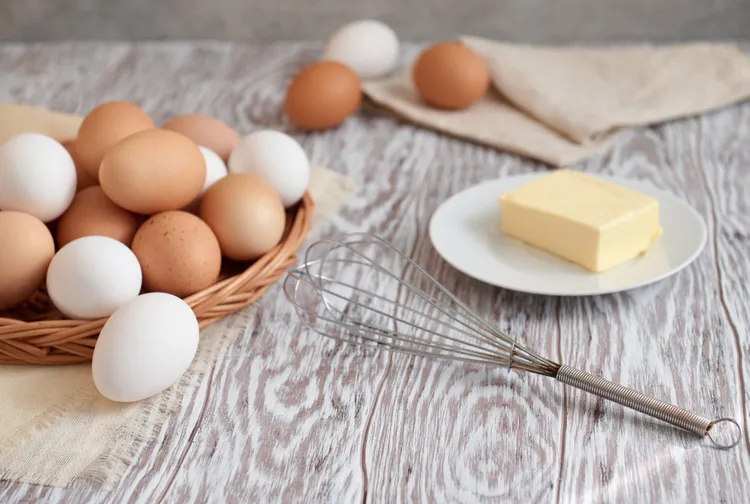
A large egg is about 70 kcal and a tablespoon of butter is about 100 kcal, and neither number changes whether the egg is cold or the butter is salted. What changes is how the food behaves in a mixing bowl, and that is the real reason recipes keep specifying these two details. Some of them matter a lot. Some are habit.
Why Recipes Call for Room Temperature Eggs
Most baking recipes that mention egg temperature are built on one idea: a smooth emulsion. Batter is fat suspended in water, held together by the proteins and lecithin in egg yolks. That emulsion forms faster and holds better when every ingredient sits at a similar temperature.
Cold eggs do three things that cause trouble:
- They firm up the butter. Creamed butter and sugar is full of tiny air pockets. Add cold egg and the butter stiffens and breaks into clumps. The batter looks curdled, and while it still bakes, the crumb is often denser.
- They mix in unevenly. A cold egg takes longer to blend, so you end up beating the batter longer to combine it. That can develop gluten and toughen the cake.
- They whip to less volume. Warmer egg whites and whole eggs loosen up and trap air more easily. Cold ones foam more slowly and peak lower.
Room temperature here means roughly 20 to 22°C (68 to 72°F), which is a typical kitchen. It does not mean eggs that sat out overnight.
When Egg Temperature Actually Matters
- Creamed cakes and cookies: pound cake, butter cake, sugar cookies and anything that starts with beating butter and sugar. This is where cold eggs cause the most damage.
- Meringues, angel food and chiffon cakes: whites whip higher and faster when they are not cold.
- Souffles, popovers and Yorkshire pudding: a smoother batter and a better rise.
- Custards, curds and sabayon: room temperature eggs combine with warm liquids without scrambling at the edges.
- Enriched doughs like brioche: cold eggs can chill the dough and slow the yeast slightly.
- Mayonnaise and hollandaise: yolks emulsify oil more readily at room temperature.
When It Doesn't Matter
- Scrambled, fried and poached eggs: straight from the fridge is fine. The pan does the warming.
- Omelets and frittatas: no real difference.
- Boiled eggs: cold eggs go in fine. Add about 30 to 60 seconds to your timing, since a cold egg takes longer to reach temperature.
- Brownies and dense bars: the difference is small, especially if the recipe uses melted butter.
- Pancakes, muffins and quick breads: mostly fine, though very cold eggs can clump into melted butter. Stir them in with the other liquids.
- Quiche and savory bakes: the oven handles it.
The rule of thumb: if the recipe starts by creaming butter, whipping whites or building an emulsion, take the extra ten minutes. If the eggs end up in a pan, skip it.
How to Warm Eggs Fast
- Place whole eggs in a bowl of warm tap water, about 40°C (100°F), for 10 minutes. The water should feel pleasantly warm, not hot.
- If you are short on time, crack the eggs into a small bowl and set that bowl in warm water for 3 to 5 minutes, stirring once.
- Dry the shells before cracking so water does not slip into the bowl.
Do not microwave eggs in the shell, which can burst them. Do not leave them out for hours either. Food safety guidance says refrigerated eggs should not sit at room temperature for more than about two hours in total. A warm-water bath for 10 minutes sits well inside that.
One useful trick in the other direction: separate eggs cold. Cold yolks are firmer and less likely to break, so separating is easier straight from the fridge. Then let the whites and yolks sit for 15 to 20 minutes before using them.
Why Some Eggs Live on the Counter
In the United States, eggs are washed before sale, which removes a natural protective coating, so they have to be refrigerated. In much of Europe and the UK, eggs are generally sold unwashed and are often stored at room temperature in shops. If you cook from recipes from both places, you may see different storage assumptions. Follow the practice that matches where you live and how the eggs were sold.
Room Temperature Rules for Butter and Other Ingredients
If eggs are called for at room temperature, the other cold ingredients usually are too. Mixing cold dairy into a warm batter, or the reverse, undoes the point.
- Butter: "room temperature" means about 18 to 20°C (65 to 68°F). It should be soft enough that a finger leaves a dent without sinking in, and still cool to the touch. Butter that is shiny or greasy is too warm.
- Milk and buttermilk: take the chill off for about 20 minutes, or warm briefly in the microwave to lukewarm.
- Cream cheese and sour cream: soften before beating, or the batter will be lumpy.
- Yeast doughs: liquids at lukewarm temperature help the yeast, but very hot liquids kill it.
To soften butter quickly, cut it into small cubes and leave them out for 15 to 20 minutes. You can also grate cold butter on a box grater. Skip the microwave. A partly melted butter will not cream properly, and the fat structure does not fully recover once melted.
Why Recipes Call for Unsalted Butter
Salted and unsalted butter taste similar in the pan, but recipes specify unsalted for three reasons.
- Salt content varies. Brands differ in how much salt they add, from a pinch to about half a teaspoon per stick. A recipe cannot balance its own seasoning if the butter is a variable.
- You control the seasoning. In baking especially, the salt amount is part of the flavor balance. Using unsalted butter and adding your own salt lets you hit the same result every time.
- Reductions concentrate salt. When you simmer a sauce down or brown butter, the salt stays while the water leaves. A butter sauce that tasted fine at the start can be too salty by the end.
Some cooks also prefer unsalted for freshness. Salt acts as a preservative, so salted butter keeps longer and can sit in the case longer. Unsalted butter turns over faster, which can mean a fresher, cleaner dairy flavor. The difference is small, but it shows up in simple recipes like shortbread, where butter is the main flavor.
How Much Salt Is in Salted Butter
Salted butter usually contains somewhere around 1.5 to 2 percent salt by weight. That works out to roughly one quarter to one half teaspoon of salt per stick (113g, or half a cup), depending on the brand. Sodium runs about 90 mg per tablespoon of salted butter and close to none in unsalted.
Calories are the same either way, at about 100 kcal and 11g of fat per tablespoon. The salt does not change the energy, only the sodium and the seasoning.
How to Substitute Salted for Unsalted
- The recipe calls for unsalted and you have salted: use the same amount of butter and reduce the added salt by about one quarter teaspoon per stick (113g). Taste the dough or sauce if you can.
- The recipe calls for salted and you have unsalted: use the same amount and add about one quarter teaspoon of salt per stick.
- For sauces and reductions: go lighter on salt at the start and season at the end, since the salt concentrates as the liquid reduces.
The swap works best in forgiving recipes like cookies, quick breads, sauteing and mashed potatoes. It is riskier in delicate bakes such as shortbread, buttercream and pastry, where salt is a quiet but obvious part of the flavor. In those, a little extra care with the amounts is worth it.
Also check where the recipe comes from. Some regions treat salted butter as the default and others assume unsalted. A recipe that does not say usually assumes the common choice of its country.
When Salted Butter Is Perfectly Fine
- On bread, toast and corn on the cob: the salt is part of the appeal.
- Sauteing vegetables, searing meat and cooking eggs: season as you go and taste.
- Mashed potatoes, rice and pasta finishes: adjust salt at the end.
- Cookies and quick breads with lots of other flavors: the difference rarely shows.
Other Butter Choices
- European-style butter: higher fat (often 82 to 86 percent versus the 80 percent minimum for standard US butter) and less water. It gives flakier pastry and a richer taste. It is worth using in laminated doughs and shortbread, though you can use standard butter in most recipes.
- Cultured butter: made from fermented cream, with a tangy flavor. Delicious on bread, a good fit for simple recipes.
- Whipped butter: has air beaten in, so it measures differently. Do not use it in baking unless the recipe asks for it.
- Spreadable tubs and margarine: contain more water and oil, so they behave differently in baking. Use real butter when a recipe says butter.
Egg Size: Another Quiet Recipe Variable
Most recipes assume a specific egg size, often large. A large US egg weighs about 50g without the shell, with roughly 30g of white and 17 to 18g of yolk. Sizes and names differ between countries, so a recipe written elsewhere might assume a different size. If your recipe says three eggs and the eggs in your fridge are small, you will be a little short on liquid and structure. For precise baking, weigh the beaten eggs and match the recipe weight if it gives one.
Calories and Macros
- One large egg: about 70 kcal, 6g protein, 5g fat, under 1g carbs.
- One tablespoon of butter (14g): about 100 kcal, 11.5g fat, no protein or carbs worth counting.
- One stick of butter (113g): about 810 kcal and 92g fat.
Butter is one of the easiest things to under-log, because it disappears into the pan, the dough or the toast. Weigh it in grams when you can, since one gram of butter is about 7 kcal. The macro calculator sets your daily targets, the meal planner places baking and cooking into your week, and the meal prep tool helps you scale batches so the butter and eggs are counted once and portioned fairly.
Meal Prep Tips
If you bake in batches, prep the eggs and butter first. Set them out 20 to 30 minutes before you start, or use the warm-water trick for the eggs while the oven preheats. Weigh the butter and cut it into cubes ahead of time so it softens evenly.
Butter keeps well in the fridge for a few weeks and freezes for several months if wrapped tightly. Cut sticks in half and freeze the part you will not use soon. Fresh eggs keep about three to five weeks in the fridge. If you are making a big batch of cookie dough or cake batter, portion it by weight so you can count the calories per serving accurately.
Common Mistakes
- Using cold eggs in creamed butter. The batter curdles and the cake bakes up denser.
- Microwaving butter to soften it. It melts unevenly and will not cream properly.
- Leaving eggs out all day. A short warm-water bath is enough and safer.
- Swapping salted for unsalted without adjusting. In delicate bakes, the extra salt shows.
- Salting a sauce before it reduces. The salt concentrates. Season at the end.
- Using whipped butter or a spread in baking. They change the fat and water balance.
- Ignoring egg size. Small eggs and large eggs are not interchangeable in precise recipes.
Quick Reference
- Creaming butter and sugar: room temperature eggs and room temperature butter
- Whipping whites: room temperature whites
- Scrambling, frying, boiling: eggs straight from the fridge
- Delicate baking and caramel: unsalted butter
- Everyday cooking and toast: salted butter is fine
- Substituting: adjust about one quarter teaspoon of salt per stick of butter
- Fastest egg warm-up: 10 minutes in warm tap water
Salt content, calorie and timing figures in this article are typical values and common guidance. They vary with the brand, the egg size and the recipe, so use them as a starting point and taste as you go.
Latest