Raw vs Cooked Weight: How to Track Rice, Pasta, Meat and Vegetables
Cooking changes the weight of food but not its calories. Here is how rice, pasta, meat and vegetables shift from raw to cooked, and which weight to log.
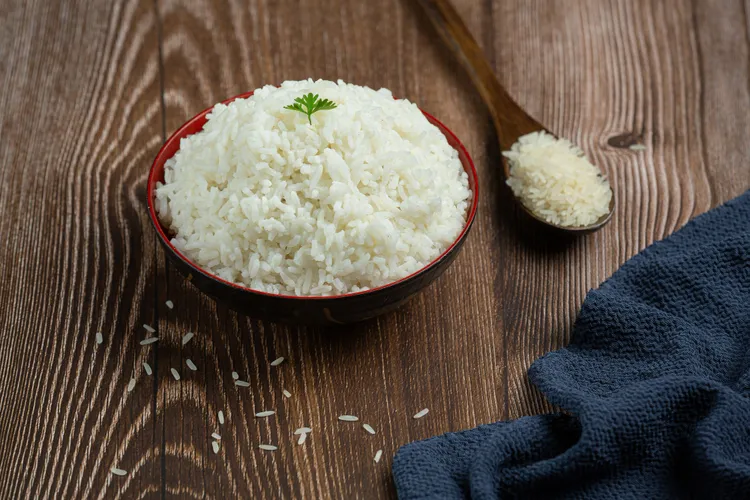
Weigh 200g of cooked white rice, log it under the raw rice entry, and your app records about 730 kcal. The bowl really holds closer to 260. That one mix-up is behind most of the "my numbers never add up" complaints, and it works in both directions depending on the food.
Why the Weight Changes but the Calories Don't
Cooking moves water. Rice, pasta, oats, beans and lentils soak it up and get heavier. Meat, fish and many vegetables lose it and get lighter. Calories come from protein, carbs and fat, and those stay in the food. So the same energy ends up spread over a different weight.
Take white rice. 100g dry is about 365 kcal. Cook it and it weighs roughly 280 to 300g. The total is still about 365 kcal, but per 100g the rice dropped from 365 kcal to about 130 kcal.
Chicken breast runs the other way. 100g raw is about 120 kcal and 22g of protein. After cooking it weighs around 75g, with the same 120 kcal and 22g of protein packed into less food. Per 100g that is now about 165 kcal and 31g of protein.
This is why nutrition databases list raw and cooked as two separate entries. Neither one is wrong. What matters is that the state you weighed matches the entry you pick.
The One Rule That Keeps You Accurate
Match the entry to the weight. Raw weight goes with the raw entry. Cooked weight goes with the cooked entry. Mixing them is the single biggest source of error in home tracking, and it is usually much bigger than any rounding or brand difference.
If you have a choice, weigh raw. Raw weight is the same every time. Cooked weight depends on how long you cooked the food, how much water went in, how well you drained it and even how hot your pan was. Two people cooking the same 100g of pasta can end up with 220g and 250g and both did nothing wrong.
One label trap to watch for: some packaged foods, like microwave rice pouches or instant noodles, print nutrition for the prepared product. Look for "as sold" versus "as prepared" at the top of the nutrition panel before you trust the numbers.
Rice, Pasta and Other Grains: Weight Goes Up
Grains and pasta roughly double or triple in weight. These are typical values per 100g, so treat them as a starting point and not a lab result:
- White rice: about 365 kcal dry, about 130 kcal cooked. 100g dry becomes roughly 280 to 300g cooked.
- Brown rice: about 365 kcal dry, about 120 kcal cooked. 100g dry becomes roughly 250 to 300g.
- Pasta: about 370 kcal dry, about 155 kcal cooked. 100g dry becomes roughly 220 to 250g.
- Quinoa: about 370 kcal dry, about 120 kcal cooked. 100g dry becomes roughly 280 to 300g.
- Couscous: about 375 kcal dry, about 110 kcal cooked. 100g dry becomes roughly 300 to 340g.
- Rolled oats cooked with water: about 380 kcal dry, about 70 kcal as porridge. 100g dry becomes anywhere from 450 to 550g depending on how much water you add.
The ranges are wide for a reason. Rice varieties absorb different amounts of water. Pasta cooked for 12 minutes holds noticeably more water than pasta pulled at 8. Rinsing, soaking, steaming versus boiling and resting time all shift the final weight. Oats are the extreme case: the weight depends almost entirely on how much liquid you pour in, so cooked oats are close to useless as a tracking weight unless you measure the water too.
For all of these, the dry weight is the number to trust. It does not change with technique.
Beans and Lentils: Dry Versus Cooked Versus Canned
Dried legumes behave like grains. 100g of dry lentils is about 350 kcal and turns into roughly 250 to 300g of cooked lentils at about 115 kcal per 100g. Dried chickpeas start around 380 kcal per 100g and cook up to roughly 220 to 250g at about 165 kcal per 100g.
Canned beans are already cooked, so use a cooked or canned entry. Weigh them drained, not with the liquid, and pick a database entry that says drained if there is one. The canning liquid carries salt and a little starch, and it can add 20 to 30 percent to the weight of the can without adding much to the food you actually eat.
Meat, Poultry and Fish: Weight Goes Down
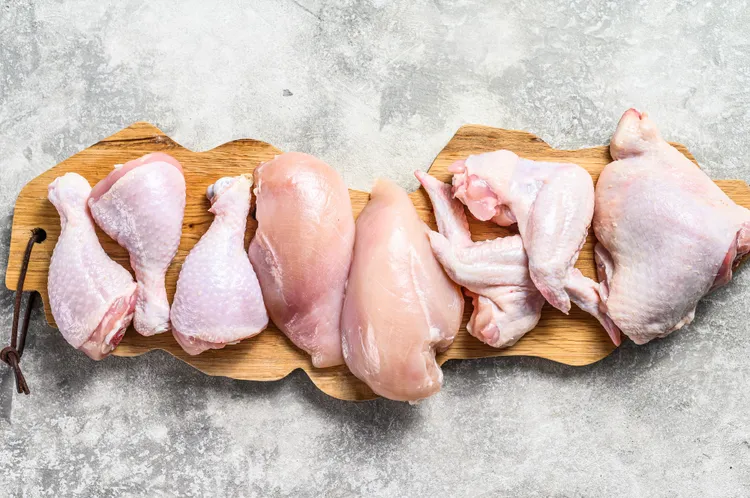
Meat loses water and some fat as it cooks. Most cuts end up at 70 to 80 percent of their raw weight, which is why protein per 100g looks so much higher on a cooked entry.
- Chicken breast, skinless: about 120 kcal and 22g protein per 100g raw. About 165 kcal and 31g protein per 100g cooked. Cooked weight lands around 70 to 78 percent of raw.
- Chicken thigh, skinless: about 120 kcal raw and 180 kcal cooked per 100g. Cooked weight is around 70 to 75 percent of raw.
- Ground beef, 85 percent lean: about 215 kcal and 18g protein per 100g raw. About 250 kcal and 26g protein per 100g cooked. Cooked weight is around 70 to 75 percent of raw if you leave the fat in the pan.
- Steak and pork chops: roughly 70 to 80 percent of raw weight. Medium-rare loses less than well done.
- Fish and shrimp: roughly 75 to 85 percent of raw weight, since they hold less water to lose.
- Bacon: the dramatic one. Crisp bacon can end up at 30 to 40 percent of its raw weight, and a good share of the fat melts into the pan, so the calories drop too.
Cooking method moves the numbers. A chicken breast grilled until it is dry loses closer to 30 percent. One that was gently poached loses less. Ground beef you drain well ends up leaner than the same beef with the fat spooned back over it, and the database entry you pick assumes one specific outcome.
Bacon is the case where weighing raw and logging raw works against you, because so much of what you weigh never reaches your plate. For bacon, most people do better counting slices and using a cooked-per-slice entry.
Vegetables: It Depends on How You Cook Them
Vegetables are low in calories, so the error is small either way, but the weight swings can still be large enough to confuse portion sizes.
- Boiled or steamed broccoli, green beans and carrots: weight barely moves, usually within 5 percent of raw. Calories per 100g stay about the same.
- Roasted vegetables: lose roughly 20 to 40 percent of their weight to evaporation. Zucchini and peppers sit at the high end of that range.
- Mushrooms: lose around 40 to 50 percent of their weight when sauteed. A big pile in the pan becomes a small spoonful.
- Spinach and other leafy greens: wilt down to roughly a third to a half of their raw weight.
- Onions: lose 30 to 50 percent when sauteed and more when properly caramelized.
- Potatoes: baked ones lose 15 to 20 percent of their weight. Boiled ones stay close to their raw weight, since they take on water as they lose some.
The simplest approach is to weigh vegetables raw, log the raw entry, and measure any oil separately. You lose very little accuracy and you avoid arguing with yourself about how much a pan of mushrooms shrank.
Oil, Fat and Cooking Liquid: The Hidden Variable
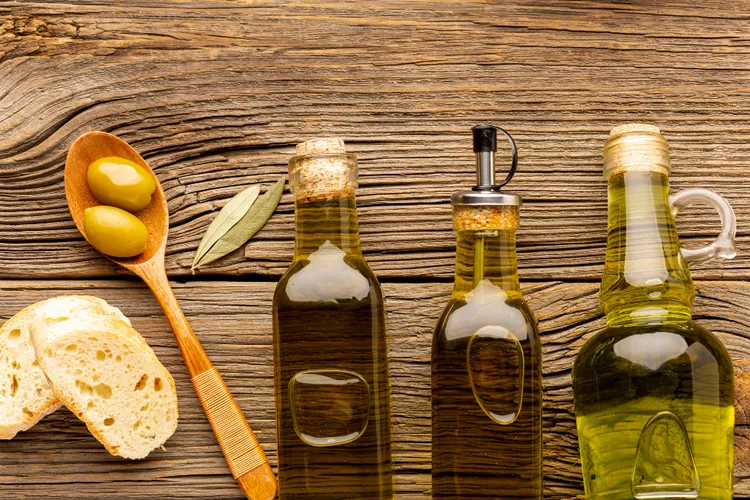
Water is not the only thing that changes weight. Oil is the wildcard that most tracking skips. One tablespoon of olive oil is about 120 kcal, which is the same as a full serving of cooked rice and more than a cup of cooked broccoli. A pan of vegetables sauteed in two tablespoons of oil carries about 240 kcal of oil that never shows up on a raw vegetable entry.
Measure the oil you put in the pan and add it as its own line. You will not get all of it into your food, because some stays behind in the pan, but counting it all is the safer error and it keeps the system simple. The same goes for butter, sauces and anything you stir in at the end.
Cooking liquid matters when it is not plain water. Rice cooked in broth, pasta boiled in salted water you drain, and beans simmered in their own sauce all move salt, fat and sugar around. For plain water, ignore the liquid. For broth, cream or sauce that stays in the dish, count it.
The Batch Method for Meal Prep
Raw weighing is easy when you cook one plate at a time. Meal prep is different. You cook a big batch, split it into containers and eat it across the week. The batch method handles that without guessing multipliers:
- Weigh every ingredient raw and add up the macros for the whole batch.
- Weigh the empty pot or container first. Cook the food, then weigh the pot again with the food in it. Subtract the empty weight to get the total cooked weight.
- Weigh each portion of cooked food.
- Divide the portion weight by the total cooked weight, then multiply the whole batch macros by that fraction.
Rice example. 300g of dry white rice is about 1,095 kcal, 21g protein, 240g carbs and 2g fat for the whole batch. Say it cooks to 840g. A 200g serving is 200 divided by 840, or about 24 percent of the batch. That serving is about 260 kcal, 5g protein, 57g carbs and 0.5g fat.
Pasta example. 500g of dry penne is about 1,855 kcal, 65g protein, 375g carbs and 8g fat. It cooks to about 1,150g. A 250g serving is about 22 percent of the batch, so around 400 kcal, 14g protein, 81g carbs and 2g fat.
Chicken example. 800g of raw chicken breast is about 960 kcal, 180g protein and 21g fat. It cooks down to 600g. A 150g portion is a quarter of the batch, so about 240 kcal, 45g protein and 5g fat.
The method works for mixed dishes too. Chili, curry, soup and casserole all follow the same four steps. Add every ingredient raw, cook, weigh the finished pot, then portion by weight. It is the most accurate way to track food you cook ahead, and it takes about two extra minutes with a kitchen scale.
Raw to Cooked Cheat Sheet
To estimate cooked weight, multiply raw weight by these factors. To go back from cooked to raw, divide. Expect about 10 percent either way, because technique matters.
- White rice: multiply by 2.8 to 3
- Brown rice: multiply by 2.5 to 3
- Pasta: multiply by 2.2 to 2.5
- Quinoa: multiply by 2.8 to 3
- Couscous: multiply by 3 to 3.4
- Lentils: multiply by 2.5 to 3
- Chickpeas: multiply by 2.2 to 2.5
- Rolled oats with water: multiply by 4.5 to 5.5
- Chicken, beef, pork, steak: multiply by 0.7 to 0.8
- Fish and shrimp: multiply by 0.75 to 0.85
- Bacon: multiply by 0.3 to 0.4
Two quick conversions to show the direction. 250g of cooked pasta divided by 2.3 is about 110g dry. 150g of cooked chicken divided by 0.75 is about 200g raw.
Common Mistakes
- Logging cooked weight under a raw entry. This is the rice example from the top. For grains it makes you overcount by a factor of two to three. For chicken it works the other way: 150g of cooked chicken logged as raw shows about 180 kcal when the real figure is closer to 250.
- Logging raw weight under a cooked entry. The reverse. 150g of raw chicken logged as cooked shows about 250 kcal when the meat is really about 180.
- Mixing up the cooking method in the database entry. Many cooked entries describe one specific outcome, like roasted chicken or pan-browned beef. If you poach or air fry, your result will be close but not identical.
- Forgetting the oil. A few tablespoons across a day can add several hundred calories that never appear in a raw-weight log.
- Trusting cooked pasta or rice weight from a different batch. Last week's 250g of pasta was not the same as this week's 250g if the cooking time changed.
- Weighing with the pan or container. Tare the scale with the empty dish on it, or weigh the container first and subtract.
Which Should You Weigh?
- Cooking a single meal: weigh raw and log the raw entry.
- Meal prepping a batch: use the batch method above.
- Eating leftovers or someone else's cooking: weigh the cooked food and log a cooked entry, and accept that it is an estimate.
- Canned or precooked food: follow the label, and check whether the figures are for the product as sold or as prepared.
- Restaurants and takeout: estimate portions and use a comparable cooked entry. Perfect precision is not available here.
Meal Prep Tips
A cheap kitchen scale that reads in grams is the single most useful tool for this. Write the empty weight of each container on its lid with a marker so you never have to remember it. When you portion a batch, weigh each serving straight into the container and note the grams on the lid.
Cooked rice and pasta need quick cooling. Spread rice on a tray or divide it into shallow containers, get it into the fridge within about an hour, and eat it within a day or two. Freezing individual portions keeps longer batches workable and also makes the weights easier to track, since each frozen block is one known serving.
Once your portions are weighed accurately, the numbers become something you can plan around. Use the macro calculator to find your daily targets, build the week with the meal planner, and let the meal prep tool turn those targets into a cooking plan. If the raw and cooked weights are logged correctly, all three tools work from numbers you can trust.
The figures in this article are typical values from standard nutrition databases such as USDA FoodData Central, rounded for readability. Brands, varieties and cooking methods vary, so treat them as solid estimates and check your own packaging when accuracy matters.
Latest