How Long to Cook Everything: The Master Cooking Time Chart
Exact cooking times for eggs, rice, pasta, vegetables, chicken, steak, pork and fish, with oven, stovetop and air fryer settings and safe internal temperatures.
"How long to boil eggs" is the most-Googled cooking question, and "how long to boil corn on the cob" sits in the top 30. People do not want theory at 6:30 on a weeknight. They want a number. This chart gives you the number, the temperature, and the sign that the food is actually done.
How to Use This Chart
Every time below is a starting point. Thickness, starting temperature, pan material and your oven all move the result, so use the time to know when to start checking, then confirm with a thermometer or the visual cue.
- Thickness beats weight. A 1-inch (2.5 cm) steak and a 2-inch steak of the same weight cook very differently. Flatten chicken breasts to an even thickness and they cook in about 4 to 5 minutes per side.
- Cold food takes longer. Meat straight from the fridge needs more time than meat that sat out for 15 to 20 minutes. Do not leave it out longer than that.
- Preheat fully. Roasting times assume the oven has reached temperature. Most ovens beep 5 to 10 minutes before they are truly hot.
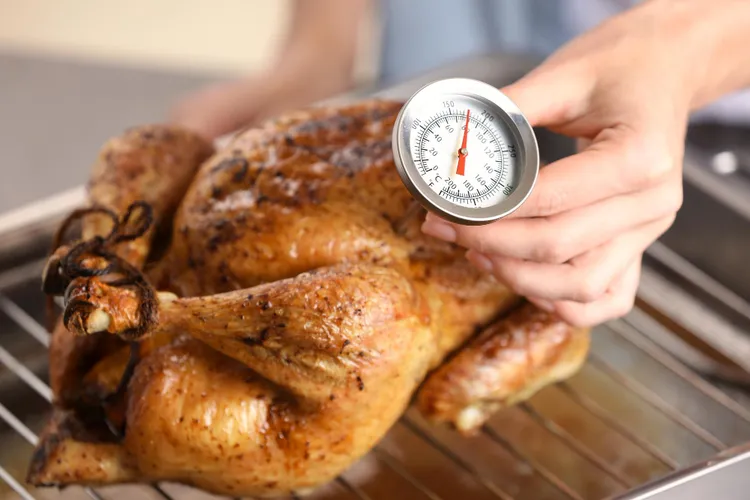
- Buy an instant-read thermometer. It is the only reliable way to cook meat without drying it out or undercooking it. Color is not a safe test.
Safe Internal Temperatures
These are the minimums recommended by the USDA. Measure in the thickest part, away from bone.
- Poultry (chicken, turkey, ground poultry): 165°F (74°C)
- Ground beef, pork, lamb: 160°F (71°C)
- Steaks, chops, roasts (beef, pork, lamb): 145°F (63°C), then rest 3 minutes
- Fish and shellfish: 145°F (63°C), or until the flesh is opaque and flakes
- Egg dishes (quiche, frittata, casseroles): 160°F (71°C)
- Leftovers and reheated food: 165°F (74°C)
Many cooks prefer steak at 130 to 135°F (54 to 57°C) for medium-rare. That is below the USDA minimum, so it is a personal risk choice. It applies only to whole cuts of beef, never to ground meat or poultry.
Eggs
For boiled eggs, use large eggs from the fridge and lower them into already-boiling water. Start the timer when they go in, and move them to ice water as soon as time is up.
- Soft-boiled (runny yolk, set white): 6 minutes
- Jammy (soft, tacky yolk): 7 minutes
- Medium (creamy center): 8 minutes
- Hard-boiled: 10 to 12 minutes, then 5 minutes in ice water so the shell peels easily
- Poached: 3 to 4 minutes in barely simmering water, never rolling boil
- Scrambled: 2 to 4 minutes over low to medium heat. Pull them while still slightly wet; they finish cooking in the pan
- Fried, sunny-side up: 2 to 3 minutes. Over easy: 3 to 4 minutes, flipped once
- Baked egg muffins: 18 to 22 minutes at 350°F (175°C), until set in the center
Rice, Grains and Pasta
Ratios are rice to water by volume. Rinse white rice until the water runs mostly clear. Bring to a boil, cover, drop to the lowest heat, and do not lift the lid. Rest off the heat for 10 minutes.
- White long-grain rice: 1 cup rice to 1½ cups water, 15 minutes covered, then rest
- Basmati: 1 cup to 1½ cups, 12 minutes, then rest 10
- Jasmine: 1 cup to 1¼ cups, 15 minutes, then rest 10
- Brown rice: 1 cup to 2 cups, 40 to 45 minutes, then rest 10
- Quinoa: rinse first, 1 cup to 2 cups, 12 to 15 minutes, rest 5
- Pearl barley: 1 cup to 3 cups, about 30 minutes
- Couscous: 1 cup couscous to 1 cup boiling water, cover and leave 5 minutes, then fluff
- Rolled oats: 1 cup to 2 cups water or milk, 5 minutes
For pasta, use plenty of well-salted boiling water (about 1 tablespoon of salt per 4 quarts). Start tasting 1 to 2 minutes before the package time.
- Spaghetti and linguine: 8 to 10 minutes
- Penne, rigatoni, fusilli: 10 to 12 minutes
- Fresh pasta: 2 to 4 minutes
- Gnocchi: 2 to 3 minutes, until they float
Potatoes and Root Vegetables
- Boiled potatoes, 1-inch cubes: start in cold salted water, 10 to 15 minutes after it boils
- Boiled potatoes, whole medium: 20 to 25 minutes, until a knife slides in with no resistance
- Baked russet potato: 425°F (220°C) for 45 to 60 minutes
- Roasted potatoes, 1-inch cubes: 425°F (220°C) for 30 to 40 minutes, turning once
- Sweet potato, baked whole: 400°F (200°C) for 45 to 60 minutes
- Sweet potato, roasted cubes: 425°F (220°C) for 25 to 30 minutes
- Carrots, sliced: boil 6 to 8 minutes, or roast at 425°F (220°C) for 25 to 30 minutes
- Beets, whole: roast wrapped in foil at 400°F (200°C) for 50 to 60 minutes, or boil 30 to 45 minutes depending on size
Vegetables
Roasting at 425°F (220°C) gives the best browning for most vegetables. Cut pieces to the same size, use a large pan so they are not crowded, and turn once halfway.
- Broccoli florets: steam 4 to 5 minutes, roast 15 to 20 minutes, sauté 4 to 6 minutes
- Cauliflower florets: steam 5 to 8 minutes, roast 20 to 25 minutes
- Green beans: boil or steam 4 to 6 minutes, roast 15 to 20 minutes
- Asparagus: roast 8 to 12 minutes, sauté 3 to 5 minutes
- Brussels sprouts, halved: roast 20 to 25 minutes, cut side down
- Zucchini, ½-inch slices: sauté 4 to 6 minutes, roast 15 to 20 minutes
- Bell pepper strips: sauté 5 to 7 minutes, roast about 20 minutes
- Mushrooms, sliced: sauté 5 to 8 minutes, until the water cooks off and they brown
- Eggplant, cubed: roast 25 to 30 minutes
- Corn on the cob: boil 4 to 6 minutes, or grill 10 to 15 minutes, turning
- Frozen peas: 2 to 3 minutes
- Spinach: 1 to 2 minutes to wilt
- Kale: sauté 4 to 6 minutes
- Onions, sliced: soft in 5 to 8 minutes, fully caramelized in 35 to 45 minutes on low heat
Chicken and Poultry
Chicken is the food people most often overcook, because 165°F (74°C) is easy to blow past. Pull breasts at 160 to 162°F (71 to 72°C) and let carryover heat finish the job during a 5-minute rest.
- Boneless breast (6 to 8 oz), pan-seared: 6 to 8 minutes per side over medium heat. Pounded to even thickness: 4 to 5 minutes per side
- Boneless breast, baked: 400°F (200°C) for 18 to 22 minutes
- Boneless breast, air fryer: 375°F (190°C) for 15 to 20 minutes, flipping halfway
- Boneless breast, poached: 12 to 15 minutes in gently simmering water
- Chicken tenders: bake 15 to 18 minutes at 400°F (200°C), or air fry 10 to 12 minutes at 375°F (190°C)
- Boneless thighs: pan 5 to 7 minutes per side, or bake 20 to 25 minutes at 425°F (220°C)
- Bone-in thighs and drumsticks: 425°F (220°C) for 35 to 45 minutes. These taste better at 175 to 185°F (80 to 85°C), because the connective tissue needs the extra heat
- Wings: bake 40 to 45 minutes at 425°F (220°C), or air fry 20 to 25 minutes at 400°F (200°C)
- Whole chicken (4 to 5 lb): 425°F (220°C) for 1 hour 10 minutes to 1 hour 30 minutes. Check the thickest part of the thigh, and rest 15 to 20 minutes before carving
- Ground chicken: 8 to 10 minutes in a skillet, broken up
Beef and Pork
- Ground beef, crumbled in a skillet: 8 to 10 minutes over medium-high heat, until no pink remains
- Burgers, ¾ inch thick: 4 to 5 minutes per side to 160°F (71°C)
- Meatballs, 1½ inch: bake 18 to 22 minutes at 400°F (200°C)
- Steak, 1 inch thick, hot pan: 3 to 4 minutes per side for medium-rare, 4 to 5 per side for medium. Rest 5 minutes
- Pot roast, 3 lb: braise at 325°F (160°C) for 3 to 4 hours, or slow cooker on low for 8 to 10 hours
- Boneless pork chop, 1 inch: pan 4 to 5 minutes per side to 145°F (63°C), or bake 15 to 20 minutes at 400°F (200°C)
- Pork tenderloin: roast 18 to 25 minutes at 425°F (220°C). Rest 5 to 10 minutes
- Bacon: pan 8 to 12 minutes on medium, oven 15 to 20 minutes at 400°F (200°C), air fryer 8 to 10 minutes at 375°F (190°C)
- Fresh sausages: pan 12 to 15 minutes on medium-low, or bake 20 to 25 minutes at 400°F (200°C). Pork sausage needs 160°F (71°C), poultry sausage 165°F (74°C)
Fish and Seafood
A reliable rule: about 10 minutes of cooking per inch (2.5 cm) of thickness. Fish continues to cook after you remove it, so stop just before it looks done.
- Salmon fillet (6 oz): bake 12 to 15 minutes at 400°F (200°C), pan-sear 4 to 5 minutes skin-side down then 2 to 3 minutes on the other side, or air fry 8 to 10 minutes at 400°F (200°C)
- Cod, tilapia, other thin white fillets: bake 10 to 14 minutes at 400°F (200°C), or pan-fry 3 to 4 minutes per side
- Shrimp: sauté 2 to 3 minutes per side, or boil 2 to 3 minutes. They are done when pink and curled into a loose C. A tight O means overcooked
- Scallops: sear 2 to 3 minutes per side in a very hot pan
- Mussels: steam 5 to 7 minutes. Discard any that stay closed
Beans and Lentils
- Red lentils: 15 to 20 minutes, no soaking
- Green and brown lentils: 20 to 30 minutes, no soaking
- Chickpeas, soaked overnight: 60 to 90 minutes. Unsoaked: 1½ to 2½ hours
- Black beans, soaked: 60 to 90 minutes
- Kidney beans, soaked: boil hard for 10 minutes first, then simmer 60 to 90 minutes. Undercooked kidney beans contain a toxin that causes illness, so do not skip the boil
- Canned beans: rinse, then heat 3 to 5 minutes. They are already cooked
Adjusting Times for Your Equipment
- Air fryer: lower the oven temperature by 25°F (about 15°C) and cut the time by 20 to 25%. Start checking early
- Convection oven: lower the temperature by 25°F (15°C), or keep it and cut the time by about 20%
- Frozen meat and fish: cooking from frozen takes about 50% longer, according to the USDA. Do not cook frozen meat in a slow cooker
- Slow cooker: 1 hour on high is roughly equal to 2 hours on low. Boneless chicken breasts take 3 to 5 hours on low or 1½ to 3 hours on high, so check at the early end
- High altitude: above about 3,000 ft (900 m), water boils at a lower temperature, so eggs, pasta, rice and beans take longer
- Uneven oven: a cheap oven thermometer shows whether your dial is accurate. Many ovens run 15 to 25°F off
Resting Times
Resting lets juices redistribute, and the temperature rises 5 to 10°F (3 to 5°C) while it happens. Tent loosely with foil, not tightly, or the crust steams.
- Burgers and thin chops: 3 to 5 minutes
- Steaks and chicken breasts: 5 minutes
- Pork tenderloin: 5 to 10 minutes
- Whole chicken and large roasts: 15 to 20 minutes
Raw vs Cooked Weight for Tracking Macros
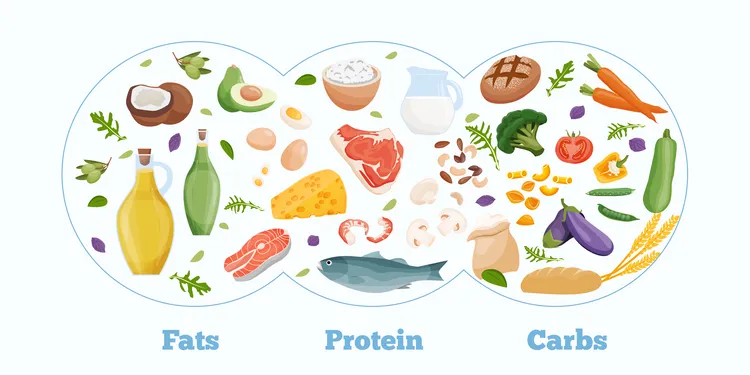
If you count calories or macros, the same food has very different numbers depending on whether you weigh it before or after cooking. Weigh raw whenever possible. It is more consistent, because cooked weight depends on how long you cooked it. These are approximate values:
- Chicken breast: loses about 25% of its weight. 100 g raw is roughly 120 kcal and 23g protein. 100 g cooked is roughly 165 kcal and 31g protein
- White rice: absorbs water and about triples in weight. 100 g dry is roughly 360 kcal. 100 g cooked is roughly 130 kcal
- Pasta: roughly doubles in weight. 100 g dry is around 350 to 370 kcal, while 100 g cooked is around 150 to 160 kcal
- Ground beef: loses 20 to 25% as fat and water cook out, and the amount depends on the fat percentage
Pick one method and use it every time, and your numbers stay comparable from week to week.
Storing and Reheating Cooked Food
- Refrigerator: cooked meat, rice, pasta and vegetables keep 3 to 4 days in sealed containers
- Freezer: most cooked meals hold their best quality for 2 to 3 months
- Rice: spread it on a tray to cool and refrigerate within about 1 hour. Rice left warm for hours is a known food-poisoning risk
- Hard-boiled eggs: up to 1 week in the fridge, in the shell
- Reheating: bring leftovers to 165°F (74°C) all the way through
- Time out of the fridge: no more than 2 hours, or 1 hour when the room is above 90°F (32°C)
Common Questions
Why is my chicken pink at 165°F?
Color is unreliable. Young chicken and some cooking methods leave pink near the bone even when the meat is fully safe. Trust the thermometer, not the color.
Do I really need a meat thermometer?
For chicken, pork and thick cuts, yes. A decent instant-read model costs about the same as one wasted roast, and it ends the guessing for good.
Why does my pasta take longer than the box says?
The water probably is not boiling hard enough once the pasta goes in. Use a bigger pot, more water, and a full boil. Also check the box's time is for al dente, not soft.
Do frozen vegetables cook faster?
Often, since they are blanched before freezing. Steam them 3 to 5 minutes. For roasting, add 5 to 10 minutes and use a hot oven so they brown instead of steaming.
Can I cook everything at the same temperature?
Yes, and it is a good meal-prep shortcut. At 425°F (220°C), chicken thighs, potatoes, broccoli and carrots all roast well on separate pans. Stagger the start times by the numbers above.
Use the time to know when to start checking, then trust the thermometer and the visual cue. Keep the 10-minutes-per-inch rule for fish, pull chicken at 160 to 162°F, rest your meat, and bookmark this page for the next time you are standing over a pan wondering if it is done.
Latest