Green Tahini Sauce (Herb-Packed)
A bright, herb-packed tahini sauce recipe built on parsley, cilantro, and mint, great over roasted vegetables and falafel.
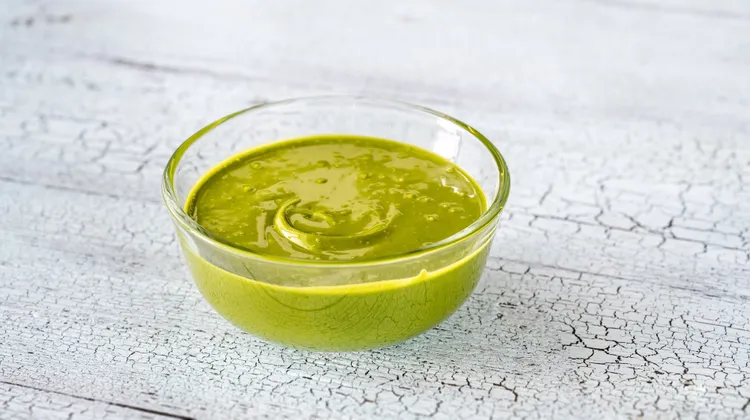
Green tahini sauce takes the classic lemon-garlic base and blends in a full handful of fresh herbs, turning a pale, simple sauce into something bright green and considerably more aromatic - especially good over roasted vegetables and falafel.
Green Tahini Sauce
Prep time: 10 minutes | Makes: about 1 1/4 cups
Ingredients
- 1/2 cup tahini, well stirred
- 1/4 cup fresh lemon juice
- 1 small garlic clove
- 1 cup fresh parsley, packed
- 1/2 cup fresh cilantro, packed
- 2 tbsp fresh mint leaves
- 1/3 to 1/2 cup cold water
- 1/2 tsp salt, or to taste
Instructions
- Combine the tahini, lemon juice, garlic, parsley, cilantro, mint, and salt in a food processor or blender.
- Blend, adding cold water gradually, until smooth and pourable. Scrape down the sides as needed to fully incorporate the herbs.
- Taste and adjust salt or lemon as needed. If it's more herb-forward than you'd like, a bit more tahini and water rebalances it.
- Use immediately for the brightest color and flavor, or refrigerate up to 4 days - the color will dull somewhat over time, though the flavor holds up well.
Notes
A food processor or blender is genuinely worth using here rather than whisking by hand - it's the only practical way to break the herbs down finely enough to fully incorporate into the sauce.
Choosing and Balancing the Herbs
Parsley forms the bulk of the herb content here since its flavor is mild enough not to overwhelm, while cilantro and mint are used more sparingly for brightness and a slight cooling note. Basil can substitute for some of the parsley for a different, more Mediterranean-leaning direction. Whatever the mix, using mostly one mild herb with smaller amounts of stronger ones keeps the sauce balanced rather than tasting like straight herb paste.
Why This Works So Well With Roasted Vegetables
Roasted vegetables, particularly cauliflower, eggplant, and sweet potato, develop a caramelized richness that a bright, herbaceous sauce cuts through nicely - the same principle behind serving chimichurri with grilled steak. The sauce's acidity and freshness balance the vegetables' sweetness and char rather than adding more richness on top of richness.
What to Use It On
- Drizzled generously over roasted cauliflower or sweet potato
- As a sauce for falafel, in place of or alongside the classic version
- Spooned over grilled chicken or lamb
- As a dip for warm pita or fresh vegetables
- Stirred into grain bowls as both a dressing and a flavor anchor
Adjusting Consistency for Different Uses
For a dip, keep it on the thicker side by using less water. For drizzling over roasted vegetables or a grain bowl, thin it further until it moves easily off a spoon in a steady stream. The herb content means it holds body slightly better than the plain version at the same water ratio, so expect to add a touch more water than the classic recipe calls for to hit the same consistency.
Make-Ahead and Storage
Green tahini sauce keeps in the fridge for about 4 days in a sealed container, though the vivid green color fades somewhat after the first day or two as the herbs oxidize - flavor-wise, it holds up well throughout. For the best color, make it close to when you plan to serve it.
Where This Sauce Started
This style of herb-loaded tahini sauce (often called "tahini chimichurri" in some American restaurant menus, though that's not its origin) draws on the same herb-forward tradition found in zhoug and other Middle Eastern green sauces, adapted with tahini as the base instead of oil.
If you haven't made the plain version yet, start with our classic tahini sauce recipe to get the base ratio down first. For everything else tahini can do, see our complete Tahini: The Pantry Staple That's Not Just for Hummus.
Choosing a Blender or Food Processor for This Recipe
A standard blender works well for this recipe as long as it can handle a relatively small volume without the herbs getting stuck above the blades - a tamper or occasional pause to scrape down the sides usually solves this. A food processor with an S-blade is arguably even better suited, since its wider, shallower bowl handles a smaller batch of leafy herbs more evenly than a tall blender pitcher. An immersion blender can work in a pinch, though it takes longer to fully break down the herbs into a smooth, uniform green.
Adjusting the Herb Ratio to Taste
The parsley-heavy base in this recipe is a reasonable starting point, but the ratio is genuinely flexible depending on what's on hand and what flavor direction you're after. More cilantro pushes the sauce toward a brighter, slightly citrusy direction; more mint pushes it cooler and more aromatic; basil in place of some of the parsley shifts it toward a more Mediterranean, almost pesto-adjacent flavor. Tasting as you go and adjusting the herb mix before adding the final water is the most reliable way to land on a version you'll want to make again.
Common Questions About Green Tahini Sauce
- Can I use dried herbs instead of fresh? Not well for this recipe - the vivid color and bright, fresh flavor depend on fresh herbs specifically. Dried herbs would produce a duller, flatter result that doesn't capture what makes this sauce distinct from the plain version.
- Why did my sauce turn brown instead of staying green? This is oxidation, the same reaction that browns cut avocado or apple. It happens gradually to any fresh-herb sauce and speeds up with more air exposure - storing it in a tightly sealed container with minimal air space, and making it close to serving time, helps slow this down.
- Can I freeze this sauce? It's possible, though the texture and color both suffer somewhat after thawing. If freezing, portion it into small containers or an ice cube tray, and expect to use it more for cooking (stirred into a soup or braise) than as a fresh finishing sauce after thawing.
- Is this the same as chimichurri? Not quite - chimichurri is oil-based rather than tahini-based, with red wine vinegar instead of lemon and no tahini at all. The two are similar in spirit (a bright, herb-forward sauce for grilled food) but different in composition and origin.
Common Mistakes When Making This Sauce
Using stems along with leaves, particularly thick cilantro or parsley stems, can make the sauce grittier and slightly bitter if not blended thoroughly enough - a higher-powered blender handles this fine, but a weaker one may need the toughest stems removed first. Another mistake is not tasting for salt at the end, since the herbs' volume can make the sauce taste under-seasoned even when the salt measurement matches the plain version. A third is over-blending to the point of generating excess heat in the blender, which can dull the herbs' fresh flavor - blending in short pulses rather than one long continuous run helps avoid this in smaller kitchen blenders.
Pairing Suggestions Beyond the Basics
Beyond roasted vegetables and falafel, this sauce works well spooned over grilled fish, mixed into a grain salad as a dressing, or even thinned further and used as a base for a green shakshuka-style dish. Its versatility comes from the same base ratio that makes the classic version so useful - once the technique is familiar, it adapts to whatever direction a meal needs. For the complete range of tahini uses, see our full Tahini: The Pantry Staple That's Not Just for Hummus.
Making This Sauce Ahead for a Dinner Party
Because color is the main thing that fades over time, this sauce is a reasonable make-ahead option for a dinner party as long as it's made the same day rather than a full day in advance - a few hours ahead, stored tightly covered with minimal air exposure, holds its color and flavor well enough for most purposes. For the most vibrant presentation, blending it just before guests arrive is still the better choice if timing allows.
Scaling This Recipe for a Crowd
This recipe scales up easily for larger gatherings - doubling or tripling all ingredients works without adjustment, though a food processor becomes more useful than a small blender at larger volumes, since a bigger batch of herbs needs more room to fully break down. As with the base sauce, add water gradually rather than all at once, checking consistency as you go rather than assuming the same water ratio scales perfectly linearly.
Using Leftover Herbs
This recipe is also a genuinely good way to use up herbs that are starting to wilt but aren't yet spoiled, since they're being blended rather than used as a garnish where appearance matters more. Parsley and cilantro in particular hold their flavor well even slightly past their freshest point, making this a practical way to avoid waste from a bunch of herbs that didn't get fully used elsewhere.
A Note on Color Retention
A small amount of extra lemon juice, beyond what's needed for flavor, can help slow the browning process slightly by lowering the sauce's pH, though it won't prevent oxidation entirely over more than a day or two. Storing the sauce in the smallest container that fits it, to minimize air contact, is the more effective preservation strategy if color matters for a specific presentation.
More to Explore
For the plain version this recipe builds on, see our classic tahini sauce. For the complete range of tahini uses, see our full Tahini: The Pantry Staple That's Not Just for Hummus.
Blender Cleanup
Herb-heavy sauces like this one can leave a green film that clings to a blender or food processor bowl - rinsing immediately after use, rather than letting it sit, makes cleanup considerably easier and prevents the herb oils from staining plastic components over time.
Comparing Green Tahini Sauce to Chimichurri and Salsa Verde
While all three are bright, herb-forward sauces meant to cut through richer foods, chimichurri is oil-and-vinegar based with Argentine origins, salsa verde varies by tradition but is often oil or tomatillo based, and green tahini sauce is distinct in using ground sesame as its body rather than oil alone. The result is a thicker, richer sauce than either of the other two, with a flavor that leans nutty rather than purely herbaceous.
Adjusting for a Milder Version
For anyone new to a strongly herbed sauce, starting with half the amount of cilantro and mint called for, and making up the difference with additional parsley, gives a gentler introduction without losing the core bright, green character of the sauce.
Ingredient Swaps for What's on Hand
If a specific herb from the recipe isn't available, the sauce is forgiving enough to work with whatever fresh herbs are actually in the fridge - dill, chives, or even a small amount of arugula can stand in for or supplement the parsley, cilantro, and mint combination, shifting the flavor slightly without breaking the underlying technique.
Why This Sauce Rewards Repeated Practice
Like the base tahini sauce, this recipe becomes faster and more intuitive with repetition - after a few batches, most cooks stop measuring precisely and start blending by taste and feel, adjusting herbs, lemon, and water until it looks and tastes right rather than following exact measurements every time.
One Last Serving Idea
Spread thinly across the base of a serving platter before piling roasted vegetables or grilled meat on top is a restaurant-style presentation that takes barely more effort than a simple drizzle, and it makes the sauce look like a deliberate part of the dish rather than an afterthought.
Keep a jar of this sauce alongside the plain version if you make both regularly, since having two ready-to-use tahini sauces on hand covers a wider range of meals than either alone, from a quick weeknight bowl to a more composed weekend spread.
Over time, most people who make this sauce regularly develop a signature herb ratio of their own, tweaked slightly from any written recipe to match their specific taste - treat this version as a solid, reliable starting point rather than a fixed formula that can't be adjusted to fit your own kitchen and preferences.
Latest