Beyond Hummus: Tahini Dips (Baba Ganoush, Muhammara, and More)
A roundup of savory tahini-based dips besides hummus, including baba ganoush, muhammara, and tarator, plus how to build a mezze spread.
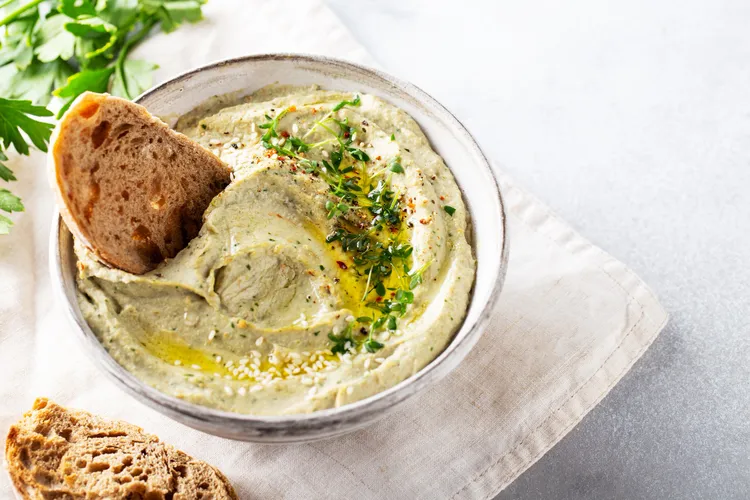
Hummus gets all the attention, but it's far from the only tahini-based dip worth making. A handful of other Middle Eastern dips lean just as heavily on tahini and deserve equal billing on a mezze spread.
Baba Ganoush
Baba ganoush swaps hummus's chickpeas for roasted, smoky eggplant, blended with tahini, lemon, and garlic into something smokier and less starchy than hummus. The eggplant is typically charred whole over an open flame or roasted until fully collapsed, then scooped out and blended with 2 to 3 tablespoons of tahini per medium eggplant, along with lemon juice, a small garlic clove, and salt. The smokiness from charring the skin is what separates a genuinely good baba ganoush from a flat one, so don't skip that step in favor of just roasting it in the oven if you can help it.
Muhammara
Muhammara is a roasted red pepper and walnut dip from Aleppo, thickened and rounded out with a smaller amount of tahini alongside pomegranate molasses, breadcrumbs, and warm spices like Aleppo pepper or cumin. It's sweeter, tangier, and more textured than hummus or baba ganoush, and the tahini here plays a supporting role rather than being the dominant flavor - usually just 1 to 2 tablespoons for a batch, enough to add body without overpowering the pepper and walnut base.
Tarator
Tarator is essentially the classic tahini-lemon-garlic sauce used as a standalone dip, sometimes with toasted pine nuts or walnuts blended in for texture. It's less well known by name outside Middle Eastern cooking, but it's essentially what a lot of people are already making when they whip up a batch of classic tahini sauce - the difference is mostly in how thick it's kept and what it's served alongside.
Tahini and Roasted Garlic Dip
A simpler option: blend tahini with a full head of roasted garlic (squeezed from its skins), lemon juice, and salt for a dip that's mellower and sweeter than a raw-garlic version, since roasting tames garlic's sharpness considerably. This one comes together with barely more effort than the classic sauce, and the roasted garlic flavor makes it feel more distinct than a quick tweak would suggest.
Whipped Tahini With Za'atar Oil
For something closer to a labneh-style presentation, whip tahini with a bit of yogurt (if dairy isn't a concern) or extra lemon and water until light and fluffy, spread it into a shallow bowl, and finish with a generous pour of olive oil mixed with za'atar. This works well as a bread dip or a base under grilled meat or vegetables.
Building a Mezze Spread
A spread of two or three of these dips, alongside warm pita, olives, and some raw vegetables, makes a genuinely substantial spread without much active cooking. Baba ganoush's smokiness, muhammara's sweetness and tang, and a bright tahini-forward dip like tarator or classic tahini sauce naturally complement each other rather than competing.
Make-Ahead Notes
All of these dips keep well in the fridge for 3 to 5 days, and most benefit from at least an hour of chilling before serving to let the flavors settle. Bring them back to room temperature before serving for the best texture and flavor, since tahini-based dips firm up noticeably when cold.
For more ways to use tahini in savory cooking, see our guide to tahini in soups, or head back to our complete Tahini: The Pantry Staple That's Not Just for Hummus.
The Role Tahini Plays Differently in Each Dip
It's worth noticing that tahini isn't used the same way across these dips. In baba ganoush and tarator, it's a lead ingredient, providing much of the dip's body and flavor alongside the eggplant or lemon-garlic base. In muhammara, it plays more of a supporting role, adding richness and body without becoming the dominant flavor against the red pepper and walnut base. Understanding this distinction helps when adjusting any of these recipes to taste - adding more tahini to muhammara, for instance, will shift its character considerably more than the same adjustment would in baba ganoush, where tahini is already load-bearing.
Roasting Vegetables for These Dips
Both baba ganoush and, to a lesser extent, muhammara depend on properly roasted vegetables as their base. For eggplant specifically, charring it directly over a gas flame or under a broiler until the skin is fully blackened and the flesh has completely collapsed gives a noticeably smokier, more authentic result than roasting alone in a moderate oven. For red peppers in muhammara, roasting until the skin blisters and blackens, then steaming them covered for 10 minutes before peeling, makes the skins come away easily and gives the peppers a deeper, sweeter flavor than using jarred roasted peppers as a shortcut, though jarred peppers work in a pinch.
Common Questions About These Dips
- Which of these dips is spiciest? Muhammara typically has the most heat, largely from Aleppo pepper or a similar warm chili, though the level is easily adjusted to taste.
- Can I make baba ganoush without charring the eggplant? Yes, roasting whole in a 425°F oven until fully collapsed (about 40 to 50 minutes) works as a substitute, though the flavor will be milder and less smoky than a charred version.
- Do these dips need to be served cold? Room temperature is generally preferred for all of them, since chilling firms up the tahini and mutes some of the flavor - pull them from the fridge 20 to 30 minutes before serving if they've been stored cold.
- Can I substitute tahini in these recipes if I'm out? Sunflower seed butter is the closest substitute across all of these; see our full substitute guide for ratios and other options.
Common Mistakes When Making These Dips
For baba ganoush, the most common mistake is not draining the roasted eggplant flesh of excess liquid before blending, which results in a watery, thin dip rather than a thick, spreadable one - letting it sit in a colander for a few minutes after roasting solves this. For muhammara, over-processing in a food processor can turn what should be a slightly textured dip into a completely smooth puree, losing some of its characteristic bite - pulse rather than run continuously for the best texture. Across all of these dips, under-seasoning is common, since the vegetables and nuts involved need a meaningfully higher amount of salt than a simple tahini sauce to taste properly balanced.
Serving and Pairing Ideas
These dips pair naturally with warm pita, fresh vegetables, and grilled meats, and they hold up well as part of a larger spread alongside tahini soup or a simple tahini sauce drizzled over roasted vegetables, building a full tahini-forward meal without much repetition in flavor or technique. For the complete range of tahini applications, see our full Tahini: The Pantry Staple That's Not Just for Hummus.
Building a Full Mezze Spread From Scratch
A complete mezze spread built around these dips works well with roughly three dips, a warm bread, a simple salad like a chopped tomato and cucumber salad, and something pickled or briny like olives for contrast. Baba ganoush's smokiness, muhammara's sweet-and-spicy character, and a bright, garlicky tarator or classic tahini sauce cover a wide enough range of flavors that the spread doesn't feel repetitive despite all three sharing tahini as a common ingredient.
Portioning for a Gathering
As a rough guide, plan for about 1/4 to 1/3 cup of dip per person if serving several different options alongside bread and other sides, adjusting up if the dips are the main event rather than one part of a larger spread. These recipes generally scale up cleanly for larger groups, with the main adjustment being a slightly longer processing time to fully break down a larger volume of ingredients.
Make-Ahead Timing for a Party
All of these dips genuinely improve with a few hours of resting time in the fridge before serving, which makes them well suited to preparing the morning of or even the day before a gathering. Bringing them to room temperature about 30 minutes before guests arrive gives the best texture and flavor, since all of them firm up and mute slightly when served straight from the fridge.
Leftover Ideas
Leftover baba ganoush or muhammara works well spread on a sandwich or stirred into pasta as an unconventional but genuinely tasty sauce, given how much flavor is already concentrated in a small amount. This is a reasonable way to avoid dip leftovers going to waste if a gathering doesn't finish everything that was made.
Where to Go From Here
For a soup-based tahini application to round out the savory side of this guide, see our tahini soup recipe. For the complete range of tahini uses, see our full Tahini: The Pantry Staple That's Not Just for Hummus.
A Quick Note on Food Processor Size
A smaller food processor (3 to 4 cups) handles single batches of any of these dips more effectively than a large one, since the ingredients need enough contact with the blade to blend smoothly rather than getting lost in too much empty space around a larger bowl.
Comparing These Dips by Effort Level
Tarator and the roasted garlic tahini dip are the fastest to prepare, needing only a blender and a handful of ingredients with no roasting required. Baba ganoush and muhammara both require more upfront time due to roasting the eggplant or peppers, though the active hands-on time remains fairly low even accounting for that step. For a quick weeknight dip, the faster options are the more practical choice; for a planned gathering, the extra roasting time for baba ganoush or muhammara is well worth the more distinct final flavor.
A Note on Garnishing
A finishing drizzle of good olive oil, a sprinkle of sumac or Aleppo pepper, and a scattering of fresh herbs elevate any of these dips visually with very little added effort, turning a simple bowl into something that looks considerably more composed for guests.
Adjusting Spice Levels Across These Recipes
Each of these dips can be adjusted up or down in heat independently of the other flavor elements - more Aleppo pepper in muhammara, a pinch of cayenne in baba ganoush, or a fresh chili blended into tarator - without disrupting the underlying technique or ratio, making it easy to tailor a full spread to a group's spice tolerance.
Why These Dips Deserve Equal Billing With Hummus
Hummus's popularity has somewhat overshadowed the rest of this category in Western cooking, but baba ganoush, muhammara, and tarator are each just as foundational within their own culinary traditions, and each brings a genuinely distinct flavor and texture to a table rather than functioning as a hummus substitute. Trying all of them side by side is the best way to appreciate what each one offers on its own terms.
Bread Pairings
Warm, slightly charred pita straight from a hot skillet or open flame makes a genuinely noticeable difference compared to room-temperature store-bought pita, and it's worth the extra minute or two of effort when serving any of these dips to guests.
None of these dips require special equipment beyond a food processor or blender already common in most kitchens, which makes trying all of them over a few weeks a reasonable, low-cost way to round out a mezze repertoire without a significant investment in new tools or ingredients.
Trying one new dip from this list every few weeks, rather than attempting all of them at once, is a reasonable way to build genuine familiarity with each recipe's specific technique before combining several into a single, more ambitious spread.
Any of these dips also travel well to a potluck or shared meal, holding up fine at room temperature for a couple of hours without the food safety concerns that come with dairy- or egg-based dips.
Together, these recipes turn a single jar of tahini into an entire evening's worth of appetizers, with very little overlap in flavor or technique despite sharing the same base ingredient throughout.
A squeeze of extra lemon just before serving brightens any of these dips right at the table, restoring some freshness even a day or two after they were first made.
Latest