Gyudon: Japanese Beef Rice Bowl Under 500 Calories
Gyudon is thinly sliced beef and onion simmered in a sweet-savoury dashi sauce, served over rice. It comes in at around 470 kcal per serving, takes 15 minutes, and is one of Japan's most popular fast-food dishes - now reproducible at home for about £2 per serving.
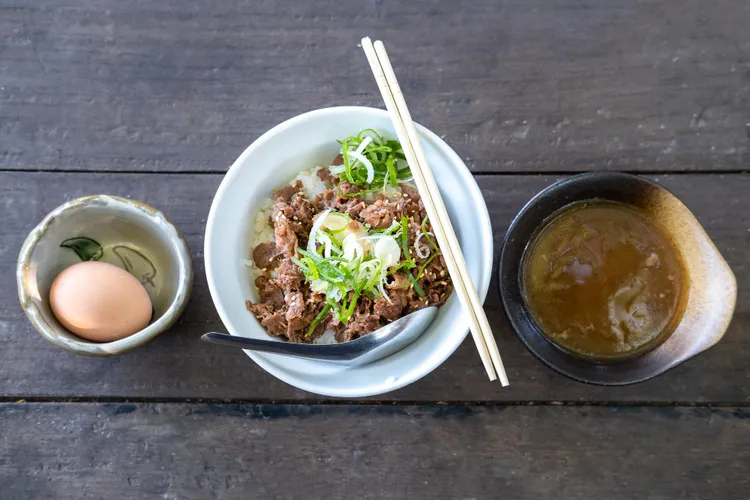
Yoshinoya, Sukiya, Matsuya - Japan's gyudon chains sell hundreds of millions of bowls every year because gyudon is fast, cheap and genuinely satisfying. The home version is better: you control the quality of the beef, the richness of the sauce, and the consistency of the egg if you serve it with one. Fifteen minutes of cooking, around £2-3 per serving depending on the beef cut, and a macro profile that works well as a protein-forward weeknight dinner.
Ingredients (serves 2)
- 250g beef (thinly sliced - use ribeye, sirloin, or ask a butcher for shabu-shabu cut)
- 1 large onion, thinly sliced (half-moons)
- 200ml dashi stock
- 2.5 tablespoons soy sauce
- 2.5 tablespoons mirin
- 1 tablespoon sake
- 1 teaspoon sugar
- 2 portions cooked Japanese rice
- Pickled red ginger (beni shoga) to serve - the traditional garnish
On the beef: The key is thin slices. Most supermarkets do not sell beef pre-sliced for gyudon, but a few techniques work: freeze a steak for 30-40 minutes until firm and slice with a very sharp knife, or ask a butcher to slice it thin on a machine. Shabu-shabu beef found at Asian grocery shops is the correct cut and usually the easiest option.
Method
Combine dashi, soy sauce, mirin, sake and sugar in a wide pan. Bring to a simmer. Add the onion and cook over medium heat for 5-6 minutes until soft and translucent.
Separate the beef slices and add to the pan. Stir gently and cook for 2-3 minutes until just cooked through. Do not overcook - thin beef continues cooking in residual heat. The sauce should have reduced slightly and clung to the meat and onion.
Divide rice between bowls. Spoon the beef and onion over the rice, ladle a little extra sauce over the top. Serve with a small pile of pickled ginger on the side.
Optional but strongly recommended: a soft-poached or slow-cooked egg (onsen tamago) on top. The yolk mixes with the sauce and transforms the dish.
Making Onsen Tamago (Hot Spring Egg)
Onsen tamago are eggs cooked at around 70°C for 45-60 minutes - the white sets to a soft, custardy texture and the yolk is warm and runny. In practice: bring a pot of water to boil, remove from heat, add cold water to bring temperature to roughly 70°C (use a thermometer, or aim for water that's hot but you can briefly dip a finger in). Add eggs directly from the fridge. Leave for 45 minutes. The result is a soft, custardy egg that breaks over the gyudon perfectly.
Nutrition Estimate (per serving with rice)
- Calories: ~470 kcal (without egg)
- Protein: ~30g
- Carbs: ~54g
- Fat: ~14g
Adding an onsen tamago adds approximately 70 kcal and 6g protein. All values are estimates based on ribeye beef and 200g cooked rice per serving.
Budget Notes
Gyudon is at its best with marbled ribeye or sirloin, which costs more. For a budget version, use thinly sliced beef chuck or brisket - it takes slightly longer to become tender in the sauce (8-10 minutes rather than 3) but the flavour is good. At £1.50-1.80 per serving with chuck, gyudon is one of the better value high-protein dinners in the Japanese cooking repertoire.
Variations
- Oyakodon base with beef: Add beaten egg to the pan in the last 90 seconds, cover, let set to custardy. Same logic as oyakodon but with beef.
- Mushroom gyudon: Add 100g sliced shiitake or enoki mushrooms with the onion. Adds umami, extends the portion, reduces cost per serving.
- Cheese gyudon: A slice of processed cheese melted over the beef before serving. A popular addition in Japan, not traditional, excellent.
Gyudon is one of several donburi dishes covered in the Japanese home cooking guide, where the full weekly meal plan shows how different rice bowls fit into a week of practical cooking.
Latest