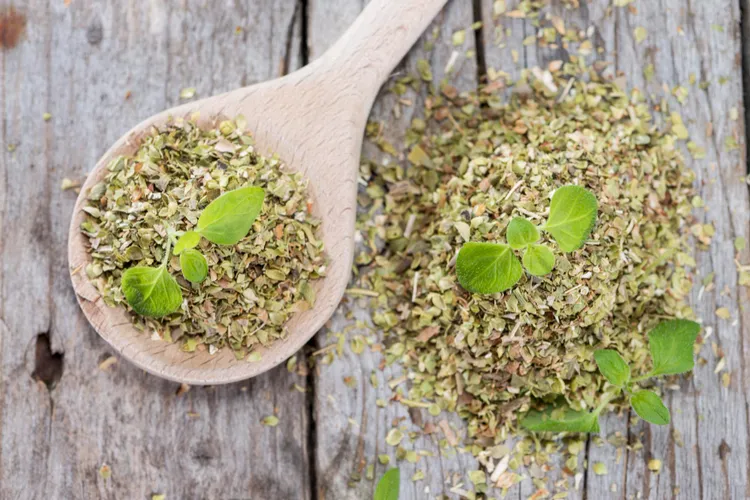
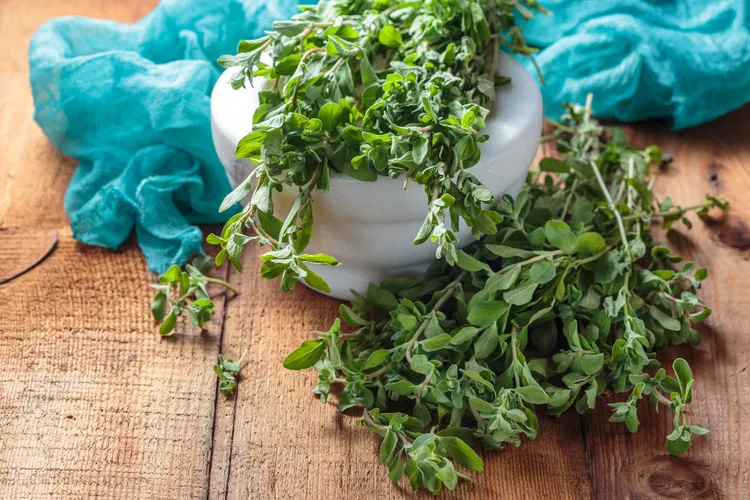
How to Substitute Fresh Oregano for Dried (and Back)
Conversion ratios between fresh and dried oregano, and why the standard 1:3 rule isn't always right.
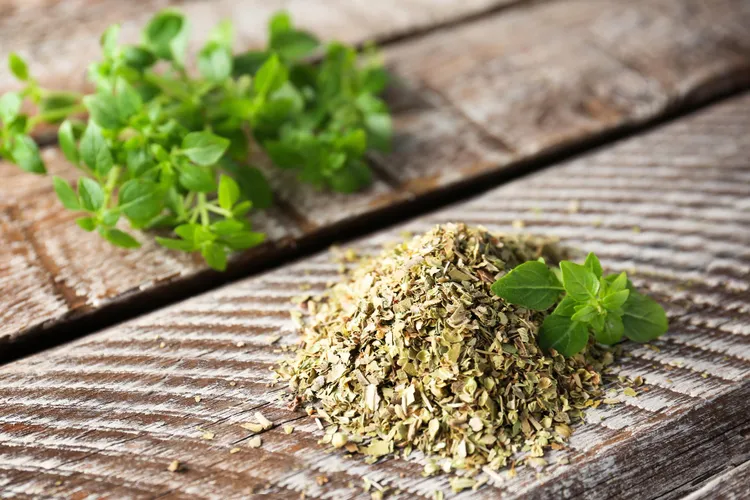
The generic rule most cooks learn, use a third as much dried herb as fresh, works reasonably well for many herbs but needs adjusting for oregano given how much its flavor changes, not just concentrates, between the fresh and dried forms.
The Starting Ratio
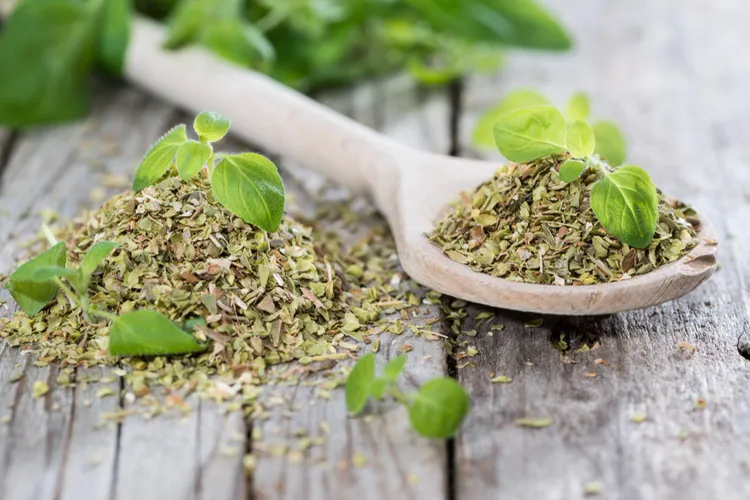
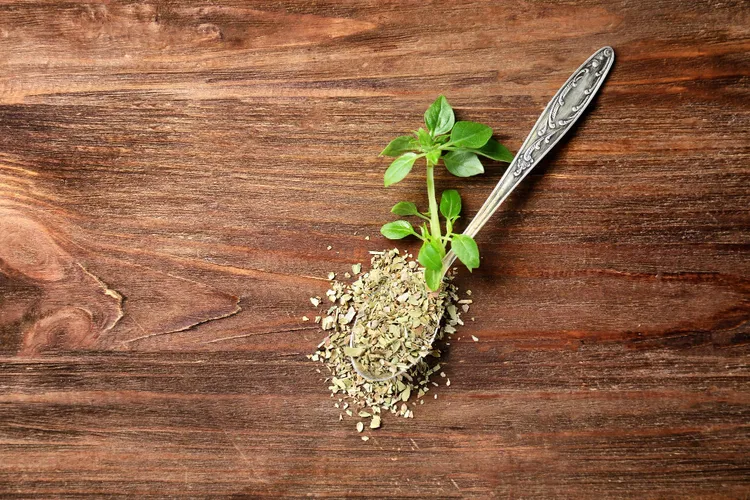
As a baseline, 1 tablespoon of fresh oregano converts to about 1 teaspoon of dried, the same 3:1 ratio used for most herbs. This is a reasonable starting point, but oregano's flavor shift between forms means the "right" amount often depends more on taste than a fixed formula.
Why the Standard Ratio Isn't Always Right
Because drying concentrates oregano's flavor compounds rather than simply reducing their overall volume the way it does with a more delicate herb, dried oregano can taste disproportionately bold compared to what the 3:1 ratio would suggest, especially in a dish with a longer simmer time that gives the dried herb time to fully rehydrate and release its oils. In practice, many cooks find that closer to a quarter of the fresh amount, rather than a full third, keeps a long-simmered dish from turning overly sharp.
Converting Fresh to Dried in Practice
- Quick-cooked or raw dishes (a dressing, a fast saute): the standard 3:1 ratio works reasonably well, since dried oregano doesn't have much time to fully rehydrate and intensify
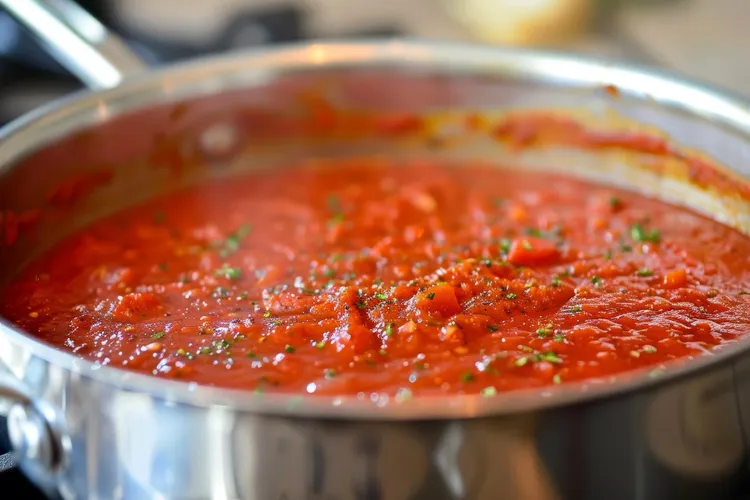
- Long-simmered dishes (a sauce, a stew, a braise): start with less than the standard ratio suggests, closer to a quarter of the fresh amount, and add more toward the end if needed
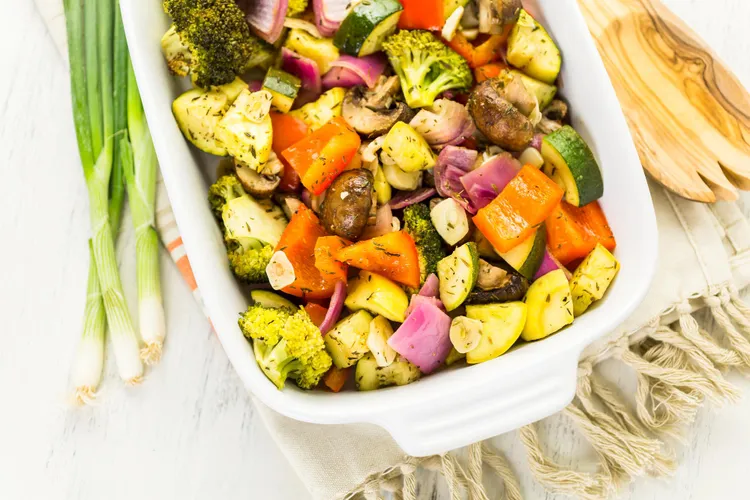
- Roasted or grilled dishes: the standard ratio is a reasonable starting point, with room to adjust based on how directly the oregano is exposed to heat
Converting Dried to Fresh
Going the other direction, if a recipe calls for dried oregano and only fresh is on hand, triple the stated amount as a starting point, then taste and adjust. Because fresh oregano's flavor is milder and brighter rather than a simple weaker version of dried, a straight triple conversion sometimes still tastes underwhelming in a dish that was really built around dried oregano's specific boldness; it's reasonable to go a bit higher if the flavor still feels thin.
A Practical Approach: Taste as You Go
Given how much these ratios can shift by dish and cooking method, treating any conversion as a starting point rather than a fixed rule, and tasting partway through cooking, gives more reliable results than following a strict formula. This matters more for oregano than for many other herbs precisely because its flavor profile shifts so much between fresh and dried, not just its intensity.
Accounting for Oregano's Age and Source
A fresher jar of dried oregano delivers noticeably more flavor per measured amount than one that's been sitting in a cabinet for a year or more. This means the "correct" conversion ratio isn't purely a function of fresh-versus-dried chemistry; it also depends on how potent your specific jar of dried oregano actually is right now. If a dish consistently tastes underwhelming despite following standard ratios, an old, faded jar of dried oregano is a likely culprit worth ruling out before assuming the ratio itself is wrong.
Converting Within a Recipe That Uses Both Forms
Some recipes, particularly the two-stage approach used in a proper marinara sauce, call for oregano at two different points for different reasons, one early for integration, one late for brightness. If substituting fresh for dried in a recipe like this, it often makes sense to keep the early addition as dried (if any is on hand) and use fresh specifically for the late addition, rather than substituting fresh across the board and losing the rounder, cooked-in flavor the early dried addition was providing.
Common Mistakes
- Applying the standard 3:1 ratio uniformly regardless of cooking method. A long-simmered sauce needs a different approach than a quick raw dressing.
- Not accounting for oregano variety when converting. Mexican oregano tends to be more pungent than Mediterranean oregano in either form; see Mexican Oregano vs Mediterranean Oregano for more on this difference.
- Converting once and never tasting again. Because oregano's flavor can shift meaningfully during cooking, taste again partway through rather than trusting the initial measurement completely.
- Assuming a fresh jar and a stale jar convert the same way. An older, faded jar of dried oregano may need more than the standard ratio suggests to match a recipe's intended flavor.
Frequently Asked Questions
Does the conversion ratio differ for Mexican oregano?
The same general approach applies, though Mexican oregano dried is often noted as being even more potent relative to its fresh form than Mediterranean oregano, so it's worth being especially conservative when substituting.
Can I substitute oregano flakes for ground oregano, or vice versa?
Yes, roughly at the same measured volume, though ground oregano disperses more evenly and can taste slightly more intense per equivalent measured amount since it has a larger effective surface area exposed during cooking.
How do I know if I've used too much dried oregano after converting from a fresh-based recipe?
See How Much Oregano Is Too Much? for signs a dish has gone too far and how to bring it back into balance.
Should I adjust the ratio differently for a marinade compared to a soup?
Yes, a marinade is a raw or lightly cooked application, so the standard 3:1 ratio works reasonably well there, while a long-simmered soup benefits from the more conservative approach described above.
Tips for Success
Start conservative when converting between fresh and dried oregano, especially for a long-simmered dish, and build up gradually rather than committing to a full conversion upfront. Keeping both forms on hand and planning which dishes call for which across a week's meal plan avoids a last-minute substitution guess altogether.
Latest