Tamagoyaki: The Japanese Rolled Omelette You'll Make Every Week
Tamagoyaki is a sweet-savoury rolled omelette eaten at breakfast, packed into bento boxes, and served as a side at Japanese dinners. It takes about 10 minutes, costs almost nothing, and looks more impressive than it is once you've done it twice.
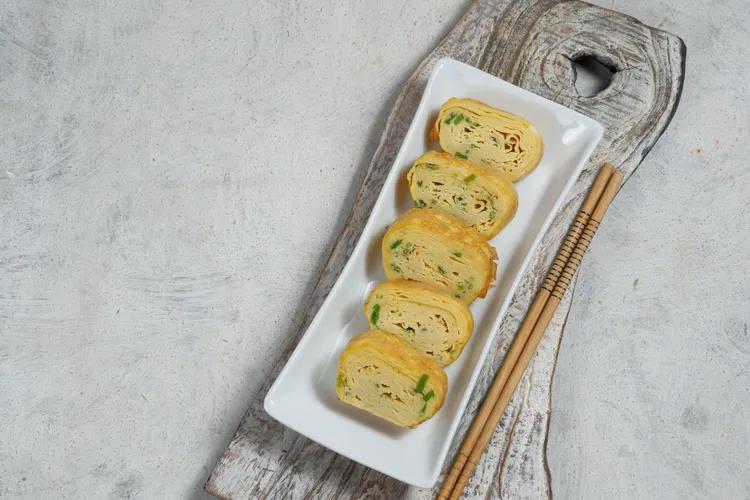
Japanese cooking has dozens of egg dishes but tamagoyaki is the one that appears at almost every meal - in bento boxes for lunch, alongside rice and miso at breakfast, as a side at izakaya dinners. The technique looks fiddly the first time: thin layers of seasoned egg are poured into a hot pan and rolled forward continuously, building a multi-layered, slightly springy log. After two or three attempts, muscle memory takes over and the whole thing takes under 10 minutes. The result is worth the practice.
Ingredients (makes 1 roll, 2-3 servings)
- 3 large eggs
- 1 tablespoon mirin
- Half teaspoon soy sauce
- Half teaspoon sugar (optional - increases sweetness)
- 2 tablespoons dashi (or water as a substitute)
- Pinch of salt
- Neutral oil for the pan (vegetable or light sesame)
Equipment: A tamagoyaki pan (rectangular, roughly 15x18cm) is the traditional tool and produces a cleaner shape. A small non-stick round pan (18-20cm) works if you don't have one - the roll will be slightly less uniform but the flavour is identical. Chopsticks or a thin spatula for rolling.
Method
Beat the eggs in a bowl - do not overbeat, you want them combined but not foamy. Add mirin, soy sauce, dashi, sugar and salt. Mix until combined.
Heat the pan over medium heat. Brush with a thin layer of oil - use a folded piece of paper towel dipped in oil to coat evenly. The pan is ready when a drop of egg sizzles immediately on contact.
Pour in enough egg to cover the pan base with a thin layer (about a third of the mixture). Tilt to coat evenly. When the egg is just set on top but still slightly wet, use chopsticks or a spatula to roll it forward from the far edge toward you, into a log at the front of the pan.
Push the log to the far end of the pan. Oil the exposed pan base again. Pour another third of the egg mixture under and around the existing log (lift it to let egg flow underneath). When this layer is just set, roll the log forward again, incorporating the new egg layer.
Repeat with the final third. The finished log should have distinct layers visible when sliced. Press gently into shape with a bamboo sushi mat or paper towels if you want a more uniform rectangle.
Let rest for 2 minutes before slicing into rounds, about 1cm thick.
Two Styles
Japanese tamagoyaki falls into two regional styles:
- Tokyo style (dashi-maki tamago): More dashi, less sugar. Savoury, soft, with a slight wobble. The professional version seen at sushi restaurants.
- Osaka style (atsuyaki tamago): Less dashi, more sugar and mirin. Sweeter, firmer, bento-friendly.
The recipe above is closer to Osaka style. For Tokyo style, increase dashi to 4 tablespoons and reduce or eliminate the sugar - the texture will be softer and harder to roll until you've practiced.
Flavour Variations
- Nori tamagoyaki: Lay a sheet of nori on the egg layer before rolling. Each slice reveals a spiral of seaweed.
- Cheese: A slice of mild cheese added with the second layer. Not traditional, very popular with children.
- Green onion: Finely sliced spring onion scattered over the egg before rolling. Adds colour and freshness.
- Mentaiko (spicy cod roe): A small amount spread on the egg layer before rolling. Strong, savoury, excellent.
Nutrition Estimate (per 3-slice serving)
- Calories: ~115 kcal
- Protein: ~8g
- Carbs: ~3g
- Fat: ~7g
All values are estimates. Values will vary slightly depending on egg size and exact quantities used.
Meal Prep and Storage
Tamagoyaki keeps in the fridge for 2 days, wrapped in cling film. It is a core bento item - slice into rounds, pack cold alongside rice and a side dish. For hot breakfast, slice fresh from the pan and serve immediately alongside rice and miso soup.
For the full context of how tamagoyaki fits into Japanese home cooking, including a sample weekly meal plan, see the complete Japanese home cooking guide.
Latest