Whipped Feta vs Whipped Ricotta vs Labneh vs Boursin
How whipped feta, whipped ricotta, labneh, and Boursin actually compare in tang, saltiness, and richness, and which one fits which occasion.
All four of these show up in the same category of "whipped cheese dip," but they behave quite differently once they're on a table, and picking the wrong one for a given occasion is a common, easily avoidable mistake.
Whipped Feta
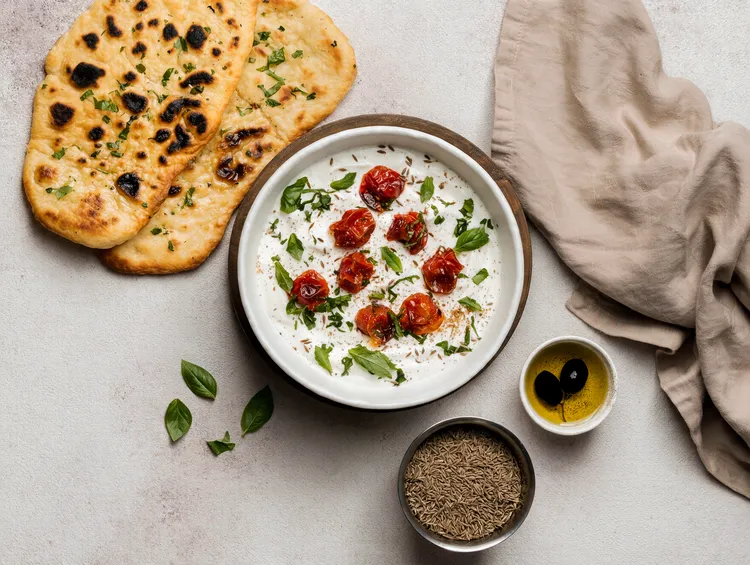
Feta is the saltiest and tangiest of the four by a clear margin, which makes it the strongest, most assertive base flavor. It pairs best with something sweet or mild to balance against, which is exactly why hot honey and blistered tomatoes are its two most popular pairings rather than something equally savory and salty. Whipped feta also holds its shape the most firmly of the four once chilled, which makes it a reliable choice for a board that needs to sit out for a while.
Whipped Ricotta
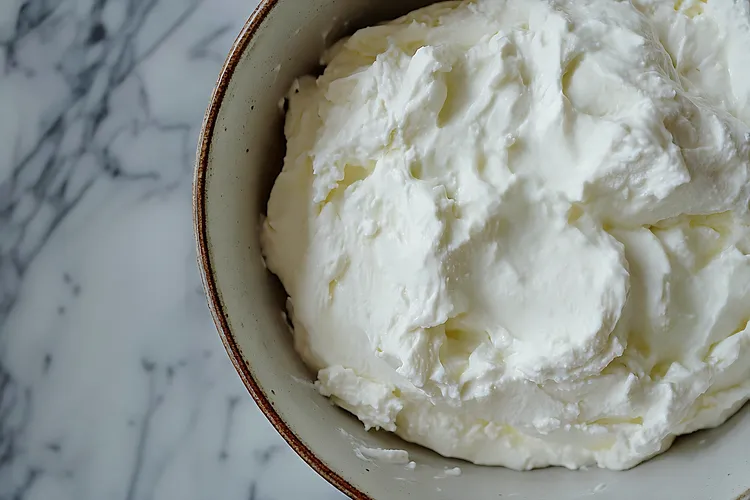
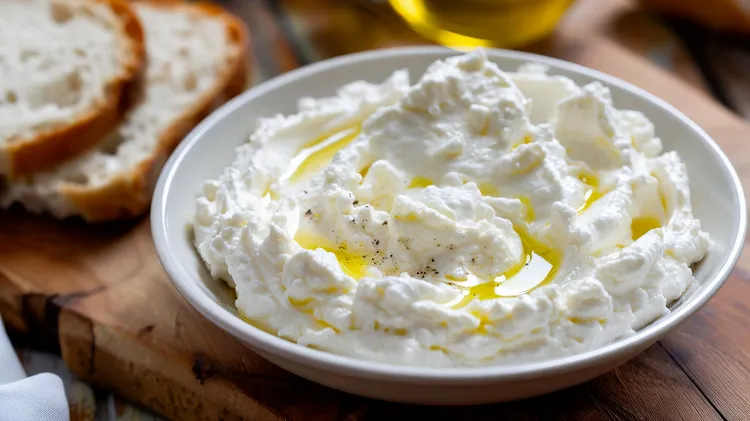
Ricotta is the mildest and lightest of the four, with a faint sweetness of its own that makes it the only one genuinely suited to a dessert direction, as in our sweet whipped ricotta recipe. Its texture is airier and less dense than whipped feta, closer to a mousse, and it's the most likely of the four to loosen noticeably at room temperature, so it's better served fairly soon after it comes out of the fridge.
Labneh
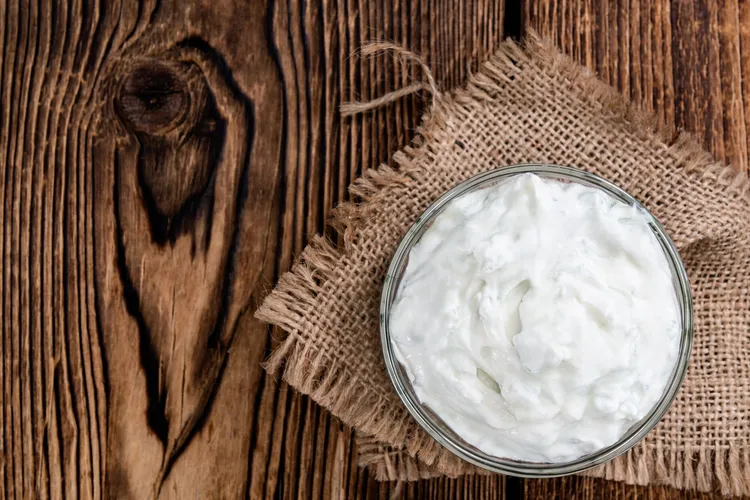
Labneh is strained yogurt, already thick before any whipping happens, and it brings a distinct tang that sits between feta's sharpness and ricotta's mildness. Unlike feta and ricotta, labneh doesn't need a food processor at all; it's often served simply stirred with olive oil and salt, since its texture is already close to a whipped consistency straight out of the strainer. It's a strong choice if you want tang without feta's saltiness, and it holds up particularly well topped with warm spiced oil or dukkah.
Boursin
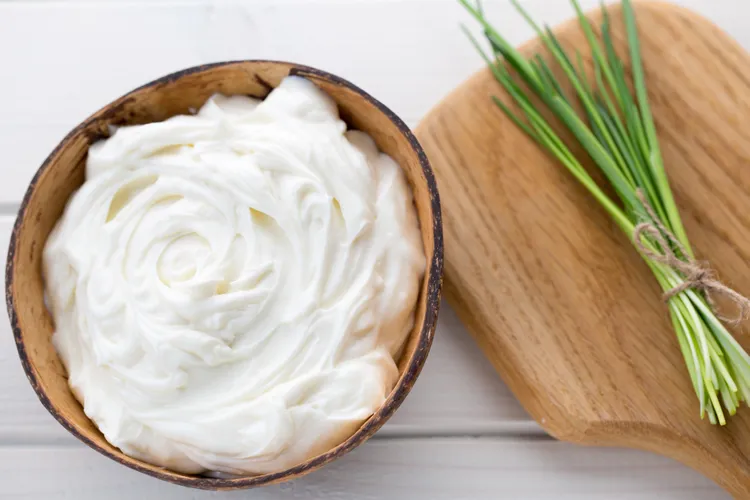
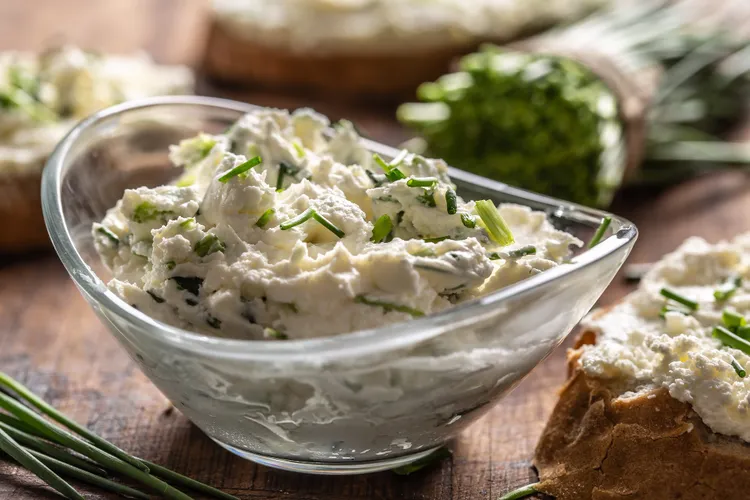
Boursin is a soft, garlic-and-herb-flavored cheese that comes pre-seasoned, which makes it the fastest option of the four since there's no real technique involved beyond softening it slightly and stirring. It's noticeably richer and creamier than the other three, closer to a savory cream cheese than a tangy cheese dip, and it doesn't have the same bright, acidic quality that feta, ricotta, and labneh all share to varying degrees.
A Direct Comparison
- Most tangy/salty: Feta, then labneh, then ricotta, then Boursin
- Best for dessert direction: Ricotta, by a wide margin
- Least active technique required: Boursin, then labneh
- Holds shape best on a board: Feta, then Boursin
- Best with warm toppings (tomatoes, spiced oil): Feta and labneh
Which One to Choose
For a bold, salty appetizer that can stand up to sweet or spicy toppings, feta is the right call. For something mild enough to go sweet or to pair with delicate fruit and honey, ricotta wins. For a Middle Eastern-leaning spread with real tang but less salt than feta, labneh fits. For the fastest possible option with zero technique and a rich, herby flavor already built in, Boursin gets you there in under two minutes.
Many boards are actually better with two of these side by side rather than committing to just one, since the contrast between, say, feta's sharpness and ricotta's mildness gives guests a genuine choice rather than more of the same flavor in a different bowl.
Rough Nutritional Differences
Per two-tablespoon serving, feta-based whipped dips tend to run slightly higher in sodium given feta's naturally salty brine, while ricotta-based versions typically run a bit higher in protein for the same serving size due to ricotta's curd structure retaining more milk solids. Labneh sits closer to ricotta in protein content but with less fat than either feta or Boursin, since it's made from strained yogurt rather than a fattier cheese base. Boursin is the richest and highest in fat of the four, owing to its cream cheese base and added butter in many commercial versions.
Price and Availability
Feta and ricotta are both widely available at virtually any grocery store and tend to be the least expensive of the four per pound. Labneh has become far more common in the last several years but can still be harder to find outside of stores with a solid Middle Eastern or international section; Greek yogurt strained overnight through cheesecloth is a reliable homemade substitute if you can't find it locally. Boursin is a specific branded product, though similar garlic-and-herb soft cheeses from other brands work as a substitute if Boursin itself isn't available.
Which One Lasts Longest in the Fridge
Whipped feta typically keeps the longest of the four, around 5 days, thanks to feta's naturally preservative brine. Labneh and Boursin both keep for roughly a week unopened and a few days once whipped or seasoned further, while whipped ricotta has the shortest window at around 3 to 4 days given ricotta's higher moisture content and shorter fresh shelf life to begin with.
How Each One Is Traditionally Made
Feta is traditionally made from sheep's milk, or a blend of sheep and goat's milk, then aged in brine, which is where both its characteristic tang and its firm, crumbly structure come from. Ricotta is made from the leftover whey of other cheesemaking, re-cooked to coagulate the remaining proteins, which is reflected in its name (ricotta literally means "recooked" in Italian). Labneh is made by straining yogurt through cloth for anywhere from several hours to a couple of days, concentrating its proteins and tang without any additional cooking. Boursin, as a commercial product, is closer to a soft, fresh cheese blended with garlic, herbs, and often a bit of added cream, rather than a traditionally aged or cultured cheese in the same sense as the other three.
Texture Side by Side
Whipped feta holds the firmest structure of the four once chilled, closer to a thick, spreadable paste. Whipped ricotta is the airiest and lightest, closer to a loose mousse. Labneh, even without any whipping, already has a thick, almost clay-like consistency straight out of the strainer, and stirring in olive oil loosens it only slightly. Boursin softens to a smooth, uniform spread with barely any effort, given its naturally soft starting texture, and doesn't take on the same aerated lightness that mechanical whipping gives the other three.
How Each One Behaves When Warmed
Whipped feta holds up reasonably well against a warm topping like the one in our blistered tomato recipe, since its firmer structure resists melting or thinning too much on contact with heat. Whipped ricotta is more prone to loosening further when a warm topping is added, given its already airy structure. Labneh handles warm toppings, particularly warm spiced oil, especially well and is a traditional pairing in Middle Eastern cooking. Boursin can turn slightly greasy if paired with something very hot, since its higher fat content separates more readily under heat than the other three.
Which One a Beginner Should Start With
Whipped feta is the most forgiving starting point for anyone new to this style of cooking, since its firmer starting texture and built-in salt make it harder to get obviously wrong. Ricotta requires slightly more attention to the draining step to avoid a loose result, and labneh, while requiring the least technique of all, does require planning ahead since straining yogurt takes several hours at minimum.
Frequently Asked Questions
Can I mix two of these together?
Yes, a blend of feta and ricotta in particular is a common variation, giving you ricotta's lightness with a bit more of feta's tang and salt than ricotta alone provides. Start with a two-to-one ratio of ricotta to feta and adjust from there.
Which one is best for someone who doesn't like strong flavors?
Ricotta or Boursin, both of which are noticeably milder than feta or labneh and less likely to overwhelm a guest who prefers subtler flavors.
Is labneh the same as Greek yogurt?
Not quite. Labneh is strained further than typical Greek yogurt, resulting in a thicker, more spreadable texture closer to a soft cheese than a yogurt, even though the two start from a similar base.
Which of the four is the most budget-friendly for a large gathering?
Feta and ricotta are generally the least expensive per pound of the four, making them the more economical choice when scaling up for a larger group.
A Final Word on Choosing Between Them
None of these four is objectively the best option across every situation; each earns its place depending on the specific flavor direction, occasion, and amount of prep time available. Keeping a rough mental map of their differences, feta's boldness, ricotta's flexibility, labneh's tang without the technique, and Boursin's convenience, makes it easier to reach for the right one instinctively rather than defaulting to the same choice every time.
How Fermentation Shapes the Flavor Differences
Feta and labneh both develop their characteristic tang through actual fermentation, bacterial cultures breaking down lactose and producing lactic acid over time, which gives both a genuine depth of sourness that's hard to fully replicate any other way. Ricotta and Boursin, by contrast, get their flavor mostly from fresh dairy fat and, in Boursin's case, added seasoning, rather than fermentation, which is part of why they read as milder and less complex even before accounting for their different textures. Understanding this distinction helps explain why a squeeze of lemon juice can brighten ricotta or Boursin but never quite gives them feta or labneh's specific tang; fresh acid and fermented acid simply taste different at a molecular level, even when both register broadly as "sour" on the tongue.
A Practical Way to Decide in the Grocery Store
If you're standing in the dairy aisle trying to decide which of these four to buy for a specific occasion, a quick mental shortcut works well: reach for feta if you want the boldest, most attention-grabbing dip on the table; reach for ricotta if you want something that can go savory or sweet with equal success; reach for labneh if you already know how to strain yogurt or can find it pre-made and want tang with minimal technique; and reach for Boursin if you're pressed for time and want a dependable, already-seasoned result with essentially no prep.
A Note on Availability by Region
Feta and ricotta are consistently available at essentially any grocery store across most regions. Labneh's availability has expanded considerably in recent years but still varies more by region than the other three, so it's worth checking a specific store's international or Middle Eastern section before planning a recipe entirely around it. Boursin, as a single branded product, is widely distributed but occasionally sold out or unavailable at smaller stores, in which case a comparable garlic-and-herb soft cheese from another brand is a reasonable substitute.
Closing Thought
Rather than treating this as a competition with a single winner, it's more useful to think of these four as complementary tools, each suited to a slightly different moment, occasion, and flavor goal. Keeping all four in mind, rather than defaulting reflexively to whichever one is most familiar, opens up considerably more variety across a season of entertaining than sticking with just one ever could, and it's worth trying each at least once to build an honest sense of which fits your own taste and hosting style best.
Revisiting This Comparison as Your Taste Develops
It's worth revisiting this comparison after you've actually made a few of these at home rather than treating it as a one-time decision, since preferences here tend to shift with more direct experience of how each one actually tastes and behaves in your own kitchen, rather than staying fixed based on a first impression alone. A flavor that seemed too bold or too mild on a first try can easily become a genuine favorite once you've had more direct experience adjusting the seasoning and toppings around it, so treat this comparison as a starting map rather than a final verdict on any of the four.
For the base technique behind the two main options in this comparison, see our guides to classic whipped feta and whipped ricotta, or head back to the complete whipped feta and ricotta guide.
Latest