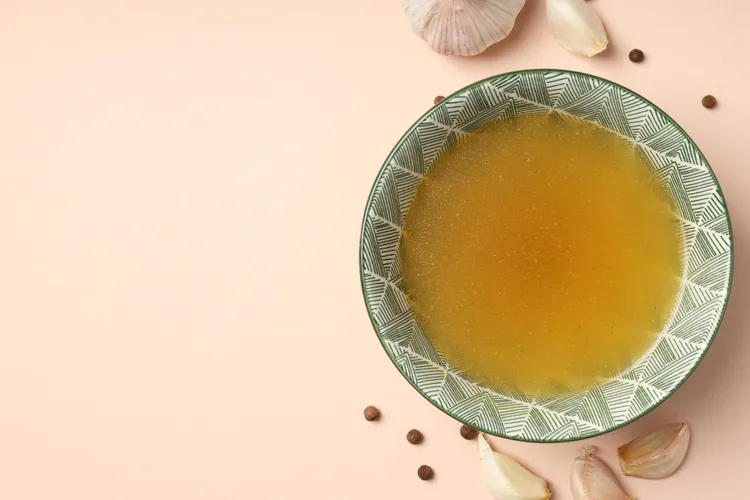
Bone Broth at Home: Long-Simmered, Deeply Nourishing
Bone broth is stock cooked for 12 to 24 hours. The extended time produces a liquid that gels firmly, has exceptional body, and works both as a cooking ingredient and as a sipping broth.
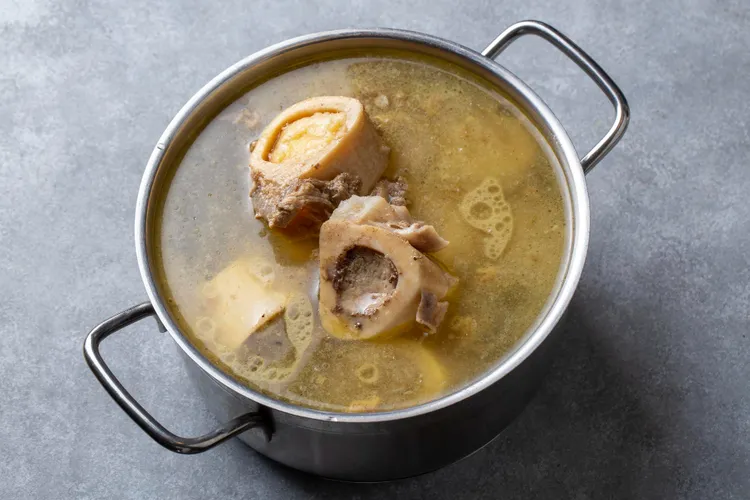
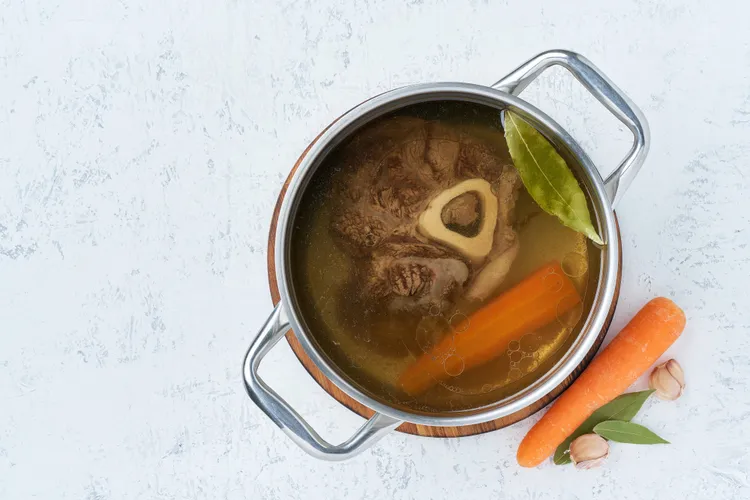
Bone broth is essentially stock cooked much longer. Where chicken stock simmers for 3 to 4 hours, bone broth goes for 12 to 24. The extended time extracts significantly more collagen, which converts to gelatin in the liquid and gives bone broth its characteristic thick, sticky, intensely savoury quality. A good bone broth should set to a firm, jiggly mass when cold.
What Changes With Longer Cooking
The three main things that change during extended simmering: gelatin content increases as more collagen is extracted from bones and connective tissue; mineral content increases as calcium, magnesium, and phosphorus leach from the bones into the liquid; and the flavour deepens and concentrates. The minerals require acidic conditions to leach effectively, which is why most bone broth recipes include a tablespoon of apple cider vinegar - the mild acid helps break down the bone matrix.
Whether the mineral content of bone broth translates into meaningful nutritional benefit beyond what a varied diet provides is debated. What is not debated is that the cooking quality of bone broth - the body, the gelatin content, the depth of flavour - makes it genuinely excellent both as a sipping broth and as a cooking ingredient.
The Gel Test
Put a tablespoon of warm bone broth on a cold saucer and refrigerate for 5 minutes. A broth with good gelatin content should set to a wobbly jelly in this time. If it stays liquid, either the bones were too lean, the water ratio too high, or the cooking time too short. For bone broth specifically, knuckle bones, feet, and joints are the most collagen-rich - use these as the majority of your bone weight rather than marrow bones, which contribute flavour but less collagen.
Recipe: Classic Beef Bone Broth (Stovetop)
Makes: 2 to 2.5 litres | Prep: 20 minutes | Roast: 30 minutes | Simmer: 12 to 24 hours
Ingredients
- 2kg beef bones (knuckle joints, feet, and some marrow bones)
- 2 medium onions, halved
- 2 carrots, roughly chopped
- 3 celery stalks, roughly chopped
- 1 head of garlic, halved crossways
- 2 tablespoons apple cider vinegar
- 3 bay leaves
- 1 teaspoon black peppercorns
- Fresh thyme and parsley stalks
- Cold water to cover (approximately 3 to 3.5 litres)
Instructions
- Roast bones at 220 degrees Celsius for 30 minutes until caramelised. Transfer to a large stockpot. Pour any fat from the tray away. Deglaze the tray with 200ml of water, scraping up any caramelised residue, and add to the pot.
- Add vegetables, apple cider vinegar, and cold water to cover. Leave to sit for 30 minutes before heating - the vinegar begins its work on the bones even before heat is applied.
- Bring to a very gentle simmer over medium-low heat. Skim off all foam in the first 30 minutes. Add the herbs and peppercorns.
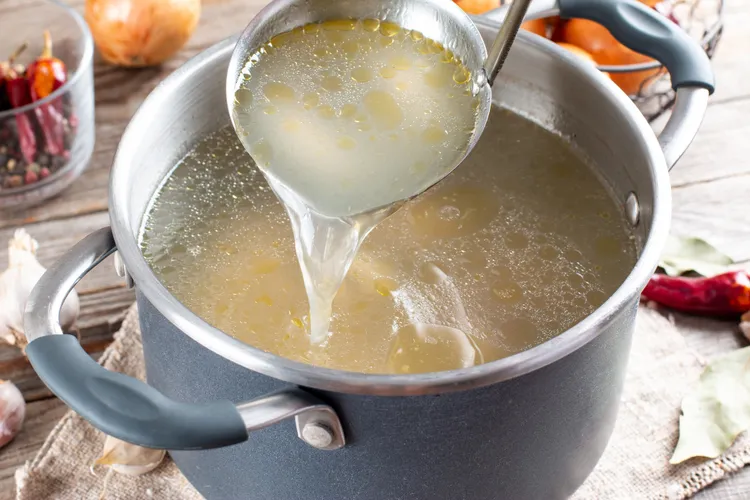
- Reduce to the lowest simmer your hob maintains. Cover and cook for 12 to 24 hours. Check every few hours - top up with boiling water if the level drops significantly. The ideal is a very slow, lazy simmer: a single bubble breaking the surface every few seconds.
- After 12 hours, taste. If the flavour is good and the liquid coats a spoon, strain and cool. If you want more depth and gelatin, continue to 18 or 24 hours.
- Strain through a fine-mesh sieve. Cool and refrigerate. Remove the fat cap once solidified. The broth beneath should be set firm like a jelly. If it is not, see notes on the gel test above.
Slow Cooker Method
The slow cooker is ideal for bone broth because it maintains the precise low temperature needed without supervision. After roasting the bones and bringing to an initial simmer on the hob (this skimming step is important and cannot be done in the slow cooker), transfer everything to the slow cooker. Cook on low for 18 to 24 hours. The result is equivalent to the stovetop method with less attention required. For a fully hands-off version using the slow cooker overnight, see the slow cooker bone broth guide.
Chicken Bone Broth
Chicken bone broth follows the same method but with a shorter window: 6 to 12 hours rather than 12 to 24. Beyond 12 hours, chicken bones can produce a slightly bitter note. The bones from roasted chicken thighs are ideal - they have already been partially cooked, which produces a slightly deeper colour and flavour. Add chicken feet if you can get them: they have the highest collagen content of any chicken part and produce a broth that gels very firmly.
As a Sipping Broth
Season the finished bone broth with salt to taste, add a slice of ginger and a few drops of soy sauce, and heat gently. This is the simplest application and one of the best. A mug of bone broth mid-morning or mid-afternoon provides protein and a warming, savoury hit that is lower in calories than most snacks. At 35 to 50 kcal per 250ml serving and 8 to 12g of protein, it is one of the better low-calorie, high-satiety drinks available.
Nutrition (per 250ml, unsalted)
- Calories: approximately 35 to 50 kcal
- Protein: 8 to 12g
- Fat: 1 to 2g (after defatting)
- Carbs: 0g
- Sodium: less than 70mg (no added salt)
For the full overview of stock types and cooking techniques, see the complete stocks and broths guide. Use Consillar's nutrition calculators to track bone broth in your daily protein and calorie targets.
Bone Broth and Collagen: What the Science Actually Says
Bone broth has attracted significant health claims over the past decade, ranging from genuine benefits to considerable overstatement. What is well-established: bone broth contains gelatin (hydrolysed collagen), amino acids including glycine and proline, and minerals extracted from bones. Gelatin in food has demonstrated benefits for joint health in some studies. The amino acids support numerous bodily functions. The minerals are present in measurable quantities, though whether they contribute meaningfully to daily intake depends on the batch and the bones used.
What is less well-established: the idea that consuming bone broth collagen directly improves skin or joint collagen. The body digests proteins (including gelatin) into individual amino acids before absorption - it does not absorb collagen intact. The amino acids from bone broth are used wherever the body needs them, not specifically for collagen synthesis. This does not diminish bone broth's cooking value or its quality as a low-calorie, high-protein drink. It simply means the more extravagant marketing claims should be treated with appropriate scepticism. For the full context on bone broth technique and how it fits into the broader stock category, see the complete stocks and broths guide.
Bone Broth as a Practical Cooking Ingredient
The sipping broth application gets most of the attention, but bone broth works equally well as a cooking stock. Its higher gelatin content gives sauces and braises made from it more body and a silkier texture than standard stock. A risotto made with bone broth has a richer, creamier result with less added butter. A pan sauce made with reduced bone broth coats a spoon more generously than one made with standard stock. The applications are identical to standard stock - bone broth simply produces a more luxurious result in preparations where body matters.
The main practical difference: bone broth concentrates faster when reduced because its higher gelatin content means it thickens at a lower reduction ratio. For pan sauces, use half the bone broth you would use of standard stock and do not over-reduce. A good bone broth reduced by 50 percent produces a sauce with the body of a standard stock reduced by 75 percent. This efficiency means a batch of bone broth goes further in sauce applications and is worth making in larger quantities than standard stock. For complete technique on the stovetop and slow cooker methods, this guide and the slow cooker overnight guide together cover every approach. For the full overview, see the complete stocks and broths guide.
Integrating Bone Broth into Daily Routine
The barrier to regular bone broth consumption is the gap between making a batch and using it. Once a batch is made, portioned, and frozen, the barrier drops to essentially zero - a mug of sipping broth requires 90 seconds in the microwave. The production barrier is the one that needs reducing, which is why the slow cooker method and the pressure cooker method in this series both exist. The slow cooker overnight method is the lowest-friction option for regular production: set it at 9pm, strain at 7am, cool during the day, portion and freeze by evening. Once this is a weekly or biweekly habit, bone broth is always available.
For cooking applications beyond the sipping broth: a mug of bone broth instead of water when cooking rice, quinoa, or other grains immediately improves the flavour of the finished grain at no additional cost. Dissolve a cube of frozen bone broth in a small pan with a shallot and a splash of wine for a pan sauce base that takes 4 minutes. Add bone broth to a vegetable soup in place of vegetable stock for additional protein and body. Track the protein contribution of regular bone broth consumption with Consillar's nutrition calculators. For the complete guide to stock and broth types, see the complete stocks and broths guide.
Bone Broth Compared to Standard Stock
The comparison between bone broth and standard stock comes down to one variable: collagen content. Standard chicken stock simmered for 3 to 4 hours extracts a moderate amount of collagen, producing a stock that lightly gels when cold. Bone broth simmered for 12 to 24 hours extracts significantly more collagen, producing a liquid that gels firmly. This difference affects cooking quality in measurable ways: a sauce reduced from bone broth has more body and coats a spoon more generously than a sauce from standard stock. A risotto made with bone broth is richer and creamier. A braise with bone broth produces a naturally thicker braising liquid.
For most weeknight cooking, the quality difference between standard stock and bone broth is noticeable but not transformative. For special dishes where richness matters - a Sunday braise, a proper risotto for guests, a restaurant-quality pan sauce - bone broth is worth the extended production time. For everyday quick cooking applications (cooking rice, deglazing pans, making quick soups), standard chicken stock is sufficient and considerably faster to make. For complete guidance on both approaches, see the chicken stock guide and the slow cooker bone broth guide. For the full framework, see the complete stocks and broths guide.
Testing Your Bone Broth Before Portioning
Before portioning and freezing a batch of bone broth, run the gel test: ladle a tablespoon onto a cold saucer and refrigerate for 5 minutes. The result tells you what the batch will be used for most effectively. A firm jelly (sets solidly, holds its shape) indicates very high gelatin content - ideal for sipping broth, for sauce-making, and for any application where body matters. A soft jelly (sets loosely, spreads when tilted) indicates moderate gelatin content - still excellent for cooking, suitable as a sipping broth with less intense mouthfeel. No set (stays liquid when cold) indicates the batch is essentially standard stock - still flavourful and useful for all cooking applications, but marketed bone broth it is not. Note the result on the label when freezing - it helps choose the right container size for the intended application.
If the batch did not gel and you want to improve it next time: increase the proportion of feet and knuckle joints to at least 60 percent of the bone weight, reduce the water to the minimum needed to cover the bones, extend the cooking time to the upper end of the range (18 to 20 hours for chicken, 22 to 24 for beef), and include the apple cider vinegar step. These four adjustments together produce a reliably gelled broth from most bone combinations. For the complete guide to all stock types from standard to bone broth to dashi, see the complete stocks and broths guide.
For the complete framework on stock types from quick vegetable stock to extended bone broth, see the complete stocks and broths guide.
Latest