Homemade Beef Stock: The Brown Stock Method
Proper brown beef stock requires roasting the bones first. This is what makes the difference between pale, thin beef liquid and something with real depth and colour.
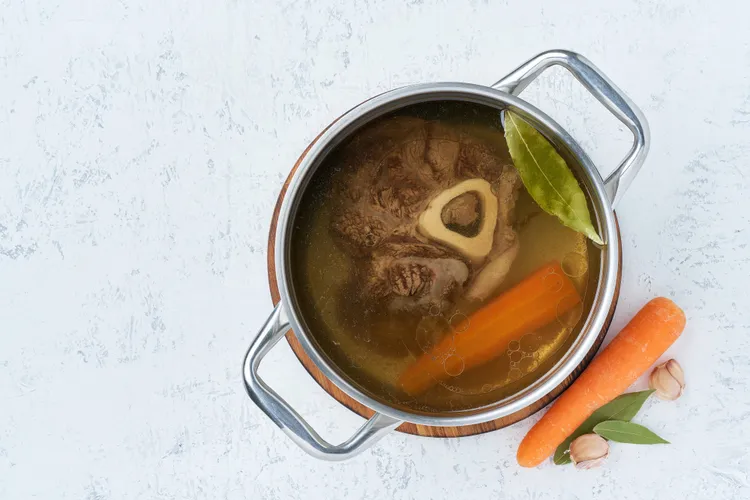
Brown beef stock is the most deeply flavoured stock in the home cook's repertoire and the most labour-intensive. The roasting step that most recipes gloss over is the entire point - raw beef bones produce pale, thin stock. Roasted beef bones produce something with colour, caramel sweetness, and the complex savouriness that makes a proper beef braise or sauce taste like it came from a professional kitchen.
Bones: What to Ask Your Butcher For
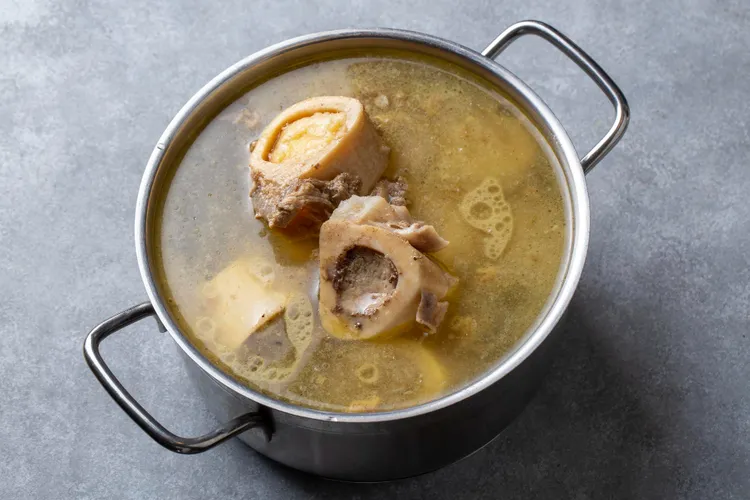
Knuckle bones (from the leg joint) are the best choice for collagen-rich stock - they produce a liquid that gels firmly when cold. Marrow bones add richness and flavour but less gelatin. Oxtail gives extraordinary flavour and gelatin but is expensive for stock use. Meaty neck bones or shin bones are a good compromise: enough collagen for a good gel, enough residual meat for flavour, and inexpensive. Ask your butcher to cut the bones into pieces no larger than 7 to 8cm so they fit comfortably in the oven and the stockpot.
For the best stock, use a combination: 60 percent knuckle bones (for gelatin) and 40 percent meaty bones or oxtail (for flavour). Total weight for a standard home batch: 2 to 2.5kg of bones.
The Roasting Step: Non-Negotiable
Spread the bones in a single layer across one or two large roasting trays. Do not crowd them - crowded bones steam rather than roast and do not develop colour properly. Roast at 220 to 230 degrees Celsius for 30 to 40 minutes until deeply browned, turning once halfway through. The bones should be a rich mahogany colour with caramelised edges. This is the Maillard reaction - the same chemical process that browns a steak - and it produces hundreds of flavour compounds that cannot be created any other way.
In the last 10 minutes of roasting, add roughly chopped onions, carrots, and celery to the tray and a tablespoon of tomato paste spread over the bones. The tomato paste adds additional caramelisation, umami, and a deep red colour to the finished stock.
Recipe: Brown Beef Stock
Makes: 2 to 2.5 litres | Prep: 20 minutes | Roast: 40 minutes | Simmer: 6 to 8 hours
Ingredients
- 2 to 2.5kg beef bones (knuckle, meaty neck, or a combination)
- 2 tablespoons tomato paste
- 2 large onions, roughly chopped
- 2 large carrots, roughly chopped
- 3 celery stalks, roughly chopped
- 1 head of garlic, halved crossways
- 3 bay leaves
- 1 teaspoon black peppercorns
- Fresh thyme and parsley stalks
- 200ml red wine (optional but recommended)
- Cold water to cover (approximately 4 litres)
Instructions
- Preheat oven to 220 degrees Celsius. Spread bones in a single layer on roasting trays. Roast for 20 minutes, turn, add tomato paste spread over the bones, and add the vegetables. Roast for a further 15 to 20 minutes until everything is deeply caramelised.
- Transfer bones and vegetables to a large stockpot. Pour the red wine into the hot roasting tray and scrape up all the caramelised residue (the fond) - this is pure flavour. Pour everything into the pot.
- Cover with cold water. Bring slowly to a very gentle simmer over medium-low heat. Skim off all grey foam as it rises in the first 30 to 40 minutes.
- Add bay, peppercorns, thyme, and parsley stalks. Reduce to the lowest simmer your hob will maintain - a bubble every few seconds at the surface. Partially cover.
- Simmer for 6 to 8 hours. Top up with cold water if the level drops significantly. Do not stir.
- Strain through a fine-mesh sieve into a large container. Discard all solids. Leave to cool, then refrigerate overnight. Remove the solidified fat cap from the surface before using or storing.
Reducing to Demi-Glace
Once strained and defatted, you have brown stock. To make a demi-glace - the intensely flavoured, syrupy sauce base used in professional kitchens - simply reduce the stock by 75 percent over medium heat. From 2 litres of stock you get approximately 500ml of demi-glace. It will coat a spoon thickly and taste intensely of beef. Freeze in tablespoon-sized portions in ice cube trays and use to finish pan sauces: one cube dissolved in a hot pan after searing meat, reduced by half, finished with a knob of butter, produces a sauce that takes 3 minutes and tastes like it took all day.
Troubleshooting
Stock is cloudy: the simmer became a boil at some point, or the bones were not skimmed adequately in the first hour. Still usable but best for braises where clarity does not matter rather than clear soups and sauces. Stock has no colour despite roasting: the bones were crowded in the oven and steamed rather than roasted. Use one more tray next time. Stock lacks body and does not gel: not enough collagen-rich bones. Add more knuckle or foot bones and increase the simmer time toward the 8-hour end of the range.
What to Make With Beef Stock
Braised short ribs, beef stew, French onion soup, beef and vegetable pie filling. As the liquid base for a proper gravy. For the roux-thickened sauce applications, see the roux guide - beef stock is the liquid that turns a dark roux into espagnole and bordelaise. For storage and freezing, see the stock storage guide. For the full context on stock types and technique, see the complete stocks and broths guide.
Nutrition (per 250ml, unsalted, defatted)
- Calories: approximately 25 to 35 kcal
- Protein: 5 to 7g
- Fat: less than 1g (after defatting)
- Carbs: 1g
Beef Stock for Braising
Beef stock's primary role in a home kitchen is as the liquid base for braises. Braised short ribs, beef cheeks, oxtail, and beef brisket all benefit from being cooked in good stock rather than water or commercial stock. The stock provides both flavour and gelatin - the gelatin thickens the braising liquid naturally during the long cook and produces the glossy, unctuous sauce that coats each piece of meat. A braise made with homemade stock tastes professional; the same technique with shop-bought stock is noticeably less good, primarily because the commercial stock cannot reduce without oversalting.
Making Beef Stock Without a Long Commitment
The standard 6 to 8 hour simmer is the correct approach for maximum quality, but it can be spread over two sessions for practical convenience. On day one, roast the bones and bring to a simmer. After 2 to 3 hours, cool and refrigerate with bones still in the liquid. On day two, remove the solidified fat cap, bring back to a simmer and continue for another 4 to 5 hours. The two-session approach produces the same quality as a continuous cook. The pressure cooker option in the pressure cooker stock guide reduces this to 90 minutes of active pressure cooking if time is genuinely limited. For the full overview of stock types and their applications, see the complete stocks and broths guide.
Beef Stock Variations: Fond Brun and Fond Blanc
The recipe above is a fond brun (brown stock) - the caramelised bones and tomato paste give it its deep colour and roasted flavour. Fond blanc (white beef stock) uses the same bones without roasting, producing a paler, more delicate stock suitable for lighter preparations like veal blanquette or creamy mushroom sauces. For fond blanc, simply skip the roasting step and begin with raw bones. The resulting stock is lighter in colour and flavour - more versatile in some ways, less characterful in others.
Veal stock follows the same method as beef stock and produces an even more gelatinous result because veal bones have a higher proportion of cartilage relative to dense bone. The gelatin content of a good veal stock is exceptional - it sets to a firm jelly when cold. In French classical cooking, veal stock is the preferred base for the finest sauces precisely because of this body. For home cooking purposes, beef stock is a practical substitute. For the full guide to stock-making including all bone types, see the complete stocks and broths guide. Track how beef stock contributes to the nutritional profile of finished dishes with Consillar's nutrition calculators.
Beef Stock in Specific Recipes
Beef stock's most immediate home kitchen application is as the liquid for braised dishes that would otherwise use water or a commercial cube. Braised short ribs in beef stock produce a sauce with body and depth that water cannot approximate. Slow-cooked chilli benefits from a cup of beef stock added with the tomatoes. French onion soup requires a proper beef stock - the soup is essentially caramelised onion in beef stock with cheese on toast, and the quality of the stock determines the quality of the finished dish.
For quick weeknight applications: a tablespoon of frozen demi-glace (concentrated beef stock) dropped into a pan after searing steak, reduced with 50ml of red wine, finished with cold butter, produces a proper restaurant-quality steak sauce in under 3 minutes. This is the application that makes the effort of making beef stock worthwhile on a Tuesday evening when time is short. For the technique, see the stock to sauce guide. For storage and freezing of demi-glace and full stock, see the stock storage guide. For the full overview of stock types, see the complete stocks and broths guide.
Nutrition (per 250ml, defatted, unsalted)
- Calories: approximately 25 to 35 kcal
- Protein: 5 to 7g (from dissolved collagen and meat proteins)
- Fat: less than 1g after defatting
- Carbs: 1g from vegetable sugars
Saving Beef Bones Over Time
Most households do not roast a large beef joint weekly, which means beef bones accumulate slowly. A dedicated freezer bag for beef bones - labelled and stored in the freezer - fills over 3 to 6 weeks of cooking. Any bone-in beef: rib bones from a slow-cooked rack, the bone from a T-bone steak, marrow bones from a braised dish, oxtail bones after stripping the meat. Once the bag reaches 1.5 to 2kg, roast and make a batch. This approach means beef stock is made every 4 to 8 weeks rather than as a separate shopping project, and it uses bones that would otherwise be discarded.
For a single batch that justifies the effort: make a larger quantity. From 2.5kg of mixed bones, a 6 to 8 hour simmer produces 3 litres of full-strength stock. Reduce half of it to a demi-glace (400ml from 1.5 litres) and freeze the other 1.5 litres in standard portions. The demi-glace cubes power sauce-making for months. The full-strength stock handles braising and soup. For complete storage and portioning guidance, see the stock storage guide. For the full overview of all stock types and their applications, see the complete stocks and broths guide.
Tasting and Adjusting Beef Stock
Tasting stock before straining is essential. After 6 to 8 hours of simmering, dip a spoon into the liquid and taste. A good beef stock at this stage should taste clean, deeply savoury, and slightly meaty without any off notes. If it tastes flat or watery, the bones had insufficient collagen or the ratio of water to bones was too high. Continue simmering uncovered for another hour with the lid off to drive off more water and concentrate the existing flavour. If it tastes slightly bitter, it has cooked too long or the bones were not rinsed before going in the pot. Strain immediately, discard the solid, and use the stock as-is - bitterness is noticeable when the stock is drunk on its own but usually disappears when used as a cooking medium for rich braises and sauces.
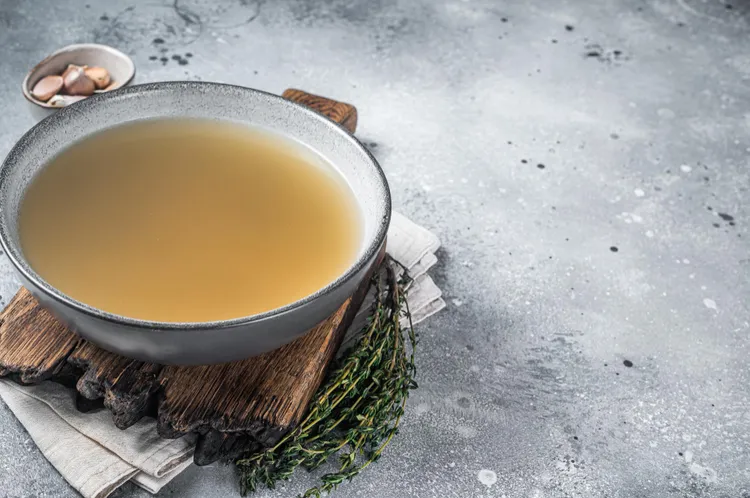
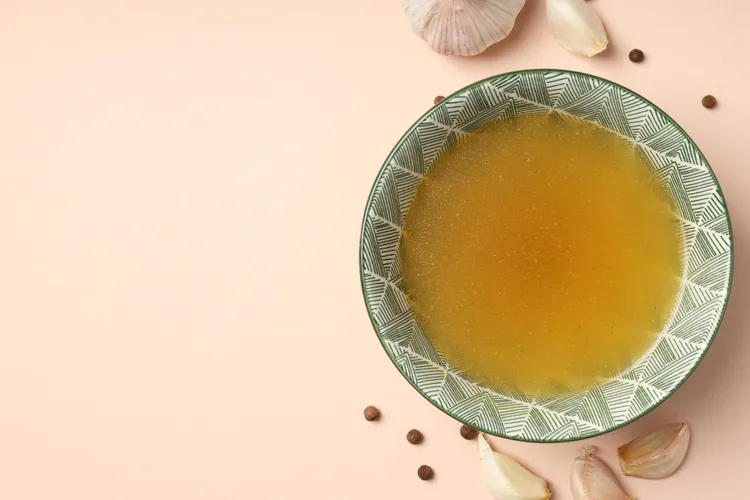
A well-made beef stock at serving temperature should look amber to deep brown, smell rich and savoury, and have a slightly viscous, almost silky texture from the dissolved gelatin. When cooled to room temperature it will begin to set. After overnight refrigeration a good batch is a firm jelly that wobbles when the container is shaken. If you achieve this, you have made proper beef stock. Store immediately in labelled portions per the guidance in the stock storage guide. For the complete picture on stock types and how to use them in sauces, see the complete stocks and broths guide and the stock to sauce guide.
Latest