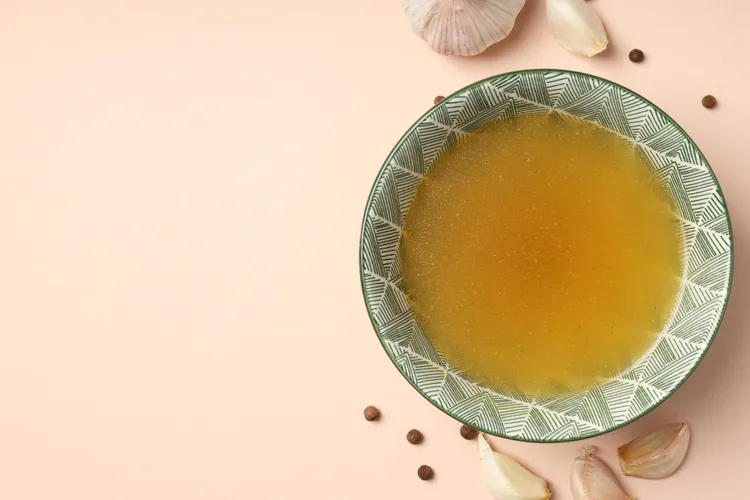
Slow Cooker Bone Broth: The Overnight Method
The slow cooker is the ideal vessel for bone broth. Set it before bed, strain in the morning. Here is the overnight method for chicken and beef bone broth.
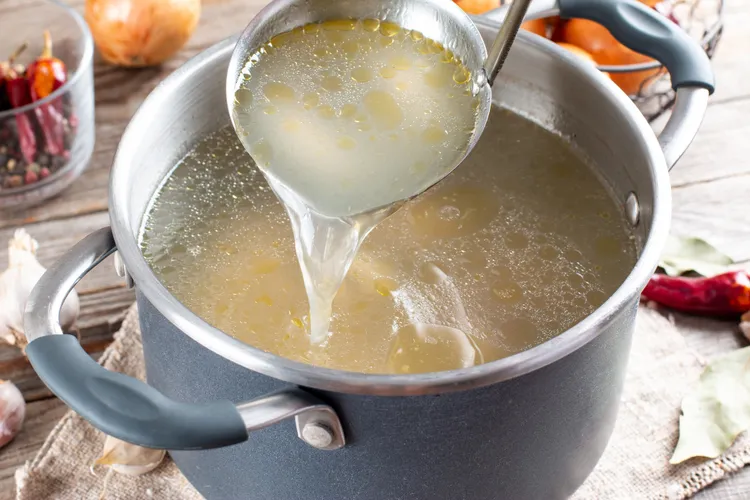
Bone broth's main deterrent is the time it requires - 12 to 24 hours of gentle simmering. The slow cooker solves this completely. Set it up before bed, wake up to finished bone broth, strain it before breakfast. No supervision required, no hob running unattended, no risk of evaporation reducing the stock too far. It is the most practical way to make bone broth regularly.
Why the Slow Cooker Works So Well
A slow cooker on its low setting maintains a temperature between 80 and 90 degrees Celsius - well below the simmering point but hot enough to extract collagen from bones over an extended period. This temperature is actually more gentle than a stovetop simmer, which means less cloudiness from protein agitation and a cleaner-tasting broth. The sealed environment also retains the volatile aromatic compounds that evaporate from an open stovetop pot.
The slow cooker's consistent temperature is its primary advantage over the stovetop. A stovetop pot can fluctuate significantly during an overnight session if the heat is not set precisely. A slow cooker holds its temperature within a few degrees for the entire cook.
Recipe: Overnight Chicken Bone Broth
Makes: 1.5 to 2 litres | Setup time: 15 minutes | Cook: 12 to 18 hours on low
Ingredients
- 1 to 1.5kg chicken bones (a whole carcass, or backs and wings, or feet for maximum gelatin)
- 1 medium onion, halved
- 1 large carrot, roughly chopped
- 2 celery stalks, roughly chopped
- 1 head of garlic, halved crossways
- 2 tablespoons apple cider vinegar
- 2 bay leaves
- 1 teaspoon black peppercorns
- Fresh thyme and parsley stalks
- Cold water to just cover (approximately 1.5 to 2 litres - do not fill the slow cooker more than three-quarters full)
Instructions
- Optional but recommended for clarity: place bones in a large pot, cover with cold water, bring to a boil, drain, and rinse under cold water to remove initial impurities. This pre-blanching step reduces cloudiness in the finished broth.
- Place cleaned bones and all vegetables in the slow cooker. Add apple cider vinegar. Add cold water to just cover - the level should be at least 3 to 4cm below the top of the cooker.
- Set to low. Leave for 12 to 18 hours overnight. No stirring, no checking, no adjustment needed.
- In the morning: strain through a fine-mesh sieve into a large bowl or pot. Discard all solids. Cool the strained broth to room temperature, then refrigerate.
- Once cold (after 3 to 4 hours in the fridge), a fat cap will have solidified on top. Remove and discard. The broth beneath should be a light to medium amber and may have gelled slightly or firmly depending on the bone type used.
Recipe: Overnight Beef Bone Broth
Follow the same method, but roast 1.5 to 2kg of beef bones (knuckle, feet, short rib) at 220 degrees Celsius for 30 minutes before adding to the slow cooker. The roasting step cannot be done in the slow cooker - it requires the dry heat of an oven to develop the caramelised colour and flavour. After roasting, add bones and vegetables to the slow cooker with 2 tablespoons of apple cider vinegar and cold water to cover. Cook on low for 18 to 24 hours.
Signs of a Good Batch
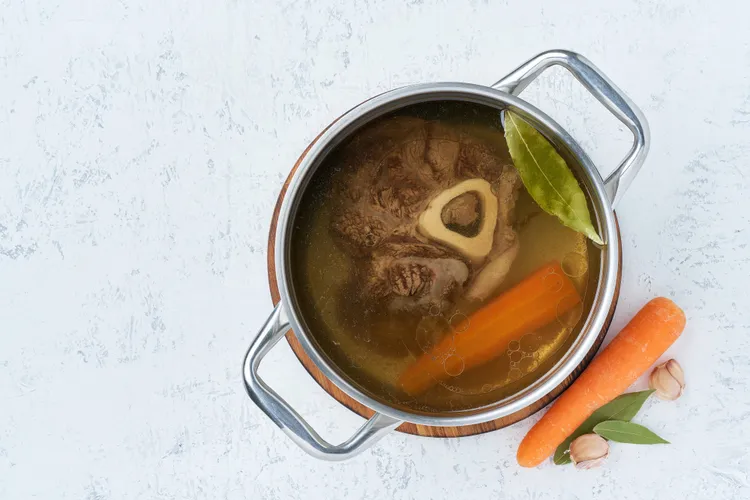
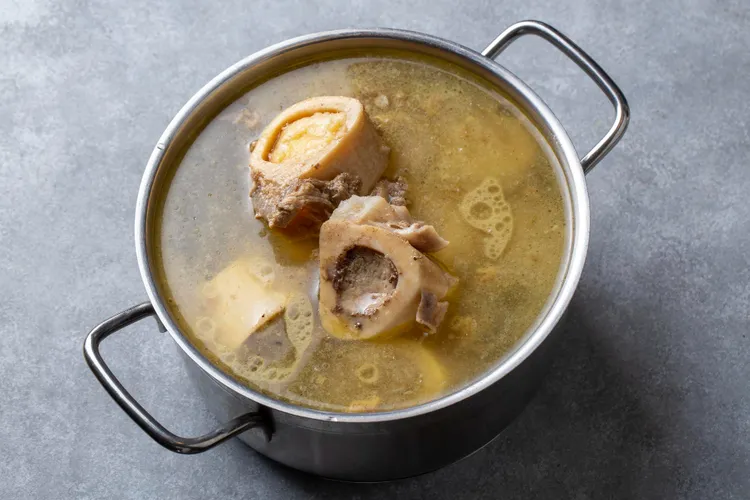
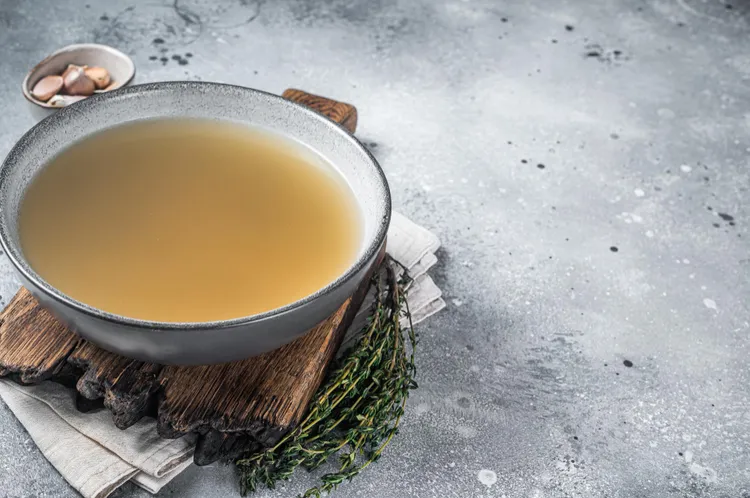
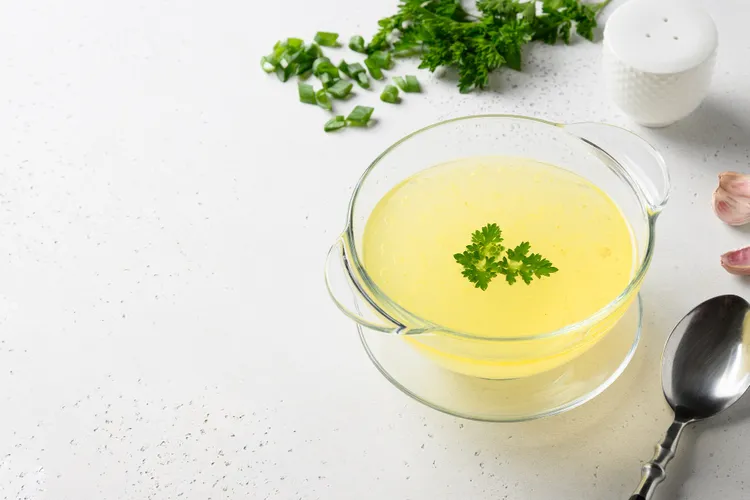
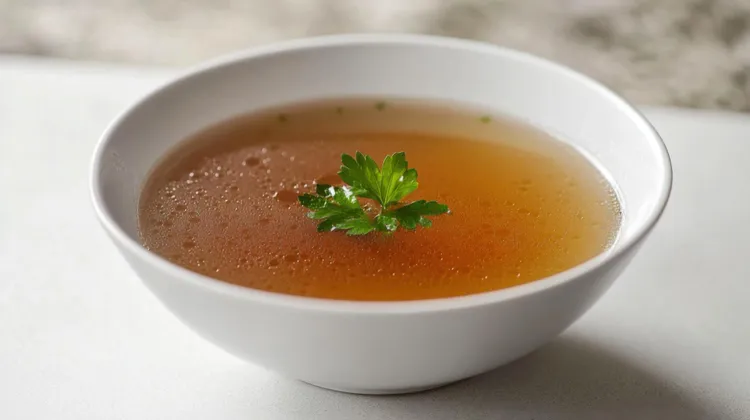
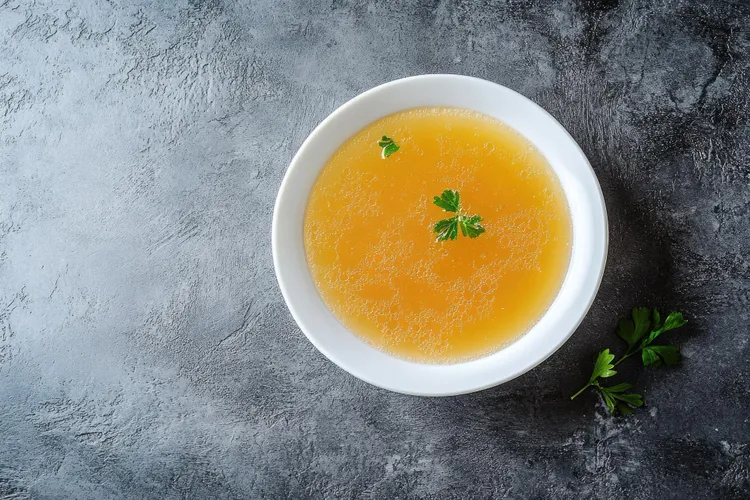
The cooked broth should be a clear amber colour (chicken) or dark amber to mahogany (beef). It should smell rich, savoury, and clean. Once cold, a good bone broth sets to a jelly - from a soft, barely-set jelly if the bones were lean, to a firm mass that holds its shape clearly if bones with high collagen content (feet, knuckle joints) were used. A broth that stays completely liquid when cold still tastes good but lacks the full body of a properly gelatinous batch.
Slow Cooker Size
A 4 to 6 litre slow cooker fits a whole chicken carcass comfortably with room for vegetables and water. For beef bone broth using 1.5 to 2kg of larger bones, a 6 litre or larger cooker is more practical. For smaller batches - half a carcass, chicken feet only - a 3 litre slow cooker is sufficient. Fill to no more than three-quarters capacity regardless of cooker size.
Morning Routine Integration
Set up the slow cooker after dinner using the bones from that evening's meal. Strain and portion before leaving for work in the morning. Cool in the fridge during the day. Defat and freeze or refrigerate in the evening. The bone broth is made across two days of normal activity with only 30 minutes of total active time. This is the most practical rhythm for making bone broth regularly. Use Consillar's weekly meal prep planner to incorporate bone broth production into your cooking week. For the complete guide to all stock types and techniques, see the complete stocks and broths guide.
Nutrition (per 250ml, unsalted, defatted)
- Calories: approximately 35 to 50 kcal
- Protein: 8 to 12g
- Fat: less than 1g (after defatting)
- Carbs: 0g
Scaling the Slow Cooker Method
The overnight slow cooker method scales easily. For a larger batch, use a 6 to 7 litre slow cooker with up to 2kg of bones and 2.5 litres of water. For a smaller, more concentrated batch using a 3 litre slow cooker, reduce bones to 700g and water to 1 litre. The cooking time does not change with the quantity - 12 to 18 hours on low produces the same result regardless of batch size.
For households where stock is used daily or near-daily, making a double batch once a week is more efficient than a single batch twice a week. A 6 litre slow cooker full of bone broth, strained and portioned on a Sunday morning, provides a week's worth of cooking stock and sipping broth. The active time difference between a single and double batch is negligible - the bones go in, the water goes in, and the slow cooker does the rest. Portion directly from the straining bowl into ice cube trays and 500ml containers, label, and freeze. Use Consillar's nutrition calculators to track the protein and calorie contribution of bone broth across the week. For the full guide to stock types and all making methods, see the complete stocks and broths guide.
Adding Aromatics to Slow Cooker Bone Broth
The aromatics for slow cooker bone broth can be more generous than for stovetop stock because the very low temperature prevents bitterness from developing even with extended cooking. Ginger, turmeric, and garlic - added in larger quantities than you would use in a stovetop stock - produce a warming, slightly spiced broth that works particularly well as a sipping broth. A whole head of garlic halved crossways, a 5cm piece of fresh ginger, a small amount of fresh turmeric or a pinch of turmeric powder, and a cinnamon stick produce a bone broth that tastes like it was made by someone who knew what they were doing, without any identifiable single spice dominating.
For a clean, neutral broth for cooking applications, keep the aromatics simple: onion, carrot, celery, bay, and peppercorn. The cooking stock version should be a background flavour that enhances what it is added to without directing the flavour of the dish. The sipping broth version can carry more aromatic weight because it stands alone as a drink. Decide the primary use before adding aromatics and season accordingly. For storage guidance covering all stock types, see the stock storage guide. For the full overview of every stock and broth type, see the complete stocks and broths guide.
Troubleshooting Overnight Slow Cooker Bone Broth
Broth did not gel: either the bones were too lean, the water-to-bone ratio was too high, or the cooking time was insufficient. For the next batch, increase the proportion of collagen-rich bones (knuckle joints, feet) to at least 60 percent of the total bone weight, reduce the water to just cover rather than generously cover, and extend to 18 to 20 hours. A batch that did not gel is still excellent stock - it lacks the body of a true bone broth but is usable for all cooking applications.
Broth tastes slightly bitter: over-cooking is unusual in a slow cooker because the temperature is controlled, but it can happen with chicken bones beyond 18 hours or if the slow cooker runs hot. Keep chicken bone broth to 12 to 16 hours maximum. Beef can go longer. Broth is very cloudy: the blanching step was skipped or the lid seal was poor (some steam escaped, affecting the temperature consistency). Cloudiness does not affect flavour. For all stock types and production methods, see the complete stocks and broths guide. For storage and portioning once the broth is made, see the stock storage guide. Track bone broth in your daily nutrition with Consillar's nutrition calculators.
Slow Cooker Bone Broth for Meal Prep
Bone broth integrates naturally into a Sunday meal prep session without adding active time. Set the slow cooker before going to bed on Saturday night using bones from the week's cooking. Strain and portion on Sunday morning while the rest of the week's prep is happening. By the time Sunday's batch cooking is complete, the bone broth is cooled, portioned into ice cube trays and 500ml containers, and ready for the freezer. The total active time across Saturday night and Sunday morning is under 30 minutes.
This approach means bone broth is never a separate project - it is a natural by-product of cooking that happens overnight while nothing else is using the kitchen. The slow cooker's low temperature and sealed environment make it safe to run unattended for 12 to 18 hours. Many home cooks who adopt this pattern end up with a continuous supply of bone broth throughout the year from the bones of whatever meat they cook regularly. For the complete guide to using bone broth and all other stock types in everyday cooking, see the 10 ways to use homemade stock guide and the complete stocks and broths guide. Use Consillar's meal prep planner to build this into your weekly routine.
Chicken Feet: The Highest Gelatin Ingredient
Chicken feet are the single most effective addition to any bone broth batch. They are almost entirely skin and connective tissue with very little actual bone - which means an exceptionally high ratio of collagen to anything else. A 500g addition of chicken feet to a standard overnight bone broth batch will produce a broth that sets to a firm jelly rather than a soft one, with a notably richer, more viscous mouthfeel. They are available from Asian grocery shops, many butchers, and halal meat shops, typically for a very low cost per kilogram.
Add them exactly as you would any other bone - no additional preparation needed beyond a rinse. They will look alarming during cooking but the finished broth has no visual trace of their origin. For the stovetop method that produces a faster result when overnight time is not available, see the bone broth stovetop guide. For the pressure cooker version that produces comparable gelatin content in a fraction of the time, see the pressure cooker stock guide. For the complete overview of all stock and broth types, see the complete stocks and broths guide. Track bone broth's protein contribution with Consillar's nutrition calculators.
Summary
The slow cooker overnight method is the most practical approach to regular bone broth production. Set it at night, strain in the morning, portion and freeze during the day. The active time is under 30 minutes across the full 18-hour window. The result is a properly gelled, deeply savoury broth that works both as a sipping drink and as a cooking ingredient with exceptional body. Combined with chicken feet for maximum gelatin or beef knuckle bones for depth, it produces the kind of bone broth that genuinely improves everything it touches. For the faster pressure cooker version, see the pressure cooker stock guide. For the complete framework, see the complete stocks and broths guide.
Bone broth made in the slow cooker overnight is the most accessible form of a technique that previously required all-day supervision. The result - a deeply coloured, well-gelled broth that sips cleanly and enriches everything it is cooked with - is worth making regularly. Set it up, go to sleep, strain in the morning.
Latest