Homemade Vegetable Stock: Quick and Clean
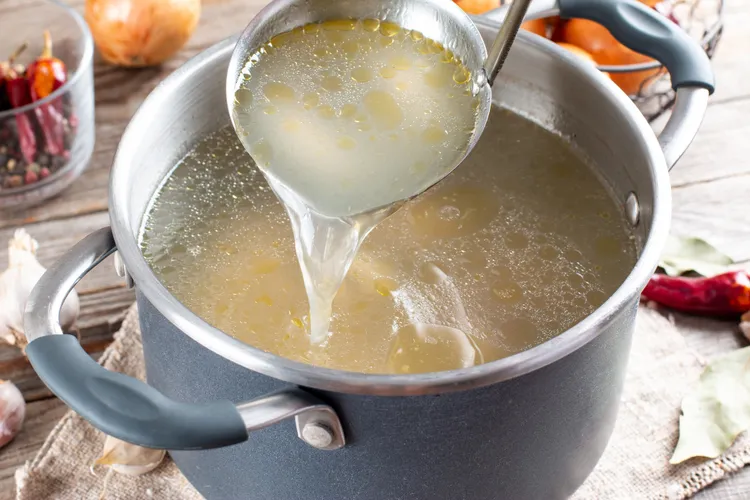
Vegetable stock takes under an hour and is the fastest stock you can make. The common mistake is over-simmering it - unlike bone stocks, vegetable stock turns bitter if cooked too long.

Vegetable stock has one critical difference from bone-based stocks: it should not be cooked for long. Bones benefit from hours of simmering to extract collagen and flavour. Vegetables give up their best flavour in 30 to 45 minutes and become bitter beyond that. The fastest stock you can make is also the one that most often gets over-cooked.
Which Vegetables Work Best
The standard base is onion, carrot, and celery - the same mirepoix used for most stocks. Leek (or the green tops saved from trimming) adds depth and a mild sweetness. Mushroom stalks and trimmings are one of the most valuable additions to vegetable stock - they provide umami that compensates for the absence of bones. Garlic adds savouriness. Fresh tomatoes or a small amount of tomato paste add colour and a slight acidity that brightens the stock.
What to avoid: brassicas (broccoli, cauliflower, cabbage, Brussels sprouts) turn sulphurous and unpleasant. Starchy vegetables like potato cloud the stock without adding flavour. Beetroot turns the stock purple. Very strong herbs like rosemary dominate everything else. Courgette and other watery vegetables dilute rather than contribute.
The Flavour Depth Problem
Vegetable stock is naturally lighter in body and flavour than chicken or beef stock. This is not a failure - it is what vegetable stock is. But you can close the gap significantly with a few additions: dried mushrooms (porcini, shiitake) add intense umami from their glutamates. A strip of kombu (dried kelp) added cold to the water before heating provides additional umami and depth - remove it before the water reaches a simmer (boiling kombu makes the stock bitter and slimy). Soy sauce (2 to 3 teaspoons per litre) adds salt and additional savoury depth for applications where the colour does not matter.
Recipe: Classic Vegetable Stock
Makes: 1.5 to 2 litres | Prep: 15 minutes | Simmer: 40 to 45 minutes
Ingredients
- 2 medium onions, roughly chopped (skin on for colour)
- 3 medium carrots, roughly chopped
- 3 celery stalks, roughly chopped
- 2 leeks (or the green tops from 3 to 4 leeks), roughly chopped
- 150g mushrooms or mushroom stalks
- 1 head of garlic, halved crossways
- 2 tomatoes, quartered (or 1 tablespoon tomato paste)
- 3 bay leaves
- 1 teaspoon black peppercorns
- Fresh thyme and parsley stalks
- 10g dried porcini mushrooms (optional, adds depth)
- Cold water to cover (approximately 2 litres)
Instructions
- Combine all vegetables in a large stockpot. Cover with cold water. If using dried porcini, add them now. Bring to a simmer over medium heat - no need for the slow cold-start technique used for bone stocks, as there is no protein foam to manage.
- Once simmering, add the herbs. Reduce to a gentle simmer and cook for 40 to 45 minutes. Do not cook beyond 50 minutes.
- Strain through a fine-mesh sieve. Press the solids gently to extract the last of the liquid - unlike bone stocks, vegetable stock is not made clearer by avoiding pressing. Discard all solids.
- Season lightly with salt if using immediately. Leave unsalted if storing - salt concentrates during reduction and storage.
Roasted Vegetable Stock
For a darker, richer vegetable stock, roast the vegetables first. Spread onion, carrot, celery, and mushrooms on a roasting tray. Drizzle with a little oil. Roast at 200 degrees for 25 to 30 minutes until caramelised. Transfer to the stockpot and proceed as above. The roasted version has more body and depth and is better for heartier dishes - bean stews, lentil soups, mushroom risotto.
Using Vegetable Stock
Vegetable stock is the right choice whenever the dish should remain plant-based: vegetarian soups and stews, risotto without meat, grain pilafs, vegetable braises. It works in kale and tomato soup in place of water for a noticeably better result. A good vegetable stock also works in most chicken stock applications when the stock flavour will be subtle - finishing sauces, cooking rice, and deglazing pans. For the full context on stock-making techniques, see the complete stocks and broths guide.
Zero-Waste Stock from Scraps
Keep a bag or container in the freezer for vegetable trimmings: onion skins (they add golden colour), carrot tops and peelings, celery leaves, leek tops, mushroom stalks, garlic skins, herb stems. When the bag is full (usually after a week of cooking), use the contents to make a batch of stock. This approach means your vegetable stock costs essentially nothing and is made from ingredients that would otherwise go in the bin.
Nutrition (per 250ml, unsalted)
- Calories: approximately 15 to 25 kcal
- Protein: 1 to 2g
- Fat: 0g
- Carbs: 3 to 4g
For storage guidance and all stock types, see the complete stocks and broths guide. Track the nutritional contribution of vegetable stock in your cooking with Consillar's nutrition calculators.
Customising Vegetable Stock for Different Cuisines
The standard Western vegetable stock (onion, carrot, celery, leek, mushroom) is a neutral base that suits European cooking. For other culinary contexts, the aromatics shift significantly. A Japanese-influenced vegetable stock is kombu and dried shiitake mushrooms cold-steeped in water - essentially a vegetarian dashi, clean and umami-forward. A South Asian vegetable stock adds ginger, turmeric, and whole spices (coriander seed, cardamom) to the standard base. A Mexican-influenced version uses tomatoes, chipotle chilli, and cumin for a smoky, deeply flavoured liquid that suits bean and grain dishes.
Vegetable Stock and Food Waste
A well-organised approach to vegetable stock turns kitchen trimmings into a valuable ingredient with no additional cost. Keep a 1 to 2 litre freezer container for vegetable offcuts: onion skins (they add golden colour), the green tops of leeks, celery leaves, carrot peelings, mushroom stalks, garlic skins, herb stems that are too woody to use. When the container is full, usually after a week of cooking, make stock. The resulting vegetable stock costs nothing beyond the water and gas used to make it. Combined with chicken bones from a roast, these saved vegetable trimmings produce a full-flavoured chicken stock at essentially zero cost. For the full guide to stock types and storage, see the complete stocks and broths guide. Track how vegetable stock contributes to your cooking with Consillar's meal prep planner.
Vegetable Stock for Specific Dishes
Vegetable stock is not a single product - the aromatics you choose should suit the dish you plan to use it in. For an Italian-inflected risotto, make a stock with onion, fennel, celery, white wine, and a small piece of parmesan rind (parmesan rind simmered in stock releases glutamates and produces remarkable depth of flavour). For a Southeast Asian noodle soup, use lemongrass, ginger, galangal, shallots, and a piece of kombu. For a Middle Eastern rice pilaf, add coriander seed, cumin, and a cinnamon stick alongside the standard mirepoix.
The versatility of vegetable stock comes from this adaptability. Unlike chicken or beef stock, which have a defined flavour identity, vegetable stock can be redirected significantly through aromatic choice. This makes it useful as a neutral base (standard mirepoix and herbs) or as a more directed flavour contribution (spiced, Asian, or Mediterranean variations). Making a batch tailored to the week's planned dishes rather than a generic all-purpose stock extracts maximum value from the same 40-minute cook time. For the full picture on stock types and when to use each, see the complete stocks and broths guide.
Vegetable Stock as a Daily Cooking Habit
The easiest way to build vegetable stock into a regular cooking routine is the freezer bag system. Keep a labelled zip-lock bag in the freezer and add vegetable offcuts as they accumulate during normal cooking. Onion skins (especially the brown papery outer skins - they contribute golden colour), leek tops, celery leaves, carrot peelings, mushroom stalks, garlic skins, herb stems - all of these are stock material that would otherwise go in the compost. When the bag reaches 300 to 400g, which takes roughly a week of normal cooking, you have the aromatics for a batch of vegetable stock. Add them to a pot of cold water, bring to a simmer, cook 40 minutes, strain. That is the entire process using ingredients that cost nothing.
The resulting stock is not always consistent from batch to batch because it reflects what you cooked that week. A week with a lot of mushrooms produces a deeper, more umami-forward stock. A leek-heavy week gives something sweeter. This variation is a feature rather than a bug - each batch is slightly different and suited to different applications. For all stock types and their specific characteristics, see the complete stocks and broths guide. For storage and freezing guidance, see the stock storage guide. Use Consillar's meal prep planner to build vegetable stock production into a weekly zero-waste cooking routine.
Nutritional Profile of Vegetable Stock
Vegetable stock has the lowest calorie count of any stock type - typically 15 to 25 kcal per 250ml serving - because it contains no dissolved animal proteins or fats. The calorie contribution is entirely from vegetable sugars and trace compounds. Sodium content is essentially zero if made without added salt, making it useful for strict low-sodium cooking where commercial stocks are unsuitable.
The practical nutritional advantage of vegetable stock is what it adds to dishes without adding calories. A soup made with good vegetable stock has more flavour and therefore more perceived satiety than the same soup made with water, despite having nearly identical caloric content. This makes vegetable stock particularly useful in weight management contexts - it is one of the few cooking ingredients that genuinely improves satisfaction without adding meaningful calories. Use Consillar's nutrition calculators to verify precise contributions in specific dishes. For the complete guide to all stock types, see the complete stocks and broths guide.
Roasted Vegetable Stock: A Better Version for Bold Dishes
The standard raw vegetable stock has a clean, fresh quality that suits delicate preparations. For heartier dishes - mushroom risotto, lentil soup, bean stew - a roasted vegetable stock has more presence and holds its own against strong flavours. The method: spread sliced onions, quartered carrots, roughly chopped celery, and halved mushrooms on a roasting tray. Drizzle with a tablespoon of olive oil. Roast at 200 degrees Celsius for 25 to 30 minutes, turning once, until everything is caramelised and some edges are darkened. Transfer to a stockpot with the standard aromatics and cold water. Simmer for 40 minutes. Strain.
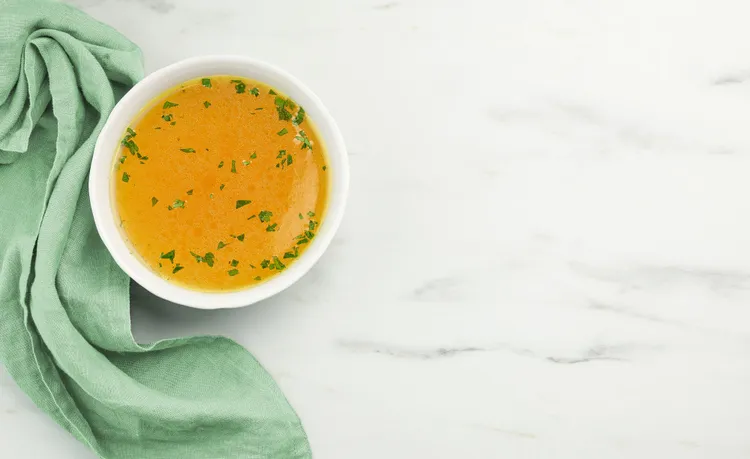
The roasted version has a deeper colour (amber-brown rather than pale gold) and a richer, more complex flavour with a pleasant caramelised sweetness from the vegetables. It is not universally better - a delicate cream soup or a light sauce does not benefit from the added depth and colour. But for any bold, earthy, or strongly flavoured dish where the stock is a background element rather than a feature, the roasted version is the right choice. Making both types and keeping them labelled in the freezer gives flexibility for different applications throughout the week. For the complete guide to stock types and applications, see the complete stocks and broths guide.
Summary
Vegetable stock is the fastest stock to make and the most versatile across dietary preferences. The 40-minute cook time fits into any weeknight, the zero-waste scrap-bag approach means ingredients cost nothing, and the clean flavour suits a wider range of dishes than meat-based stocks. Two constraints separate good vegetable stock from mediocre: never cook beyond 50 minutes (bitterness develops quickly), and avoid brassicas and starchy vegetables in the pot. Within those guardrails, almost any combination of aromatic vegetables produces a usable, flavourful stock. For recipes that use vegetable stock on CookThisMuch, see kale and tomato soup as a starting point. For the complete guide to all stock types and how each fits into a weekly cooking routine, see the complete stocks and broths guide.
The most practical rule for vegetable stock: set a timer for 45 minutes when it reaches a simmer, turn off the heat when it rings, and strain immediately. Everything else - what vegetables to use, whether to roast them first, which aromatics to add - is secondary to that timing constraint. A vegetable stock that has not been over-cooked will taste good regardless of which combination of vegetables went into it.
Latest