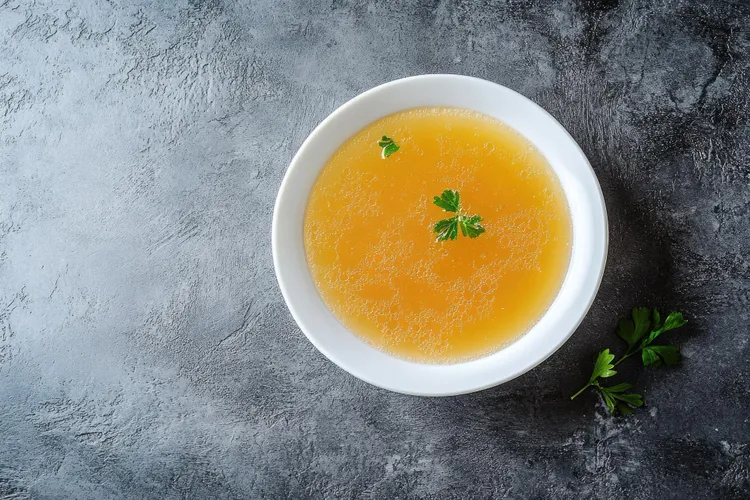
The Home Cook's Guide to Stocks and Broths
Everything you need to make proper stock at home: chicken, beef, vegetable, fish, and bone broth. The techniques that separate watery, flat liquid from something that makes every soup, sauce, and braise taste noticeably better.
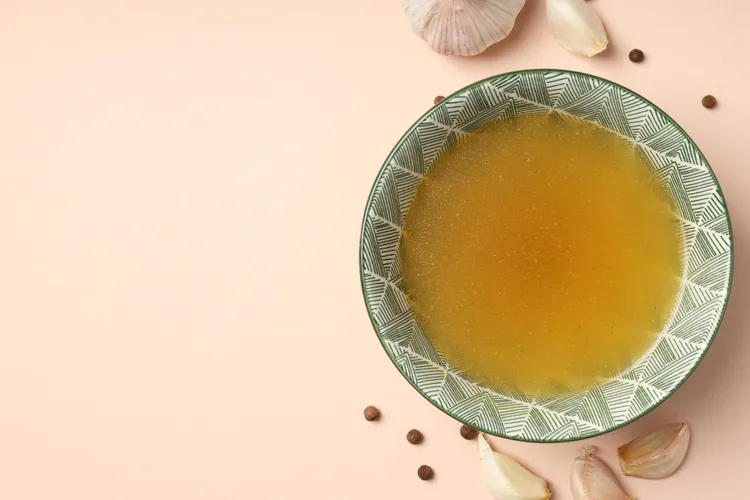
Most home cooks underestimate what stock actually does. It is not a substitute for water. It is flavour infrastructure - the layer beneath everything else in a dish that determines whether a soup tastes flat or complex, whether a pan sauce has depth or just tastes of wine. Making stock at home is simpler than most people think, and the difference it makes to finished cooking is disproportionate to the effort involved.
Stock vs Broth: The Actual Difference
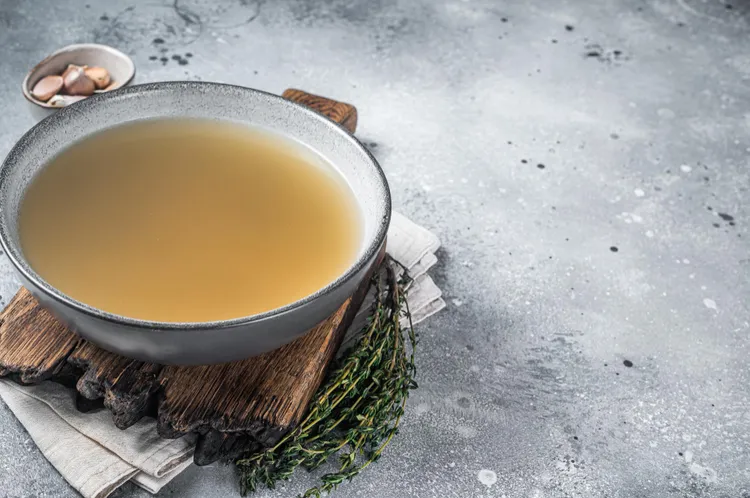
These terms are used interchangeably in most home kitchens and on most shop shelves, but the technical distinction is worth knowing. Stock is made primarily from bones, with aromatics for flavour support. The collagen extracted from bones during long simmering converts to gelatin, which gives stock its body and that characteristic lip-sticking quality when it cools to a gel. Broth is made primarily from meat rather than bones. It has more immediate flavour and is often seasoned and drinkable on its own, but it lacks the body of a proper bone stock.
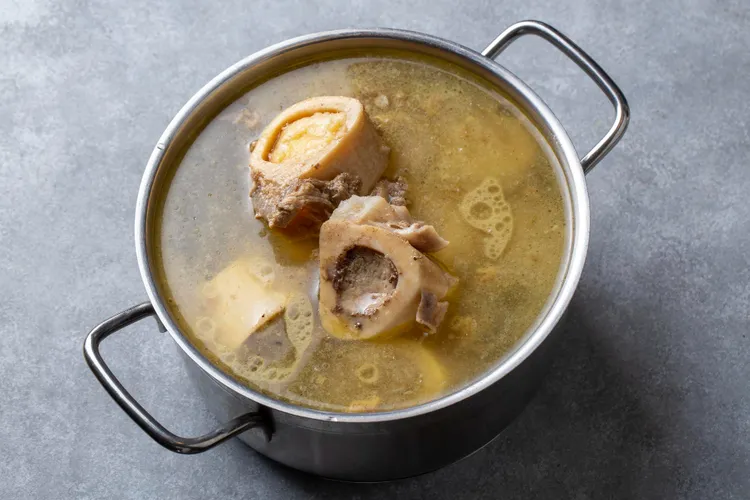
Bone broth is simply stock cooked longer - usually 12 to 24 hours rather than 3 to 6 - to extract more collagen and minerals. The gelatin content is higher, the colour deeper, and the resulting liquid sets more firmly when cold. In practical terms for home cooking, the distinction between stock, broth, and bone broth matters less than making something with real flavour rather than boiling cubes in water.
Why Homemade Beats Shop-Bought
Commercial stock and broth are heavily salted, often relying on yeast extract and flavour enhancers to compensate for short extraction times. You cannot reduce a shop-bought stock without it becoming inedibly salty, which rules out making pan sauces and glazes. Homemade stock contains no added salt, so it reduces cleanly. It gels when cold because it contains real collagen. It has genuine depth because the bones and aromatics were actually cooked for hours.
The cost argument is also real. Chicken carcasses from a roast cost nothing. Beef bones are cheap from any butcher. Vegetable offcuts - onion skins, carrot tops, celery leaves, leek trimmings - accumulate in a week's cooking and would otherwise go in the bin.
The Core Technique: What Applies to All Stocks
Every stock - chicken, beef, fish, vegetable - follows the same fundamental logic. Flavour and gelatin are extracted from solids into cold or tepid water by long, gentle heat. Three things separate good stock from mediocre stock:
- Start cold. Cold water extracts proteins gradually, keeping them in solution and producing a cleaner, clearer stock. Hot water causes protein to seize and cloud immediately.
- Never boil. A rolling boil emulsifies fat into the liquid and agitates proteins, producing grey, greasy, cloudy stock. The correct temperature is a gentle simmer - bubbles breaking the surface occasionally, never aggressively.
- Do not stir. Stirring disturbs the proteins and fat that are slowly separating upward. Let them rise, then skim them off.
Skimming: Why and When
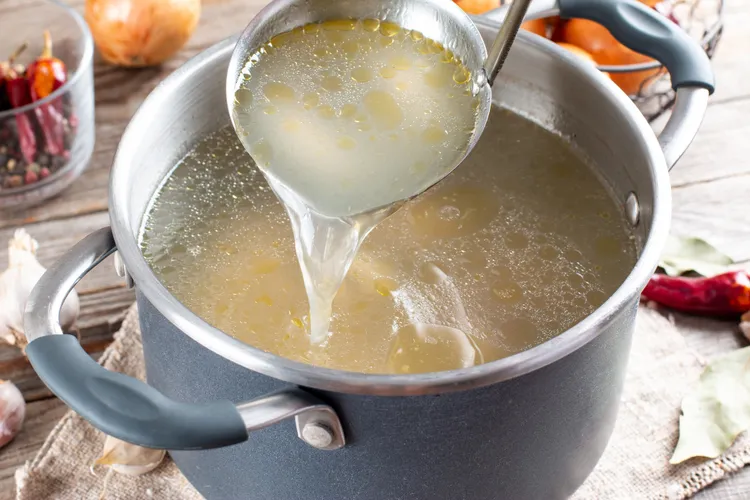
In the first 20 to 30 minutes of heating, grey-brown foam rises to the surface. This is coagulated protein and impurities from the bones. Skim it off with a ladle or fine-mesh spoon. Once the stock reaches a simmer and the foam has been removed, it needs little attention beyond occasional top-up of water and an eye on the temperature. Some recipes blanch bones in boiling water first (bringing to a boil, draining, rinsing) to pre-remove impurities before the main cook. This is more common for beef and pork bones than for chicken.
Aromatics: The Flavour Framework
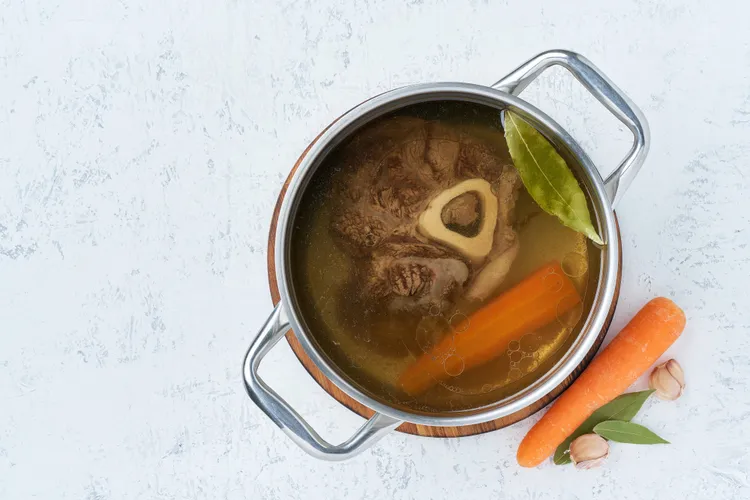
The mirepoix is the standard aromatic base for most Western stocks: roughly 2 parts onion, 1 part carrot, 1 part celery. No need to peel the onion - halved and charred cut-side down in a dry pan adds colour and sweetness to the stock. The bouquet garni (bay leaves, thyme sprigs, peppercorns, parsley stalks tied together or in muslin) completes the aromatic picture. These are the background notes, not the foreground - they support the primary ingredient (chicken, beef, fish) without dominating it.
What to avoid: brassicas (broccoli, cabbage) turn sulphurous in long-simmered stock. Starchy vegetables (potatoes) cloud the liquid. Strong herbs like rosemary and sage can overpower if used in quantity. Beetroot tints everything purple.
Chicken Stock
The most versatile and the best starting point. A whole carcass from a roast chicken, a raw carcass, or a combination of backs and wings all work. The bones from pan-roasted chicken thighs make an excellent addition. Simmer time is 2 to 4 hours - longer extracts more gelatin but can produce a slightly bitter note from the bones. For the full method and timing, see the chicken stock guide.
Beef Stock
The most labour-intensive but also the most deeply flavoured. Beef bones require roasting at high heat before simmering to develop the caramelised, savoury colour that gives brown beef stock its character. Simmer time is 6 to 8 hours. The full method including bone types and reduction to a demi-glace is in the beef stock guide.
Vegetable Stock
The fastest to make (45 minutes to 1 hour) and the most variable depending on which vegetables are used. Onion, carrot, celery, leek trimmings, and mushroom stalks are the backbone. Over-simmering vegetable stock produces bitterness - it does not benefit from the long cook that bone stocks require. For the method and the most common mistakes, see the vegetable stock guide.
Fish Stock (Fumet)
The most time-sensitive. Fish frames and heads simmer for 20 minutes only - beyond that the stock becomes bitter and glue-like. The best applications are bisques, fish chowders, and seafood risotto. See the fish stock guide for the quick method and a recipe for a classic fish veloute.
Bone Broth
Stock cooked for 12 to 24 hours. The extended time extracts significantly more collagen, producing a liquid that gels firmly when cold and has a noticeably richer mouthfeel. Whether the additional nutritional claims around bone broth are warranted is a separate question from its cooking quality - as a cooking ingredient it is excellent. The full method and the sipping broth applications are in the bone broth guide.
Dashi: The Japanese Stock
Made from kombu (dried kelp) and katsuobushi (dried bonito flakes), dashi takes 15 minutes and produces the cleanest, most umami-forward stock in any culinary tradition. It is the base of miso soup, ramen broth, and countless Japanese sauces. The dashi guide covers both the standard and the vegetarian kombu-only version.
Storing and Freezing Stock
Fresh stock keeps in the fridge for up to 5 days. For longer storage, freeze in portions. The most practical approach is ice cube trays for small amounts (1 to 2 tablespoons each, useful for deglazing and finishing sauces), then rigid containers in 500ml or 1 litre portions for soups and braises. A well-organised freezer with labelled stock containers is one of the most useful meal prep assets a home cook can have. For the full guide to storage, freezing methods, and how to use frozen stock cubes, see the stock storage and freezing guide.
Using Stock in Everyday Cooking
The straightforward applications - soups, stews, risotto - are obvious. The less obvious ones are where homemade stock makes its biggest impact: deglazing a pan after searing meat, adding a ladleful to a braise, cooking rice or grains in stock instead of water, making a quick pan sauce after cooking balsamic chicken and mushrooms. Any dish that contains liquid is a candidate for stock replacement. The guide to using stock in everyday cooking covers the full range of applications.
Stock as Meal Prep
One batch of chicken stock made on a Sunday afternoon produces enough for a week of cooking: rice, a soup, two pan sauces, a braise. The passive nature of stock-making suits a batch cooking session - it sits on the hob and looks after itself while something else is being prepared. Use Consillar's weekly meal prep planner to build a week of meals around a batch of homemade stock as the flavour foundation.
Articles in This Series
- How to Make Chicken Stock at Home
- Homemade Beef Stock: The Brown Stock Method
- Homemade Vegetable Stock: Quick and Clean
- Fish Stock (Fumet): 20 Minutes to a Proper Base
- Bone Broth at Home: Long-Simmered, Deeply Nourishing
- How to Make Dashi: Japanese Stock in 15 Minutes
- How to Store and Freeze Homemade Stock
- How to Clarify Stock and Make Consomme
- From Stock to Sauce: Reductions, Gravies, and Pan Sauces
- Pressure Cooker Stock: Same Result in a Quarter of the Time
- Slow Cooker Bone Broth: The Overnight Method
- 10 Ways to Use Homemade Stock Beyond Soup
The Mirepoix and Its Variations
The classic mirepoix - 2 parts onion, 1 part carrot, 1 part celery by weight - is the default aromatic base for chicken, beef, and fish stocks. It provides sweetness (onion and carrot), earthy savouriness (celery), and a clean vegetable background that supports without dominating. For French cooking this is sacrosanct; for wider culinary applications, variations are appropriate and often preferable. A Spanish sofrito base (onion, tomato, garlic, and a little paprika) suits a fish stock destined for paella. A South-East Asian approach uses lemongrass, galangal, and shallots for a broth destined for noodle soups. Ginger and garlic without the Western vegetables produce a clean, aromatic chicken stock that suits Japanese and Korean cooking. The principle - aromatics that support the primary flavour without competing - applies regardless of cultural context.
Leek is often added as a fourth element to the classic mirepoix. It has a milder, sweeter flavour than onion and its green tops in particular are useful in stock. Most home cooks have leek trimmings regularly - the tough green outer layers that would otherwise go in the compost are excellent in stock. For the individual guides on each stock type, see the cluster articles linked in the recipe series section above. For storage of all types, the stock storage and freezing guide covers every scenario.
Stock in the Context of Weekly Cooking
The most successful approach to homemade stock is treating it as a by-product of other cooking rather than a separate project. A roast chicken on Sunday produces a carcass on Sunday evening. Put it in the pot with whatever vegetable trimmings accumulated during the week, add cold water, and leave to simmer for 3 to 4 hours. By the time the kitchen is cleaned up, the stock is ready to strain. This approach costs almost no additional time because the carcass and vegetable trimmings would otherwise be discarded.
The same principle applies to beef stock: save bones from any bone-in cut over several weeks in the freezer. Once you have 1.5 to 2kg, roast them and make a batch. Fish fumet requires planning - you need fresh frames and should make it the same day - but the 20-minute cook time means it can be made alongside any fish preparation.
Salt: The Most Important Thing You Are Not Adding
Never salt stock during cooking. This is a hard rule with a clear reason. Stock is a concentrate of flavour that will be reduced further in every application: a sauce reduces by 50 to 75 percent; a braise cooks for hours as the liquid evaporates; a gravy is reduced to a fraction of its original volume. Salt added during stock-making concentrates at the same rate. A mildly salted stock becomes inedibly salty after reduction. An unsalted stock reduces cleanly, letting you season the finished dish at the right stage with the right amount of salt for that specific application.
This is also why shop-bought stock is unsuitable for proper sauce-making. Commercial stocks are salted to be palatable when added directly to a dish. They cannot be reduced without oversalting. Homemade unsalted stock is a fundamentally different ingredient, not just a more flavourful version of the commercial product.
Temperature: The One Variable Most People Get Wrong
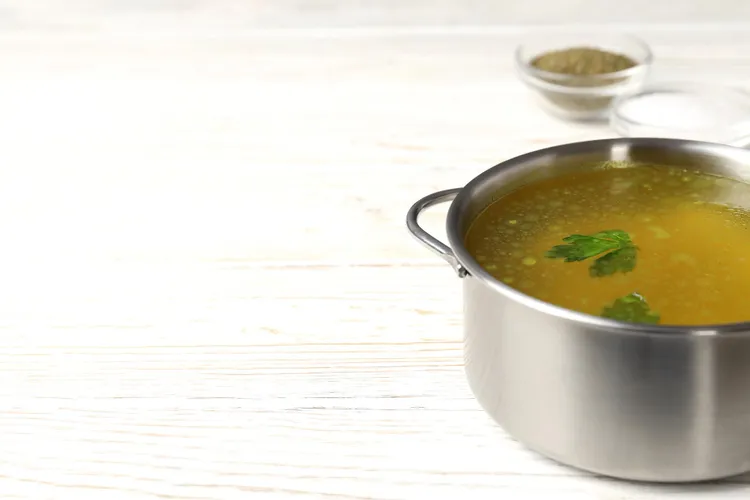
The correct temperature for simmering stock is 82 to 93 degrees Celsius - below a full simmer, above a steep. At this temperature, flavour and gelatin extract slowly and cleanly without emulsifying fat into the liquid or agitating proteins enough to cloud the stock. On most domestic gas hobs, this requires the lowest setting. On electric hobs, it may require occasional heat adjustments. A thermometer is useful for the first few batches until you can identify the correct temperature visually: tiny bubbles occasionally breaking the surface, minimal movement in the liquid, gentle wisps of steam.
The most common stock failure is a pot that appears to be simmering gently from the outside but is actually boiling vigorously with the lid trapping heat. Check by removing the lid - if the liquid erupts into a full boil, reduce the heat and leave the lid slightly ajar or off entirely. Stovetop stocks work best with partial coverage: enough to prevent excessive evaporation, not enough to trap heat that raises the temperature to a boil.
The Bouquet Garni
A bouquet garni is a bundle of herbs used to flavour stock and removed before straining. The classic composition is bay leaves, thyme sprigs, and parsley stalks tied together with string or wrapped in a leek leaf. The parsley stalks (not the leaves, which can make stock slightly bitter) are the key flavour contributor alongside the bay. Thyme adds a warm, herbal note. The bay provides a distinctive background flavour that is present in most Western stock traditions.
For different flavour profiles, the bouquet garni adapts: for a tomato-inflected stock, add a sprig of basil or some dried oregano. For a ginger-forward Asian stock, skip the Western herbs entirely and use just a few slices of fresh ginger and a couple of spring onion stalks. For a lemon-accented fish stock, add a strip of lemon zest to the bundle. The bouquet garni is a tool for aromatic focus - it defines the herbal identity of the finished stock without any one herb dominating.
Latest