Candied Citrus Peel: Orange, Lemon and Grapefruit
Candied citrus peel is the most useful sugar preserve in a baking larder. This guide covers the quick method, three fruits, how to crystallise, and everything you can do with the finished product.
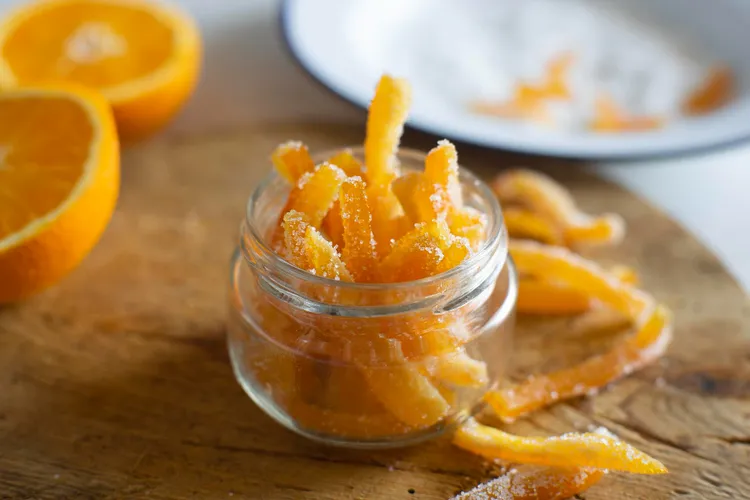
Candied citrus peel is the single most useful sugar preserve in a baking larder. It keeps for three months at room temperature, three times that in the freezer, and makes every cake, biscuit, and chocolate it touches more interesting. The commercial version - the fluorescent orange and green cubes in Christmas cake mixes - is a poor substitute. Homemade candied peel made from a single citrus fruit tastes of that fruit in a way the commercial version never does.
The Quick Method vs the Traditional Seven-Day Method
Candied peel can be made using either a quick single-session method (the one in this guide) or a traditional multi-day method where the syrup concentration is gradually increased over a week. The quick method produces excellent results for peel and is the right starting point for home cooks. The seven-day method is used for whole fruit and for peel where you want maximum translucency and the absolute deepest candy penetration. For most baking and confectionery uses, the quick method is indistinguishable in quality.
Blanching: The Bitterness Step
Citrus peel contains bitter compounds in the pith. Blanching in boiling water removes most of them before candying. For orange and lemon peel, two to three changes of boiling water (bring to a boil, drain, replace with fresh cold water, bring to a boil again) is sufficient. For grapefruit, which has a thicker, more bitter pith, use four to five changes. The blanching is complete when you can taste a small piece of peel and it is pleasantly mild rather than harshly bitter. Some residual bitterness is desirable - it is what makes candied peel interesting rather than just sweet.
Recipe 1: Candied Orange Peel
Makes: approximately 300g | Prep: 15 minutes | Cook: 50 minutes | Dry: 24 hours
Ingredients
- 4 large oranges, scrubbed
- 500g white granulated sugar
- 300ml water
- 100g extra sugar for rolling (optional, for crystallised finish)
Instructions
- Score the orange skin into quarters from top to bottom. Peel off the skin in large pieces, keeping pith attached. Cut each piece into strips approximately 5mm wide.
- Place strips in a saucepan. Cover with cold water. Bring to a boil, drain, and rinse with cold water. Repeat twice more (three blanching rounds total). Taste a strip - it should be mildly bitter, not harsh.
- Combine 500g sugar and 300ml water in the saucepan over medium heat. Stir until sugar dissolves. Add blanched peel strips.
- Bring to a gentle simmer. Cook over low heat for 45 minutes, stirring occasionally, until the peel is translucent and the syrup is thick. The peel is ready when it looks glassy rather than opaque.
- Lift strips with a fork onto a wire rack set over a baking tray. Leave at room temperature for 24 hours to dry. The surface should feel slightly tacky but not wet.
- For crystallised peel: once dried to tacky, roll each strip in granulated sugar to coat. Return to the rack and leave another 24 hours until the sugar coating is dry and crunchy.
- Store in an airtight container between sheets of baking paper. Keeps 3 months at room temperature, 9 months frozen.
Recipe 2: Candied Lemon Peel
Follow the orange peel recipe exactly, substituting lemons. Lemon peel produces a sharper, more aromatic result. Use 6 lemons rather than 4 oranges to get the same yield - lemon peel is thinner. The blanching rounds are the same (three changes of water).
Recipe 3: Candied Grapefruit Peel
Grapefruit peel is thicker and more bitter than orange or lemon. Use 2 grapefruits. Increase blanching to 4 to 5 rounds. The cooking time in syrup extends to 60 minutes as the thicker peel takes longer to become translucent. The result is more bitter and more complex than orange - excellent dipped in dark chocolate.
Using Candied Peel in Baking
Toss candied peel in a tablespoon of flour before folding into cake batter - this prevents it sinking to the bottom during baking. Chop finely and fold into shortbread dough, panettone, and stollen. Press strips onto the surface of a florentine before baking. Dip in 70 percent dark chocolate and set on baking paper for a confectionery that needs no baking. Use in place of commercial mixed peel in any recipe - the improvement is immediate. The leftover syrup from the candying pan is a flavoured simple syrup: bottle it and use in cocktails, cakes, and salad dressings.
Common Mistakes
Peel that shrinks and shrivels during candying was blanched incorrectly or the syrup was too concentrated too early. If the peel collapses, it is still edible and useful chopped into baked goods. Peel that remains tough after 45 minutes of simmering: cut the strips slightly thinner next time and ensure the blanching step fully softened them before adding to the syrup. Peel that becomes sticky after storage: the drying period was insufficient. Redry in a 60-degree oven for 1 hour, roll in sugar, and return to a dry container.
Nutrition (per 30g, candied orange peel)
- Calories: approximately 90 kcal
- Carbs: 23g (of which sugars 22g)
- Protein: 0g
- Fat: 0g
For the full overview of sugar preserving techniques from candying to fruit in syrup, see the complete sugar preserving guide. For the broader context of home preserving techniques including jam, chutney, and pickles, see the homemade preserves guide.
The Science of Blanching
Blanching citrus peel in multiple changes of boiling water removes the bitter limonin and naringin compounds concentrated in the pith. These are the same compounds that make a piece of orange pith unpleasant to eat raw. Each boiling water change removes a proportion of the bitter compounds along with the water. Three changes remove enough bitterness to produce pleasantly mild peel with just a residual complexity. The number of changes needed varies by fruit: sweet orange needs two to three, bitter orange (Seville) needs four to five, grapefruit needs four to five, lemon needs two to three. Taste after the final blanching - the peel should be mild enough to eat on its own without grimacing.
The Candying Syrup: Monitoring Concentration
As the peel cooks in the syrup, water evaporates and the concentration increases. You can monitor this without a thermometer by watching the behaviour of the syrup: early in cooking it is thin and pourable. After 20 to 30 minutes it begins to look slightly viscous. At 40 to 45 minutes it should be thick enough to coat a spoon lightly and fall in a ribbon rather than a stream. This is the right endpoint. If the syrup begins to caramelise or turn amber at the edges of the pan, the heat is too high and the concentration is going too far too fast - add a tablespoon of water and reduce the heat. Caramelised syrup produces darker, more toffee-flavoured peel which is a different product from the clean citrus candy you are aiming for.
Chocolate Dipped Peel
Dark chocolate-dipped candied orange peel is one of the best confectionery items you can produce at home with no specialist equipment. Melt 200g of good 70 percent dark chocolate in a heatproof bowl over a pan of barely simmering water. Dip each strip of dried candied peel halfway into the chocolate. Lay on baking paper and leave to set at room temperature (or refrigerate for 10 minutes if the kitchen is warm). Once set, the combination of bitter chocolate, caramelised orange, and sweet sugar coating produces a confectionery at least the equal of anything from a commercial chocolatier. Package in small boxes or bags for gifting - they keep for 3 weeks at cool room temperature. For gifting ideas and packaging, see the sugar preserves gift guide. For the complete sugar preserving framework, see the complete sugar preserving guide.
Variations: Candied Mixed Peel
Commercial mixed peel combines orange, lemon, and citron peel in a single preparation. Homemade mixed peel can be made by candying the three fruits separately using the same recipe and then combining in a single container for storage. Using a ratio of roughly 2 parts orange to 1 part lemon to 1 part grapefruit (or citron, if available) produces the classic mixed peel profile used in Christmas cake, panettone, and stollen. Chop the peel into pieces of roughly equal size before combining - the small, 5mm dice used in commercial mixed peel is the target size for baking applications.
For an elevated mixed peel: candy Meyer lemon peel alongside standard lemon peel. Meyer lemons are sweeter and more floral than standard lemons, and their candied peel has a distinctive character that lifts any bake it goes into. Blood orange peel has a slightly more complex, slightly more bitter profile than navel orange peel. Bergamot peel (the citrus used to flavour Earl Grey tea) produces an extraordinarily aromatic candied peel that is worth seeking out from Italian delis during the winter season when bergamots are available. Use it sparingly - it is very perfumed.
Storing the Candying Syrup
The syrup remaining after candying orange peel is a flavoured citrus syrup with concentrated orange oil compounds. Bottle it and refrigerate - it keeps for 3 to 4 weeks. Uses: brushed over a warm orange cake as a glaze; stirred into sparkling water with ice; used in cocktails in place of plain simple syrup; used as the soaking syrup for a citrus trifle sponge. If you have candied multiple citrus varieties in sequence using the same syrup base, the accumulated syrup has a complex mixed citrus flavour that is even more useful as a flavouring ingredient. For the complete sugar preserving framework and all techniques, see the complete sugar preserving guide.
Candied Peel in Chocolate Making
Chocolate and candied orange peel is one of the classic flavour combinations in confectionery. The orange oils in the peel cut through the fat of the chocolate and provide a sharp, aromatic contrast. For home chocolate making: melt 200g of 70 percent dark chocolate in a heatproof bowl over barely simmering water. Dip each strip of dried, crystallised candied peel halfway into the melted chocolate. Lay on baking paper and leave to set. The ideal serving temperature is cool room temperature rather than refrigerator cold - the chocolate should snap cleanly and the peel should have some give. Stored in a cool place in a lidded box, chocolate-dipped candied peel keeps for 2 to 3 weeks.
For a more sophisticated version: use a blend of dark and milk chocolate (70 percent combined with 40 percent milk in equal parts by weight) for a slightly sweeter, creamier shell that complements the bitterness of the orange peel rather than doubling down on it. Dust with a tiny amount of gold luster dust after dipping if serving at a celebratory occasion - the visual effect is striking. For the complete guide to sugar preserving techniques covering all methods from candied fruit to simple syrups, see the complete sugar preserving guide. Use Consillar's nutrition calculators to track the calorie contribution of chocolate-dipped candied peel.
The Leftover Syrup
The concentrated orange-flavoured syrup remaining in the pan after candying is too good to discard. Pour it into a sterilised bottle while still hot. It keeps in the fridge for 3 to 4 weeks. Use it brushed over a warm orange cake as a glaze, stirred into sparkling water with ice for a citrus drink, used in cocktails in place of plain simple syrup for additional orange complexity, or as the soaking liquid for a citrus trifle sponge. Each batch of candied peel produces approximately 150 to 200ml of this syrup - enough to be genuinely useful as an ingredient in its own right. For the complete sugar preserving guide and all techniques, see the complete sugar preserving guide.
Yield, Cost, and Value
Four large oranges produce approximately 300g of finished candied peel. At seasonal orange prices, the ingredient cost is negligible - the sugar and energy for simmering are the main costs. Commercial candied orange peel sells for roughly eight to twelve pounds per 200g from a specialist food shop. Homemade candied peel from the same weight of fruit costs under two pounds and takes 50 minutes of simmering plus 24 hours of drying. The quality difference between homemade and commercial is large enough to be immediately apparent in any bake. For bakers who use candied peel regularly - Christmas cake, panettone, florentines, hot cross buns, or any fruit bread - making it at home at least once a year is worthwhile on both quality and cost grounds.
Scaling up is straightforward. Six oranges, four lemons, and two grapefruits candied separately in a single afternoon session produces approximately 700g of mixed peel - enough for two Christmas cakes and all other uses through the season. The three fruits are candied in sequence in the same saucepan with the same sugar concentration method. The orange goes first (mildest, most useful in quantity), then the lemon (sharper, used in smaller amounts), then the grapefruit (most bitter, used sparingly). The accumulated syrup from all three becomes a complex mixed citrus flavouring syrup that is more interesting than any single fruit version. Use Consillar's nutrition calculators to track the calorie contribution of candied peel in baking.
Latest