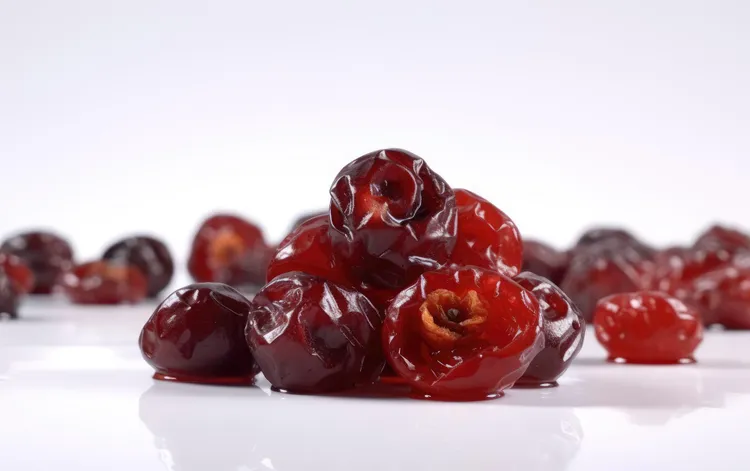
Candied Whole Fruit: Clementines and Cumquats
Whole candied clementines and cumquats are among the most visually striking preserves you can make. The technique requires patience but produces something genuinely beautiful and genuinely delicious.
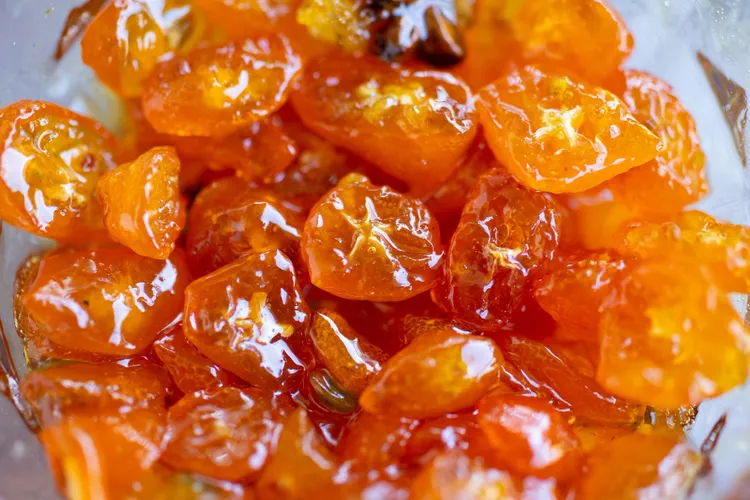
A whole candied clementine or kumquat is one of the most striking things you can put on a table. The fruit is entirely transformed - translucent, glossy, saturated with sugar, and with the aromatic bitterness of the peel integrated into a preserve that is simultaneously sweet, complex, and intensely citrus. The seven-day gradual method is the only approach that achieves full candy penetration in a whole fruit without collapse.
Why Whole Fruit Requires the Gradual Method
Peel and thin slices can be candied in a single session because the short distance from surface to interior allows rapid sugar penetration. A whole fruit has much greater thickness - the syrup needs to penetrate centimetres through skin, pith, and flesh to reach the centre. If you expose a whole clementine directly to a concentrated syrup, the osmotic pressure gradient is too steep: moisture rushes out of the fruit faster than sugar can move in, and the fruit collapses, shrinks, and shrivels.
The gradual method avoids this by starting with a very dilute syrup (barely sweeter than the fruit's own juice) and increasing concentration slowly over seven to ten days. At each stage, the fruit equilibrates with the surrounding syrup before the concentration increases. By the final days the fruit is fully saturated with sugar and the interior is preserved throughout.
Which Fruits Work
Clementines and mandarins are ideal: thin skin, minimal pith, a size that fits in the palm of your hand. Kumquats (tiny oval citrus eaten whole including the skin) are the best choice for a first whole-fruit candying session - their small size means full penetration happens faster, at 5 to 7 days rather than 7 to 10. Lemons and small limes can be candied whole but require 10 to 14 days for full penetration. Avoid large oranges - they take 14 to 21 days and require a larger volume of syrup.
Recipe: Candied Clementines
Makes: 6 whole candied clementines | Active time: 15 minutes on Day 1, 10 minutes per day for 6 to 9 days
Ingredients
- 6 small clementines, washed
- 1kg white granulated sugar, divided
- 1 litre water
Instructions
- Blanching: Pierce each clementine all over with a skewer (20 to 30 times per fruit). Place in a saucepan, cover with cold water, bring to a boil, drain. Repeat twice. This removes bitterness from the skin and pith and creates channels for the syrup to penetrate.
- Day 1: Combine 300g sugar with 1 litre water. Heat to dissolve. Add clementines. Bring to a very gentle simmer for 5 minutes. Remove from heat. Transfer to a bowl deep enough to keep fruit submerged. Cover. Leave 24 hours.
- Days 2 to 6 (or 9): Each day, drain the syrup into a saucepan. Add 50g sugar. Heat to dissolve. Pour over clementines. Cover. Leave 24 hours. The syrup darkens and thickens progressively.
- Testing for readiness: After Day 6, lift a clementine and press it gently. It should feel firm throughout, not soft in the centre. Hold it up to light - it should look translucent almost to the core. If still opaque in the centre, continue for 2 to 3 more days.
- Drying: Transfer candied clementines to a wire rack. Dry at room temperature for 24 hours, or in a 60-degree oven for 2 to 3 hours until the surface is dry but glossy. They can be stored as-is, or dipped in tempered dark chocolate for a more luxurious product.
- Store in an airtight container between sheets of baking paper. Keeps 3 months at room temperature.
Candied Kumquats
Follow the same recipe. Kumquats need only 5 to 7 days of syrup changes due to their small size. They do not need blanching - their skin is thin and not bitter. Simply pierce and proceed from Day 1. The finished kumquats are small, entirely edible whole (skin, flesh, and seeds), and make an excellent garnish for desserts and cheese boards.
Using Whole Candied Fruit
As a centrepiece garnish on a celebratory cake. Sliced in cross-section to reveal the translucent interior as a garnish for desserts. Dipped in dark chocolate and given as a gift. Served on a cheese board alongside strong blues and aged hard cheeses. Sliced and folded into a chocolate terrine or semifreddo. The syrup from the candying process is a deeply flavoured citrus cordial: bottle and refrigerate for 3 weeks.
Nutrition (per clementine, approx. 60g)
- Calories: approximately 180 kcal
- Carbs: 47g (of which sugars 46g)
- Protein: 0.5g
- Fat: 0g
For the complete guide to sugar preserving techniques including peel, crystallised ginger, and fruit in syrup, see the complete sugar preserving guide.
Troubleshooting Whole Fruit Candying
The most common problem in whole fruit candying is fruit that collapses on the first or second day of the process. This almost always means the initial syrup was too concentrated, pulling moisture out of the fruit too rapidly. Prevention: ensure Day 1 syrup is genuinely dilute - 300g sugar to 1 litre of water produces a syrup that is only slightly sweeter than many fruit juices. If collapse has already happened, the fruit is still edible (use it chopped in baked goods) but cannot be recovered as whole candied fruit. Start a new batch with a more dilute initial syrup.
Fruit that remains opaque at the centre after the scheduled number of days: either the pieces need longer, or the daily simmering step was too brief. Extend for 2 to 3 more days of daily syrup changes. The translucency test - holding the fruit up to a light source - is the most reliable indicator of completion. If you can see light through the fruit to the centre, the candy has penetrated fully. If the centre is still a dense, opaque mass, it needs more time.
Candied Kumquat Variations
Kumquats lend themselves to variations that clementines do not, because the entire fruit (including skin) is eaten. Kumquats in spiced syrup: add a cinnamon stick and 2 star anise to the syrup from Day 2 onwards. The resulting kumquats have a warming background spice integrated throughout. Kumquats in vanilla syrup: split a vanilla pod and add from Day 1 for a floral, creamy sweetness. Chocolate-dipped kumquats: dip the finished whole candied kumquats in 70 percent dark chocolate and set on baking paper. The bitter chocolate with the sweet, tart, fragrant kumquat is exceptional. For the complete sugar preserving guide, see the complete sugar preserving guide.
The Visual Impact of Whole Candied Fruit
Part of the appeal of whole candied clementines and kumquats is visual. A whole candied clementine sliced in cross-section reveals a translucent, jewel-like interior with visible segment structure preserved in the sugar. This cross-section, placed on top of a cake or alongside a dessert, is immediately striking in a way that no commercial decoration can replicate. The translucency - achieved only through the gradual candying method - is what distinguishes a properly made whole candied fruit from a merely sugar-coated one.
Presentation suggestions that use this visual quality: slice three candied clementines thinly crossways. Fan the slices on the surface of a glazed citrus tart before serving. Press one whole candied kumquat into the top of each individual financier or madeleine before baking. Arrange three cross-cut slices at the centre of a celebration cake before the final icing layer. Place one whole candied kumquat on the rim of a cocktail glass as a garnish. None of these require additional decoration - the candied fruit provides all the visual interest needed. For packaging these for gifts, see the sugar preserves gift guide. For the complete guide to all sugar preserving techniques, see the complete sugar preserving guide.
Timing a Whole Fruit Candying Session
The seven-to-ten day schedule for whole clementines needs to be planned against your availability to do the daily step. Unlike some preserving techniques where missing a day is significant, the whole fruit candying method is tolerant of schedule shifts. If Day 4 becomes Day 5 because you were not home, the clementines are sitting in a progressively concentrated syrup that is preserving them safely. The daily step is about increasing concentration, not about a critical timing window. Shift the schedule to fit your week, just ensure the daily concentration increase happens at roughly 24-hour intervals and the fruit stays submerged throughout.
For gift production, plan backwards from the gifting date. If the clementines will be gifts for a dinner party on the first weekend of December, they should be finished and drying by late November, which means the seven-day schedule should start in mid-November. For a Christmas gift box, starting in late November gives enough time for the full process plus the drying stage plus packaging. For kumquats, which take only 5 to 7 days, start even later. A batch of kumquats started on the 15th of December can be ready, dried, and packaged by the 22nd. For the complete guide to sugar preserving techniques and all recipes in this series, see the complete sugar preserving guide. For gifting ideas, see the sugar preserves gift guide.
Kumquats as an Introduction to Whole Fruit Candying
Kumquats are the ideal starting point for anyone attempting whole fruit candying for the first time. Their small size (2 to 3cm) means the syrup penetrates to the centre in 5 to 7 days rather than 7 to 10. Their thin skin requires no aggressive blanching - one change of boiling water is sufficient. Their flavour - intensely citrusy, with a pleasant tartness from the skin that is meant to be eaten - is exceptional when candied. The visual result, a dozen or so glossy, translucent oval fruits in an airtight tin, is immediately striking. Starting with kumquats builds confidence in the gradual method before attempting the larger and more demanding clementine. For the complete sugar preserving guide covering all techniques, see the complete sugar preserving guide. Use Consillar's meal prep planner to schedule a whole fruit candying session in the right seasonal window.
The Economics of Whole Fruit Candying
Whole candied clementines and kumquats are among the most expensive items in specialist confectionery and food gift shops. A single whole candied clementine from a high-end patisserie or food hall can retail for three to five pounds. A box of six might cost twenty to thirty pounds. The homemade version, made from seasonal clementines at peak winter availability, costs approximately thirty to fifty pence per fruit in ingredients. A box of six whole candied clementines made at home costs three pounds in ingredients and produces something that is genuinely equal to the most expensive commercial versions in terms of technique and flavour.
This cost differential is even more pronounced for kumquats, which are smaller and less expensive as raw fruit. A 500g box of fresh kumquats at peak season (typically available from October through January at Asian grocery shops and specialty greengrocers) costs under three pounds and produces approximately 400g of finished candied kumquats - roughly 60 to 80 individual pieces. The same quantity from a specialist confectioner would cost significantly more. For the complete sugar preserving guide and all techniques, see the complete sugar preserving guide. Use Consillar's nutrition calculators to track whole candied fruit in your diet.
The Final Appearance Test
A successfully candied whole clementine has three visual characteristics that confirm completion. First, the skin is uniformly translucent when held up to a light source - you should be able to see the segment structure through the skin with no opaque patches remaining. Second, the surface has a distinctive glassy sheen rather than the dull, matte look of fresh citrus skin. Third, when you press the fruit gently between your fingers it should feel firm and slightly resistant throughout - the same texture from skin to centre - rather than having a softer centre and harder exterior. Any fruit that does not meet all three criteria needs additional days of syrup changes before moving to the drying stage. Rushing the readiness test produces unfinished work that is immediately apparent in the finished product. For the complete guide to sugar preserving techniques from the simplest syrup to whole candied fruit, see the complete sugar preserving guide.
Latest