Glacé Cherries: The Seven-Day Method
Proper glacé cherries take seven days of daily syrup changes. The result is a dark, flavourful, firm cherry that tastes of the fruit rather than just sugar.
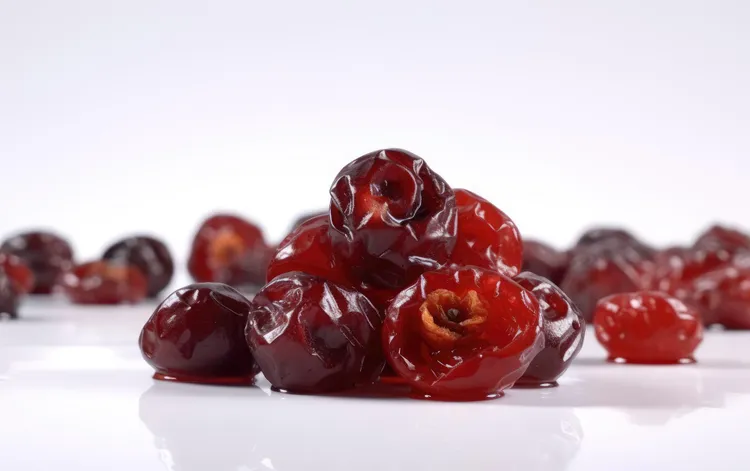
Commercial glacé cherries are dyed, artificially coloured, and taste primarily of sugar. Homemade glacé cherries made from fresh sweet cherries using the proper seven-day method are dark, subtly flavoured, firm, and genuinely good to eat on their own. They also hold their shape and colour better in baked goods than commercial versions, which bleed dye and collapse during baking.
Which Cherries to Use
Sweet dark cherries (Bing, Morello, or any deep red variety) produce the best glacé cherries. The deeper the colour in the fresh cherry, the more interesting the finished result. Morello cherries have a slight tartness that balances the sugar particularly well. Avoid very small cherries - they are fiddly to stone and produce a less satisfying result. Cherries 2 to 3cm in diameter are ideal. Fresh cherries are available from June through August in the UK. Frozen sweet cherries (thawed and well-dried before candying) work but produce a softer result.
Stoning
A cherry stoner makes the job fast. Without one, use a thick straw or a metal skewer pushed through the base of the cherry to push the stone out through the stem end. Some juice loss is inevitable - work over a bowl to catch it. The cherry juice can be added to the candying syrup for additional flavour.
Recipe: Traditional Glacé Cherries
Makes: approximately 400g | Active time: 15 minutes on Day 1, 10 minutes per day for 6 days | Dry: 2 to 4 hours on Day 7
Ingredients
- 500g fresh sweet cherries, stoned
- 600g white granulated sugar, divided
- 400ml water
- Any juice reserved from stoning
Schedule
- Day 1: Combine 200g sugar with 400ml water (plus reserved cherry juice) in a wide saucepan. Heat to dissolve. Add cherries. Bring to a very gentle simmer and cook 3 minutes. Remove from heat. Cover and leave at room temperature for 24 hours.
- Day 2: Drain syrup into a clean saucepan. Add 50g sugar. Heat to dissolve. Add cherries. Bring to a gentle simmer for 2 minutes. Remove from heat. Cover and leave 24 hours.
- Days 3, 4, 5, and 6: Repeat Day 2 each day, adding 50g sugar each time. By Day 6 the syrup is very thick and the cherries are deeply coloured and glossy.
- Day 7: Drain cherries from the syrup. Reserve the syrup - it is a deeply flavoured cherry cordial and should not be discarded. Spread cherries on a wire rack over a baking tray. Dry in a 60-degree oven for 2 to 3 hours until the surface is tacky but not wet. Or dry at room temperature for 6 to 8 hours. Store in an airtight container lined with baking paper.
Using the Cherry Syrup
The syrup left over from glacé cherry production is a concentrated cherry cordial. Bottle it, refrigerate it, and use it as: a mixer in cocktails (particularly good with gin and sparkling water), a flavouring for lemonade, a sauce for ice cream or panna cotta, a glaze for a tart or cake. It keeps in the fridge for 3 to 4 weeks and in the freezer for 6 months.
Uses for Glacé Cherries
In baking: toss in flour before adding to cake batter to prevent sinking. In florentines: pressed onto the surface before baking. Chopped and folded into a bakewell tart filling. In a Black Forest cake or cherry clafoutis. As a garnish for cocktails. As a component in a petits fours selection. In a Christmas cake alongside homemade candied peel from the candied citrus peel guide.
Troubleshooting
Cherries collapse or shrivel: the initial simmer was too vigorous, or the cherries were over-ripe. Use firm, just-ripe cherries and keep the first simmer very gentle. Cherries remain opaque after all seven days: the syrup concentration on Day 1 was too high, preventing the gradual osmotic exchange. Start with a lighter syrup (150g sugar to 400ml water) and increase more gradually. Finished cherries are very sticky: insufficient drying time. Redry in a 60-degree oven for 1 hour.
Nutrition (per 30g, approx. 6 cherries)
- Calories: approximately 88 kcal
- Carbs: 23g (of which sugars 22g)
- Protein: 0g
- Fat: 0g
For the complete sugar preserving guide covering all techniques, see the complete sugar preserving guide.
Why Homemade Beats Commercial
Commercial glacé cherries are produced through an accelerated process using very high initial syrup concentration and artificial dyes to achieve the uniform bright red colour that distinguishes them visually. This process is faster than the traditional seven-day method but produces a product that has sacrificed flavour for convenience. The cherry flavour is minimal; the primary taste is sugar. The colour is from dye, not from the fruit. The texture is uniform and often too soft for baking applications where the cherry should hold its shape.
Homemade glacé cherries using the seven-day method retain much more of the original cherry flavour because the gradual syrup exchange gives the fruit's flavour compounds time to remain in the cherry rather than being driven out by aggressive initial concentration. The colour - a natural deep burgundy to dark ruby rather than bright red - comes from the cherries themselves. In baking, the flavour difference is perceptible even within a rich Christmas cake or fruit bread. For bakers who make Christmas cake annually, making glacé cherries in July is worth the seven-day commitment. For the complete sugar preserving guide, see the complete sugar preserving guide.
Storing and Using Glacé Cherries
Store in an airtight container between layers of baking paper at room temperature. They keep for 3 months. Longer storage: freeze in a sealed bag for up to 6 months. Thaw at room temperature for 2 hours before using in baking. For baking use, toss in a tablespoon of flour before folding into batter to prevent sinking. For confectionery use, serve at room temperature as a petit four, alongside cheese, or as a garnish. The leftover cherry candying syrup is a deeply flavoured cherry concentrate: bottle it, dilute 1:4 with sparkling water, or use as a dessert sauce. It keeps in the fridge for 4 weeks.
Planning the Seven-Day Schedule
The seven-day method fits easily into a normal week of cooking if the daily step (which takes 10 minutes) is timed to coincide with being in the kitchen anyway. Starting on a Saturday allows all seven days to include at least one or two convenient moments - Sunday cooking, weekday evenings. The cherries need to be attended to once per day, and the step (drain, add sugar, heat, add cherries, simmer briefly, remove from heat, cover) takes exactly as long as bringing a kettle to boil and making tea. If the daily step is missed by a few hours, it is not critical - the cherries are sitting in a very high-sugar syrup that is safely preserving them. Shift the schedule by a day if needed. The total number of steps matters more than the precise 24-hour interval between each.
A practical approach: do the first day's preparation on a weekend when 15 minutes of focused kitchen time is available. After that, the daily step slots naturally into the end-of-day kitchen routine - when clearing up after dinner, take 10 minutes to process the syrup and cover the cherries for the next 24 hours. By the following weekend, the cherries are done and ready for the drying stage, which again suits a quiet Saturday morning. For gifting these and other sugar preserves, see the sugar preserves gift guide. For the complete framework, see the complete sugar preserving guide.
Making Glacé Cherries Work in Baking
Homemade glacé cherries behave differently from commercial versions in baking, primarily because they are less sugary and more flavourful. They also release less moisture during baking because the gradual candying process has replaced more of the fruit's moisture with stable sugar syrup. This means they hold their shape better in a cake and are less likely to create a wet patch of colour in the crumb. The one adjustment needed: because homemade glacé cherries are less sweet than commercial, any recipe that accounts for the sweetness of commercial glacé cherries may benefit from a small increase in sugar (approximately 10 to 15g per 100g of commercial cherries replaced).
For the classic glacé cherry cake (a light Victoria-style sponge with cherries distributed through the batter): toss the cherries in a teaspoon of plain flour before folding into the batter. This prevents them from sinking but the main factor is cutting the cherries into halves or quarters so they are embedded in the batter structure rather than sitting as whole, heavy pieces that gravity pulls downward. Whole cherries should be reserved for surface decoration where sinking is not possible. For the complete sugar preserving guide and all techniques, see the complete sugar preserving guide. For gifting ideas using glacé cherries, see the sugar preserves gift guide.
Glacé Cherries vs Cherries in Brandy
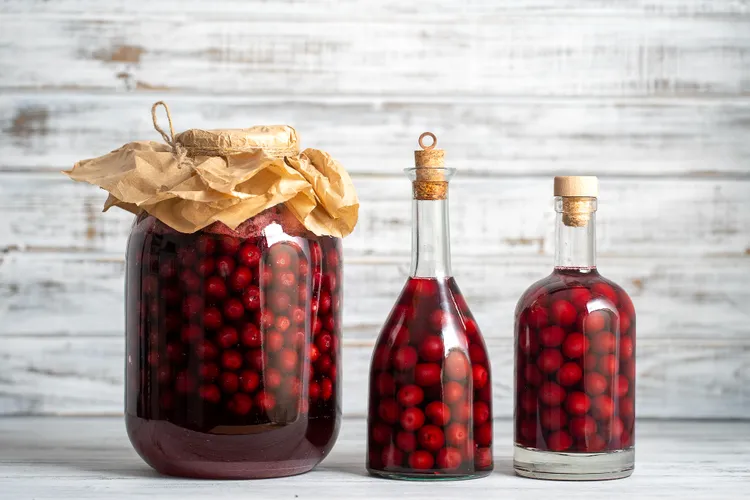
Sweet dark cherries are the raw material for two different preserves in this series, and a productive June cherry-buying session can initiate both simultaneously. Glacé cherries from the seven-day method require firm, well-sized cherries and produce a dry, concentrated confectionery suitable for baking and confectionery decoration. Cherries in brandy from the cherries in brandy guide require the firmest, largest cherries for a long soaking without disintegration and produce a boozy, luxurious dessert ingredient. The two techniques are complementary: use the largest, firmest cherries for the brandy preserve and the medium-sized ones for glacé work. From 1kg of fresh cherries, 400g of the largest go into brandy, 500g go into the seven-day glacé process, and the remainder are eaten fresh. Nothing is wasted and the session produces two excellent preserves from a single purchase. For the complete sugar preserving guide and all techniques, see the complete sugar preserving guide.
Troubleshooting Common Problems
Cherries collapse during the seven-day process almost always because the initial syrup was too concentrated. The osmotic gradient was too steep: moisture rushed out of the cherries faster than sugar moved in, and the cells collapsed. Prevention: Day 1 syrup should use no more than 200g sugar per 400ml water - a syrup that is only slightly sweeter than the cherry juice itself. If the cherries collapsed on Day 1, they are still edible (soft, sweet, good in cakes where texture is irrelevant) but cannot be recovered for decorative use. Start fresh with a more dilute syrup.
Cherries that remain opaque after all seven days: either the cherries were larger than optimal and need 2 to 3 additional days, or the daily simmering step was too brief to allow adequate heat penetration. Extend for 3 more daily sessions and check translucency by holding each cherry up to a light. Full translucency to the centre is the goal.
Cherries that become sticky after a few days of storage: the drying stage was insufficient. Return to a 60-degree oven for 1 hour, then leave at room temperature in a ventilated spot for 4 to 6 more hours. Store with a silica gel sachet in the container to absorb ambient moisture. For the complete sugar preserving guide and all techniques from glacé cherries to syrups, see the complete sugar preserving guide.
Glacé Cherries in Context
The seven-day glacé cherry method sits at the more involved end of the sugar preserving spectrum, but the daily time commitment is only 10 minutes and the result cannot be replicated commercially at equivalent quality. For bakers who make Christmas cake or simnel cake annually, glacé cherries made at home from July's fresh fruit and used in November's cake represents one of the most satisfying completions of a home preserving cycle. The cherries were made at peak quality, stored correctly, and used in the bake they were intended for. The cake tastes better. The process was self-contained and entirely under control. That is what sugar preserving at home produces at its best: ingredients of genuine quality made at the right moment and used when they are most useful. For the complete guide to all sugar preserving techniques from syrups to whole candied fruit, see the complete sugar preserving guide. Use Consillar's meal prep planner to schedule a July cherry session into your summer cooking calendar.
Latest