Cherries in Brandy
Cherries in brandy are the most luxurious fruit preserve and the simplest to make. A jar packed in July is ready for Christmas and keeps for a year.
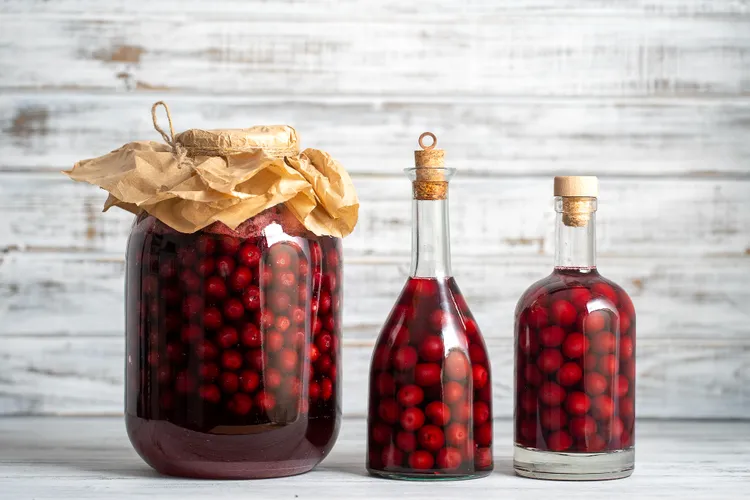
Cherries in brandy require no cooking, no sterilising of syrup, and no equipment beyond a large jar. Pack fresh cherries with sugar and brandy, seal the jar, and leave for three months while the sugar dissolves and the brandy takes on the cherry flavour. Open at Christmas to find a completely transformed product: the cherries are tender, boozy, and deeply flavoured, and the liquid has become a cherry brandy of exceptional quality.
The Method
This technique - alcohol preservation combined with high sugar - is one of the oldest methods of preserving fruit. The brandy creates an environment with too high an alcohol content for harmful microorganisms, and the sugar draws juice from the cherries while simultaneously absorbing it back to create a flavoured liqueur. No heat, no water bath, no active preservation step needed. Time does all the work.
Choosing the Brandy
A good but not precious brandy is the right choice. You want quality that contributes flavour but not a vintage Cognac that would be wasted in preserving. Spanish brandy (Brandy de Jerez) has a slightly sweeter, more rounded character that works particularly well. French VS Cognac is the classic choice. For a less expensive option, any commercial brandy at 40 percent ABV or above works. Never use a brandy below 40 percent for preserving - the alcohol content is the preservation mechanism.
Recipe: Classic Cherries in Brandy
Makes: 1 x 1-litre jar | Prep: 20 minutes | Mature: 3 months minimum
Ingredients
- 600g dark sweet cherries (Bing, Morello, or similar), washed
- 200g white granulated sugar
- 400 to 500ml brandy (enough to cover the cherries completely)
Instructions
- Wash cherries thoroughly. Dry completely - any surface water will dilute the preserve and potentially affect the preservation. Leave stems on or remove - stems look attractive but are not essential.
- Prick each cherry 2 to 3 times with a skewer or toothpick. This allows the brandy and sugar to penetrate the fruit more quickly.
- Layer cherries and sugar in a sterilised 1-litre jar, alternating layers. Pour brandy over to completely cover. The cherries will float initially - use a clean weight or a folded piece of wax paper to keep them submerged.
- Seal the jar tightly. Turn upside down and back once to begin dissolving the sugar. Store in a cool, dark place for at least 3 months. Turn the jar once a week for the first month to help the sugar dissolve evenly.
- After 3 months: the sugar should be fully dissolved, the cherries plump and brandy-soaked, and the liquid a deep ruby brandy. Ready to serve. Keeps at room temperature for 12 months once sealed; once opened, keep in the fridge and use within 3 months.
Variations
Cherries in kirsch: substitute kirsch for brandy. The cherry-distillate flavour creates an intense cherry-on-cherry result used in Black Forest cake and other Central European pastries. Cherries in rum: dark rum gives a more tropical, rounded result. Cherries in whisky: Scotch whisky with morello cherries and a cinnamon stick added to the jar produces a richly spiced result. Sloe gin cherries: a small proportion of sloe gin mixed into the brandy adds colour and berry complexity.
Using Cherries in Brandy
Served over vanilla ice cream - the single most impressive use of the least effort. As a garnish for cocktails and desserts. Spooned alongside a cheese board. Chopped and folded into a chocolate ganache for truffles. Used in the filling for a Black Forest cake. The brandy syrup strained from the jar is an excellent homemade cherry brandy: serve over ice or use as a dessert sauce. Add a teaspoon to a glass of Champagne or prosecco for a cherry kir royale. The recipe for a rum-based version pairs naturally with any of the rum baking guides at CookThisMuch's rum desserts guide.
Cherries in Brandy as a Gift
A sealed jar of cherries in brandy is one of the most universally appreciated food gifts. It is unusual enough to be interesting, practical enough to be used, and the quality of the homemade version is genuinely superior to commercial equivalents. Make a batch of 4 to 6 small jars (350ml each) in June or July. By December they are at their best and ready for gifting, still six months inside their shelf life.
Nutrition (per 30g cherries plus 15ml syrup)
- Calories: approximately 75 kcal (including alcohol content)
- Carbs: 12g (of which sugars 11g)
- Protein: 0g
- Fat: 0g
For the complete guide to sugar preserving methods, see the complete sugar preserving guide.
The Three-Month Wait
Three months is the minimum maturation time for cherries in brandy. At one month the brandy is clearly present but the cherry flavour has not fully integrated with the spirit. At two months the relationship between fruit and brandy is developing but the sugar is still perceptibly sweet rather than incorporated. At three months the sugar has fully dissolved, the brandy has taken on cherry depth, and the cherries have absorbed enough spirit to be identifiably boozy. At six months the entire jar has unified into something more complex than any of its components. At 12 months (the practical maximum), the flavours have developed as far as they will go and the cherries are deeply soft and profoundly flavoured.
If you make cherries in brandy in June, they are minimally ready by September, comfortably mature by Christmas, and at their absolute best the following June. The implication is that you should always have the previous year's batch available - make them annually and you will never wait three months. The batch being eaten was made last year; this year's batch is maturing for next year.
Alcohol Content and Food Safety
Cherries in brandy are preserved by alcohol concentration. Brandy at 40 percent ABV combined with the sugar creates a preserving medium that prevents harmful bacterial growth without any heat processing. The cherry syrup that develops is effectively a fruit brandy at approximately 25 to 30 percent ABV after dilution from the cherry juice. This is sufficient for preservation. Do not attempt to reduce the brandy quantity significantly to save cost - the preservation mechanism depends on maintaining sufficient alcohol concentration throughout the jar. For the complete guide to sugar preserving methods, see the complete sugar preserving guide. For broader home preserving context, see the homemade preserves guide.
Scaling Up for Gift Production
Cherries in brandy scales very easily because there is no cooking involved and the method is simple assembly. To make 12 x 350ml jars for gifting: use 2.5kg of cherries, 800g of sugar, and approximately 1.75 litres of brandy. The only constraint is jar size - work with whatever clean, sterilised jars you have. Swing-top Kilner jars in 350ml to 500ml sizes are ideal for gifting. Standard wide-mouth preserving jars work equally well. The visual presentation of the deep red cherries in amber brandy through clear glass is part of the gift - choose jars that show the contents rather than opaque containers.
The economics of scale are compelling. A litre of standard VS brandy typically costs fifteen to twenty pounds. Combined with 600g of fresh cherries at seasonal prices (two to three pounds per 500g) and 200g of sugar (negligible cost), a litre jar of excellent cherries in brandy costs approximately twelve to fifteen pounds in ingredients and produces something that retails for twenty to thirty pounds per 350ml jar in a specialist food shop. Making a dozen small jars for Christmas gifting costs the equivalent of two or three purchased gifts and produces twelve. For the complete sugar preserving guide and the full range of techniques, see the complete sugar preserving guide.
The Non-Alcoholic Version
For households where alcohol is not appropriate, a non-alcoholic version of cherries in syrup uses a high-concentration sugar syrup rather than brandy as the preserving medium. Combine 400g sugar with 200ml water and 100ml cherry or grape juice. Heat to dissolve. Add cherries and pack into sterilised jars with the hot syrup. The resulting preserve must be refrigerated (the alcohol preservation mechanism is absent) and used within 3 to 4 weeks. Alternatively, water bath process for 15 minutes for pantry storage up to 6 months.
The flavour of the non-alcoholic version lacks the complexity that brandy contributes, but the cherry quality is excellent and the syrup - a concentrated cherry cordial - is arguably more versatile. Add a teaspoon of vanilla extract and a cinnamon stick to the syrup for a warmer, more complex profile. A splash of balsamic vinegar (1 tablespoon per 400ml syrup) adds depth and acidity that partially compensates for the absence of alcohol's sharpness. For the complete guide to sugar preserving including all techniques from candied fruit to simple syrups, see the complete sugar preserving guide. For gift packaging, see the sugar preserves gift guide.
Cherries in Brandy Year After Year
The best way to ensure you always have mature cherries in brandy available is to make them annually and maintain a rolling stock. Make a batch every June. Eat the previous year's batch through autumn and winter. Open the current year's batch at Christmas when they have reached three months of maturity. By February, the current year's batch is at six months - the most complex and interesting stage. By the following June when you make the new batch, the current year's stock is 12 months old and at its peak. This rolling annual cycle means you are never waiting three months from a cold start. The habit of making them once a year, timed to the cherry season, is all that is needed. For the complete guide to all sugar preserving techniques, see the complete sugar preserving guide. For gift ideas using cherries in brandy, see the sugar preserves gift guide.
Quality of Fruit Matters Most
Cherries in brandy is one of the preserves where the quality of the starting fruit makes the largest difference to the finished product. The brandy and sugar will carry a good cherry forward over three months of maturation, intensifying and concentrating what is already there. If the starting cherry is mild, watery, or lacking in flavour, the finished preserve will be sweet and boozy but not interesting. The best cherries in brandy are made from intensely flavoured, firm, dark varieties at the peak of their season - not from out-of-season cherries that travelled a long distance to reach the market.
In the UK, the cherry season peaks in late June and early July. In the three to four weeks around this peak, domestic cherries from Kent and other growing regions are at their best: firm, sweet-tart, deeply coloured, and significantly cheaper than at other times of year. This is the window for making cherries in brandy. Buy double what you think you need - half for immediate eating, half for the preserve. The investment of ten minutes at peak season produces twelve months of matured cherries in brandy available from September onwards. For the complete sugar preserving guide, see the complete sugar preserving guide. Use Consillar's meal prep planner to mark the June cherry window in your cooking calendar.
Pairing and Serving Notes
Cherries in brandy are most commonly served as a dessert ingredient or accompaniment, but their range extends further. Two or three cherries dropped into a glass of prosecco or Champagne make an excellent aperitif. A cherry placed in a glass of brandy or bourbon adds colour and flavour over the course of the drink. The brandy syrup strained from the jar is a cherry brandy suitable for drinking straight over ice or mixing. A spoonful of cherries and a pour of their syrup over a scoop of vanilla ice cream takes 20 seconds and produces a dessert that is genuinely impressive. For the complete guide to sugar preserving, see the complete sugar preserving guide.
Cherries in brandy is the most patient preserve in this series and the one that rewards that patience most clearly. Three months is the minimum; six months is when they are genuinely excellent; twelve months is exceptional. Make them, label them, put them away, and forget about them until the autumn. The jar will be worth opening. For the complete guide to all sugar preserving techniques, see the complete sugar preserving guide.
Latest