Pears in Spiced Syrup
Whole poached pears in a spiced red wine syrup are a classic autumn preserve. This guide covers the method, syrup spicing, how long they keep, and the range of ways to serve them.
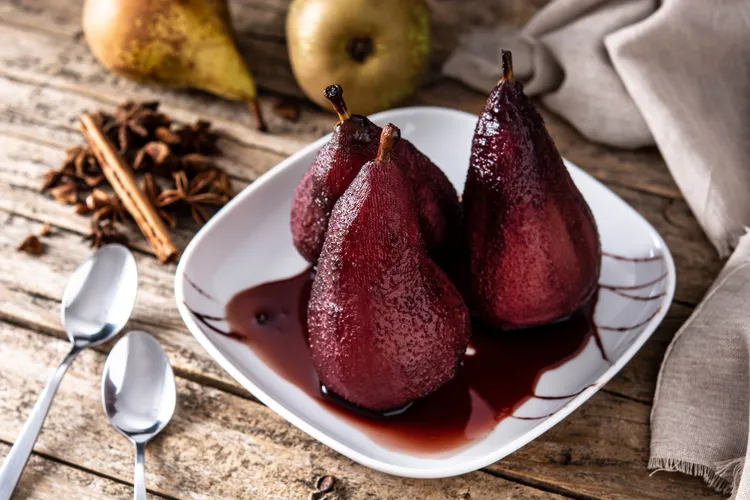
Poached pears in spiced red wine syrup sit at the intersection of preserve and dessert. They are a preserve - they keep for weeks in the fridge and longer still with water bath processing - and they are also one of the most elegant desserts a home cook can produce from a shelf ingredient. Open a jar, slip a pear into a bowl, pour the ruby syrup over it, and serve with cream or ice cream. Done in under a minute from a jar that has been sitting in the fridge since October.
Choosing Pears
Firm-fleshed varieties hold their shape through poaching and storage: Conference, Bosc (Williams Bon Chretien), and Comice all work well. Very ripe or soft-fleshed pears collapse too easily and produce a compote rather than a preserve with distinct pieces. Small to medium pears are best - they fit in jars more easily and poach more evenly than large ones. If using large pears, halve them after peeling and core before poaching.
The Syrup
A spiced red wine syrup gives the pears their distinctive deep ruby colour and warming flavour. Any good-quality drinkable red wine works - there is no need for expensive wine in a preserve syrup, but avoid wine that tastes sharp or vinegary as those qualities concentrate during cooking. Non-alcoholic versions work equally well: replace the wine with pomegranate juice for a similar colour and fruity depth, or with apple juice and a splash of red grape juice for a milder result.
Recipe: Whole Pears in Spiced Red Wine Syrup
Makes: 2 x 1-litre jars or 4 x 500ml jars | Prep: 20 minutes | Cook: 30 to 40 minutes
Ingredients
- 6 to 8 firm Conference pears (or similar), peeled, stems intact
- 750ml red wine
- 250ml water
- 300g white granulated sugar
- 1 cinnamon stick
- 3 star anise
- 6 cloves
- 4 cardamom pods, lightly crushed
- Peel of 1 orange
- 1 vanilla pod, split
- 1 tablespoon lemon juice
Instructions
- Sterilise jars.
- Combine wine, water, sugar, and all spices in a saucepan wide enough to hold the pears in a single layer. Bring to a simmer, stirring to dissolve the sugar.
- Peel the pears, leaving stems attached. Use a melon baller or small teaspoon to core them from the base, removing the core without cutting the pear in half.
- Add pears to the simmering syrup. They should be mostly submerged. Poach at a very gentle simmer, turning occasionally, for 15 to 25 minutes depending on size and ripeness. Test with a skewer through the thickest part - it should pass through with slight resistance. The pears will continue to soften in the jar.
- Transfer pears to sterilised jars using a slotted spoon. Strain the syrup through a fine-mesh sieve over the pears, filling to within 1cm of the rim. Tuck a piece of cinnamon stick and a star anise into each jar for visual appeal. Seal immediately.
- Refrigerate. Best after 48 hours once the syrup has fully penetrated the fruit. Keeps 4 to 6 weeks in the fridge, 12 months water bath processed.
Serving Ideas
A whole poached pear in a puddle of its ruby syrup alongside a quenelle of vanilla ice cream is one of the most impressive-looking desserts achievable from a jar on a shelf. Sliced and served on a tart case filled with almond cream. As a dessert with blue cheese and walnuts on a cheese board. Chopped into a salad with rocket, Gorgonzola, and toasted hazelnuts with the syrup used as part of the dressing. The syrup, strained and warmed with a splash of port or brandy, makes an excellent dessert sauce for chocolate cake.
Variation: Pears in White Wine and Saffron
Use 500ml dry white wine in place of red, omit the cloves and star anise, and add a generous pinch of saffron threads to the syrup. The result is a delicate, golden preserve with a subtle floral sweetness suited to lighter dessert applications. Use the white wine syrup rather than the spiced red version alongside fish terrines and mild fresh cheeses.
Nutrition (per pear plus 100ml syrup)
- Calories: approximately 180 kcal
- Carbs: 40g (of which sugars 38g)
- Protein: 0.5g
- Fat: 0g
For the complete guide to sugar preserving techniques, see the complete sugar preserving guide.
Testing for Doneness
Pears in syrup need to be tested at the narrowest point - typically just below the shoulder where the flesh is thickest. A skewer should pass through with moderate resistance: not freely (over-cooked), not firmly blocked (under-cooked). The pear will continue softening in the syrup for 24 to 48 hours after jarring, so erring on the side of slightly underdone at the time of packing is correct. A pear that is perfectly tender when jarred will be too soft after two days in the syrup.
Making Pears in Syrup for Water Bath Processing
For pantry storage lasting 12 months rather than 4 to 6 weeks in the fridge, water bath processing after jarring creates the vacuum seal needed. After jarring the hot pears in hot syrup, lower sealed jars into a pot of simmering water. The water should cover the lids by at least 2.5cm. Process at a full rolling boil for 20 minutes (for 500ml jars) or 25 minutes (for 1-litre jars). Allow to cool undisturbed for 24 hours. Check seals. Processed jars keep for 12 months at room temperature. The processing softens the pears slightly further - account for this when testing doneness at the packing stage by leaving them slightly underdone.
The Syrup as a Sauce and Drink
The deep red spiced syrup that remains after the pears are eaten is as useful as the fruit itself. Warm it gently and pour over a panna cotta, vanilla ice cream, or chocolate tart. Use it to poach more fruit. Reduce it by half for a thicker dessert sauce. Dilute with sparkling water for a non-alcoholic spiced berry drink. Add a splash of port or Madeira and serve warm as a pre-dessert drink in small glasses. The syrup represents a month's worth of cooking value after the pears are gone. For the complete sugar preserving guide and all techniques covered in this series, see the complete sugar preserving guide.
Choosing the Right Pear for the Method
Variety selection is critical for pears in syrup. Conference pears are the most reliable: they poach beautifully, hold their shape, and have a flavour that marries well with spice. They are available from September through February. Bosc (Williams Bon Chretien) pears have more sweetness and a slightly granular texture when raw that actually improves with poaching - they become silkier. Comice pears are delicious but ripen very quickly and have a narrower window of firmness suitable for poaching. Avoid Bartlett (Williams) pears in their very ripe state - they collapse easily. For the best results, buy firm but not hard pears and poach within 2 to 3 days of purchase.
A useful rule: if you can eat the pear comfortably at the moment of purchase, it is too ripe for poaching. Pears suitable for poaching should need another 2 to 3 days at room temperature before they reach eating ripeness. The deliberate choice of slightly underripe fruit is the single most important factor in producing pears in syrup that hold their shape through poaching and the subsequent days in the jar. For the complete sugar preserving guide covering all techniques in this series, see the complete sugar preserving guide.
Planning a Pear Season Preserving Session
Conference pears peak in October and November in the UK. A single session in mid-October using 2kg of pears produces enough for personal use and gifting: approximately 8 x 500ml jars. The pears improve in the jar over the first 2 weeks as the spiced syrup penetrates fully, reaching optimal flavour by the end of October. By Christmas they are deeply coloured and beautifully flavoured - ready for gifting or serving at a celebration dinner.
The economics of a 2kg batch: pears at seasonal price approximately two to three pounds per kilogram, a bottle of affordable red wine (four to five pounds), sugar (under one pound), spices (minimal cost if already in the pantry). Total ingredient cost under twelve pounds for eight jars. Commercial equivalents - pears in syrup from a specialty food shop - would cost eight to twelve pounds per jar. The session takes approximately 1.5 hours of active time. For planning this session into your October cooking calendar, use Consillar's meal prep planner. For the complete sugar preserving guide covering all techniques in this series, see the complete sugar preserving guide.
Pears in Syrup for Entertaining
A whole poached pear in its ruby syrup is one of the easiest impressive desserts to produce from a stored preserve. Remove a pear from the jar 30 minutes before serving to come to cool room temperature. Place in a shallow bowl with a generous pour of strained syrup. Serve alongside a scoop of vanilla ice cream and a thin almond biscuit. The presentation is elegant, the preparation is essentially zero, and the pear itself - having spent weeks deepening in flavour in the spiced syrup - tastes better than any freshly poached pear could. This is the practical argument for preserving: the work invested in October produces effortless entertaining quality throughout winter. For the complete guide to all sugar preserving techniques, see the complete sugar preserving guide.
Beyond Red Wine: Alternative Poaching Liquids
Red wine gives the pears their distinctive colour and flavour, but it is not the only option. White wine and vanilla: 500ml of dry white wine with 250ml water, 250g sugar, a split vanilla pod, and lemon peel produces a golden, delicately flavoured syrup where the pear is the foreground flavour rather than the spice. This version is more versatile - it pairs with lighter desserts and is suitable for serving alongside fish terrines and mild fresh cheeses in a savoury context. Pomegranate juice: replacing the wine with 400ml of pure pomegranate juice and 350ml of water produces a vivid ruby colour comparable to the red wine version with a sweet-tart fruitiness that is lighter and less tannic. Suitable for guests who prefer no alcohol. Cider: 500ml of medium-dry cider with 250ml water and warming spices produces an autumnal, apple-adjacent syrup that pairs naturally with blue cheese. Each variation follows the same method with identical timing and temperature. For the complete sugar preserving guide covering all techniques, see the complete sugar preserving guide.
Making the Most of the Poaching Liquid
The spiced red wine syrup after all the pears are eaten is as useful as the fruit was. Warm it gently in a small saucepan and pour over a chocolate tart as a sauce. Reduce it by half for a more concentrated sauce suitable for a panna cotta or semifreddo. Add a tablespoon of port and serve warm in small glasses before dessert as a pre-dessert drink. Stir a tablespoon into a vinaigrette for a salad of bitter leaves with walnuts and blue cheese. Add a splash to a slow-cooked lamb shoulder in the last hour of braising for sweetness and depth. The spiced wine syrup is not a waste product but a second ingredient of equal quality to the pears themselves. It keeps in the fridge for 3 to 4 weeks after the pears are gone. For the complete sugar preserving guide and all techniques, see the complete sugar preserving guide.
Final Notes on Pears in Spiced Syrup
Pears in spiced syrup is the preserve that most consistently surprises people who receive it as a gift or encounter it on a table. The deep ruby colour is striking. The flavour - pear softened by weeks in warm spice and wine - is unexpectedly complex. The ease of serving (open the jar, spoon into a bowl, pour the syrup) is in deliberate contrast to how impressive the result looks. This combination of visual impact, flavour, and effortless service is exactly what a well-made preserve delivers at its best. For all the techniques in this sugar preserving series, see the complete sugar preserving guide. Use Consillar's nutrition calculators to track pears in syrup in your daily diet.
Latest