Croissant Dough vs Danish Dough vs Puff Pastry: What's Actually Different
A clear comparison of croissant dough, Danish dough, and puff pastry - what they share, what makes each distinct, and when they can substitute for each other.
Croissant dough, Danish dough, and puff pastry all rely on the same core technique - folding butter and dough together repeatedly to build thin, alternating layers - and that shared foundation is exactly why the terminology gets confusing across different recipes and sources.
The Shared Technique
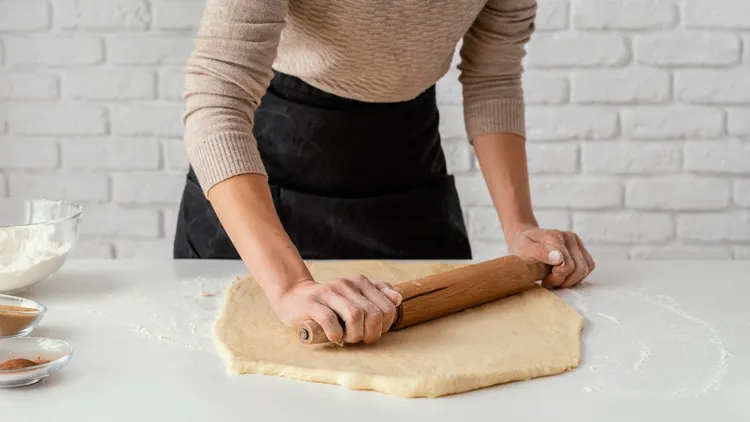
All three doughs use lamination: rolling and folding dough around a layer (or layers, after cutting the butter into it) of butter, repeated several times, to build up dozens of thin alternating sheets. In the oven, water in the butter converts to steam and pushes those layers apart, creating the flaky, layered texture common to all three. What differs between them is the base dough itself, not the lamination process.
Puff Pastry
Puff pastry contains no yeast and no enrichment beyond the butter itself - just flour, water, salt, and butter. It rises purely from steam during baking, producing a crisp, light, very flaky texture with no bread-like chew at all. It's the most neutral of the three in flavor, which is exactly why it works so well both in sweet applications (fruit tarts, palmiers) and savory ones (vol-au-vents, wellington). See our rough puff guide for a faster version of this same dough.
Croissant Dough
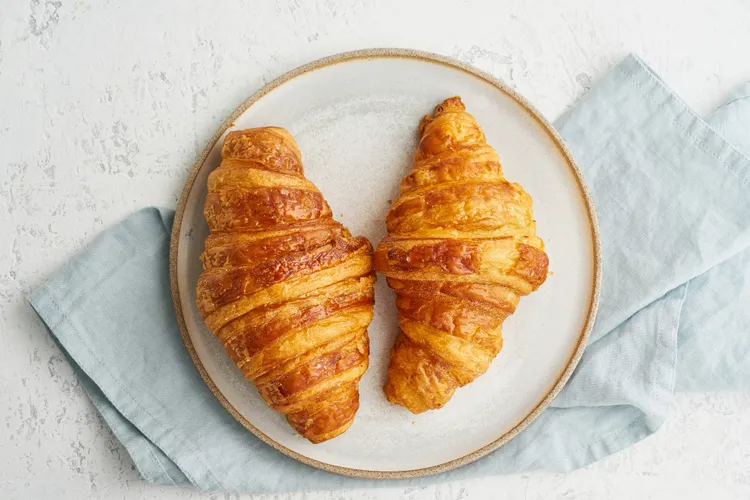
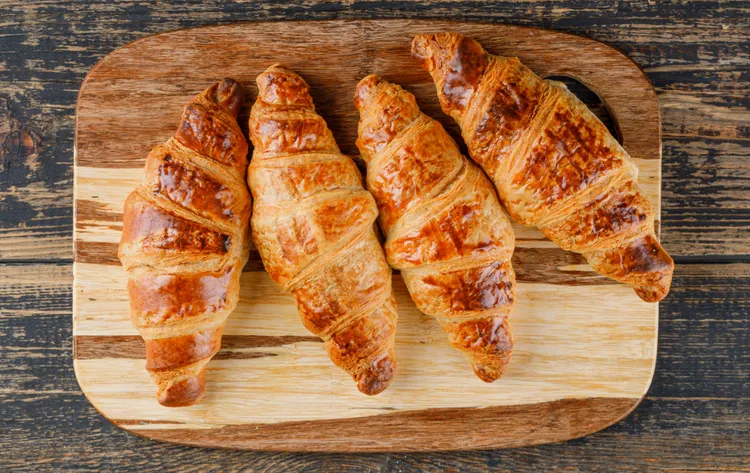
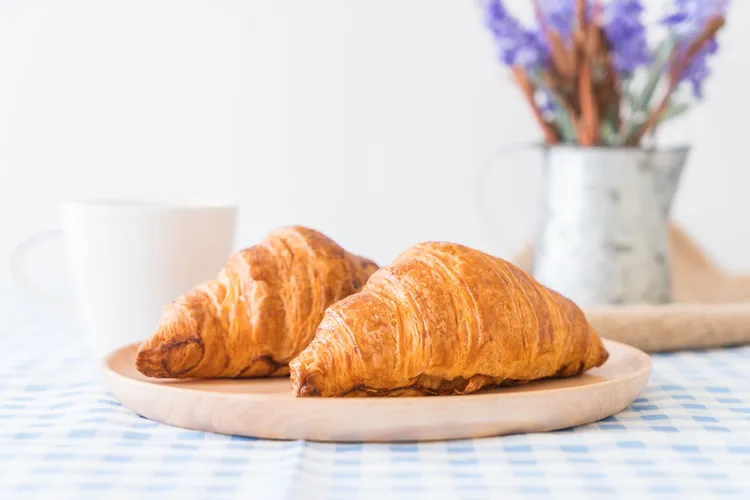
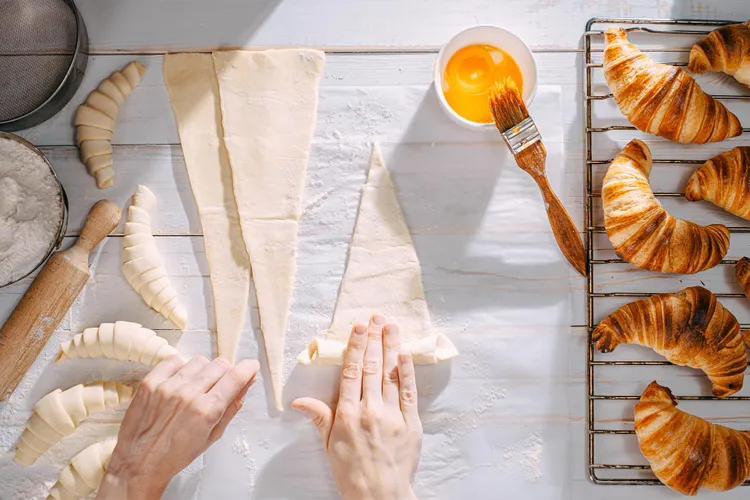
Croissant dough adds yeast and a modest amount of enrichment - milk, sugar, and a small amount of butter mixed directly into the base dough itself, in addition to the laminated butter block. The yeast means croissant dough rises in a way puff pastry doesn't, giving it a lighter, more open, bread-like interior alongside the flaky exterior lamination provides. This combination - yeasted rise plus lamination - is what makes croissants distinct from both puff pastry and plain bread.
Danish Dough
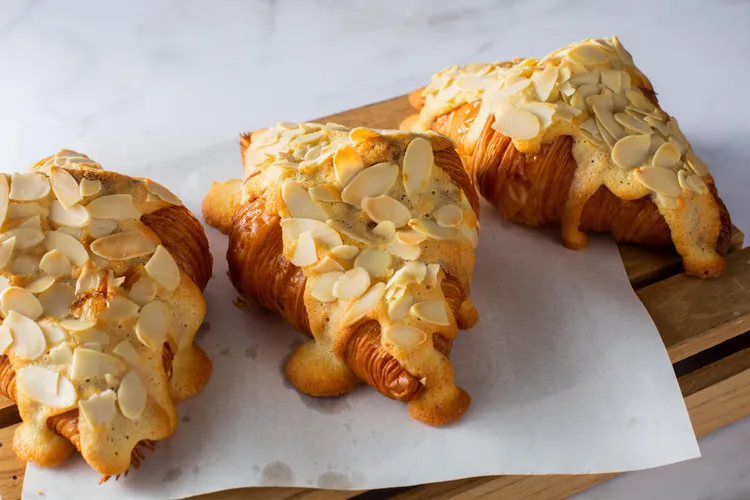
Danish dough is closely related to croissant dough - also yeasted and laminated - but typically includes more enrichment: additional egg, sugar, and sometimes cardamom or other spices worked into the base dough. This extra richness gives Danish pastry a slightly sweeter, more tender crumb than a classic croissant, and it's traditionally shaped around fillings (fruit, cheese, custard) rather than left plain the way a classic croissant often is.
A Quick Side-by-Side
- Puff pastry: No yeast, minimal enrichment, purely steam-leavened, most neutral flavor, most versatile across sweet and savory.
- Croissant dough: Yeasted, light enrichment (milk, sugar, a little butter), bread-like interior with flaky exterior.
- Danish dough: Yeasted, heavier enrichment (egg, more sugar, sometimes spice), sweeter and more tender than croissant dough, traditionally filled.
Why the Confusion Happens
Because all three share the same folding and rolling technique, and because home bakers often encounter the terms "laminated dough," "croissant dough," and "puff pastry" used loosely or interchangeably in casual writing, it's easy to end up unsure which specific dough a given recipe is actually calling for. The clearest tell is usually whether yeast appears in the ingredient list at all - if it does, you're looking at a croissant-style or Danish-style dough; if not, it's puff pastry.
Can You Substitute One for Another?
Puff pastry can generally substitute for croissant dough in shape (rolled, folded, filled the same way) but not in final texture - you'll get a crisp, flaky pastry without croissant dough's characteristic airy, bread-like chew. Croissant dough and Danish dough are closer substitutes for each other, since both are yeasted and laminated; the main practical difference in a home kitchen is that Danish dough's extra richness makes it slightly more forgiving of a warm kitchen during lamination, since the added fat and sugar affect how the dough handles.
Other Pastries Built on the Same Principle
Kouign-amann uses croissant-style laminated dough with sugar folded in during lamination itself, caramelizing as it bakes for a distinctly crisp, sugar-crusted exterior. Rough puff (see our guide) is a faster shortcut version of true puff pastry. Once the core lamination skill is comfortable, all of these become accessible with relatively small adjustments to the base dough recipe rather than an entirely new technique to learn.
Which One Should You Start With
Croissant dough is a reasonable starting point specifically because the payoff - a genuinely different, more complex result than a quick puff pastry project - makes the extra time investment feel worthwhile even on a first attempt. Rough puff is the better starting point if the goal is simply to build comfort with rolling cold, butter-laden dough before committing to a multi-day yeasted project.
How This Affects Shaping and Filling Choices
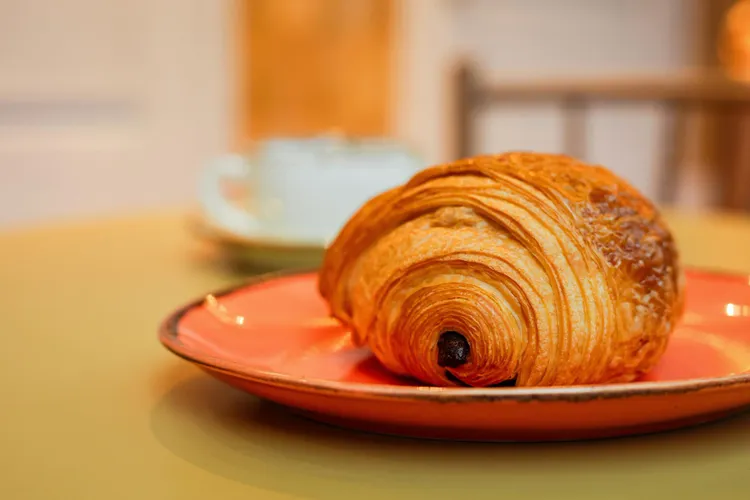
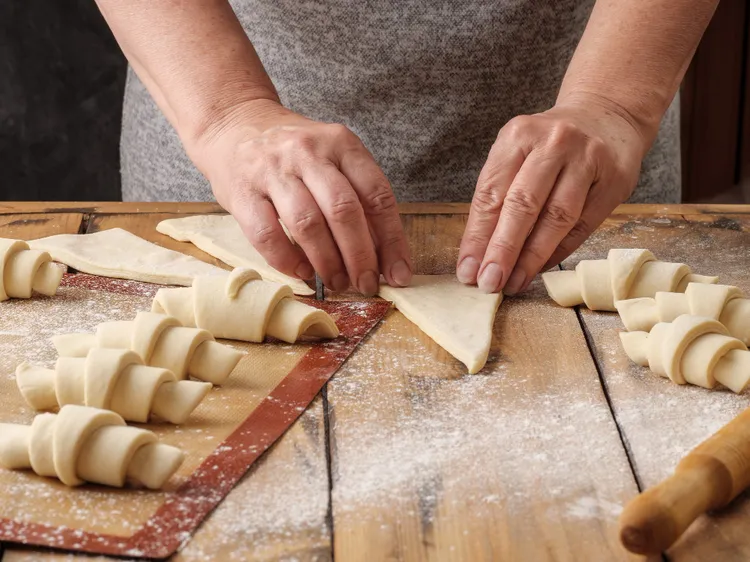
The specific dough you're working with also shapes what fillings and forms make sense. Puff pastry's neutral flavor and reliably crisp result make it well suited to savory applications where you don't want a competing sweetness or bread-like chew - think a beef wellington crust or a savory vol-au-vent. Croissant dough, with its yeasted lightness, works equally well plain or filled, savory or sweet, which is part of why it supports such a wide range of variations, from pain au chocolat to ham and cheese versions. Danish dough's extra richness leans it more naturally toward sweet, fruit-and-custard-filled applications, where its more tender, cake-adjacent crumb complements a soft filling well.
How Layer Count Differs Between the Three
All three doughs can end up with a similar number of laminated layers by the time shaping happens - often somewhere between 27 and 81 layers depending on how many folds were used - but the way those layers behave in the oven differs because of the yeast. Puff pastry's layers puff almost entirely from steam alone, giving very distinct, separated sheets in the finished pastry. Croissant and Danish dough get some separation from steam too, but the yeast's gas production adds an additional, more diffuse rise throughout the dough, which is part of why a croissant's crumb looks more like a network of irregular pockets rather than puff pastry's cleaner, more stacked layering.
Regional and Historical Notes
Puff pastry has roots in French pâtisserie going back centuries, well before the croissant as we know it today existed in its modern laminated form - the croissant most people recognize is actually a relatively recent development, refined into its current yeasted, laminated form in the early 20th century, evolving from an older, non-laminated Austrian pastry called the kipferl. Danish pastry, despite the name, has a more layered history involving both Austrian and Danish bakers, and continues to be called "Vienna bread" (wienerbrød) within Denmark itself, a nod to its Austrian roots even in its adopted home.
Substitution Cheat Sheet
- Recipe calls for puff pastry, you only have croissant dough on hand: Usable in a pinch, but expect a softer, more bread-like result than true puff pastry would give, and less crisp overall.
- Recipe calls for Danish dough, you only have croissant dough: A close substitute - the main difference will be slightly less richness and sweetness than a true Danish would have.
- Recipe calls for croissant dough, you only have puff pastry: Not a great substitute if a true croissant texture is the goal, since there's no yeast to provide the characteristic airy rise - better used for a different, puff-pastry-appropriate shape instead.
Kouign-Amann: A Fourth Related Pastry Worth Knowing
Kouign-amann deserves a mention alongside these three, since it uses croissant-style laminated, yeasted dough as its base but adds a distinctive twist: sugar is folded into the dough during lamination itself, alongside the butter, rather than being mixed only into the base dough or left out entirely. As it bakes, that sugar caramelizes against the pan and the pastry's exterior, creating a distinctly crisp, almost candy-like crust around a still-tender, laminated interior. It's a more advanced project than a classic croissant specifically because managing sugar during lamination adds another variable to control alongside butter and dough temperature, but it's a natural next step for anyone who's built confidence with the base croissant technique in this guide.
How to Tell Which Dough a Recipe Is Actually Using
When working from an unfamiliar recipe, a few quick checks clarify which of these doughs you're actually dealing with. Check the ingredient list first for yeast - its presence rules out plain puff pastry immediately. Next, check for egg in the base dough itself (not just the egg wash) and a higher proportion of sugar relative to a classic croissant recipe - both point toward Danish rather than classic croissant dough. Finally, check whether sugar appears specifically in the lamination steps themselves, folded in alongside the butter rather than just mixed into the base dough - that's the signature of kouign-amann rather than any of the other three.
Do These Doughs Taste Different Before Baking
If you've ever tasted a small pinch of raw dough while working (a common, harmless habit for experienced bakers, so long as the eggs used are pasteurized or the amount is trivial), you may notice the differences between these doughs even before baking. Puff pastry tastes mostly of butter and a faint saltiness, with no real sweetness. Croissant dough has a subtle sweetness and a faint yeasty note even raw. Danish dough tastes noticeably sweeter and richer, often with a hint of egg. This raw-taste difference is a reasonably reliable, if informal, way to double-check which dough you're actually working with if a recipe's labeling is ambiguous or you're troubleshooting an unfamiliar source.
Cost Differences Between the Three
Because of their differing enrichment levels, these three doughs also differ somewhat in ingredient cost, though the difference is generally modest given how few ingredients any of them require. Puff pastry is typically the cheapest, needing only flour, butter, salt, and water. Croissant dough adds yeast, milk, and a modest amount of sugar. Danish dough, with its extra egg and higher sugar content, costs slightly more still, though butter remains the dominant cost across all three regardless of which specific dough you're making.
Terminology in Recipes From Different Countries
Recipe terminology for these doughs varies somewhat by country and language, which can add another layer of confusion beyond what's covered here - French, German, and Scandinavian baking traditions each have their own specific vocabulary and sometimes slightly different conventions for what counts as "enriched" versus "lean" laminated dough. When working from a recipe translated from another language, it's worth focusing on the actual ingredient list and technique described rather than relying purely on the name given, since names don't always translate with perfect precision across culinary traditions.
Bringing It All Back to Practice
Understanding these distinctions matters most when it actually changes what you do in the kitchen - recognizing that a recipe calling itself "puff pastry" but including yeast is really describing a croissant-adjacent dough, for instance, or knowing that swapping Danish dough into a plain croissant recipe will shift the final result toward something sweeter and more tender than intended. Beyond that kind of practical decision-making, the terminology itself matters less than simply getting comfortable with the shared lamination technique underlying all of it, since that technique is what genuinely transfers from one dough to the next regardless of what any of them happen to be called.
Where to Go From Here
If this comparison has clarified which dough a specific recipe outside this guide is calling for, the next step is simply applying the lamination principles covered throughout this guide - temperature management, chilling discipline, and careful rolling - regardless of which specific dough you end up working with. Those fundamentals carry over completely from one laminated dough to the next, which is ultimately the more valuable, transferable takeaway from this whole comparison than any single name or definition on its own. Master the temperature and folding fundamentals once, and every laminated pastry covered here becomes accessible with only small adjustments to the base dough recipe itself, which is exactly why this comparison is worth understanding well beyond just picking the right name for a given recipe you happen to be following. The name tells you what to expect; the technique is what actually gets you there.
For the complete croissant process this comparison sits alongside, see our classic croissant recipe, or head back to the complete croissant guide.
Latest