Rough Puff: A Shortcut Lamination Method
A faster, more forgiving lamination shortcut for when full multi-day croissant dough isn't practical, with a full rough puff recipe.
Full croissant lamination is a genuine time investment, and there are plenty of situations where it isn't practical - a weeknight craving, a last-minute brunch, or simply wanting to test whether you enjoy working with laminated dough before committing to a multi-day project. Rough puff pastry is the shortcut for exactly those situations.
What Rough Puff Actually Is
Rough puff (sometimes called blitz puff pastry) skips the separate, carefully rolled butter block entirely. Instead, cold butter is cut into the flour in rough, uneven chunks - closer to how you'd make pie dough - and the folding process itself is what breaks those chunks into thin, laminated-style layers over just a few folds. It trades some of the precision and layer count of true lamination for a dramatic reduction in time and technical difficulty.
Rough Puff vs Full Croissant Lamination
- Time: Rough puff comes together in under 2 hours total, including chilling. Full croissant lamination takes 2 to 3 days.
- Technique: Rough puff tolerates uneven butter distribution and less precise rolling far better than true lamination, which makes it considerably more forgiving for a first attempt at working with butter and dough together.
- Yeast: Rough puff contains no yeast, so it doesn't rise the way a croissant does - it puffs purely from steam, giving a crisp, flaky result closer to true puff pastry than to a croissant's airy, bread-like interior.
- Result: Rough puff is flakier and crisper but denser and less airy than a true croissant. It's a different, related pastry rather than a faster path to an identical result.
Basic Rough Puff Recipe
Rough Puff Pastry
Prep time: 20 minutes, plus chilling | Makes: about 1 lb dough
Ingredients
- 2 cups (250g) all-purpose flour
- 1 tsp salt
- 1 cup (225g) cold unsalted butter, cut into 1/2-inch cubes
- 1/2 to 3/4 cup ice water
Instructions
- Whisk the flour and salt together in a large bowl.
- Add the cold butter cubes and toss to coat. Using your fingers or a pastry cutter, flatten the butter cubes roughly into the flour - you want irregular, flattened pieces of butter still clearly visible, not a fine, sandy texture.
- Add ice water a few tablespoons at a time, mixing gently with a fork until the dough just holds together when pressed. It will look shaggy and rough, not smooth.
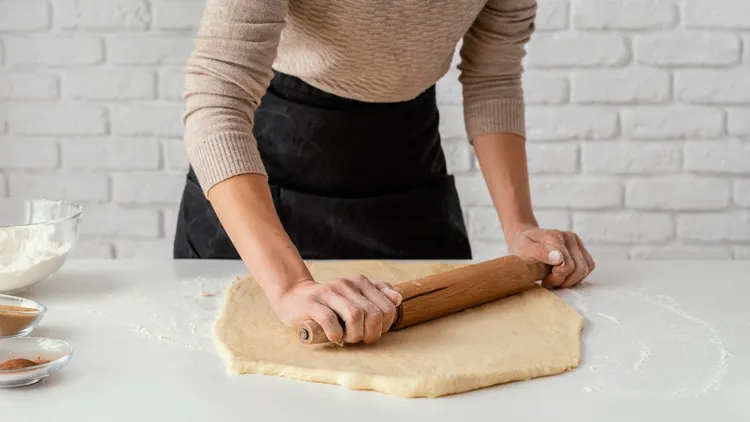
- Turn the dough out onto a floured surface and shape roughly into a rectangle. Roll it out into a longer rectangle, about 3 times as long as it is wide.
- Fold in thirds, like a letter, then rotate 90 degrees. Repeat this roll-and-fold two more times, for a total of three folds.
- Wrap and refrigerate for at least 30 minutes before using, or up to 2 days.
Notes
Unlike true croissant lamination, all three folds here can happen back to back with minimal chilling in between, since there's no separate butter block to keep intact - just brief 10 to 15 minute rests if the dough starts feeling soft.
What Rough Puff Is Good For
- Quick fruit or savory turnovers
- Tart shells and galette bases
- Palmiers and other simple shaped pastries
- A faster, flakier alternative to pie crust for savory pot pies
It's less suited to a true croissant shape specifically, since without yeast it won't rise into the airy, crescent-shaped pastry the shape is designed around - but it works very well shaped and baked as a flatter, denser pastry along similar lines.
Why Rough Puff Is More Forgiving
Because the butter starts already broken into small pieces rather than one large, carefully sized block, small temperature fluctuations during rolling matter less - there's no single large butter layer that can catastrophically merge with the dough the way a mishandled beurrage can. This makes rough puff a genuinely good practice project before attempting full croissant lamination, since it builds comfort with rolling cold, butter-laden dough without the higher stakes of a multi-day process.
When Full Lamination Is Still Worth It
If the goal is specifically a true, airy, yeasted croissant - the kind with a distinct honeycomb interior and a light, bread-like chew - rough puff won't get you there, no matter how carefully it's made. The yeast and the extended cold fermentation across the full multi-day process contribute flavor and texture that a same-day rough puff simply doesn't develop. See our classic croissant recipe when the real thing is the goal.
How Many Folds Rough Puff Actually Needs
Three folds, as in the recipe above, is a reasonable standard for most rough puff applications, but the exact number is somewhat flexible depending on how flaky you want the final result and how much time you have. Two folds produces fewer, slightly thicker layers - still flaky, but a bit less dramatically so. Four folds produces more, thinner layers, closer to what a shortcut lamination can achieve, though pushing much beyond four folds starts running into diminishing returns, since the butter pieces have already been broken down quite fine by that point and additional folding mostly just works the dough further without adding meaningfully more distinct layers.
Common Rough Puff Mistakes
- Cutting the butter too small: If the butter cubes are cut too fine, or over-mixed into the flour, you lose the distinct chunks that create layers during folding, ending up with something closer to a pie dough than a laminated one. Keep pieces visibly chunky, roughly pea to almond sized, going into the water addition.
- Adding too much water: A wetter dough is stickier and harder to roll cleanly, and it can also toughen the final result. Add water gradually and stop as soon as the dough just holds together, even if it still looks a little shaggy.
- Skipping the chill before use: Even though rough puff comes together faster than true lamination, the final chill (at least 30 minutes) still matters - it lets the gluten relax and firms the butter back up after all the rolling and folding, both of which affect how well the dough performs once baked.
Shaping Rough Puff for Croissant-Adjacent Results
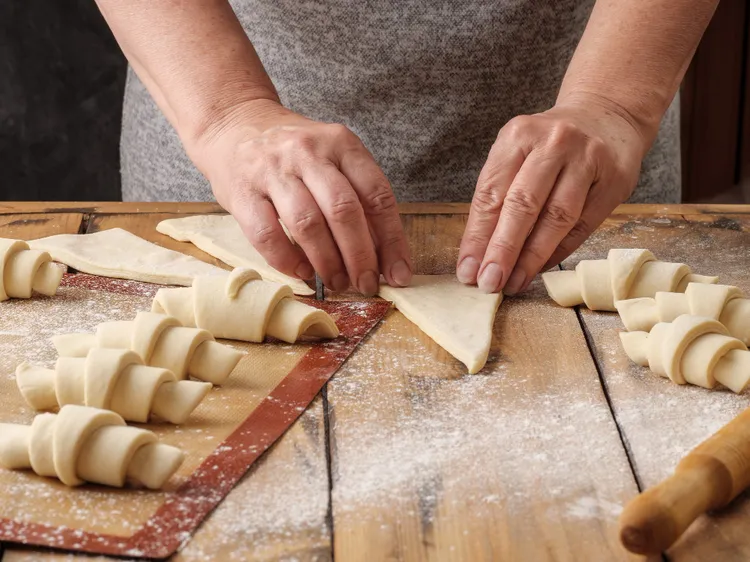
While rough puff won't rise into a true crescent shape the way yeasted dough does, it can still be cut and rolled into a similar shape for a denser, flatter pastry with a similar visual silhouette - useful if you want something in the general spirit of a croissant without the multi-day time investment. Expect a shorter, less puffed result with a texture closer to a flaky, buttery cookie or a dense puff pastry twist than a true croissant, but still genuinely enjoyable in its own right.
Freezing Rough Puff Dough
Rough puff freezes well, arguably even more conveniently than true croissant dough, since there's no separate butter block or yeast timing to worry about. Wrap the finished, folded dough tightly and freeze for up to two months; thaw overnight in the refrigerator before rolling and using. This makes it a genuinely practical thing to keep on hand for quick tarts or turnovers whenever the craving strikes, without planning a multi-day project around it.
Comparing Rough Puff to Store-Bought Puff Pastry
Store-bought puff pastry is a completely reasonable option when time is genuinely short, and it's worth acknowledging rather than dismissing outright. That said, homemade rough puff, even at its simplified, shortcut level, tends to have a noticeably better flavor from real butter (many store-bought versions use a butter-shortening blend or shortening alone) and a fresher, less processed taste overall. If flavor and a from-scratch result matter more than saving every possible minute, rough puff strikes a reasonable middle ground between the two extremes of full lamination and a frozen store-bought sheet.
Why "Rough" Is in the Name
The name reflects the deliberately imprecise, faster technique relative to classic puff pastry or croissant lamination - there's no need for a perfectly smooth, evenly rolled butter block, no need for exact temperature calibration at each fold, and no requirement for identical, machine-like layers. This rougher approach is exactly what makes it accessible without the multi-day time investment, and it's worth embracing that imprecision rather than trying to apply the same exacting standards from full lamination to a technique that's specifically designed to skip them.
Rough Puff for Beginners Learning the Croissant Process
Making a batch or two of rough puff before attempting full croissant lamination is a genuinely useful way to build comfort with the physical sensations involved - how cold butter feels and behaves under a rolling pin, how much pressure to use, what a properly chilled dough feels like versus one that's warmed too much. None of this experience is wasted once you move on to the more demanding full lamination process; if anything, it makes that first full croissant attempt feel less unfamiliar.
Sweet Applications for Rough Puff
Beyond savory turnovers and tart shells, rough puff works beautifully for simple sweet applications: cut into squares, filled with a spoonful of jam or fruit compote, folded into a triangle and baked, it makes a quick fruit turnover in well under an hour from start to finish. Brushed with egg wash and sprinkled with coarse sugar before baking, these turnovers develop a satisfying crunch that holds up nicely against a soft fruit filling.
Palmiers: A Classic Simple Shape
Palmiers - the classic French "elephant ear" cookie - are one of the simplest ways to use rough puff, requiring nothing more than rolling the dough in sugar, folding both long edges in toward the center twice, then slicing into thin cookies and baking until caramelized and crisp. This shape works especially well with rough puff specifically, since it doesn't require the more delicate handling that a full croissant shape does, making it a good low-stakes project to try the technique on before moving to something more involved.
Why Rough Puff Isn't a "Lesser" Technique
It's worth resisting the framing of rough puff as simply a worse or incomplete version of true lamination. It's a genuinely different technique suited to different goals - speed and forgiveness over maximum layer count and precision. Many professional pastry kitchens use rough puff deliberately for certain applications, not just as a beginner's substitute, precisely because its faster timeline and lower technical demands are the right tool for a given job, like a quick tart shell that doesn't need the airy lift of true croissant dough.
Storing Baked Rough Puff Items
Anything baked from rough puff - turnovers, palmiers, tart shells - keeps best in an airtight container at room temperature for two to three days, since the absence of yeast means it doesn't stale in quite the same bread-like way a croissant does. For longer storage, baked rough puff items freeze and reheat well using the same general approach described in our freezing and reheating guide, typically needing a slightly shorter reheat time given their smaller, thinner shapes compared to a full croissant.
A Reasonable Middle Ground
For anyone weighing whether to attempt full croissant lamination or reach for store-bought puff pastry, rough puff is worth keeping in mind as a genuine third option - one that delivers real, homemade flakiness and flavor without the multi-day time commitment full lamination asks for. It's not a replacement for either extreme, but a legitimately useful technique in its own right for the many situations that fall somewhere in between, and it's a technique worth having in your regular rotation even after you've built up confidence with full croissant lamination, simply because not every craving justifies a multi-day project. Keeping both techniques in your back pocket - full lamination for special occasions and rough puff for everyday flaky pastry needs - covers a much wider range of situations than committing to only one approach, and it means you'll rarely find yourself without a reasonable option regardless of how much time a given day actually allows for baking. Keep a batch in the freezer and that option is available on essentially no notice at all.
For the full comparison between rough puff, true croissant dough, and other related pastries, see our dough comparison guide, or head back to the complete croissant guide.
Latest