Pain au Chocolat Recipe (Same Dough, Different Shape)
A full pain au chocolat recipe using the same laminated croissant dough, shaped into rectangles around batons of chocolate.
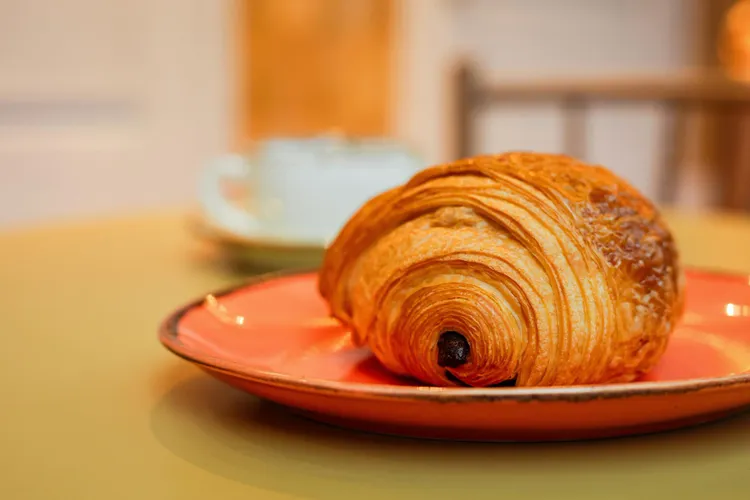
Pain au chocolat uses the exact same laminated dough as a classic croissant, with only two real differences: a rectangular shape instead of a triangle, and batons of chocolate rolled up inside. If you can make one, you can make the other.
Pain au Chocolat
Prep time: 20 minutes, plus lamination and proofing time | Makes: 10 to 12 pastries
Ingredients
- 1 full batch laminated croissant dough (see our classic croissant recipe), through the final fold and rest
- 20 to 24 chocolate batons (small rectangular chocolate sticks made specifically for this purpose), or 7 oz good semisweet chocolate cut into 3-inch batons
- 1 egg, beaten with 1 tbsp milk, for egg wash
Instructions
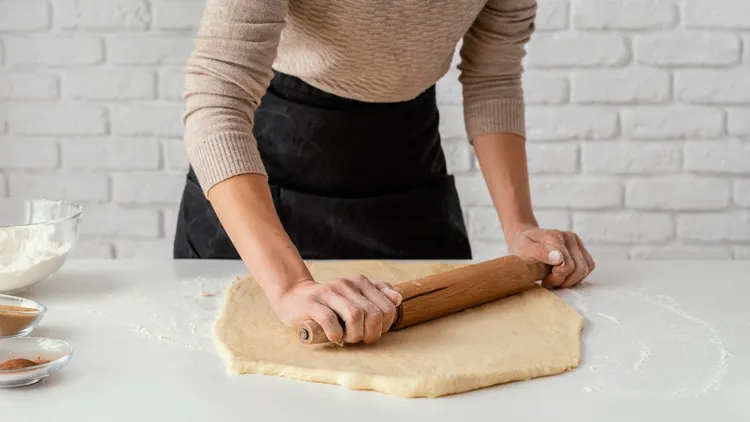
- Roll the laminated dough into a large, even rectangle, about 1/4 inch thick, the same way you would for classic croissants.
- Trim the edges for even lamination throughout, same as with triangles.
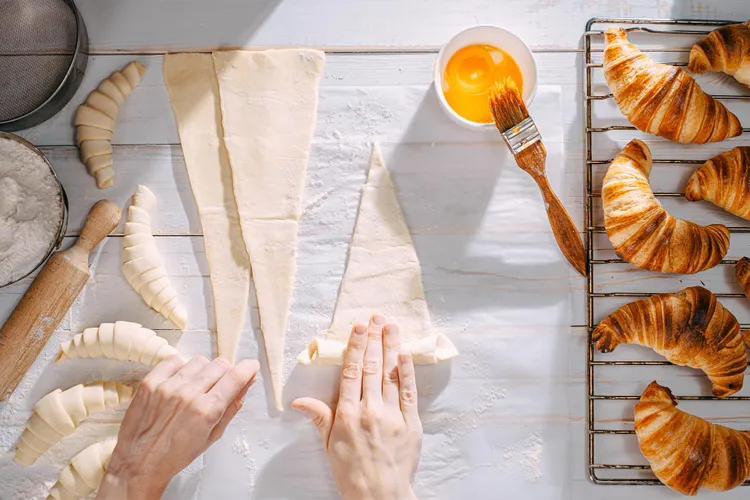
- Instead of triangles, cut the dough into rectangles roughly 4 by 5 inches.
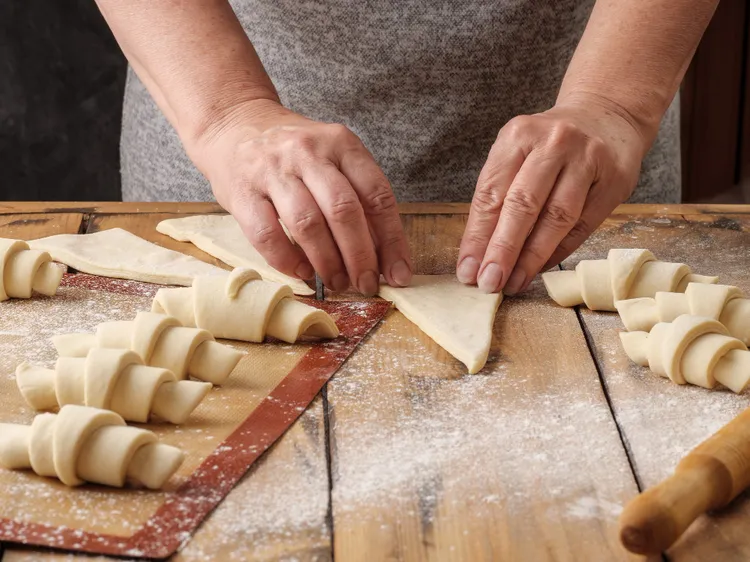
- Place one chocolate baton near one short edge of each rectangle. Roll the dough over it once, place a second baton just past the fold, and continue rolling to fully enclose both batons inside the dough.
- Place each pastry seam-side down on a parchment-lined baking sheet, spaced well apart.
- Apply a light first coat of egg wash.
- Proof at warm room temperature until visibly puffy, about 2 to 3 hours - see our schedule guide for general timing.
- Apply a second, more thorough coat of egg wash.
- Bake at 400°F for 15 to 18 minutes, until deeply golden.
- Cool for at least 15 minutes before eating - the chocolate inside stays quite hot longer than the pastry itself.
Notes
If you can't find dedicated chocolate batons, cutting a good-quality chocolate bar into evenly sized sticks works well. Avoid chocolate chips - they're formulated to hold their shape rather than melt smoothly, which gives a less satisfying, less evenly distributed result inside the pastry.
Why Two Chocolate Batons Instead of One
Using two shorter batons rather than a single long one spreads the chocolate more evenly through the finished pastry, so every bite gets some, rather than concentrating all the chocolate in one thick central seam. It also makes the rolling process itself more manageable, since you're not trying to fully enclose one long piece of chocolate in a single motion.
Choosing Chocolate
Dedicated chocolate batons (sometimes labeled "chocolate patissier" or "baking batons") are formulated to hold their shape well through baking without fully melting into a puddle, which keeps a defined chocolate layer rather than one that disappears into the dough. If substituting a chocolate bar, a semisweet or bittersweet variety in the 55 to 65% cacao range gives good balance against the buttery, slightly sweet dough - fully sweet milk chocolate can end up cloying against the richness of the pastry itself.
Shape Variations
The classic pain au chocolat shape is a rectangle, but some bakers prefer a slightly different fold - rolling the dough around the chocolate more like a scroll, with visible spiral layers on the ends similar to a cinnamon roll's cross-section. Either shape works with the same dough and chocolate; it's purely a matter of visual preference.
Common Issues Specific to Pain au Chocolat
Chocolate leaking out during baking
This usually means the dough wasn't fully sealed around the chocolate, most often at the ends of the rectangle rather than along the main seam. Press the short ends closed firmly when rolling, tucking them under slightly the way you would seal the tip of a classic croissant.
Uneven chocolate distribution
If the chocolate batons shifted during rolling, some pastries end up with chocolate concentrated to one side. Placing the batons carefully and rolling with even, consistent pressure helps keep them centered.
Dough issues
Since this uses the same laminated dough as classic croissants, all the same lamination troubleshooting applies - see our lamination mistakes guide if the pastry comes out dense rather than flaky.
Serving and Storage
Pain au chocolat is best eaten the day it's baked, ideally still slightly warm so the chocolate inside is soft. For longer storage, see our freezing and reheating guide, which covers both baked pastries and freezing the shaped, unbaked version for a bake-from-frozen morning treat.
Scaling From a Full Batch of Dough
A full batch of croissant dough (as in our base recipe) makes enough for either a full batch of classic croissants, a full batch of pain au chocolat, or a mixed batch split between the two. There's no need to make a separate dough specifically for pain au chocolat - it's simply a different way of shaping and filling the same base.
A Brief History of the Name
Pain au chocolat translates literally to "chocolate bread," though outside France it's sometimes called a chocolate croissant despite not actually being crescent-shaped in its traditional form. In parts of France, particularly the south, it's also referred to as chocolatine - a naming split that reflects genuine regional variation rather than one term being more correct than the other. Either name refers to the same pastry: laminated dough rolled around chocolate rather than left plain.
Getting the Chocolate-to-Dough Ratio Right
It's tempting, especially for chocolate lovers, to add more chocolate than a recipe calls for, but there's a real limit to how much a piece of laminated dough can hold before the extra weight and moisture from melting chocolate start working against the pastry's structure. Too much chocolate can weigh down the dough enough to prevent it from rising and puffing properly during baking, and it increases the odds of chocolate breaking through the dough at a seam as it liquefies and expands with heat. Two standard batons per pastry, as in the recipe above, is a reliable, well-tested ratio - it's worth resisting the urge to double it on a first attempt, even if it feels conservative.
Working With Melted Chocolate Instead of Batons
If chocolate batons aren't available and cutting a bar into sticks feels fiddly, a small spoonful of chocolate ganache or a thick chocolate spread can substitute, though the result will be a bit messier to shape and the chocolate is more likely to ooze out during rolling compared to a solid baton, which holds its shape and position much more predictably. If using a spread, use less than you would with solid batons and keep it well away from the edges of the dough rectangle to leave more margin for a clean seal.
Serving Pain au Chocolat Warm
Unlike some pastries that are best fully cooled before serving, pain au chocolat genuinely benefits from being eaten while the chocolate inside is still soft and just slightly melted, roughly 15 to 20 minutes out of the oven. Waiting much longer than that lets the chocolate firm back up considerably, which isn't a problem exactly, but does lose some of the pastry's signature contrast between warm, molten chocolate and crisp, flaky exterior.
Pairing Suggestions
A simple, unsweetened coffee or espresso is the classic pairing for pain au chocolat, since the pastry itself is already quite rich and sweet from the chocolate and buttery dough together - a sweeter drink alongside it can feel like too much. For a non-coffee option, a plain black or green tea offers a similar contrast without competing for sweetness.
Adjusting the Shape for a More Modern Look
Traditional pain au chocolat is a compact, seam-side-down rectangle, but a more modern presentation - popularized by a number of contemporary bakeries - rolls the dough more loosely around the chocolate to create a spiral cross-section similar to a cinnamon roll, with the layers and chocolate visible when the pastry is cut in half. Both versions use the identical dough and filling; the only difference is how tightly and in what orientation you roll. If you want to try the spiral version, roll the dough around the chocolate with slightly looser tension than a standard croissant roll, and place it on the tray so the spiral is visible from the side rather than seam-side down.
Making a Larger or Smaller Batch of Pain au Chocolat Specifically
If you know in advance that pain au chocolat is the primary shape you want from a given batch of dough (rather than splitting it between classic croissants and pain au chocolat), you can cut the entire rolled-out dough sheet into rectangles rather than triangles, which typically yields a similar total count - around 10 to 12 pastries - from a standard batch, with slightly less trimming waste than the triangle-cutting pattern requires, since rectangles use the dough's width more efficiently.
Troubleshooting Chocolate That Doesn't Stay in Place
If the chocolate batons keep sliding out of position while you roll, chilling them briefly in the fridge before assembly firms them up and makes them easier to place precisely and keep in position through the roll. Room-temperature chocolate, especially in a warm kitchen, can be soft enough to shift or even partially melt against your fingers during handling, which makes accurate placement harder than it needs to be.
Choosing Between Dark, Semisweet, and Milk Chocolate
Beyond the general 55 to 65% cacao recommendation given earlier, it's worth thinking about how the chocolate's sweetness interacts with the rest of the pastry across a whole eating experience. A darker, more bitter chocolate (70% or higher) provides a more dramatic contrast against the buttery, lightly sweet dough, appealing to those who find standard pain au chocolat a bit one-note in sweetness. Milk chocolate, while less traditional, is a reasonable choice for a milder, more universally approachable version, particularly for younger palates, though it can tip the whole pastry toward feeling overly sweet if used generously.
A Batch Variation: Chocolate Croissants Instead of Rectangles
For a hybrid approach, you can use the classic triangle-cutting and rolling technique from our classic croissant recipe, tucking a small piece of chocolate near the base of each triangle before rolling into the traditional crescent shape. This gives you the familiar crescent silhouette with a chocolate surprise inside, rather than the traditional rectangular pain au chocolat shape - a nice option if you want variety without committing an entire dough batch to one shape or the other.
Why the Filling Doesn't Interfere With Lamination Quality
Because the chocolate is added at the very last step, right before the final roll, it has no effect on the lamination process itself - all the layer-building work happens before the filling ever enters the picture. This means everything you've learned about butter block quality, temperature management, and fold technique applies identically whether you're making plain croissants or pain au chocolat; the filling is purely a shaping-stage decision layered on top of an otherwise unchanged lamination process.
A Note on Portion Size for Kids
If you're making a batch with children in mind, cutting slightly smaller rectangles and using a single, shorter chocolate baton per pastry produces a more kid-appropriately sized treat without needing to change anything else about the recipe or technique - just scale the rectangle dimensions down proportionally and adjust the bake time slightly shorter to account for the smaller size. Smaller pastries also proof somewhat faster than full-sized ones, so keep a closer eye on the visual proofing cues rather than assuming the same timing will apply exactly.
Where Pain au Chocolat Fits in a Mixed Batch
Most home bakers find the easiest approach is splitting a single batch of laminated dough between a few classic crescents and a few pain au chocolat, rather than committing an entire batch to one shape. Since both use the same dough and go through identical proofing and baking conditions, they can share a baking sheet without any adjustment, making this one of the simplest ways to add variety to a single croissant-making session, and it's a good way to gauge which shape your household prefers before committing a full batch to either one exclusively next time.
For the dough and lamination process this recipe depends on, see our classic croissant recipe, or head back to the complete croissant guide.
Latest