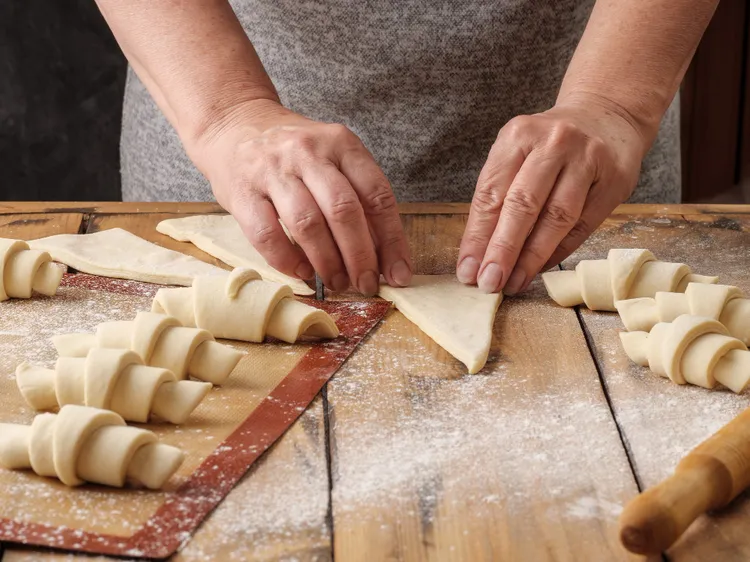
Almond Croissants From Day-Old Croissants
How to turn day-old croissants into almond croissants using simple syrup and frangipane, and why slightly stale croissants actually work better for this than fresh ones.
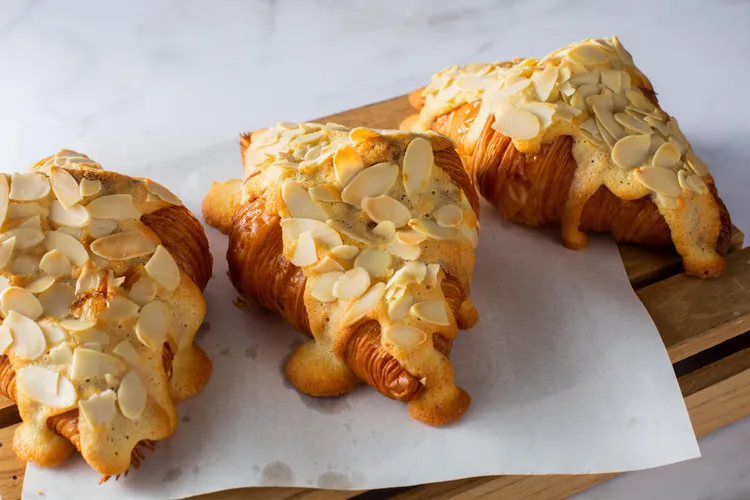
Almond croissants solve a real problem: what to do with croissants that are a day or two old and no longer at their best fresh out of the oven. Rather than being a compromise, this is genuinely one of the best things to do with day-old croissants specifically - the slight staleness is part of what makes the technique work.
Almond Croissants From Day-Old Croissants
Prep time: 25 minutes | Bake time: 15 minutes | Makes: 6 pastries
Ingredients
For the simple syrup
- 1/2 cup water
- 1/2 cup granulated sugar
- 1 tbsp rum or almond extract (optional)
For the frangipane
- 1/2 cup (115g) unsalted butter, softened
- 1/2 cup (100g) granulated sugar
- 1 cup (100g) almond flour
- 2 tbsp all-purpose flour
- 2 large eggs
- 1 tsp almond extract
- Pinch of salt
Everything else
- 6 day-old croissants (see our classic croissant recipe)
- 1/2 cup sliced almonds
- Powdered sugar, for dusting
Instructions
- Make the simple syrup: combine water and sugar in a small saucepan, bring to a simmer, stirring until the sugar dissolves. Remove from heat, stir in rum or almond extract if using, and let cool.
- Make the frangipane: beat the butter and sugar together until light and fluffy. Beat in the almond flour, all-purpose flour, and salt. Add the eggs one at a time, beating well after each. Stir in the almond extract.
- Slice each croissant horizontally in half, as if splitting it for a sandwich.
- Brush the cut sides of both halves generously with the cooled simple syrup - be generous here, since the point is to reintroduce moisture the croissant lost over the past day or two.
- Spread a layer of frangipane on the bottom half of each croissant, then replace the top half.
- Spread another thin layer of frangipane over the top of each assembled croissant, and sprinkle generously with sliced almonds.
- Bake at 350°F for 12 to 15 minutes, until the frangipane is set and golden and the almonds are toasted.
- Let cool slightly, then dust with powdered sugar before serving.
Notes
Don't skip the simple syrup step even if it feels unnecessary - it's doing the real work of bringing a stale croissant back to a pleasant, moist texture, which the frangipane alone won't fully accomplish.
Why Day-Old Croissants Actually Work Better Here
Fresh, still-warm croissants are delicate and can fall apart when sliced and soaked in syrup - the structure hasn't fully set yet. A day or two of sitting firms up the crumb slightly, making it sturdier and better able to absorb syrup without disintegrating, while still being soft enough to slice cleanly. This is one of the rare cases in baking where "not quite fresh" is actually the better starting point.
Getting the Syrup Amount Right
It's easy to underdo the simple syrup out of a reflex worry about making things soggy, but a light hand here actually produces a drier, less pleasant result than intended. Brush generously enough that the croissant surface is visibly moistened and slightly glossy, not just lightly dampened - a genuinely stale croissant can absorb more syrup than it looks like it should need.
Frangipane Consistency
The frangipane should be soft and spreadable but not runny - similar to a thick cake batter. If it seems too stiff to spread easily, a tablespoon of milk or cream loosens it up without affecting the final texture much. If it seems too loose, an extra tablespoon of almond flour firms it back up.
Variations
- Chocolate almond version: Add a layer of thinly sliced chocolate or a spread of chocolate hazelnut spread between the croissant halves along with the frangipane.
- Orange almond version: Add orange zest to the frangipane and a splash of orange liqueur to the simple syrup for a brighter, more citrus-forward result.
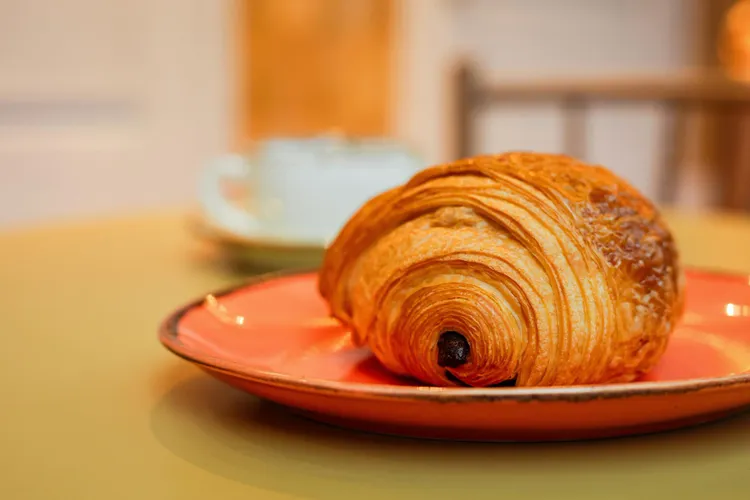
- Using pain au chocolat instead: Day-old pain au chocolat works with this same technique, adding an extra layer of chocolate flavor to the finished pastry.
How Stale Is Too Stale
Croissants one to three days old work best for this technique. Beyond that, especially if they weren't stored well, they can dry out to the point where even generous simple syrup can't fully restore a pleasant texture - see our freezing and reheating guide for the best way to store extra croissants if you're planning to make almond croissants a few days out rather than the next day.
Make-Ahead Potential
The frangipane can be made a day or two in advance and refrigerated, which makes this a genuinely convenient way to use up extra croissants from a larger batch without much same-day effort - most of the work is quick assembly once the frangipane is ready.
What Frangipane Actually Is
Frangipane is a sweet almond cream traditionally made from equal or near-equal parts butter, sugar, and ground almonds (or almond flour), bound together with egg. It's a fixture of French pastry well beyond almond croissants specifically, showing up in galette des rois and a range of fruit tarts as well. Understanding it as its own component, rather than a fixed recipe tied only to almond croissants, opens up other uses for any extra batch you make - a spoonful baked into the center of a simple fruit tart, for instance, adds richness and helps absorb excess fruit juice that would otherwise make the tart soggy.
Choosing Between Almond Flour and Almond Meal
Almond flour, made from blanched almonds with the skins removed, produces a smoother, paler frangipane. Almond meal, made from almonds with skins still on, gives a slightly coarser texture and a more rustic, flecked appearance. Either works for this recipe - it's a matter of texture preference rather than one being technically correct. If you only have whole almonds on hand, pulsing them finely in a food processor works as a substitute for either, though take care not to over-process into almond butter.
Assembling Multiple Croissants at Once
If you're working through a larger batch of day-old croissants at once, it helps to set up an assembly line rather than fully completing one croissant before starting the next: slice all the croissants first, brush all the cut sides with syrup, spread frangipane across all the bottoms, then top and finish each one. This keeps the syrup from drying out on early pieces while you're still working on later ones, and generally moves faster than a fully sequential approach.
Adjusting Sweetness
The simple syrup and frangipane together add a meaningful amount of sugar to an already lightly sweet croissant base. If you'd prefer a less sweet result, reducing the sugar in the frangipane by up to a quarter still produces a good texture and holds together fine during baking, while noticeably softening the overall sweetness. The simple syrup is harder to reduce without also reducing how much moisture it restores to the croissant, so that's a better component to leave as written even if you're adjusting sweetness elsewhere.
Storing Finished Almond Croissants
Unlike plain croissants, almond croissants with frangipane don't freeze quite as well once fully assembled and baked, since the texture of baked frangipane can turn slightly grainy after freezing and thawing. They're best made in the quantity you plan to eat within a day or two, stored at room temperature loosely covered, or in the fridge for a few extra days if needed (bringing them back to room temperature or a brief warm-through in the oven before serving).
Using This Technique on Other Day-Old Pastries
While this guide focuses on plain croissants specifically, the same syrup-and-frangipane approach works on other slightly stale laminated pastries too, not just plain crescents. Day-old pain au chocolat makes an excellent almond-chocolate hybrid using this exact method, and even day-old savory versions can theoretically be repurposed, though the sweet syrup and frangipane pair better conceptually with pastries that started out sweet or plain rather than savory.
Toasting the Almonds Before or After Baking
The sliced almonds on top will toast naturally during the 12 to 15 minute bake, but if you prefer a deeper, more pronounced toasted flavor, briefly toasting them in a dry skillet for 2 to 3 minutes before sprinkling them on gives a noticeably more intense almond flavor than relying on the oven alone. Watch them closely if you do this, since almonds go from perfectly toasted to burnt quickly once they start browning.
A Simpler, Faster Version
If the full frangipane feels like more effort than you want for a given occasion, a simplified version - just the simple syrup soak, a light dusting of powdered sugar, and a scattering of sliced almonds without any frangipane at all - still meaningfully improves a stale croissant, giving it renewed moisture and a bit of almond flavor and crunch, even without the full richness of the traditional version. This shortcut is worth keeping in mind for a quick breakfast fix rather than a more deliberate baking project.
Why This Is a Genuinely Bakery-Common Practice
It's worth knowing that using day-old croissants for almond croissants isn't a home-baker workaround or a lesser version of some "real" recipe - many professional bakeries deliberately make almond croissants specifically from the previous day's unsold plain croissants, precisely because the technique works better with slightly firmer, day-old pastry and because it's an efficient, low-waste use of inventory that would otherwise go stale unsold. Approaching this technique with that context in mind reframes it as a genuinely smart, traditional method rather than a consolation prize for imperfect timing.
Scaling the Frangipane for a Larger Batch
The frangipane recipe given above makes enough for six croissants; if you have more day-old croissants to use up, the recipe scales up linearly with no adjustments needed - simply multiply all frangipane ingredients by the same factor as the number of croissants you're working with. The simple syrup, similarly, scales easily, though it's worth making slightly more than the strict ratio suggests, since it's easy to underestimate how much a genuinely stale croissant will absorb.
Testing Doneness
The finished almond croissants should look golden and slightly puffed on top, with the frangipane set (no longer visibly wet or jiggly when the tray is gently shaken) and the sliced almonds toasted to a light golden brown. If the almonds are browning faster than the frangipane is setting, loosely tenting the tray with foil for the remaining bake time protects them from over-darkening while the interior finishes cooking through.
Serving Almond Croissants for a Crowd
Since this technique is specifically designed to use up multiple day-old croissants at once, it scales naturally for a gathering - a full batch of six or more makes a genuinely impressive brunch centerpiece for relatively little active effort, especially if the frangipane was made a day ahead. Arrange them on a large platter dusted generously with powdered sugar right before serving for the best visual presentation, and consider dusting again just before guests arrive if there's any delay, since powdered sugar can absorb into the surface and lose some visibility over time.
Why This Belongs in Every Croissant Baker's Toolkit
Once you've made a full batch of croissants once, you'll likely have leftovers at some point, and knowing this technique means those leftovers are never a letdown - they're simply a different, arguably even more indulgent pastry waiting to happen. It's worth thinking of almond croissants not as a backup plan but as a genuine second recipe built into the value of every batch of dough you make, one that's arguably worth planning for deliberately by baking a slightly larger batch than you need fresh, specifically so a portion is guaranteed to reach that ideal one-to-two-day mark. Between the technique itself and the flexibility it offers for planning ahead, it's genuinely one of the more useful things to know once you're regularly making croissants at home, turning what could be wasted pastry into one of the more memorable items on the breakfast table, and a genuinely satisfying use of a day or two's patience.
For the base croissant recipe this technique repurposes, see our classic croissant recipe, or head back to the complete croissant guide.
Latest