Ham and Cheese Croissants
A savory ham and cheese croissant recipe built on the same laminated dough, with technique for sealing and preventing a soggy bottom.

Savory croissants use the same laminated dough as their sweet counterparts, with ham and cheese folded in during shaping rather than added as a plain crescent. The lamination technique doesn't change at all - only what happens in the final shaping step.
Ham and Cheese Croissants
Prep time: 20 minutes, plus lamination and proofing time | Makes: 10 to 12 pastries
Ingredients
- 1 full batch laminated croissant dough (see our classic croissant recipe), through the final fold and rest
- 8 to 10 oz thinly sliced good-quality ham
- 8 oz gruyère or another good melting cheese, thinly sliced or shredded
- 1 tbsp Dijon mustard (optional, for a sharper flavor)
- 1 egg, beaten with 1 tbsp milk, for egg wash
Instructions
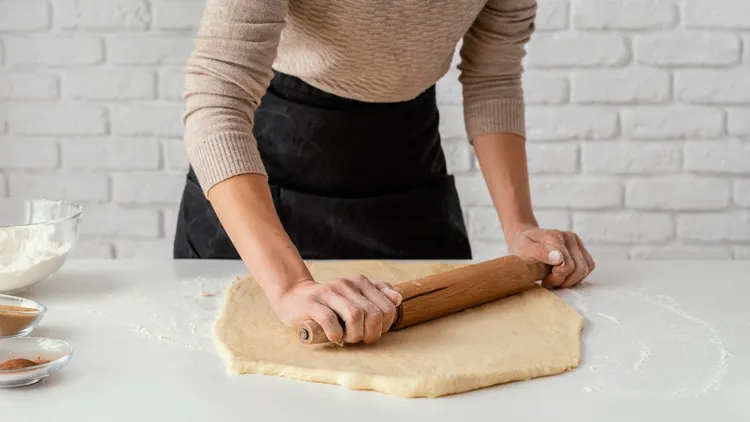
- Roll the laminated dough into a large, even rectangle, same as for classic croissants, and trim the edges.
- Cut the dough into rectangles roughly 4 by 6 inches - slightly larger than for pain au chocolat, to accommodate the filling.
- If using mustard, spread a thin, even layer across each rectangle, leaving a small border around the edges.
- Layer a slice or two of ham and a portion of the cheese over roughly two-thirds of each rectangle, leaving the far third bare.
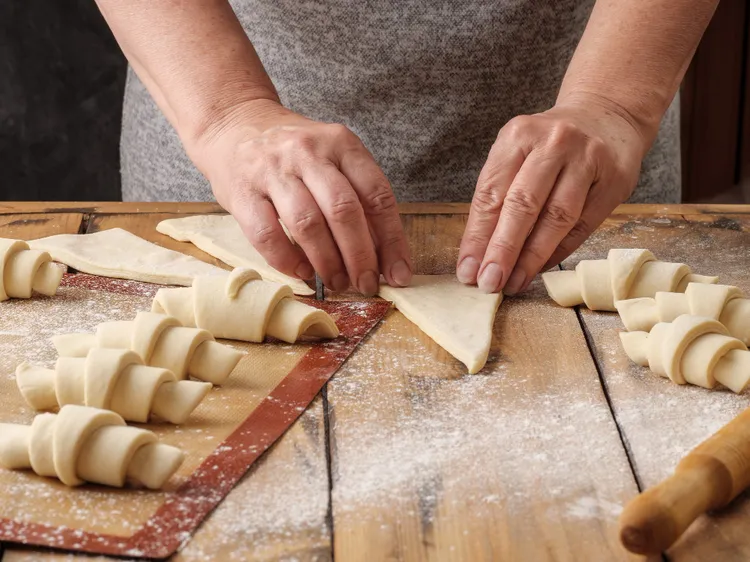
- Roll each rectangle up starting from the filled end, ending with the bare dough wrapped around the outside to help seal everything in.
- Place seam-side down on a parchment-lined baking sheet, spaced well apart.
- Apply a light first coat of egg wash and proof at warm room temperature until puffy, 2 to 3 hours.
- Apply a second coat of egg wash before baking.
- Bake at 400°F for 16 to 20 minutes - slightly longer than plain croissants, since the filling adds mass and moisture that takes a bit more time to bake through.
- Let cool for at least 10 minutes before eating; the cheese stays extremely hot immediately out of the oven.
Notes
Watch these more closely than plain croissants near the end of baking - the cheese can bubble out and brown quickly once it starts escaping, and a tray that looks perfect at 16 minutes can go from golden to overly dark within another minute or two.
Choosing Ham and Cheese
Thinly sliced deli-style ham works better than a thick-cut version, since thick slices add too much bulk relative to the dough and can make the pastry harder to seal and roll evenly. Gruyère is the classic choice for its good melt and nutty flavor, but other good melting cheeses - Swiss, fontina, or a sharp cheddar for a different flavor direction - all work well.
Preventing a Soggy Bottom
Ham and cheese release some moisture as they heat, which can occasionally make the base of the pastry slightly less crisp than a plain croissant. Leaving that bare third of dough to wrap around the outside (rather than filling the pastry edge to edge) helps contain this, since it gives the moisture somewhere to be absorbed by dough rather than escaping directly onto the baking sheet.
Sealing the Filling In
Unlike plain croissants, where the tip alone needs sealing, savory filled versions benefit from a firmer press along the entire seam where the dough overlaps itself, since cheese in particular can find its way out through any gap as it melts and expands. A light press with your fingers along the full length of the seam, right after rolling, is usually enough.
Variations
- Spinach and feta: Substitute sautéed, well-drained spinach and crumbled feta for a vegetarian version - drying the spinach thoroughly first matters even more here, since spinach releases significant water as it heats.
- Turkey and swiss: A lighter alternative to ham, following the same technique.
- Everything-seasoned version: Sprinkle everything bagel seasoning over the second coat of egg wash before baking for extra crunch and flavor on top.
Serving Suggestions
These make a substantial enough breakfast or brunch item to serve alone, especially alongside a simple green salad for a light lunch. They also travel and reheat well enough to be a genuinely good make-ahead option for a busy week - see our freezing and reheating guide for the best approach to bringing back their texture without drying out the cheese filling.
Same Dough, Different Result
It's worth remembering that everything about the lamination process - the temperature sensitivity, the folding technique, the proofing cues - carries over directly from the base recipe. If your ham and cheese croissants come out dense rather than flaky, the cause is almost certainly the same lamination issue that would affect a plain batch; see our lamination mistakes guide for troubleshooting.
Balancing Savory Fillings Against the Dough's Sweetness
Standard croissant dough includes a modest amount of sugar, which is barely noticeable in a plain croissant but becomes a more deliberate flavor contrast once ham and cheese are involved. Most people find this contrast pleasant - a hint of sweetness against salty ham and nutty cheese is a fairly classic pairing - but if you'd prefer a more purely savory result, you can reduce the sugar in the base dough recipe by about half specifically for a batch you're planning to fill this way, without meaningfully affecting the yeast's ability to work or the lamination process itself.
Portion Sizing for Savory Croissants
Because ham and cheese croissants tend to be eaten as more of a meal than a plain croissant (which often functions more as a light breakfast item or accompaniment), it's worth cutting the dough into slightly larger rectangles than the ones used for a plain crescent, which the recipe above already accounts for. If you want an even heartier result, sizing up further and using two rectangles' worth of dough rolled together is a reasonable adjustment, though it will need a few extra minutes of baking time to cook through fully.
Make-Ahead Assembly
The filling itself - sliced ham, sliced or shredded cheese, mustard if using - can all be prepped and portioned out the night before, stored separately in the fridge, so that shaping day moves faster and you're not slicing cheese while also managing dough that needs to stay cool. This is a small time-saver, but a meaningful one on a morning where you're also managing proofing time and trying to have a finished breakfast ready at a reasonable hour.
A Note on Reheating Leftovers
Because these contain melted cheese, reheating leftover ham and cheese croissants benefits from slightly gentler heat than plain croissants to avoid the cheese scorching before the pastry itself is fully warmed through. A 300°F oven for about 8 to 10 minutes, checked partway through, tends to work well - see our freezing and reheating guide for more detail on storage and reheating generally.
Other Savory Directions Worth Trying
Once the basic technique of folding a savory filling into laminated dough feels comfortable, it opens up to a wide range of other combinations beyond ham and cheese - caramelized onion and gruyère, sun-dried tomato and mozzarella, or a simple pesto and parmesan version all follow the same shaping and sealing approach with just a different filling swapped in.
Serving These as Part of a Larger Spread
Ham and cheese croissants hold up well as part of a brunch spread alongside other dishes, since they don't require last-minute plating the way a hot egg dish might - baking them slightly ahead and keeping them warm in a low oven (around 200°F) for up to 20 minutes works fine without drying them out significantly. This makes them a genuinely practical choice for a gathering, since a batch can be shaped and baked in advance of guests arriving without needing to time everything down to the minute.
A Note on Portion Cost
Because these use quality deli ham and a good melting cheese in addition to an already butter-rich dough, they're a noticeably more expensive pastry to make than a plain croissant, ingredient for ingredient. This is worth keeping in mind if you're making a large batch specifically for a crowd - splitting a single batch of dough between some plain croissants and some ham and cheese versions is often a more cost-effective approach than making an entire batch as the filled version, while still offering variety on the table.
Cheese Melt Behavior to Expect
Different cheeses melt at different rates and to different degrees of ooziness, which is worth knowing before you commit to a specific one for a batch you're planning ahead for a specific occasion. Gruyère melts smoothly and evenly without becoming excessively runny, which is part of why it's the traditional choice. A very high-moisture, fresh mozzarella, by contrast, can release more liquid as it melts, which is more likely to contribute to the soggy-bottom issue discussed earlier - if using mozzarella, a lower-moisture, part-skim version behaves more predictably in this application than a fresh, wet mozzarella ball would.
Ham Quality and How It Affects the Finished Pastry
Since ham is one of only a few flavor components in this recipe, its quality matters more than it would in a dish with many competing ingredients. A well-cured, thinly sliced deli ham, or a good quality baked ham sliced thin at home, gives noticeably better flavor than a heavily processed, water-added supermarket ham. Black Forest ham, a classic French ham, or a good quality Virginia-style ham all work well and bring slightly different flavor notes - smokier, saltier, or sweeter respectively - to the finished pastry.
Adjusting for a Crowd With Mixed Preferences
If you're baking for a group with a mix of preferences - some who want the classic ham and cheese, some who'd prefer plain, some who might want a vegetarian option - a single batch of dough can be split three ways relatively easily, since the shaping and filling steps happen at the very end of the process, well after lamination is complete. Divide the rolled-out, laminated dough into sections before cutting individual shapes, and treat each section according to whichever filling (or no filling at all) that portion is intended for.
Why These Don't Need a Dipping Sauce
Unlike some savory pastries that lean on an accompanying sauce for full flavor, a well-made ham and cheese croissant is intended to be a complete, self-contained bite - the mustard folded inside (if used) and the melted cheese together provide enough moisture and flavor complexity that an additional sauce on the side, while not unwelcome, isn't really necessary the way it might be for a plainer pastry.
Pairing With a Simple Side
Because these are substantial enough to function as a light meal, a simple side is usually all that's needed to round things out - a small green salad with a light vinaigrette, or a bowl of fresh fruit, both work well without competing with the richness of the pastry itself. Avoid pairing with another heavy, buttery dish, since the croissant alone already covers that side of the meal. A light, acidic side actually helps cut through the richness of the butter, ham, and cheese together, making the overall meal feel more balanced rather than heavy.
Mixing Savory and Sweet in One Batch
Just as with pain au chocolat, there's no reason a single batch of dough can't be split between ham and cheese and a sweeter shape, giving a spread that covers both breakfast preferences at once. Keep savory and sweet fillings on separate portions of your work surface while assembling to avoid any cross-contamination of flavors, and consider a small visual marker - a different fold direction or a sprinkle of seeds on the savory ones - so they're easy to tell apart once they're all on the same tray, especially useful if you're serving a mixed group and want to point people toward the version they'd prefer without cutting into each one to check. A small dusting of everything bagel seasoning on the savory ones and a light sprinkle of coarse sugar on the sweet ones works well as a simple, edible label that doubles as extra flavor and texture.
For the dough this recipe is built on, see our classic croissant recipe, or head back to the complete croissant guide.
Latest