What to Cook With Your First Spring Harvest: Radishes, Peas and Asparagus
Simple ways to use the earliest producers of the growing season, all of which are best eaten within a day or two of picking.
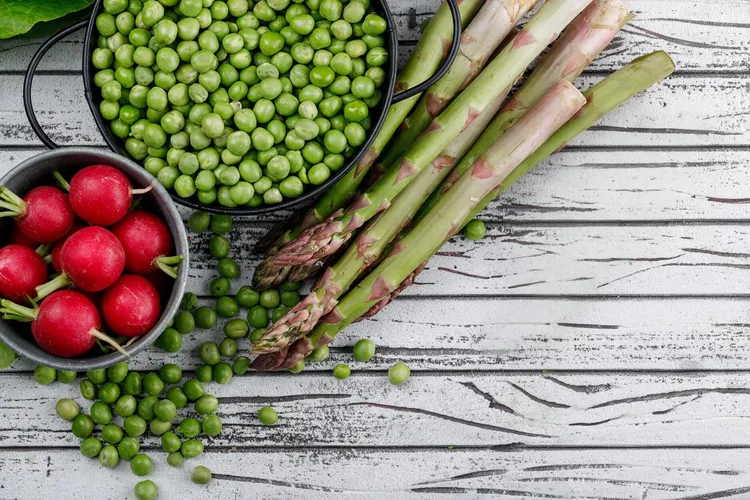
The first harvest of the season is usually a small one, a handful of radishes, a few handfuls of peas, maybe an established asparagus bed sending up its first spears, but it's worth treating with more attention than the volume suggests. These earliest crops are also some of the most perishable in the whole garden, and their flavor drops off fast once picked.
Radishes: Ready in About a Month
Radishes are usually the first thing a spring garden produces, going from seed to harvest in roughly four weeks. Their peppery bite is strongest right after picking and mellows over the following days, so eating them soon after harvest, rather than letting them sit, gives the fullest flavor. A fresh radish salad with lemon and parsley uses them raw and crisp, which is where radishes are at their best; cooked radishes lose some of their signature sharpness and take on a milder, almost turnip-like flavor instead, which some cooks prefer for a change of pace. Pairing radishes with eggs, as in bacon and radish fried eggs, is a good way to use a small daily handful in a proper meal rather than just a snack.
Peas: Cook Them the Day They're Picked
Peas convert their sugar into starch within hours of being picked, which is why a pea eaten straight from the vine tastes noticeably sweeter than one bought at a store or even one that sat in the fridge overnight. Shelling peas the same afternoon they're harvested, rather than saving the task for later, makes a real difference in flavor. Snap and snow peas, eaten pod and all, hold their sweetness a bit longer than shelled peas but still taste best within a day of picking.
A Simple Radish and Pea Sauté
Radishes and peas are a natural pairing in the garden and in the kitchen, since they're often ready around the same time. Halved radishes cooked cut-side down in butter for a few minutes mellow their sharpness and pick up a light golden color; adding shelled peas for the last minute or two of cooking keeps them from overcooking and turning starchy. Finished with a squeeze of lemon and some chopped herbs, this takes about ten minutes start to finish and uses a typical early harvest of both crops.
Asparagus: Established Beds Need Almost No Prep
Asparagus is a perennial crop, meaning an established bed comes back on its own each spring without replanting, and the spears that come up in the first few weeks are usually the most tender of the season. Snapping off the woody bottom of each spear, rather than cutting with a knife, naturally finds the point where the stalk turns tough. Foil-baked salmon with roasted asparagus pairs the vegetable with whatever protein is on hand and needs almost no other prep, which fits the light, early-season harvest well.
Why None of This Should Wait
All three of these crops share one trait: they don't hold well, and their quality drops noticeably within a couple of days of harvest. Unlike a fall squash that can sit on the counter for months, radishes, peas, and asparagus are at their best eaten the same day or the day after picking, which means the plan for using them should be decided before the harvest, not after.
Reading a Radish Before You Pick It
A radish left in the ground too long, even by just a week past ideal, tends to grow woody and develop a hollow center, which isn't obvious from looking at the greens above ground. Checking the shoulder of the root, the part just visible at the soil surface, gives a rough sense of size, and pulling one test radish from a row is a reasonable way to check readiness before harvesting the whole planting. Radishes generally taste best pulled at about an inch in diameter for most common varieties; larger doesn't mean better with this particular crop, unlike many other root vegetables.
Radish greens themselves are edible and often overlooked, with a slightly peppery, mustardy flavor similar to arugula. Sautéed briefly with garlic, they make a reasonable use of a part of the harvest that would otherwise go straight to the compost pile, especially useful if a radish planting comes in all at once and using every part of it feels more efficient than discarding half.
Peas Beyond the Shell: Snap, Snow, and Shoots
Not all peas are shelled. Snap peas are eaten pod and all, snapped in half and eaten raw or barely cooked, while snow peas have flatter, more tender pods that work well in a quick stir-fry. Both hold their sweetness a bit longer after picking than shelled peas do, though "a bit longer" still means using them within a day or two rather than treating them as a storage crop. Pea shoots, the tender tips of the growing vine, are also edible and make a good early, fast-growing addition to a salad well before the pods themselves are ready, which is worth knowing for gardeners who want something usable from a pea planting even earlier in the season.
Extending the Radish and Pea Window
A single sowing of radishes or peas has a relatively short productive window, typically two to three weeks before radishes turn woody and pea vines slow down in the heat. Sowing a second, smaller batch two to three weeks after the first stretches the harvest a bit longer without overwhelming the kitchen all at once, which is a useful habit to build into next year's planting even if this year's first batch is already in the ground.
What Comes Right After
This first wave of harvest typically overlaps with the tail end of spring greens and leads directly into the herb and garlic harvest of early summer. How to Cook With What You Grow: A Season-by-Season Guide lays out the full sequence from this earliest planting through to the following winter's storage crops.