Fruit Jelly and Pate de Fruit
Pate de fruit - firm, jewel-like fruit jellies coated in sugar - is the preserve closest to confectionery. This guide covers the technique, pectin requirements, and tested recipes for raspberry and quince versions.
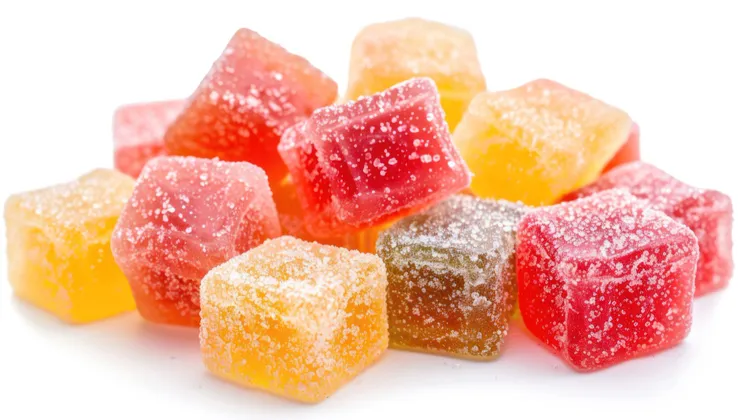
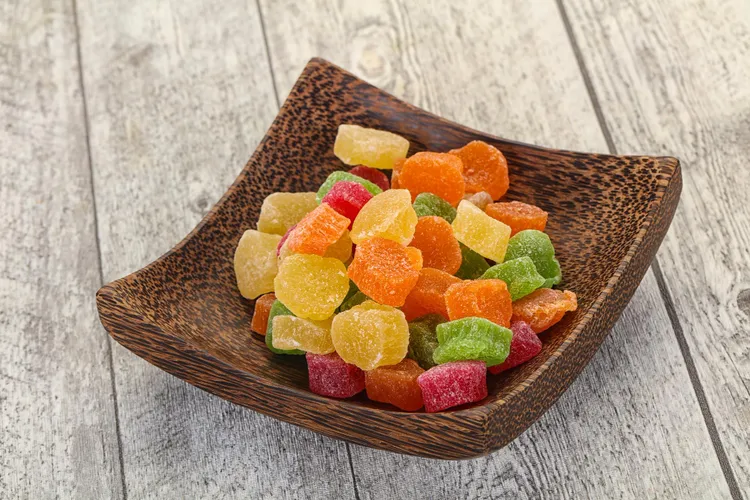
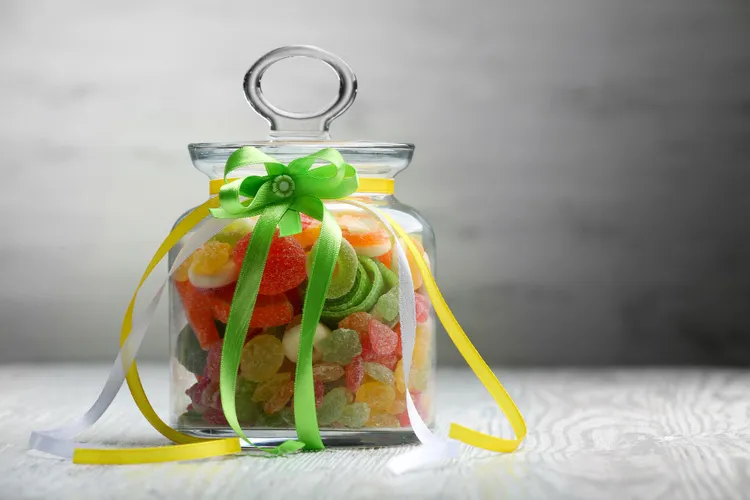
Pate de fruit is the preserve that most resembles confectionery. It is a firm, jewel-coloured fruit jelly cut into squares and coated in sugar - the type of thing displayed in glass jars at French patisseries and sold for considerably more per gram than they cost to make. The technique requires a sugar thermometer and some patience but no advanced skill. The result is something genuinely impressive that most people have not eaten before and would not know how to make.
How Pate de Fruit Works
Pate de fruit is jam taken to a higher sugar concentration and poured into a flat layer to set solid. Where jam sets at approximately 105 degrees Celsius to a spreadable gel, pate de fruit is cooked to 107 to 110 degrees and contains enough pectin to set to a firm, sliceable mass. The high sugar concentration (65 to 70 percent) preserves it at room temperature. The coating of granulated sugar prevents the pieces from sticking together and adds a crunchy texture contrast to the soft fruit interior.
Pectin Requirements
Pate de fruit needs high pectin fruit or added commercial pectin. Apple and quince have enough natural pectin to set firmly. Raspberry, strawberry, and blackcurrant need commercial liquid or powdered pectin added. The classic approach uses fruit puree with added pectin rather than whole fruit - this gives a smooth, intensely flavoured interior rather than the seed and skin texture of jam.
Recipe 1: Raspberry Pate de Fruit
Makes: approximately 36 pieces (one 20x20cm slab) | Prep: 20 minutes | Cook: 20 minutes | Set: 12 hours
Ingredients
- 500g fresh or frozen raspberries
- 400g white granulated sugar, divided (350g in the cook, 50g for coating)
- 20g liquid pectin (or follow powdered pectin packet for equivalent setting strength)
- 2 tablespoons lemon juice
- 1 tablespoon glucose syrup (optional, prevents crystallisation)
Instructions
- Line a 20x20cm baking tin with cling film or lightly oiled baking paper. Lightly oil the surface.
- Puree raspberries and press through a fine sieve to remove all seeds. You need 300ml of seedless puree.
- Combine puree, lemon juice, and glucose syrup (if using) in a heavy-based saucepan. Bring to a simmer.
- Add 350g sugar in three additions, stirring to dissolve each time. Add liquid pectin and stir in well.
- Bring to a boil over medium-high heat, stirring constantly. Cook to 107 to 108 degrees Celsius on a sugar thermometer. The mixture will be very thick and will pull away from the sides of the pan when you stir. This takes 8 to 12 minutes of active cooking.
- Pour immediately into the prepared tin. Smooth the surface. Leave to set at room temperature for at least 12 hours - overnight is better.
- Once fully set, turn out onto a board dusted with sugar. Cut into 2x2cm squares. Roll each piece in the remaining 50g of granulated sugar to coat completely. Store in layers separated by baking paper in an airtight container at room temperature. Keeps 3 to 4 weeks.
Recipe 2: Quince Pate de Fruit
Quince has naturally high pectin and sets without added commercial pectin. The result is firmer, more amber-coloured, and has a distinctive floral quince flavour.
Makes: approximately 36 pieces | Prep: 30 minutes | Cook: 40 minutes | Set: 12 hours
Ingredients
- 600g quince (approximately 2 large), peeled, cored, roughly chopped
- 150ml water
- 400g white granulated sugar, divided
- 1 tablespoon lemon juice
Instructions
- Simmer quince in 150ml water with lemon juice for 20 to 25 minutes until completely soft. Blend to a smooth puree.
- Return puree to pan. Add 350g sugar and stir to dissolve over medium heat.
- Cook over medium-high heat, stirring constantly, until the thermometer reads 107 to 110 degrees Celsius and the paste pulls cleanly from the pan sides. Quince paste needs longer than raspberry - expect 20 to 25 minutes of active cooking.
- Pour into a lined tin. Set overnight. Cut and coat in sugar as above.
Troubleshooting
Pate de fruit too soft after setting: did not reach the correct temperature. Return to the pan, add a teaspoon of additional pectin dissolved in a tablespoon of water, reheat to 108 degrees and reset. Pate de fruit too hard and crystalline: overcooked or glucose syrup was omitted. Still edible but texture is less pleasant. Coating sugar dissolves and becomes wet: humidity absorbed the sugar from the coating. Store in a sealed container with a silica gel sachet.
Nutrition (per piece, approx. 10g)
- Calories: approximately 35 kcal
- Carbs: 9g (of which sugars 9g)
- Protein: 0g
- Fat: 0g
For the complete guide to sugar preserving techniques, see the complete sugar preserving guide.
Pate de Fruit as a Gift
Pate de fruit packaged in small boxes is one of the most impressive food gifts in the sugar preserving repertoire. A box of six or eight jewel-coloured squares - raspberry red, quince amber, blackcurrant purple, apricot orange - looks like something from a French confectionery and costs a fraction of what it would retail for. The presentation matters: lay them in a single layer in a box lined with tissue paper, separated from each other and from the paper by small squares of baking paper to prevent sticking. Add a small label identifying each flavour if using multiple varieties in one box.
The shelf life of 3 to 4 weeks at room temperature means gift boxes can be assembled up to a month before the gifting occasion. The pate de fruit should be made when the fruit is in season: raspberry in July, quince in October, blackcurrant in July. For packaging details and broader gift set ideas, see the sugar preserves gift guide. For the complete sugar preserving guide, see the complete sugar preserving guide. Use Consillar's nutrition calculators to track the sugar contribution of pate de fruit in your diet.
Making Pate de Fruit Without a Thermometer
A sugar thermometer is strongly recommended for pate de fruit because the 107 to 110 degree setting point is critical. However, it is possible to judge by texture if you do not have one. At the correct temperature the mixture has a dramatically different texture from under-cooked: it pulls away from the sides of the pan in thick sheets when you stir, rather than flowing back. When you drop a teaspoon of the mixture onto a cold saucer and leave it for 30 seconds, the dropped blob should be firm enough to peel off the saucer cleanly rather than spreading flat. A third test: dip a spoon in and hold it sideways - the mixture should fall off in one thick, slow drop rather than streaming down.
None of these tests are as reliable as a thermometer reading of 108 degrees, but in combination they give a confident signal. The risk of under-cooking (the pate de fruit does not set) is more recoverable than over-cooking (it sets too hard and becomes grainy) - if in doubt, cook slightly less rather than slightly more. Under-set pate de fruit can be re-cooked with a little additional pectin. Over-cooked pate de fruit is difficult to rescue and the texture is irreversibly compromised. For the complete sugar preserving guide covering all techniques from candied fruit to syrups, see the complete sugar preserving guide.
Glucose Syrup: Why It Matters
Glucose syrup (available from baking supply shops) is added to pate de fruit to prevent crystallisation during storage. When pure sucrose (granulated sugar) is cooked to high concentration and cooled, the sucrose molecules have a tendency to re-organise into crystals. Glucose syrup, which contains a different sugar (dextrose), interferes with this crystallisation process by disrupting the regular molecular pattern that allows sucrose crystals to form. The result is a pate de fruit that stays smooth and jewel-like rather than developing a gritty, crystalline texture over time.
Without glucose syrup, pate de fruit made with pure granulated sugar begins to crystallise within a week, particularly at the cut edges where the surface area is high. Adding 1 tablespoon of glucose syrup per 400g of sugar (approximately 10 percent substitution by weight) prevents this without affecting the flavour or setting properties of the finished product. Cream of tartar (half a teaspoon per batch) is a cheaper alternative that works through a different mechanism (it inverts some of the sucrose into its component sugars) and also reduces crystallisation, though less effectively than glucose syrup. For the full sugar preserving guide, see the complete sugar preserving guide.
Pate de Fruit Storage and Temperature
Temperature affects the texture of pate de fruit significantly. Stored at cool room temperature (15 to 18 degrees Celsius), the pieces are firm and hold their sugar coating well. In a warm kitchen (above 22 degrees), the sugar coating begins to absorb ambient moisture and becomes slightly tacky. In the fridge, the pieces firm up considerably and are best brought to room temperature for 20 minutes before eating or serving - cold pate de fruit has a texture more like hard candy than the intended yielding, jewel-like square. The practical instruction for storage: keep at cool room temperature in a sealed container with a silica gel sachet if the kitchen is warm or humid. For a kitchen without good temperature control, brief refrigeration is better than soft, sticky pieces - just allow time to come back to room temperature before serving. For the complete guide to all sugar preserving techniques, see the complete sugar preserving guide.
Pate de Fruit in Professional Context
In French patisserie, pate de fruit is considered one of the more technically demanding confectionery items - not because the method is complex, but because the precision required at the cooking stage (the narrow 107 to 110 degree window) and the reliance on correct pectin content make inconsistency easy. Commercial operations use industrial refractometers and precise temperature control. At home, the combination of a reliable sugar thermometer, high-pectin fruit or properly measured commercial pectin, and the visual tests described in this guide produces consistent results once the technique is understood.
The most common home failure - a product that does not set firmly enough - is almost always due to insufficient cooking temperature rather than incorrect pectin. The mixture looks and behaves dramatically differently at 105 degrees (approaching jam territory) versus 108 degrees (pate de fruit territory). At 108 degrees it pulls away from the pan sides in sheets and drops from a spoon in thick, slow dollops that hold their shape on a cold plate for several seconds before spreading. If the mixture is flowing freely from a spoon and spreading immediately on a cold plate, it has not reached temperature regardless of what the thermometer reads. Continue cooking and test again in 2 minutes. For the complete guide to all sugar preserving techniques in this series, see the complete sugar preserving guide. Use Consillar's nutrition calculators to track pate de fruit in your daily sugar intake.
Pate de Fruit Beyond Raspberry and Quince
The two recipes in this guide cover the most reliable fruit types, but the technique extends to almost any high-pectin or commercially pectinised fruit puree. Blackcurrant pate de fruit has an intensity and acidity that makes a small square genuinely shocking in the best possible way - it is the most flavourful version available. Apricot with vanilla is softer and more aromatic, a warm golden colour in the finished piece. Mango and passion fruit combined in equal parts produces a tropical version with complex sweetness and bright acidity. For any new fruit combination, the starting points are: 300ml of puree, 350g of sugar, sufficient pectin for a firm set, and a target temperature of 108 degrees Celsius. From there, the method is identical to the raspberry version. For the complete sugar preserving guide and all techniques in this series, see the complete sugar preserving guide.
Pate de fruit is the most technically demanding product in this series and the most visually impressive. The narrow cooking window and the reliance on correct pectin are manageable with a reliable thermometer and attention to the visual cues described in this guide. Once successful, the technique produces something that genuinely looks like it came from a French confiserie. For the complete guide to all sugar preserving techniques, see the complete sugar preserving guide.
Latest