How to Make Black Garlic at Home
You don't need a fermentation chamber to make black garlic. A rice cooker or slow cooker on its lowest setting, 3-6 weeks of patience, and a few whole bulbs of garlic are all it takes.
The process sounds more complicated than it is. You're not actually fermenting in the microbial sense - no starter cultures, no brine, no monitoring. You're applying sustained low heat to whole garlic bulbs and waiting. Most of the work happens without you.
What You Need
- Whole garlic bulbs (as many as will fit in your equipment)
- A rice cooker with a "keep warm" setting, OR a slow cooker with a "low" or "warm" setting
- Aluminum foil (optional but helpful)
- 3-6 weeks of time
The ideal fermentation temperature is 60-80°C (140-176°F). Most rice cooker "keep warm" settings sit around 65-70°C, which is close to ideal. Slow cooker "warm" settings vary by model - check yours with a kitchen thermometer if possible.
Method: Rice Cooker
- Place whole, unpeeled garlic bulbs directly in the rice cooker bowl. Don't add water.
- Set to "keep warm". Do not use the "cook" or "steam" settings - they run too hot.
- Close the lid. Leave undisturbed.
- After 2 weeks, check one bulb: peel a clove. If it's light brown and softening, the process is working. If it's still white and firm, your temperature may be too low.
- Continue for a total of 3-6 weeks depending on your heat level and desired intensity. 4 weeks typically yields well-balanced black garlic with good sweetness and complexity.
- Remove and allow to cool completely before storing.
Method: Slow Cooker
- Wrap each garlic bulb individually in a single layer of aluminum foil. This helps regulate moisture and prevent the outer layers from drying excessively.
- Place wrapped bulbs in the slow cooker on the "warm" or lowest "low" setting.
- Leave the lid on. Check weekly.
- After 3-4 weeks, unwrap and test a clove. Target: black, soft, sweet-smelling, not wet or slimy.
- Continue up to 6 weeks for deeper color and more pronounced flavor.
What to Expect Week by Week
- Week 1: The garlic will smell strongly - a concentrated garlic odor, then sulfurous notes. Keep your cooker in a garage, shed, or well-ventilated space if possible. This phase passes.
- Week 2: Smell transitions from sharp to mellower and slightly sweet. Cloves beginning to brown.
- Week 3: Deeper color, sweetness developing. Smell now earthy and mild.
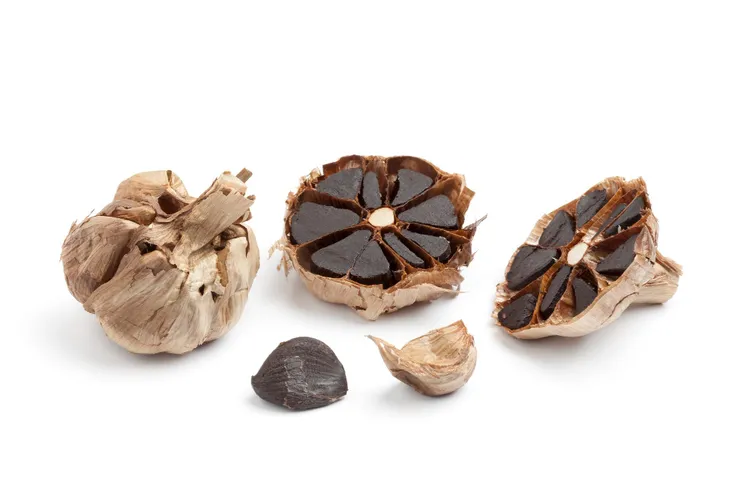
- Week 4-6: Full black color, soft texture, complex flavor. Ready to use.
Signs of a Good Batch
- Cloves are uniformly black or very dark brown throughout
- Soft and slightly sticky, like a dried fruit
- Smells sweet, earthy, slightly tangy - not sulfurous
- Tastes sweet and savory with no raw garlic bite
Signs Something Went Wrong
- Hard or white center: Didn't ferment fully. Extend time or check temperature.
- Wet or slimy texture: Too much moisture, possibly mold. Discard.
- Bitter or acrid taste: Temperature was too high. Try lower setting next batch.
- Patchy color: Uneven heat distribution. Rotate bulbs next time.
Cost Comparison
A head of garlic costs $0.50-1.00. Commercial black garlic runs $2-5 per head. Making your own cuts the cost by 60-80%, though you're investing 4-5 weeks. At scale (filling a rice cooker with 8-10 heads), the economics are clear. The electricity cost of running a rice cooker on warm for 4 weeks is roughly $2-4 depending on your rate.
Storing Your Homemade Black Garlic
Allow the bulbs to cool completely after removal. Store whole and unpeeled at room temperature for up to a month, or refrigerated for 2-3 months. Once peeled, use within 2 weeks from the fridge. For longer storage, blend into paste with a small amount of olive oil and freeze in portions. Full storage guidance is in our article on how to store black garlic.
What to Make First
Once you have a batch, start with black garlic paste - mash a whole bulb's worth of cloves with a fork, add a splash of olive oil, and store in a jar. From there, the aioli and compound butter are both done in minutes and show you immediately what the ingredient does. For everything else, the complete black garlic guide has you covered.
Latest