How to Make Dashi: Japanese Stock in 15 Minutes
Dashi is the fastest, cleanest-tasting stock in any culinary tradition. Made from kombu and dried bonito flakes, it underpins miso soup, ramen broth, and Japanese cooking.
Dashi is the stock that makes Japanese cooking taste like Japanese cooking. Without it, miso soup tastes flat. Ramen broth made with it has a depth that water-based versions cannot achieve. It takes 15 minutes, uses two ingredients, and the technique could not be simpler. Yet most Western home cooks have never made it.
The Two Ingredients
Kombu is dried kelp - a dark, flat seaweed found in the Japanese section of most Asian grocery shops and increasingly in large supermarkets. It is covered in a natural white powder (mannitol) that contributes umami - do not wipe it off, or rinse the kombu. Store it in a sealed bag at room temperature; it keeps indefinitely.
Katsuobushi is dried, fermented, and smoked skipjack tuna shaved into pale pink flakes. It smells smoky and intensely savoury. Available from Asian grocery shops. For a vegetarian dashi, omit the katsuobushi and use kombu alone (kombu dashi), or add dried shiitake mushrooms alongside the kombu.
Why Dashi Is Different from Other Stocks
Most stocks extract flavour through hours of simmering. Dashi works differently - kombu's glutamic acid (a naturally occurring amino acid and one of the compounds behind umami) extracts almost immediately in contact with water, especially at low temperatures. Boiling kombu is actively counterproductive - it releases compounds that make dashi slimy and bitter. The technique is about precision, not time.
Recipe: Ichiban Dashi (First Dashi)
Ichiban dashi (first dashi) is the delicate, clear version used in clear soups and dipping sauces. It uses a light hand with the katsuobushi and does not squeeze the flakes when straining - this preserves its clarity and lightness.
Makes: 1 litre | Time: 15 minutes
Ingredients
- 1 litre cold water
- 20g kombu
- 20g katsuobushi (bonito flakes)
Instructions
- Combine kombu and cold water in a medium saucepan. Leave to soak for 30 minutes if time allows (this cold-steep extracts maximum glutamic acid). If short on time, proceed directly.
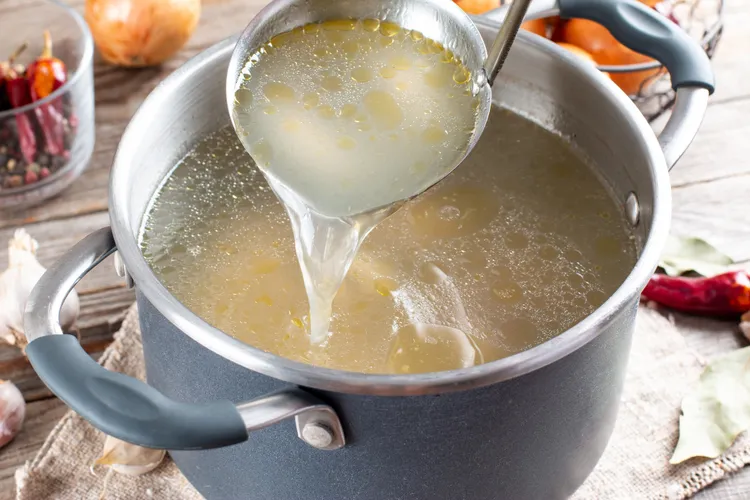
- Heat over medium heat until the water reaches approximately 60 to 70 degrees Celsius - small bubbles beginning to form on the bottom of the pan but not yet simmering. Remove the kombu at this point. Do not let the water boil with kombu in it.
- Increase heat to bring the water to just below a boil. Add the katsuobushi in one motion. Remove from heat immediately. Leave to steep for 2 to 3 minutes - the flakes will sink to the bottom.
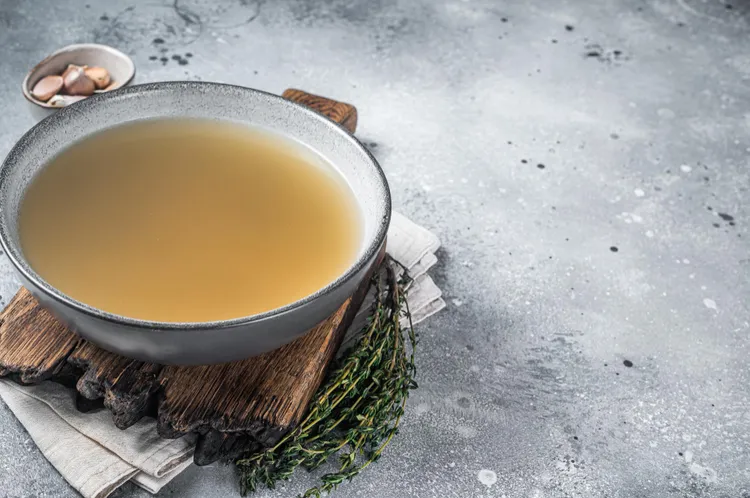
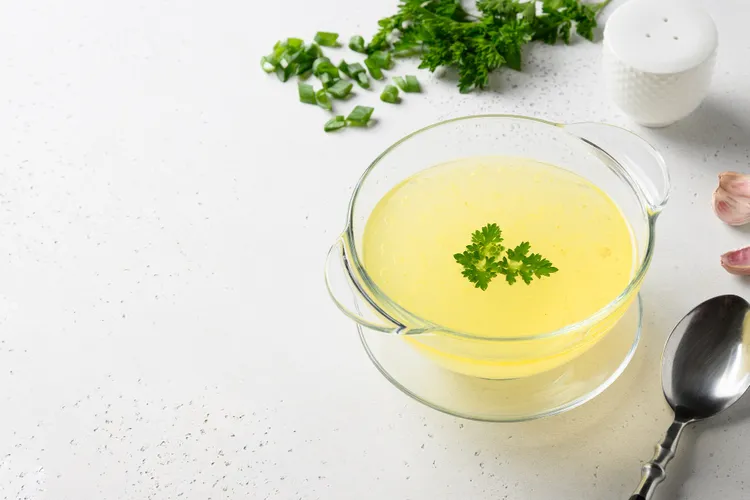
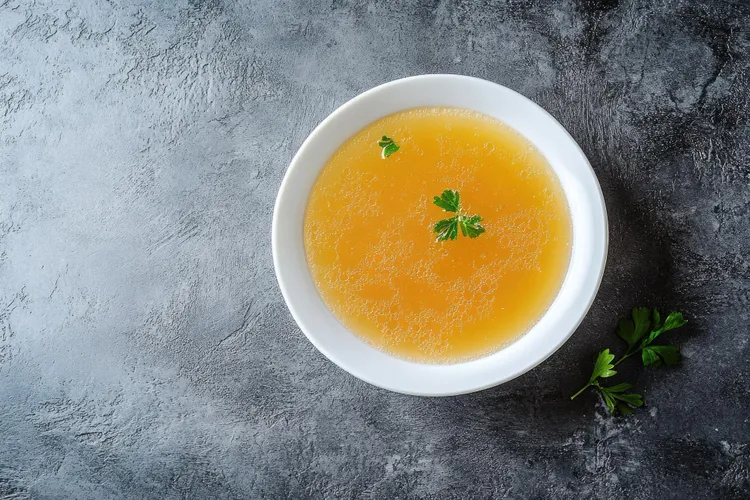
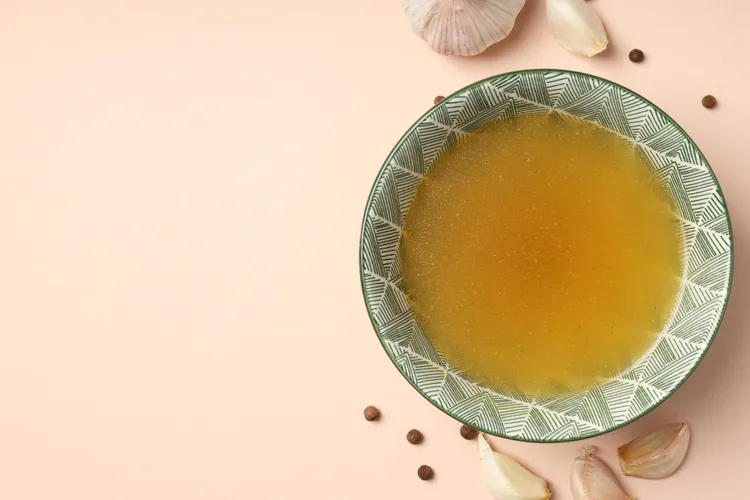
- Strain gently through a fine-mesh sieve lined with kitchen paper or muslin. Do not press or squeeze the katsuobushi. Discard the solids. The dashi should be pale amber, clear, and smell clean and smoky.
Recipe: Niban Dashi (Second Dashi)
The kombu and katsuobushi from the first dashi still have flavour. Niban dashi (second dashi) extracts it using longer simmering - the result is a more robust, slightly less delicate stock used for miso soup and heartier dishes.
- Return the used kombu and katsuobushi to the pot. Add 1.2 litres of cold water.
- Bring to a gentle simmer over medium heat. Simmer for 10 minutes.
- Strain. The resulting niban dashi is deeper in colour and flavour than ichiban.
Vegetarian Kombu Dashi
Steep 25g of kombu in 1 litre of cold water in the fridge overnight. The cold extraction produces a very clean, sweet-savoury dashi without any fishiness. Strain and use. For a more robust vegetarian version, add 4 to 5 dried shiitake mushrooms to the cold water along with the kombu - they contribute additional umami from their guanylate content, which synergises with the kombu's glutamates to produce a more complex stock.
Using Dashi
Miso soup: dissolve 1 to 2 tablespoons of miso paste per 300ml of dashi off the heat (never boil miso - the heat kills the live cultures and flattens the flavour). Add tofu, wakame, and spring onion. Ramen broth: use dashi as the starting liquid, build with soy sauce, mirin, and your choice of tare (seasoning concentrate). The existing stock guide covers dashi in the context of broader stock technique. Noodle dipping sauce: dashi reduced with soy sauce and mirin. Tamagoyaki (Japanese rolled omelette): a tablespoon of dashi stirred into the eggs before cooking. For the full stock-making overview, see the complete stocks and broths guide.
Nutrition (per 250ml ichiban dashi)
- Calories: approximately 5 to 10 kcal
- Protein: 1 to 2g
- Fat: 0g
- Carbs: 1g
- Sodium: approximately 10 to 20mg
Dashi Variations
The two-ingredient kombu and katsuobushi dashi is the foundation, but Japanese cooking uses several other dashi types for specific applications. Iriko dashi uses small dried sardines (niboshi) rather than katsuobushi - it has a stronger, more robust flavour suited to miso soup and hearty noodle dishes. Shitake dashi uses dried shiitake mushrooms cold-steeped overnight for an intensely savoury, earthy flavour suited to vegetable dishes and vegan cooking. Tori dashi (chicken dashi) combines kombu cold-steep with a brief simmer of chicken bones - it is the dashi used in certain types of ramen and produces a lighter, cleaner broth than a full chicken stock.
All of these follow the core principle of dashi: short extraction times, careful temperature control, and clean, pure flavour. Once you have made a basic kombu and katsuobushi dashi, the variations are straightforward. For storage of dashi alongside other stock types, see the stock storage guide. For the broader overview of all stock types, see the complete stocks and broths guide.
Where to Buy Dashi Ingredients
Kombu is available from: Japanese grocery stores (most reliable selection), Korean grocery stores (kombu is central to Korean cooking as well), specialist food shops carrying Asian ingredients, and the world food aisle of large supermarkets. Online delivery has made kombu accessible virtually everywhere. The quality varies - look for large, thick pieces with a uniform dark green-black colour and the white powder coating intact. Thin, papery, or brownish kombu is old and will produce a weaker dashi.
Katsuobushi (bonito flakes) is slightly harder to find than kombu but available from the same sources. It is sold in bags of pale pink, paper-thin flakes with a distinctive smoky smell. For beginners, the ready-made dashi packets (teabag-style sachets containing both kombu and katsuobushi in correct proportions) available at Japanese grocery stores are a good introduction - they produce an accurate result with no measuring required. Once you are comfortable with the flavour of dashi, making it from whole ingredients gives more control over strength and balance. For the full context on stock types from around the world, see the complete stocks and broths guide. For storage of dashi alongside other stocks, see the stock storage guide.
Dashi in Non-Japanese Cooking
Dashi's clean umami quality makes it useful beyond traditional Japanese applications. Added to a Western-style mushroom soup in place of vegetable stock, it provides a cleaner, more intense mushroom flavour with less cooking time needed to build depth. A tablespoon of light soy sauce, a tablespoon of mirin, and 200ml of dashi produce a quick sauce for grilled fish, steamed vegetables, or cold tofu that is more nuanced than any Western sauce achievable in the same time. Dashi as the steaming liquid when cooking delicate vegetables over boiling liquid adds a gentle savoury note to the vegetable without any visible sauce.
The key insight is that dashi is essentially a very clean, very precise delivery mechanism for glutamic acid (umami). Western cooking achieves similar effects through long-cooked stocks, reduced sauces, and ingredients like parmesan, anchovies, and tomato paste. Dashi achieves the same depth in 15 minutes with two ingredients. Once you understand it in that context, its uses extend well beyond miso soup. For the full overview of stock types from all culinary traditions, see the complete stocks and broths guide. For storage guidance, see the stock storage guide.
Nutrition (per 250ml, unsalted ichiban dashi)
- Calories: approximately 5 to 10 kcal
- Protein: 1 to 2g
- Sodium: 10 to 20mg (naturally occurring, no added salt)
Making Dashi Part of a Weekly Routine
Dashi is the most practical stock to make regularly because of its 15-minute production time. Unlike chicken or beef stock, it does not require saving bones over weeks or planning a long simmering session. A batch of dashi can be made on the same morning it is needed. The ingredients - a small piece of kombu and a handful of katsuobushi - take up minimal storage space and keep indefinitely at room temperature.
For households that eat Japanese food regularly, making dashi twice a week is reasonable. For households where Japanese cooking appears occasionally, making it fresh for each use is the practical approach. The niban dashi method extends the value of each kombu and katsuobushi portion - the second brew from already-used ingredients produces a stock suitable for miso soup and noodle dishes where the extra 10 minutes is the only additional cost. Stored in the fridge, ichiban dashi keeps for 3 days. For longer storage, freeze in 250ml portions - the flavour is somewhat diminished after freezing but still better than commercial alternatives. For the complete guide to stock types and their applications, see the complete stocks and broths guide.
Dashi Proportions and Strength
The ichiban dashi recipe above (20g kombu, 20g katsuobushi per litre) produces a medium-strength dashi suitable for most applications. For a lighter dashi suited to very delicate dishes - a clear soup where the dashi flavour should barely register - reduce the katsuobushi to 10g per litre. For a stronger, more intensely flavoured dashi suited to ramen or dipping sauces - use 30g kombu and 30g katsuobushi per litre. The kombu and katsuobushi can also be adjusted independently: more kombu increases the sweet, mineral umami quality; more katsuobushi increases the smoky, oceanic depth.
Cold brew dashi (kombu cold-steeped in water overnight without heating) produces a cleaner, more delicate result than the heated method. Combine 20g of kombu with 1 litre of cold water in a jar or container. Refrigerate overnight. Remove the kombu in the morning. The resulting cold dashi is very clean and sweet-savoury - good for dishes where you want the dashi to be a background element without any prominent bonito smokiness. It does not require any heating and the kombu softens slightly in the cold water, which can be sliced and served as a cooked vegetable in its own right. For the complete guide to all stock types from Japanese dashi to Western bone broth, see the complete stocks and broths guide.
Summary
Dashi is the most efficient stock in any culinary tradition. Two ingredients, 15 minutes, and the result underpins an entire cuisine's flavour profile. The technique is precision-based rather than time-based: temperature control for the kombu, timing for the katsuobushi, and restraint in straining. The cold brew method removes even the heating step and produces a clean, delicate stock with no equipment beyond a jar and a fridge. For anyone who cooks Asian food regularly - or wants to add umami depth to Western cooking without a 4-hour stock session - dashi is the most practical addition to a cooking repertoire. Use Consillar's nutrition calculators to track dashi's negligible calorie contribution in any dish. For every stock type from dashi to bone broth, see the complete stocks and broths guide.
Practical Uses for Spent Kombu
The kombu removed from dashi at the 60 to 70 degree mark is not waste - it is a cooked vegetable with good flavour and nutrition. Slice it thinly and use in the following ways: simmered with soy sauce and mirin as a side dish (nimono); chopped and added to rice before cooking for a subtle savoury note; sliced thinly and added to miso soup as a vegetable component alongside tofu; or shredded finely and mixed with sesame seeds and rice vinegar as a quick salad. The spent katsuobushi from ichiban dashi goes into niban dashi as described above, and from there into furikake (a Japanese rice seasoning) when combined with soy sauce and mirin and dried in a low oven. Neither ingredient needs to be discarded after its primary role in dashi is complete. Making dashi this way produces both the stock and useful by-products from a very small quantity of ingredients. For the complete guide to all stock types, see the complete stocks and broths guide.
Latest