Low-Sugar Brown Sugar Boba: Cutting Sugar Without Losing the Flavor
A reduced-sugar brown sugar boba recipe that cuts the syrup ratio while keeping the caramel flavor, plus what changes in the stripe effect and pearl sweetness.
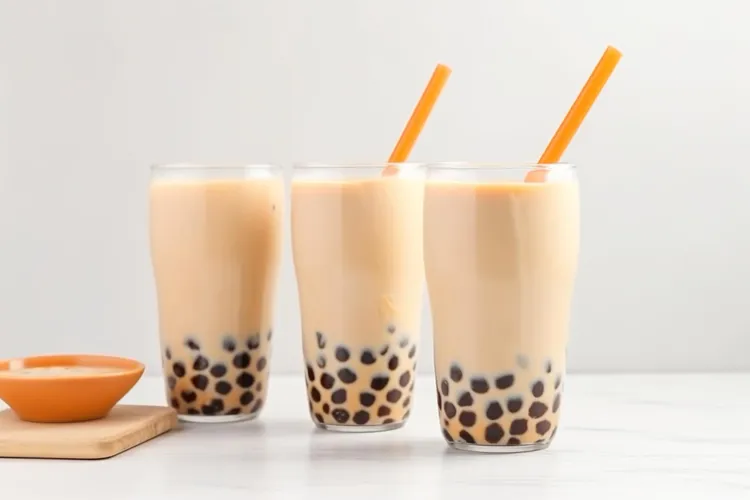
Brown sugar boba is one of the sweeter drinks in the bubble tea category, with most of the sugar coming from the syrup rather than the milk or tea. The syrup can be scaled back further than most home recipes suggest without losing the caramel flavor that defines the drink - it just changes the stripe effect and how sweet the pearls themselves taste.
Ingredients
- 1/2 cup cooked tapioca pearls (see the tapioca pearl cooking guide)
- 2 tablespoons reduced brown sugar syrup (half the standard amount - recipe below)
- 1 cup brewed black tea, double-strength, cooled, unsweetened
- 1/2 cup milk of choice
- 1 cup ice
Reduced Brown Sugar Syrup
- 1/2 cup dark brown sugar, packed
- 1/2 cup water
- Pinch of salt
Instructions
- Make the reduced syrup: combine the brown sugar, water, and salt in a small saucepan over medium heat, stirring until dissolved, then boil without stirring for 5 to 7 minutes until slightly thickened. This version uses half the sugar of the standard brown sugar syrup recipe but the same amount of water, so it's naturally less concentrated and won't stripe quite as boldly - that's expected.
- Toss the warm tapioca pearls in about half of the reduced syrup, reserving the rest for coating the glass.
- Coat the inside of a glass with the remaining syrup, tilting and rotating for stripes.
- Add the pearls, then ice.
- Pour in the milk and unsweetened tea, slowly, over the back of a spoon.
- Taste before adding anything further - the reduced syrup carries most of the sweetness, and the unsweetened tea keeps the rest of the drink from adding to it.
Nutrition (per serving)
- Calories: ~250 kcal
- Protein: 4g
- Carbs: 42g
- Fats: 8g
This is roughly a third less sugar than the standard recipe. For a full side-by-side against both the standard and shop versions, see the calorie and sugar breakdown.
Why Cutting the Syrup Works Better Than Cutting the Tea Sugar
In a standard recipe, virtually all of the added sugar comes from the syrup - the tea itself is unsweetened and the milk contributes none. This means the syrup is the only place that actually needs adjusting to meaningfully cut sugar, and because the syrup's caramel flavor is fairly concentrated, cutting it by close to half still leaves a clearly identifiable brown sugar flavor rather than tasting like a flavorless attempt at the drink.
What Changes at Lower Sugar Levels
The tiger stripe effect is noticeably thinner and lighter in color with the reduced syrup, since there's simply less concentrated sugar to cling to the glass - it still stripes, just less dramatically than the full-sugar version. The pearls themselves also come out less sweet on their own, which some people actually prefer since it lets the tea flavor come through more clearly rather than being dominated by sweetness.
Using a Sugar Substitute Instead
Swapping in a heat-stable sugar substitute (such as allulose or a monk fruit and erythritol blend) for some or all of the brown sugar in the syrup is possible, but the texture and stripe behavior change more than with a simple quantity reduction - many substitutes don't reduce and thicken the same way real sugar does, since a lot of a syrup's body comes specifically from sugar's chemistry as it's heated. If trying this, use a substitute specifically labeled for cooking or baking rather than a tabletop packet sweetener, and expect a thinner syrup that may need a small amount of cornstarch slurry to thicken properly for striping.
Other Ways to Reduce Sugar Beyond the Syrup
- Use less syrup on the pearls themselves, reserving more for glass-coating where the flavor impact per spoonful is higher relative to how much you actually drink.
- Cut the ice-to-liquid ratio slightly so there's proportionally less room for syrup and more for tea, without changing the syrup recipe itself.
- Brew the tea a bit stronger so tea flavor stands out more relative to sweetness, letting you use less syrup while the drink still tastes balanced rather than flat.
Common Mistakes
- Cutting the syrup but keeping the water the same: results in a thin, weak-tasting syrup rather than a genuinely lower-sugar one with concentrated flavor. Reduce both proportionally, as in the recipe above.
- Sweetening the tea separately to compensate: defeats the purpose. Let the reduced syrup carry all the sweetness.
- Expecting identical stripe intensity at lower sugar levels: the stripes will be thinner and lighter. This is a normal tradeoff, not a sign something went wrong.
Frequently Asked Questions
How much further can I cut the syrup before it stops tasting like brown sugar boba?
Most people can tell the difference once the syrup is cut much past 50%, since the caramel flavor becomes faint enough that the drink starts tasting like a plain milk tea with tapioca rather than something distinctly brown sugar flavored. The roughly 50% reduction in this recipe tends to be the practical floor for keeping the drink clearly recognizable as brown sugar boba.
Does using less syrup change the pearls' texture, not just their sweetness?
Not meaningfully - the pearls' texture comes from the cooking process itself, covered in the tapioca pearl cooking guide, not from how much syrup they're coated in afterward. Less syrup mainly affects how sweet the pearls taste, not how chewy they are.
Is a sugar-free version possible, not just reduced-sugar?
Technically yes using a heat-stable sugar substitute for the entire syrup, but expect a meaningfully different texture, since real sugar's ability to reduce and thicken into a clingy syrup is partly a function of its specific chemistry under heat, which most substitutes don't fully replicate. A completely sugar-free version is achievable but requires more experimentation and adjustment than a straightforward quantity reduction.
Will unsweetened tea taste too bitter without any syrup to balance it?
Brewing the tea a little less strong than the double-strength standard, and letting the reduced syrup carry more of the balancing sweetness, usually avoids this. If the unsweetened tea alone tastes overly bitter, that's often a sign it's steeped slightly too long or too hot rather than a sign more sugar is needed.
Can I use this same reduced ratio for the vegan version too?
Yes - the syrup reduction and the milk swap are independent adjustments and combine without any conflict. Use oat or soy milk from the vegan brown sugar boba guide alongside the reduced syrup here for a lower-sugar, dairy-free version.
Thinking About Sugar Reduction Gradually
For anyone used to the full-sugar version, dropping straight to a 50% reduction can taste like a noticeable jump the first time. Cutting the syrup by smaller increments over a few batches - closer to 20% at first, then 35%, then the full reduction in this recipe - lets your palate adjust gradually, and a lot of people find that what tasted "not sweet enough" on the first lower-sugar attempt tastes properly balanced within a few glasses, once expectations reset.
Balancing Sweetness With Other Flavor Elements
A reduced-sugar drink can sometimes taste flat rather than simply "less sweet," since sugar plays a real role in how the other flavors in a drink are perceived, not just sweetness on its own. A small pinch of extra salt in the reduced syrup - slightly more than the standard recipe calls for - can help round out the flavor and prevent the lower-sugar version from tasting thin, the same way a pinch of salt makes many desserts taste more balanced rather than simply less sweet.
Comparing to Artificially Sweetened Shop Options
Some shops offer a "sugar-free" or artificially sweetened version using a substitute like stevia or sucralose rather than a genuine sugar reduction. This recipe takes a different approach - real sugar in a smaller amount rather than a sugar substitute in the full original amount - which tends to produce a more natural-tasting result, since it avoids the sometimes noticeable aftertaste some sugar substitutes carry, at the cost of not being fully sugar-free the way those shop options are.
Why Sugar Reduction Is More Effective Here Than in Baking
Cutting sugar in a baked good often changes the structure and texture significantly, since sugar plays a functional role beyond sweetness in most baking - moisture retention, browning, tenderness. A drink syrup doesn't carry the same structural burden, which is part of why a fairly aggressive sugar reduction works better here than it would in, say, a cake or cookie recipe. The syrup's only real jobs are flavor, color, and enough thickness to stripe a glass, all of which tolerate a meaningful reduction more gracefully than a baked good's crumb structure would.
Comparing This to Ordering "Less Sweet" at a Shop
Most bubble tea shops offer sweetness levels as a percentage - 100%, 70%, 50%, 30%, and sometimes 0%. A 50% option at most shops corresponds reasonably closely to the roughly-halved syrup ratio in this recipe, giving a useful reference point if you're used to ordering a specific sweetness level and want to replicate something familiar at home rather than guessing at how strong to make the reduction.
Other Sugar Sources to Watch in a Full Build
If combining this with other variations from the broader brown sugar boba guide, it's worth remembering that toppings like cheese foam carry their own sugar content on top of whatever's in the base drink, and a pre-sweetened plant milk (relevant if also making the vegan version) can quietly add more sugar than expected if not checked. A genuinely low-sugar build accounts for all of these pieces together, not just the syrup in isolation.
Long-Term Adjustment vs a One-Time Swap
For anyone making this a regular part of their routine rather than an occasional treat, gradually settling into the reduced-sugar version as the new default - rather than treating it as a special "diet" version reserved for certain occasions - tends to stick better over time. Palates adapt to lower sweetness levels reasonably quickly with consistent exposure, and many people who make the switch report that the full-sugar version eventually starts tasting cloying by comparison after a few weeks of the reduced version as their normal.
A Note for Anyone Managing Blood Sugar Closely
For anyone monitoring blood sugar for medical reasons, even the reduced-sugar version in this guide still contains a meaningful amount of sugar and should be treated accordingly rather than assumed to be a "safe" low-sugar option in a clinical sense - it's a moderate reduction relative to the standard recipe, not a diabetic-friendly formulation. Anyone with specific medical dietary needs should consult a doctor or dietitian regarding how a drink like this fits into their individual plan.
A Reasonable Middle Ground
For most people, the roughly 50% syrup reduction in this recipe strikes a workable balance - a meaningfully lower sugar count without losing enough flavor to feel like a compromise. It's a good default to reach for on a regular basis, reserving the full-sugar version for more occasional, deliberate indulgence rather than everyday drinking.
Sugar reduction in a drink like this doesn't have to mean giving something up entirely - it's closer to recalibrating what "normal" tastes like, and for most people that recalibration happens faster than expected once they commit to the reduced version consistently rather than switching back and forth between the two.
Wrapping Up
This variation proves brown sugar boba doesn't have to be an all-or-nothing sweetness proposition - a thoughtful reduction to the one component that carries nearly all the sugar keeps the drink recognizable while meaningfully changing its nutritional profile. It's a genuinely practical middle ground rather than a compromise that sacrifices the drink's identity.
Try the full-sugar and reduced-sugar versions back to back at least once - side-by-side comparison makes it much easier to judge whether the reduction is right for your taste than trying to remember how the full-sugar version tasted from a separate occasion.
This is a variation on the classic brown sugar boba milk tea recipe, adjusting only the syrup ratio. For the full technique and background, see the complete brown sugar boba guide.
Latest