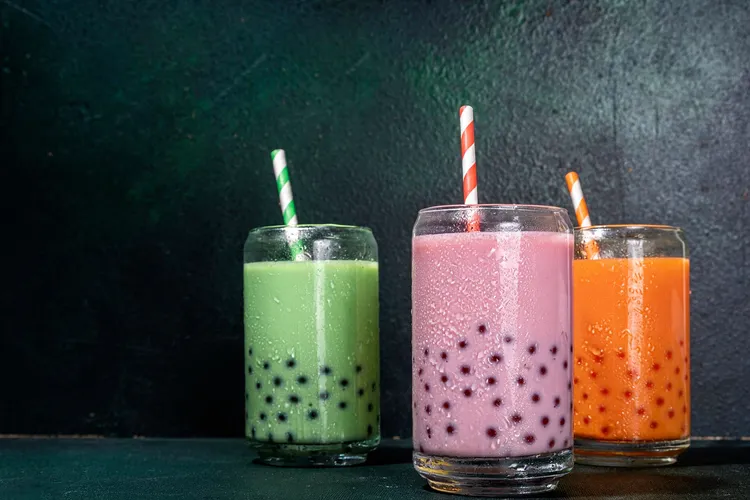
Classic Brown Sugar Boba Milk Tea Recipe
The full brown sugar boba milk tea recipe, from syrup-coated tapioca pearls to the striped glass and iced milk tea, assembled step by step.
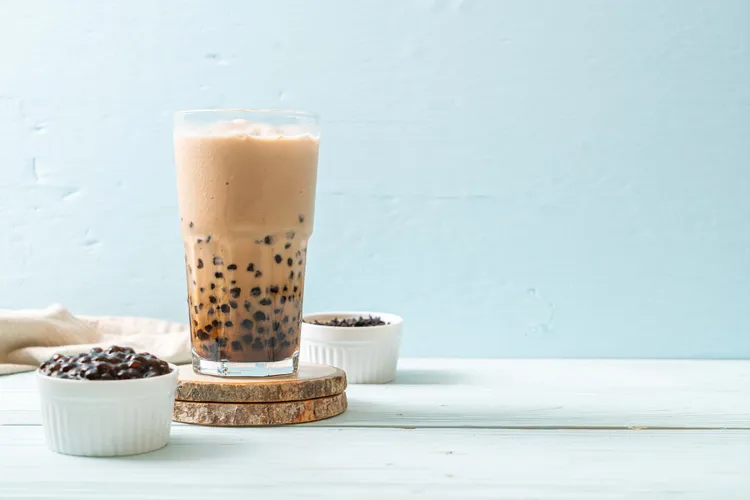
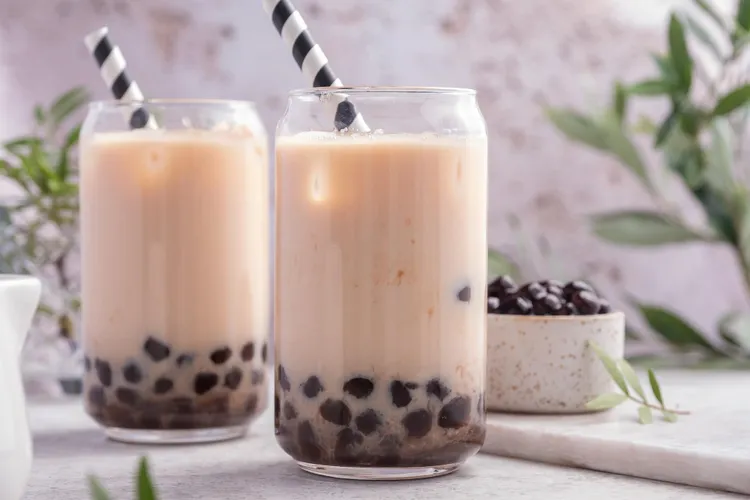
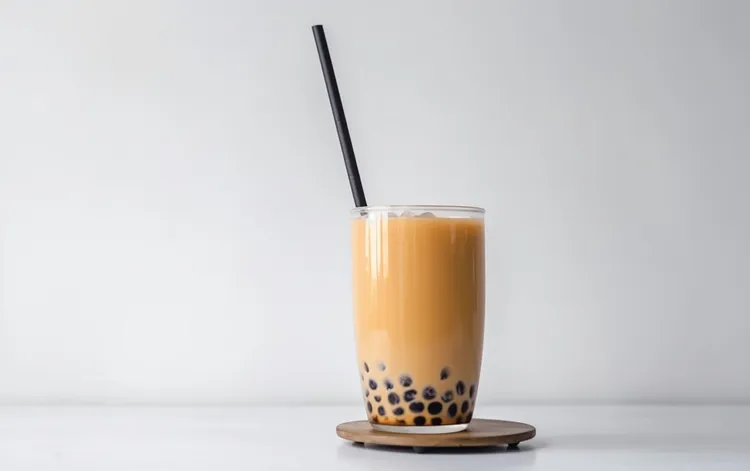
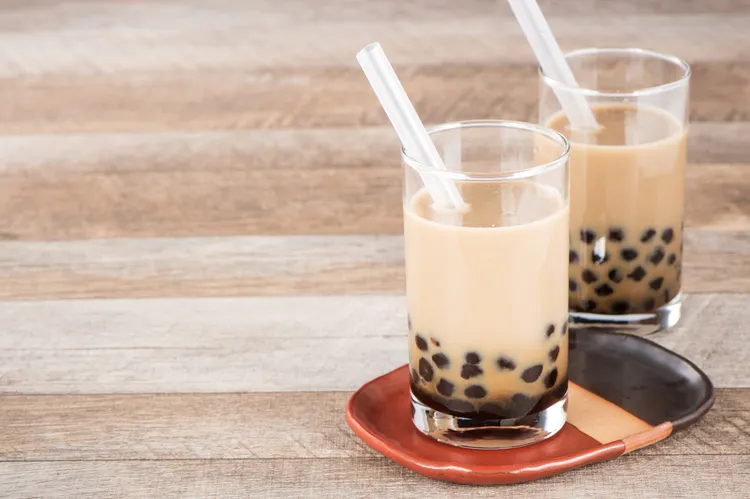
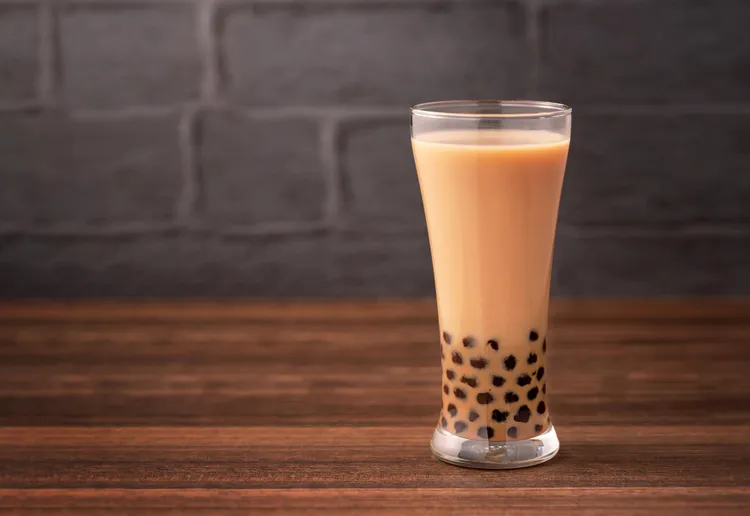
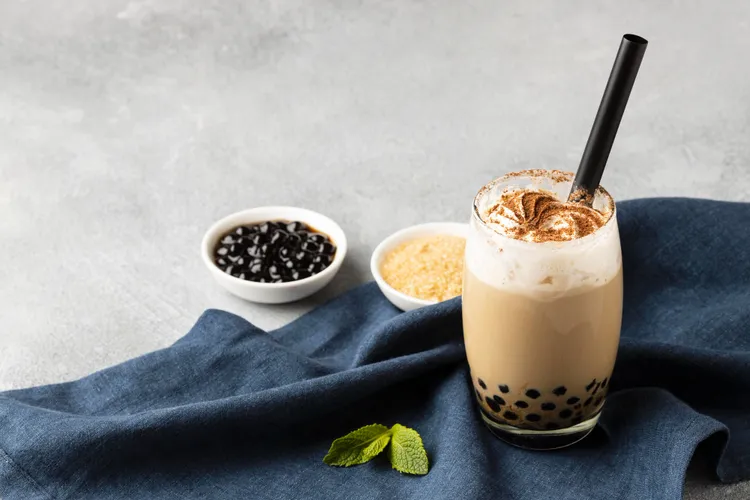
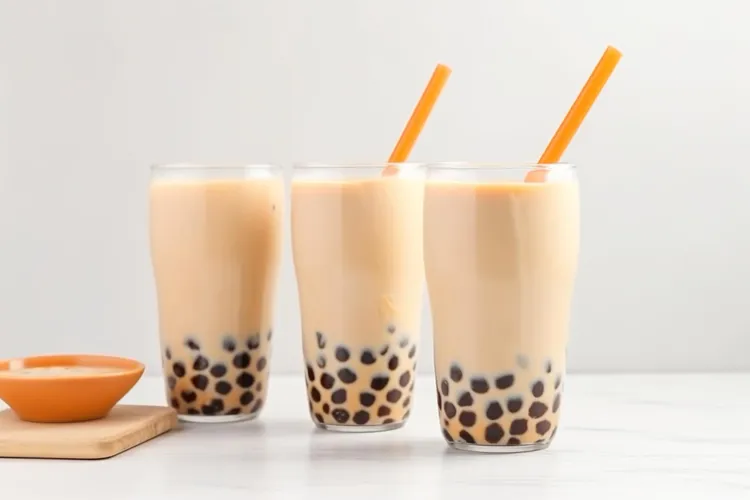
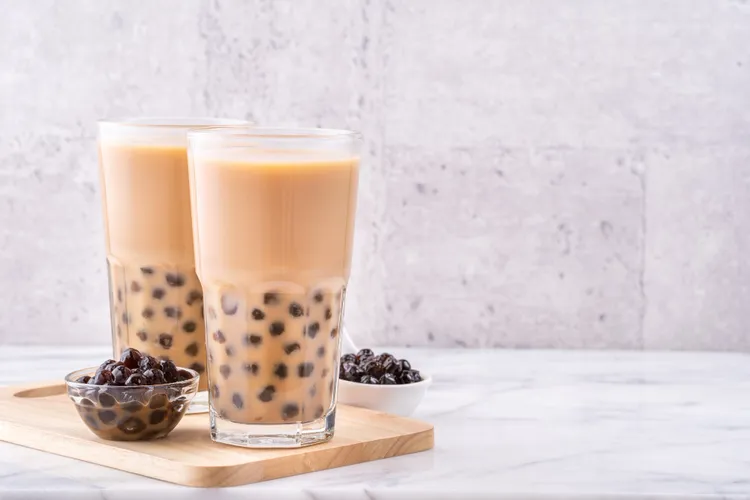
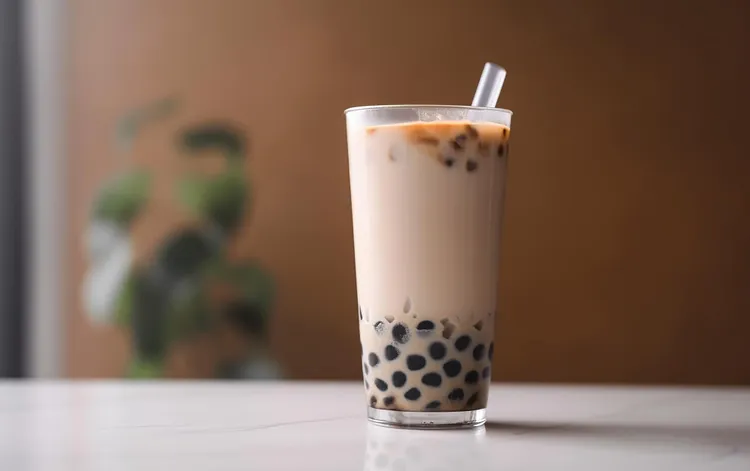
This is the full assembled drink - tapioca pearls cooked in brown sugar syrup, a striped glass, and a black tea and milk base poured over ice. Once the pearls and syrup are made, the actual assembly takes about five minutes per glass.
Ingredients
- 1/2 cup cooked tapioca pearls (see the tapioca pearl cooking guide)
- 1/4 cup brown sugar syrup (see the syrup recipe), plus extra for coating the glass
- 1 cup brewed black tea, cooled
- 1/2 cup whole milk
- 1 cup ice
Instructions
- Brew the black tea double-strength (use twice the usual amount of tea leaves or bags for the same water) so it holds up once diluted by ice - a normal-strength tea tastes weak once melted ice waters it down further. Let it cool most of the way to room temperature.
- While the tea cools, toss the warm cooked tapioca pearls in the brown sugar syrup so they're fully coated.
- Pour about a tablespoon of extra syrup into an empty serving glass. Tilt and rotate the glass slowly so the syrup runs down the inside walls in a few thick lines, then let it sit for a minute to set.
- Spoon the syrup-coated tapioca pearls into the bottom of the glass.
- Fill the glass with ice.
- Pour in the milk, followed by the cooled tea, pouring slowly over the back of a spoon so the layers and stripe don't get disturbed.
- Serve immediately with a wide boba straw, stirring just before the first sip to combine the layers to your preference.
Nutrition (per serving)
- Calories: ~380 kcal
- Protein: 4g
- Carbs: 68g
- Fats: 8g
These are estimates for a standard glass using whole milk and the full amount of syrup listed above. For a full breakdown against a typical shop-bought version, see the calorie and sugar comparison.
Getting the Tea Strength Right
The single biggest reason homemade milk tea tastes watery compared to a shop version is under-brewed tea. Because this drink is served entirely over ice, and because the ice itself melts and dilutes the drink further as you're sipping it, the tea needs to be brewed at roughly double the strength you'd want for a hot cup on its own. A strong black tea like Assam or a basic black tea blend holds up best against the milk and syrup; a delicate green or white tea gets lost entirely in this format.
Layering for the Tiger Stripe Look
The order matters: syrup coats the glass first, then pearls, then ice, then milk, then tea poured last and slowly. Pouring the tea in too fast, or adding the milk after the tea instead of before it, tends to wash the syrup stripes down the glass walls before you've had a chance to see the layered effect. If presentation matters for the glass you're serving, pour with patience over the back of a spoon rather than straight from the pitcher.
Milk Options
Whole milk gives the richest, creamiest result and is the standard choice. 2% works fine with a slightly lighter mouthfeel. Half-and-half in place of some of the milk gives an even richer, more dessert-like version, closer to what some specialty shops serve as a premium option. For a dairy-free version, see the dedicated vegan brown sugar boba guide, since not every plant milk holds up the same way against black tea.
Adjusting Sweetness
The full amount of syrup above produces a drink close to standard shop sweetness. Cutting the syrup by a third barely changes the flavor while noticeably reducing the sugar content - see the low-sugar variation for the specific adjusted ratio and what to expect from the reduced stripe effect at lower syrup amounts.
Serving Hot Instead of Iced
This recipe is built around the iced, layered presentation, but the same components work as a hot drink with a different assembly approach - see iced versus hot brown sugar boba for how the technique changes when there's no ice involved.
Common Mistakes
- Brewing tea at normal hot-tea strength: it tastes weak and washed out once ice dilutes it further. Brew double-strength specifically for iced serving.
- Pouring milk in too fast: disturbs the syrup stripes before they've set. Pour slowly over the back of a spoon.
- Using cold tapioca pearls straight from the fridge: they firm up and lose their chewy texture within a few hours of refrigeration - see the storage guide for the realistic window and reheating method.
- Skimping on syrup entirely to save on sugar: produces a drink that's technically boba milk tea but not really brown sugar boba, since the caramel flavor and stripe effect both depend on using a real amount of syrup. The low-sugar variation guide covers a better way to cut sugar without losing the character of the drink.
Frequently Asked Questions
Can I make this with green tea or oolong instead of black tea?
Yes, though the flavor balance shifts. Black tea's stronger, more tannic profile stands up best against the brown sugar and milk, which is why it's the standard choice. A strong oolong works reasonably well as a substitute with a slightly different, more floral character. Delicate teas like green or white tea tend to get overwhelmed by the syrup and milk and are better suited to a lighter drink without brown sugar.
What's the best way to brew double-strength tea without it turning bitter?
Use twice the tea leaves or bags for the same amount of water, but don't extend the steep time to compensate - over-steeping, not just using more tea, is what causes bitterness. Steep for the time recommended on the package even at double concentration, and taste partway through if you're unsure.
Can I use bottled or powdered instant tea instead of brewing my own?
It works in a pinch, but the flavor is noticeably flatter and less aromatic than fresh-brewed loose leaf or bagged black tea, and many bottled teas are already sweetened, which throws off the balance with the syrup. Freshly brewed tea gives a meaningfully better result for very little extra effort.
My drink turned out cloudy and separated instead of layered. What went wrong?
This usually means the milk and tea were combined too quickly or too forcefully, or the tea wasn't cooled enough before pouring. Pour slowly over the back of a spoon, and make sure the tea has cooled close to room temperature before it goes anywhere near the milk layer.
Is it better to add the ice first or the pearls first?
Pearls first, then ice. Adding ice first can make it harder to get the syrup-coated pearls settled evenly at the bottom of the glass, and the weight of the ice on top of loose pearls sometimes pushes them unevenly against the glass walls, disrupting the stripe effect from below.
Adjusting for Personal Taste
This recipe reflects a fairly standard, shop-style balance of tea, milk, and sweetness, but there's real room to adjust once you've made it a few times. More milk and less tea produces a creamier, less tannic drink. More tea and less milk produces a bolder, more astringent one closer to a straight iced tea with pearls. The syrup amount is the main lever for sweetness - see the low-sugar variation for a specific reduced-sugar version if that's the direction you want to adjust in.
Storing Leftover Assembled Drinks
This drink doesn't store well once assembled - the ice dilutes further as it melts, and the tapioca pearls firm up within a couple of hours regardless of refrigeration, covered in detail in the tapioca storage guide. If you're making this for a group, it's better to prep the components (cooked pearls in syrup, brewed tea, milk) separately and assemble individual glasses as needed rather than pre-mixing a large batch that will sit for a while.
A Note on Portion Size
This recipe makes one standard 16-ounce glass, close to what most bubble tea shops serve as their regular size. For a smaller portion, scale the pearls, syrup, tea, and milk down proportionally rather than just using less ice, since reducing ice alone concentrates the drink rather than shrinking it evenly.
Scaling for a Group
Multiply the syrup, pearls, and milk proportionally, but brew the tea as a separate, extra-concentrated batch meant specifically to be diluted rather than trying to stretch a single normal batch across more glasses. Assemble each glass individually rather than trying to premix everything in a pitcher, since the layered presentation only works assembled fresh per glass.
Choosing a Tea Beyond the Basics
Within "black tea," there's still real variation worth knowing about. Assam tea gives a bold, malty base that stands up particularly well to milk and sugar, and is a common choice at bubble tea shops for this reason. Ceylon tea is brighter and slightly more citrusy, giving a livelier, less heavy result. A basic supermarket black tea blend works fine too and is what most home versions default to - the specific varietal matters less than making sure whatever you use is brewed strong enough to survive dilution from the ice.
Presentation Details Worth Knowing
Beyond the syrup stripes, a few small details separate a homemade glass from a shop one visually. Filling the glass generously with ice (rather than a small handful) both keeps the drink cold longer and gives the pearls and stripes more visual space to be seen clearly through the glass. Using a clear glass rather than an opaque cup, at least for serving at home, lets the layered effect actually be visible, which is otherwise lost entirely in a solid-colored cup.
A Note on Ice Quality
Standard ice cubes work fine, but if the drink tends to dilute faster than you'd like before you finish it, larger ice cubes (or a single large ice sphere, if you have a mold) melt more slowly than a handful of small cubes with more total surface area, keeping the drink cold and properly balanced for longer without watering it down as quickly.
Pairing This With Food
Brown sugar boba's sweetness and richness make it a natural fit alongside savory food rather than dessert - it pairs well with salty or spicy dishes the same way a sweet iced tea often does, cutting through heat or richness in a savory meal. It's less commonly served alongside another sweet dish, since two very sweet items together can feel like too much rather than complementary.
Timing the Whole Process
Starting the tapioca pearls first, then making the syrup and brewing the tea while the pearls simmer and rest, is the most efficient order for getting everything ready around the same time rather than waiting on one component after finishing another. With a bit of practice, the full process from starting the pearls to pouring a finished glass comfortably fits into about 45 minutes.
Making It a Regular Routine
Once you've made this a handful of times, a lot of the individual steps become quick and automatic, and the whole process shrinks closer to 25 to 30 minutes for someone who's cooked the pearls and syrup enough times to not need to double-check timing constantly. At that point, a Saturday afternoon batch for the household is a genuinely reasonable, low-effort routine rather than a special-occasion project.
This recipe is the core of everything else in the broader guide - once it's comfortable, every variation covered elsewhere is simply a small, deliberate change to one part of this same base process.
Making this drink the same way a few times before starting to experiment gives a useful baseline to compare variations against, whether that's a different tea, a different milk, or an adjusted syrup ratio. Once the base recipe feels second nature, adapting it to personal taste becomes much more intuitive.
Where This Fits
This recipe is the centerpiece of the full brown sugar boba guide, which also covers the equipment, sourcing, and background that surround it. If your pearls or syrup aren't quite right yet, start with the pearl cooking guide and syrup guide before assembling a full glass.
Latest