Peaches in Vanilla Syrup
Poached peaches in a vanilla and lemon syrup are one of the most elegant fruit preserves. They keep in the fridge for three weeks and taste of summer served on yoghurt or with cream.
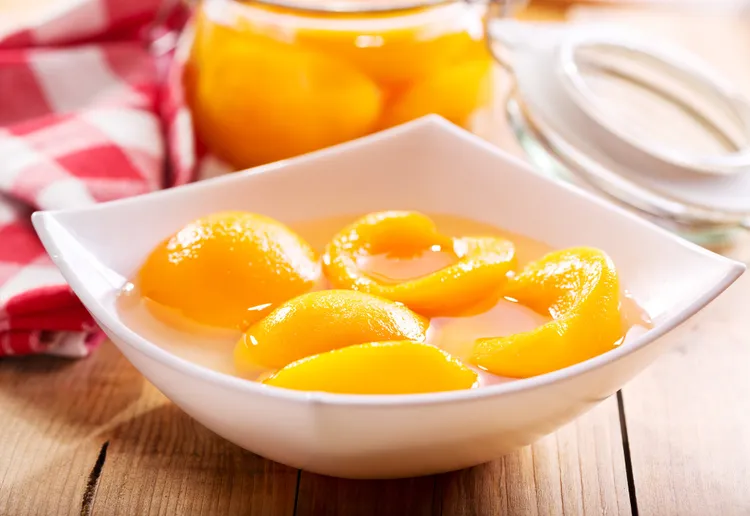
Peaches in syrup are the most accessible fruit preserve in this series. There is no gradual sugar exchange over seven days, no temperature to monitor, and no critical timing window. The technique is straightforward: make a light vanilla syrup, poach the peaches briefly, pack into sterilised jars. The result is a preserve that looks beautiful, keeps for weeks, and serves effortlessly from the jar.
Choosing Peaches
White peaches produce a more delicate, floral result. Yellow peaches are more robustly flavoured with a slightly higher acidity. Both work well. The most important requirement is ripeness: slightly underripe peaches hold their shape better during poaching and will continue to soften in the syrup over days. Very ripe peaches collapse easily and produce a preserve that is more like a compote. Freestone varieties (where the stone comes away from the flesh cleanly) are significantly easier to work with than clingstone.
The Syrup Ratio
A light syrup for fruit preserving is typically 250g sugar to 500ml water (a 1:2 ratio by weight). This produces a syrup that is perceptibly sweet but does not overwhelm the flavour of the fruit. For a richer preserve closer to a traditional tinned peach, increase to 350g sugar to 500ml water. The lighter syrup is more versatile for dessert and breakfast applications.
Recipe: Peaches in Vanilla and Lemon Syrup
Makes: 3 x 500ml jars | Prep: 25 minutes | Cook: 20 minutes
Ingredients
- 1kg ripe but firm peaches (approximately 6 to 8 medium peaches)
- 500g white granulated sugar
- 1 litre water
- 2 vanilla pods, split lengthways
- Peel of 1 lemon in large strips (use a peeler, avoid the white pith)
- 1 tablespoon lemon juice
Instructions
- Sterilise jars at 120 degrees Celsius for 15 minutes.
- To peel the peaches: score a shallow X on the base of each. Lower into boiling water for 45 seconds. Transfer immediately to a bowl of cold water. The skins slip off easily. Halve and stone.
- Combine sugar, water, vanilla pods, and lemon peel strips in a wide saucepan. Bring to a simmer, stirring to dissolve the sugar.
- Add the peach halves (do not crowd the pan - work in batches if necessary). Poach at a very gentle simmer for 3 to 5 minutes until just tender. A skewer should meet slight resistance. They will continue to soften in the jar.
- Use a slotted spoon to pack the peach halves cut-side down into the warm sterilised jars. Tuck a piece of vanilla pod into each jar.
- Add lemon juice to the hot syrup. Pour syrup over the peaches, filling to within 1cm of the rim. The peaches must be fully submerged. Seal immediately.
- Store in the fridge for up to 3 weeks. For longer pantry storage, process in a water bath for 20 minutes.
Variations
Peaches in spiced syrup: replace vanilla with a cinnamon stick, 3 cardamom pods (lightly crushed), and 4 cloves. Peaches in rose syrup: add 2 tablespoons of rose water to the finished syrup off the heat before pouring over the fruit. Peaches in prosecco: replace half the water with dry prosecco, added after the sugar has dissolved and the syrup has come off the heat before adding peaches.
Serving
Spooned over thick Greek yoghurt with a drizzle of the syrup. Alongside golden syrup custard as a simple dessert. With cream and a crumbled almond biscuit. As a component in a trifle - the syrup soaks the sponge. Served with a scoop of vanilla ice cream and some toasted flaked almonds. The syrup from the jar is a delicate peach cordial: diluted with sparkling water, it is an excellent non-alcoholic drink.
Nutrition (per 100g peach plus syrup)
- Calories: approximately 80 kcal
- Carbs: 20g (of which sugars 19g)
- Protein: 0.5g
- Fat: 0g
For the complete guide to sugar preserving including candied fruit, crystallised ginger, and flavoured syrups, see the complete sugar preserving guide. Track the nutritional contribution of preserved fruit in your cooking with Consillar's nutrition calculators.
Peaches in Syrup vs Tinned Peaches
Commercial tinned peaches are processed at high heat to achieve commercial shelf stability, which softens them to a uniform, almost textureless consistency and dulls the flavour. Homemade peaches in syrup are briefly poached at a gentle temperature and sealed - they are kept in the fridge rather than on a pantry shelf, which means they can be processed less aggressively. The result is a peach with distinct texture, genuine flavour, and a syrup that tastes of the fruit rather than the can. The technique is simpler than the tinned version requires: no pressure canning, no commercial sealing equipment. A sterilised jar, a brief poach, and refrigerator storage covers most home use.
The Poaching Temperature
Poaching peaches at too high a temperature causes them to break apart. A very gentle simmer - small bubbles barely breaking the surface, the syrup moving but not agitating - is the correct temperature. Check by eye: the syrup surface should show movement but no visible bubbling. If the syrup is actively simmering with visible bubbles, reduce the heat. The timing depends on the size and ripeness of the peaches: small, firm peaches take 3 minutes. Large, ripe peaches take 4 to 5 minutes. Underdone is better than overdone - the peaches continue softening in the jar over the first 24 to 48 hours. Test with a skewer through the thickest part: it should pass through with some resistance, not freely. For the complete guide to sugar preserving, see the complete sugar preserving guide. Use Consillar's nutrition calculators to track preserved fruit in your diet.
Peeling Technique: Getting It Right
The blanching and cold-water peeling technique works best with ripe peaches. Under-ripe peaches have a tighter cell structure and the skin does not slip as readily after blanching - you may need to use a small paring knife to help it along. For consistently easy peeling, the key is the cold water plunge immediately after the boiling water: the thermal shock contracts the skin away from the flesh. Leave the peach in cold water for at least 30 seconds before attempting to peel.
If blanching does not work for a particular variety, a vegetable peeler used on chilled peaches (straight from the fridge) is a reliable alternative. The skin of most peach varieties is thin enough for a sharp peeler when the fruit is cold and slightly firm. The advantage of the blanching method is speed (10 peaches can be blanched and peeled in 5 minutes) and the fact that it works on fully ripe fruit without bruising it the way a peeler can.
Beyond Peaches: Other Stone Fruit in Syrup
The same method applies to other stone fruit. Apricots in light vanilla syrup: halve and stone, poach for 2 to 3 minutes (they soften faster than peaches). Nectarines in syrup: do not need peeling as their skin is thinner and less bitter than peach skin; reduce the blanching to one change of water if you prefer to peel them. Plums in spiced syrup: use the spice combination from the pears recipe; plums need only 2 minutes of gentle poaching before they begin to soften. Yellow plums (mirabelles) in light syrup are particularly good - their small size means they can be left whole, and the flavour is delicately honey-like. For the complete sugar preserving guide covering the full range of techniques, see the complete sugar preserving guide.
Water Bath Processing for Pantry Storage
Peaches in vanilla syrup kept in the fridge have a 3-week shelf life. For a product that keeps on a pantry shelf for 12 months, water bath canning is needed. The process is straightforward and adds approximately 30 minutes to the session. After filling hot jars with hot peaches and hot syrup (leaving 1cm headspace), lower sealed jars into a pot of simmering water with at least 2.5cm of water above the lids. Bring to a full rolling boil. Process for 20 minutes for 500ml jars, 25 minutes for 750ml jars. Remove and allow to cool for 24 hours without disturbing. Check seals: the lid should be concave and immoveable when pressed. Any jar that did not seal should be refrigerated and used within 3 weeks.
The water bath processing softens the peaches slightly further than the refrigerator version - factor this into the poaching time by pulling them slightly underdone before jarring. A peach that is just barely tender at jarring will be perfectly soft after processing and subsequent storage. For the full water bath canning technique applied to all fruit preserves, see the homemade jam guide which covers the method in detail. For the complete sugar preserving guide, see the complete sugar preserving guide.
Serving Peaches in Syrup
A jar of peaches in vanilla syrup served at a winter dinner party - the warm amber of the fruit against the clear vanilla-flecked syrup poured into a glass bowl alongside good vanilla ice cream - is one of the simplest but most effective dessert presentations available from a shelf ingredient. The preparation at the table takes 30 seconds. The impression it creates is disproportionate to that effort. This is the practical value of a summer preserving session: the work was done in July, the reward comes in January when time and energy are in shorter supply. For the complete sugar preserving guide and all techniques from candying to syrups, see the complete sugar preserving guide. Use Consillar's nutrition calculators to track peaches in syrup in your daily intake.
Peach Varieties and Their Differences
White peaches and yellow peaches behave slightly differently in syrup. White peaches have a more floral, more delicate flavour with less acidity. They are more visually dramatic in the jar - the white flesh against the pale vanilla syrup looks clean and elegant. Yellow peaches are more assertively fruited with a stronger flavour that holds its own against spiced syrups. If using yellow peaches, the vanilla syrup can support additional flavourings - a strip of lemon peel, a cardamom pod, or a split vanilla pod are all good additions. White peaches are best with vanilla alone, where their delicacy is not overwhelmed.
Nectarines can be substituted for peaches in this recipe with minimal adjustment. Their skin is thinner and less bitter than peach skin, so the blanching and peeling step can be reduced to a simple peel with a sharp knife or vegetable peeler on chilled, firm fruit. Their flavour is more intense than peach and they hold their shape better during poaching. A jar of nectarines in vanilla syrup has a sharper, brighter quality than a peach version - excellent for those who find peaches in syrup too sweet. For the complete guide to all sugar preserving techniques, see the complete sugar preserving guide. Use Consillar's meal prep planner to schedule summer fruit preserving sessions.
Troubleshooting Common Problems
Peaches that break apart during poaching were over-ripe or poached at too vigorous a simmer. Use firm, slightly under-ripe fruit and keep the poaching liquid at the gentlest possible movement. Peaches that discolour (turn brown) before going into the jar: the lemon juice in the syrup is the primary protection - work quickly after peeling and get the peaches into the acidulated syrup as fast as possible. A brief dip in cold water with a tablespoon of lemon juice while preparing the remaining peaches provides additional protection. Syrup that is cloudy rather than clear: this is usually caused by over-ripe fruit releasing starch, or by the syrup reaching a full boil rather than a gentle simmer. Cloudiness does not affect flavour but the aesthetic is less appealing. Use slightly under-ripe fruit and maintain a very gentle simmer for a clearer result. For the complete guide to all sugar preserving techniques, see the complete sugar preserving guide. Use Consillar's nutrition calculators to track peaches in syrup accurately.
Peaches in vanilla syrup made in July or August, stored correctly in the fridge or water-bath-processed for the pantry, represent summer preserved at its most accessible. The preparation is straightforward, the result is genuinely impressive, and the jar earns its shelf space through every month it remains available. For the complete sugar preserving guide, see the complete sugar preserving guide.
Latest