From Stock to Sauce: Reductions, Gravies, and Pan Sauces
Stock is the starting point for every great sauce. This guide covers the technique for pan sauces, proper gravy, and reducing stock to a demi-glace.
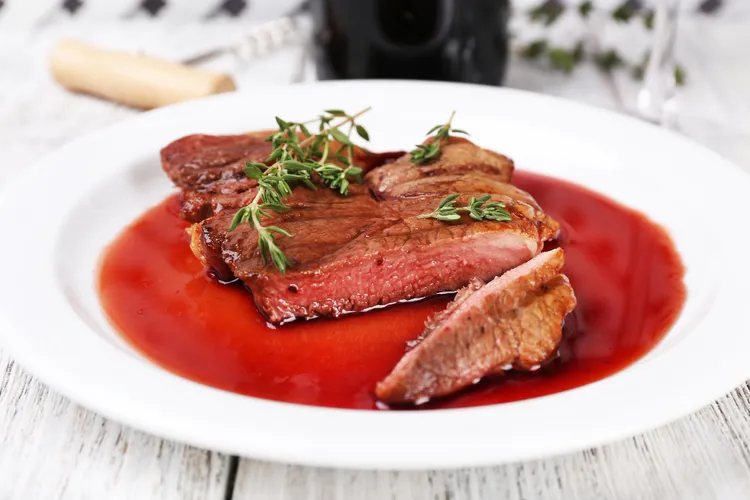
The most immediate return on homemade stock is the pan sauce. After cooking a piece of meat - chicken thighs, a steak, a pork chop - the pan is coated in caramelised meat juices that are pure flavour. Add a splash of stock, scrape and reduce, finish with butter: that is the core technique. With shop-bought stock it produces something salty and thin. With good homemade stock it produces a proper sauce in under 3 minutes.
The Pan Sauce: Core Technique
A pan sauce has four stages: deglazing, reduction, optional enrichment, and seasoning.
- Deglaze: Remove the cooked meat from the pan and set it to rest. Pour off most of the fat (leave a tablespoon). Add liquid to the hot pan: wine, stock, or a combination. The liquid will sizzle and steam violently. Scrape the bottom of the pan with a wooden spoon or spatula - the caramelised residue (the fond) dissolves into the liquid and is the primary flavour source.
- Reduce: Bring the liquid to a boil and reduce by half to two-thirds. The reduction concentrates the flavour and changes the texture from thin to lightly syrupy. With good unsalted homemade stock, this reduction works cleanly without oversalting.
- Enrich (optional): Off the heat, swirl in a knob of cold butter - 20 to 30g. This technique (mounting with butter) adds richness, sheen, and rounds out the flavour. The butter must be cold and the pan must be off the heat - adding butter to a boiling sauce causes it to split rather than emulsify.
- Season: Taste and add salt if needed. A squeeze of lemon juice brightens the sauce.
Quick Pan Sauce Recipes
After cooking pan-roasted chicken thighs: deglaze with 100ml white wine plus 200ml chicken stock. Add a teaspoon of Dijon mustard and a tablespoon of creme fraiche at the end. Reduce and season. After searing steak: deglaze with 150ml red wine plus 100ml beef stock. Reduce by half. Mount with cold butter. Season and add a few drops of Worcestershire sauce. After pork chops: deglaze with 200ml chicken or pork stock. Add a teaspoon of wholegrain mustard and a teaspoon of apple butter or calvados. Reduce. Mount with butter.
Proper Gravy
Gravy is a pan sauce built on roasting juices. After roasting meat, pour the roasting tray juices into a jug. Spoon off the fat (keep it - it is excellent for roasting potatoes). Return the defatted juices to the tray or a saucepan. Add stock - chicken stock for poultry, beef stock for red meat. Bring to a simmer. If you want a thicker gravy, use a roux: whisk 30g plain flour into 30g of the reserved fat in the roasting tray, cook for 1 minute, then add the juices and stock gradually while whisking. See the roux guide for the technique.
Reductions: Demi-Glace and Glaze
Reducing stock concentrates both flavour and gelatin. The stages:
- Stock (full dilution): soup, cooking liquid for rice and grains
- Reduced by 50 percent (glace de viande light): pan sauce base, poaching liquid for vegetables
- Reduced by 75 percent (demi-glace): sauce base, finishing sauces - coats a spoon thickly and has a syrupy consistency when hot
- Reduced by 90 percent (glace de viande): intensely flavoured, solid when cold - used sparingly as a finishing seasoning or flavour boost
Reducing Without Oversalting
This is the critical reason to make unsalted stock. A shop-bought stock reduced by 75 percent becomes inedibly salty. Homemade unsalted stock reduces cleanly - the flavour concentrates without the salt becoming overwhelming. Season the reduced sauce at the very end, after reduction is complete, not before. For all the stock-making foundations, see the complete stocks and broths guide.
Using Demi-Glace from the Freezer
Freeze reduced stock (demi-glace) in ice cube trays. Each cube is 2 tablespoons of concentrated beef flavour. One cube dropped into a hot pan with 50ml of wine and reduced makes a proper restaurant-quality sauce in 2 minutes. Having a bag of demi-glace cubes in the freezer means a sophisticated sauce is always 3 minutes away regardless of what else is in the fridge.
Nutrition (3-minute pan sauce per serving, approx. 60ml)
- Calories: approximately 80 to 120 kcal (including butter enrichment)
- Fat: 6 to 9g
- Protein: 2 to 3g
- Carbs: 2 to 3g
Sauce Building Beyond the Pan
Pan sauces and gravies are the most immediate applications, but stock-based sauces extend well beyond these. A veloute - stock thickened with a white roux - is one of the five mother sauces of classical French cooking and the foundation for dozens of derivative sauces. Chicken stock veloute with added mushroom and cream becomes a sauce supreme. With added tarragon it becomes a sauce estragon. With white wine and shallot reduction it becomes a sauce vin blanc. All of these start from the same place: stock plus roux. The roux guide covers the technique in detail.
Stock Reductions as Seasoning
A very concentrated stock reduction - reduced to a syrup, essentially a meat glaze - functions as a seasoning rather than a sauce component. A teaspoon of concentrated beef glaze added to a tomato sauce, a bean stew, or a mushroom dish adds depth without a detectable beef flavour. A teaspoon added to mashed potato produces a richer, savourier result. This is how professional kitchens use concentrated stocks - as a background flavour enhancer across many dish types, not just in obvious meat-stock applications. Freeze in small portions (half-teaspoon amounts in a small ice cube tray) for this purpose. For the complete guide to stock types and production methods, see the complete stocks and broths guide.
The Five Classical Mother Sauces and Stock
Classical French cooking identifies five mother sauces, four of which use stock as a primary ingredient. Bechamel (milk, butter, flour) is the exception - it uses no stock. The other four are stock-based: veloute (stock plus roux), espagnole (brown stock, brown roux, tomato), sauce tomat (tomato, stock, aromatic vegetables), and hollandaise is sometimes listed as a fifth but does not use stock. From these five bases, hundreds of classical sauces are derived by adding wine, cream, shallots, herbs, and other ingredients.
Understanding this hierarchy explains why homemade stock is so transformative: you are not just improving a recipe, you are working from the correct foundations for an entire cooking system. A home cook with good chicken and beef stock available can produce any of the classical derivative sauces - sauce supreme, sauce mushroom, sauce bordelaise, sauce Robert - using straightforward techniques. None of these require specialist skills beyond what the stock and roux guides in this series cover. The roux guide and the how to make a roux guide provide the technique that combines with stock to produce these sauces. For the full context on stock types, see the complete stocks and broths guide.
Quick Pan Sauce Reference: Four Combinations
These four combinations work for weeknight cooking with ingredients you are likely to have. Each takes under 5 minutes from pan to plate after the meat is cooked.
Chicken with lemon and capers: Deglaze pan with 100ml white wine plus 100ml chicken stock. Reduce by half. Add 1 tablespoon of capers and a squeeze of lemon. Finish with a knob of cold butter. Season. Works alongside balsamic chicken and mushrooms as a lighter alternative sauce.
Steak with red wine: Deglaze with 150ml red wine. Reduce by two-thirds. Add 100ml beef stock. Reduce until syrupy. Finish with cold butter. Season.
Pork with apple and mustard: Deglaze with 200ml chicken stock. Add 1 teaspoon wholegrain mustard and 1 tablespoon apple butter or chutney. Reduce until lightly thickened. Finish with butter.
Fish with white wine and dill: Use fish stock or light chicken stock. Deglaze with 150ml white wine plus 100ml stock. Add a tablespoon of creme fraiche and fresh dill. Do not boil after adding creme fraiche. For the salmon preparation that pairs well with this sauce, see foil-baked salmon with asparagus. For the complete stock guide covering all types, see the complete stocks and broths guide.
Sauce Troubleshooting
Sauce too thin after reducing: either the starting stock had low gelatin content (not enough collagen-rich bones), or the reduction was not taken far enough. Reduce further. If the stock is very lean and the sauce still will not thicken, dissolve a teaspoon of arrowroot or cornstarch in cold water and whisk into the simmering sauce - it thickens immediately without affecting flavour the way flour does. Sauce too thick or sticky: add a splash of stock or water to loosen. A sauce that has become syrupy and is sticking to the pan has reduced too far - thin with stock immediately and reduce more gently this time.
Sauce split (fat separated from liquid): the butter was added to a boiling sauce rather than off the heat, or the sauce was reheated after butter was added. Mounting with butter only works at below-simmering temperature and the sauce should not be reheated after butter is added. If the sauce has split, remove from heat and whisk in an ice cube - the cold water sometimes re-emulsifies a slightly split sauce. For the complete guide to stock-making including all types and how to reduce them, see the complete stocks and broths guide. Use Consillar's nutrition calculators to track the calorie contribution of butter-enriched pan sauces.
Sauce Development Beyond the Pan
Not all stock-based sauces start in the same pan as the meat. Some of the most useful weeknight sauces are made separately, in parallel, while the protein cooks. A simple jus - stock reduced by 75 percent in a small saucepan with a bay leaf and a shallot - takes 12 to 15 minutes and can be made while a roast chicken rests. By the time the resting period is complete, there is a proper jus ready to pour over the sliced meat. This approach produces a sauce with significantly more depth than a pan dripping gravy while requiring almost no attention beyond occasionally checking the reduction level.
For a weeknight pan sauce that does not depend on drippings: heat 300ml of chicken stock in a small saucepan with a crushed garlic clove and a sprig of thyme. Reduce by half over 8 minutes. Remove garlic and thyme. Add a tablespoon of cold butter off the heat and swirl to emulsify. Season. This works alongside any protein without needing anything from the cooking pan. It is less complex than a proper deglazing sauce but more flavourful than plain jus. Use Consillar's nutrition calculators to track calorie contributions from butter-enriched sauces. For the complete stock and broth guide, see the complete stocks and broths guide.
Summary
The pan sauce technique - deglaze, reduce, enrich with cold butter, season - is the most transferable cooking skill in this series. It works after any protein, takes under 5 minutes, and produces a result that cannot be replicated with shop-bought stock because commercial stock oversalts on reduction. Homemade unsalted stock is the enabling ingredient. Once you can make a consistent pan sauce, the logic extends to proper gravy, veloute, and demi-glace - all of which are the same principle applied with more time and more stock. For the stock production that makes this possible, see the individual guides and the complete stocks and broths guide. Use Consillar's nutrition calculators to track sauce calories precisely.
The Financial Case for Homemade Stock in Sauce-Making
A single tablespoon of reduced demi-glace from homemade beef stock produces a pan sauce ingredient that would cost several pounds per portion if purchased from a specialist supplier. The demi-glace itself costs the gas to simmer for 8 hours and the bones from one batch of beef stock. Divided into ice cube portions and used one cube at a time, a single batch of demi-glace produces 20 to 30 restaurant-quality sauce portions. The same sauce quality from a shop - in the form of demi-glace sachets or concentrated stock pods - costs several pounds per use. Making stock and reducing it to concentrate is the highest-value activity in home sauce production, both for quality and economics. For the full production guide, see the complete stocks and broths guide.
Latest