How to Store and Reheat Leftover Tapioca Pearls
The real storage window for cooked tapioca pearls at room temperature versus the fridge, plus how to reheat firmed-up pearls back to a usable texture.
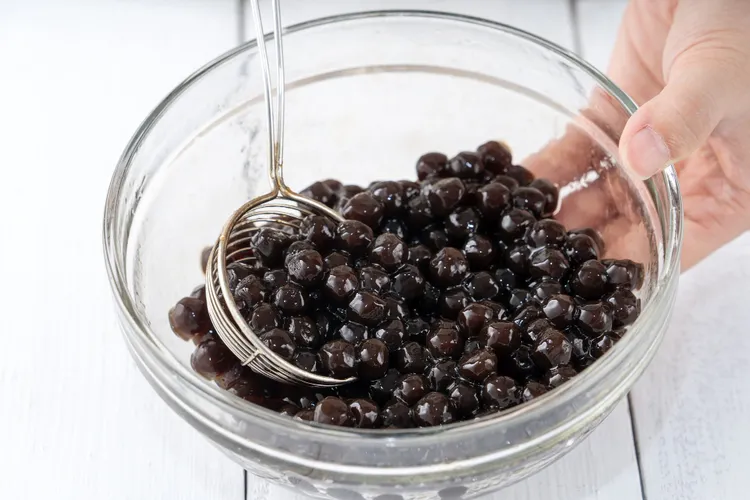
Tapioca pearls are genuinely a same-day food. They firm up as they cool no matter what you do, and refrigeration accelerates that process rather than slowing it down the way it does with most cooked food. Understanding the real timeline helps set expectations before cooking a batch bigger than you'll actually use.
Room Temperature: The Best Option for Short-Term Storage
Cooked pearls held in their brown sugar syrup, covered, at room temperature stay usable for roughly 4 to 6 hours. The syrup slows the firming process somewhat compared to plain water, which is part of why tossing pearls in syrup right after cooking matters beyond just flavor. This is the best option if you're serving a group over the course of an afternoon or evening rather than all at once.
Refrigeration: Works, But Changes the Texture Fast
Refrigerated tapioca pearls firm up noticeably within 2 to 3 hours and become distinctly hard and unpleasant by the 24-hour mark, even sitting in syrup. This isn't a storage mistake or a sign anything was done wrong - it's simply how tapioca starch behaves at cold temperatures, since the same retrogradation process that makes refrigerated rice and bread go stale happens faster and more dramatically with tapioca.
If you do need to refrigerate: store the pearls submerged in their syrup in an airtight container, and plan to reheat rather than serve them cold, since cold tapioca pearls straight from the fridge are noticeably worse than reheated ones.
How to Reheat Firmed-Up Pearls
- Bring a small pot of water to a boil.
- Add the refrigerated pearls and boil for 2 to 3 minutes, just enough to soften them back up without fully re-cooking them from scratch.
- Drain and immediately toss in fresh or reserved brown sugar syrup - reheating strips away some of the original syrup coating, so re-coating matters for both flavor and texture.
- Use immediately; reheated pearls firm back up even faster than a first batch once they cool again.
This reheating method brings back a reasonable amount of chewiness but won't fully restore the pearls to their original just-cooked texture - it's a genuine improvement over serving them cold and hard, not a full reset.
Freezing: Not Recommended
Tapioca pearls don't freeze well. The starch structure that gives them their chewy texture breaks down during freezing and thawing in a way that produces a mushy, waterlogged result once thawed, closer to what happens to a thawed potato than a typical frozen-and-reheated starch. Freezing raw uncooked dried pearls (before boiling) is fine, since they're shelf-stable dry goods - it's specifically cooked pearls that don't hold up to freezing.
How Long Uncooked Dried Pearls Keep
Unopened dried tapioca pearls keep for many months at room temperature in a sealed package, similar to dried pasta. Once opened, transfer them to an airtight container to keep out moisture, and use within the timeframe printed on the original packaging - most brands suggest using opened pearls within a few months for the best texture once cooked.
Planning Batch Size Around This
Given how narrow the good-texture window is, it's worth cooking pearls closer to when you'll actually use them rather than batch-cooking far in advance. For a single person or couple, cooking just enough for that session's drinks (roughly 1/4 to 1/2 cup dried pearls per two servings) avoids the storage problem entirely. For a group gathering spread over a few hours, room-temperature storage in syrup covers that window comfortably without needing refrigeration.
A Quick Reference
- Using within the hour: leave at room temperature in syrup, covered.
- Using within 4 to 6 hours: room temperature in syrup, covered, still works reasonably well.
- Beyond 6 hours: refrigerate in syrup, and plan to reheat before serving.
- Beyond 24 hours: texture is genuinely compromised even after reheating; better to cook a fresh batch.
- Uncooked dried pearls: shelf-stable for months in a sealed, dry container.
Frequently Asked Questions
Can I speed up cooking a fresh batch instead of trying to store leftovers?
For most home situations, yes - since a standard batch of tapioca pearls only takes 30 to 40 minutes including the rest step, and produces noticeably better texture than reheated leftovers, cooking a smaller fresh batch closer to when you'll actually drink it is usually the better tradeoff over trying to stretch a large batch across multiple days.
Does adding more syrup to stored pearls help preserve their texture longer?
It helps somewhat by slowing moisture loss and firming, since sugar syrup is slightly hygroscopic and can keep the surrounding environment more humid than plain water would, but it doesn't meaningfully extend the window past what's outlined above - it's a modest improvement, not a way to safely store pearls for days.
Is it safe to eat tapioca pearls that have been left out overnight at room temperature?
This is more a quality question than a food safety one, since the syrup and pearls themselves don't carry the same bacterial risk that a dairy or meat product left out overnight would. That said, the texture will have degraded well past the point of being enjoyable by then, so it's more a matter of taste and texture than safety.
Can I portion and store dried, uncooked pearls in the freezer for longer shelf life?
It's not necessary - dried tapioca pearls are already shelf-stable for many months at room temperature in a sealed container, similar to dried pasta, so freezing offers little practical benefit and isn't standard practice for this product.
Why do some shops seem to serve pearls that stay chewy for hours?
Shops that serve boba consistently throughout a day are typically cooking multiple smaller batches over the course of the day rather than one large batch that sits for hours, precisely because of the texture window described above. A shop's pearls that seem to "stay chewy" are often simply fresher, cooked more recently, than they might appear.
Planning a Multi-Batch Session
If you're making boba for several people over an extended gathering, cooking two or three smaller batches spaced out over a few hours - rather than one large batch at the start - keeps the texture consistently good throughout, at the cost of a bit more active hands-on time. This mirrors how a shop actually manages the same freshness problem at a larger scale.
Storing the Other Components Separately
Unlike the pearls, brewed tea and brown sugar syrup both hold up well for later use. Brewed tea keeps in the refrigerator for about 2 to 3 days before its flavor starts to noticeably decline, and brown sugar syrup, as covered in the syrup guide, keeps for roughly two weeks refrigerated. This means prepping the syrup and even brewing tea a day or two in advance is entirely reasonable - it's specifically the cooked pearls that need to be timed close to serving.
Signs a Batch Should Be Discarded Rather Than Reheated
Pearls that have developed an off smell, a slimy rather than firm surface texture, or visible mold (more likely after a day or more at room temperature in a warm kitchen) should be discarded rather than reheated and served, regardless of how they started out. This is a food safety consideration separate from the texture-based storage timeline covered above, and it's worth checking for before assuming a batch just needs reheating to be usable again.
Why Tapioca Behaves So Differently From Other Cooked Starches in Storage
Rice, pasta, and potatoes all firm up somewhat once refrigerated too, through the same general starch retrogradation process, but tapioca is unusually fast and pronounced in how it firms up compared to these more common cooked starches. This comes down to tapioca starch's specific molecular structure, which is higher in amylopectin relative to some other starches - a structure that gelatinizes readily under heat but also re-crystallizes readily as it cools, more so than starches with a different amylose-to-amylopectin ratio. This is a genuine structural property of the ingredient, not something that better technique or different storage containers can fully work around.
Comparing Storage Windows Across Common Home-Cooked Starches
- Cooked rice: holds reasonably well refrigerated for 3 to 4 days with only moderate texture change.
- Cooked pasta: similar, around 3 to 5 days, with some softening.
- Cooked tapioca pearls: meaningfully shorter window, noticeable firming within hours rather than days.
This comparison is useful context for anyone surprised by how quickly tapioca pearls change compared to other starchy leftovers they're used to storing without much thought.
Meal-Prepping Around This Limitation
Rather than trying to prep tapioca pearls ahead of time, a more workable meal-prep approach for regular boba drinkers is prepping and storing the other, more storage-friendly components in advance - a batch of brown sugar syrup and a batch of concentrated brewed tea, both of which hold up well for a week or two - and simply cooking a small, fresh batch of pearls (10 to 20 minutes, start to finish, for quick-cook varieties) right before each individual serving. This splits the effort in a way that respects tapioca's specific limitations while still meaningfully reducing the total active time needed for each glass compared to starting completely from scratch every time.
A Realistic Expectation to Set
Accepting that tapioca pearls are simply not a make-ahead ingredient, rather than searching for a storage trick that fully solves the problem, is the most useful mindset here - no container, temperature, or technique fully overcomes the underlying starch chemistry at play, and working with that limitation rather than against it leads to better results overall.
Cook only as many pearls as you'll realistically drink within a few hours, and treat any leftovers past that window as a texture compromise rather than a true failure - reheated pearls are still perfectly drinkable, just not quite as good as a freshly cooked batch, and that's a reasonable tradeoff for the convenience of not starting completely from scratch for a second round.
Setting Expectations With Guests
If serving boba to guests over an extended visit, it's worth mentioning that later servings might have a slightly different texture than the first round, especially if pearls have been sitting for a while between pours. Most people don't notice or mind this difference, but knowing it's a normal, expected part of how tapioca behaves - rather than a sign something went wrong in the kitchen - helps set the right expectations if anyone asks.
Plan for same-day use, treat anything beyond a few hours as a texture compromise rather than a failure, and lean on the reheating method above when a second-day batch is genuinely the only option available.
Tapioca pearls are one of the few components in this whole guide that genuinely reward cooking fresh and often, rather than batching ahead - once that's accepted as part of how the ingredient works, the whole process becomes much less frustrating to plan around, and the results stay noticeably more consistent from one glass to the next.
Cook what you'll drink soon, keep leftovers in syrup rather than plain water, reheat with a brief boil rather than a microwave, and treat anything beyond a day as no longer worth serving. These four points cover the great majority of situations that come up around storing this specific ingredient.
This storage guidance applies specifically to the pearls used throughout the brown sugar boba guide, including every flavor variation covered elsewhere in this series.
Planning around this one limitation is the single most useful thing to take away from this guide - everything else about making boba at home is considerably more forgiving of advance preparation than the pearls themselves.
This is part of the full brown sugar boba guide. For the original cooking method these storage times are based on, see the tapioca pearl cooking guide, and if a batch has already gone hard or chalky beyond what reheating can fix, the troubleshooting guide covers the other common failure points.
Latest