Why Your Tapioca Pearls Turned Out Hard, Chalky, or Fell Apart
A troubleshooting guide for the most common tapioca pearl failures - hard centers, mushy exteriors, clumping, and dissolving - and how to fix each one.
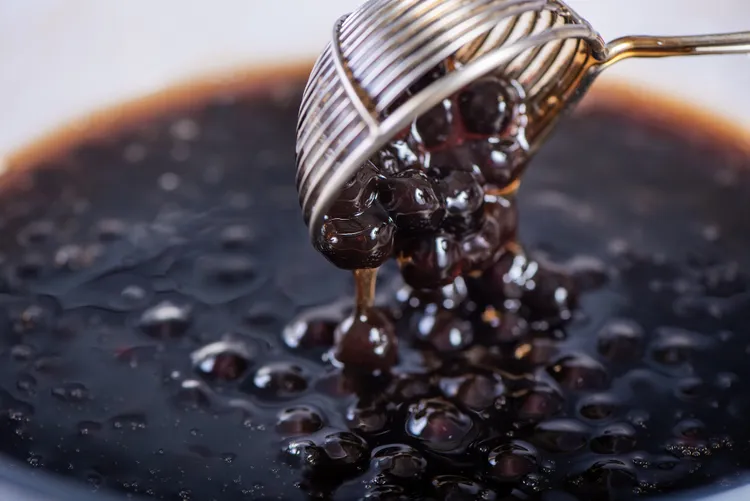
Tapioca pearls fail in a few predictable ways, and each one traces back to a specific step in the cooking process rather than being random bad luck. Knowing which stage went wrong makes it possible to fix the next batch rather than just trying again with the same method.
Problem: Hard or Chalky Center
This is the most common failure, and it almost always means the pearls didn't simmer long enough or skipped the rest step. A hard, opaque center is undercooked starch that never fully gelatinized. Cut a pearl in half - if you see a visible white or opaque dot in the middle rather than uniform translucency, the batch needed more time.
The fix: return the pearls to a pot of simmering water for another 5 to 10 minutes, then turn off the heat, cover, and let them rest for a full 15 to 20 minutes off the heat. This often salvages a batch that seemed undercooked, since the rest step alone finishes a lot of the interior cooking that a longer boil sometimes doesn't fully solve. See the full tapioca pearl cooking guide for the complete timing this is based on.
Problem: Mushy or Falling-Apart Exterior
This is close to the opposite problem - the outside has been cooked past the point of holding its shape, usually from boiling too long, boiling too hard, or stirring too vigorously and too often during cooking, which physically breaks down the softened exterior.
The fix: unfortunately, once pearls have gone mushy on the outside, there's no way to reverse that specific batch - the starch structure has broken down. For the next attempt, reduce the boil time slightly, switch from a hard rolling boil to a gentler one during the simmer stage, and stir only occasionally rather than continuously.
Problem: Pearls Stuck Together in Clumps
This usually happens from not enough water in the pot relative to the amount of pearls, or from adding the pearls to water that wasn't at a full boil yet, giving them time to settle and stick to each other and the bottom of the pot before the water came back up to temperature.
The fix: use a full 8:1 water-to-pearl ratio and make sure the water is at a genuine rolling boil before adding the pearls, then stir gently but immediately for the first 30 seconds specifically to prevent early clumping.
Problem: Pearls Dissolved or Disintegrated Into the Water
This is a more severe version of the mushy-exterior problem, usually from cooking at too high a heat for too long, or from using pearls that were already old or improperly stored and had begun to break down structurally before they even hit the water.
The fix: check the expiration date and storage condition of your pearls before assuming the cooking method is at fault - pearls stored in a humid environment or kept well past their best-by date can fail this way regardless of technique. If the pearls are fresh, reduce the heat to a firmer simmer rather than a hard boil for the main cooking stage.
Problem: Pearls Turned Gummy or Sticky After Cooling
This is largely unavoidable to some degree - tapioca pearls firm up as they cool, and it happens faster than most people expect, often within 20 to 30 minutes at room temperature and much faster in the refrigerator.
The fix: use the pearls within an hour of cooking whenever possible, and keep them in their syrup (not plain water) while waiting, since the syrup slows the firming process somewhat. See the storage and reheating guide for the actual window you're working with and how to bring firmed-up pearls back to a usable texture.
Problem: Pearls Taste Bland Even Though They Cooked Correctly
This isn't a cooking failure at all - it means the pearls weren't given enough time to absorb the syrup after cooking. Properly textured pearls that taste like plain starch usually just came straight out of the water without a proper soak in syrup afterward.
The fix: toss the warm, drained pearls in brown sugar syrup immediately after cooking and let them sit in it for at least 10 minutes before using - see the brown sugar syrup guide for the syrup recipe this depends on.
A Quick Diagnostic Reference
- Hard center, chewy outside: undercooked - simmer longer, then rest properly.
- Mushy outside, no real structure: overcooked or over-stirred - reduce boil time and heat next time.
- Clumped together: not enough water, or added before a full boil.
- Dissolved into the pot: heat too high, too long, or pearls past their prime.
- Gummy after sitting out: normal aging - use within the hour, or refer to the storage guide.
- Bland flavor: not enough syrup soak time, not a cooking issue at all.
Preventing These Issues Next Time
Most of these problems trace back to two things: not following the specific water ratio and rest step in the tapioca pearl cooking guide, or using pearls that weren't fresh to begin with. Following that guide's timing closely on the first attempt, rather than guessing based on general pasta-cooking instincts, avoids the majority of these failures before they happen.
Frequently Asked Questions
Can a batch that's slightly undercooked be fixed after it's already cooled?
Yes, in most cases - return the cooled pearls to simmering water for a few minutes to bring them back up to temperature and continue the cooking process, then let them rest again before using. This works better the sooner it's attempted after the original cook, since pearls that have fully cooled and firmed up are harder to bring back to a good texture even with additional cooking.
Is it possible to overcook pearls during the rest step itself, not just the boiling stage?
Resting for meaningfully longer than the recommended 15 to 20 minutes, especially in a pot that's still retaining a lot of heat, can eventually push pearls toward the mushy side, though this is a slower process than overcooking during active boiling. If resting longer than usual, check texture periodically rather than assuming more rest time is always better.
Why do pearls from the same batch sometimes turn out inconsistent, some good and some not?
This usually comes back to overcrowding in the pot or an uneven boil, where pearls near the edges or bottom of the pot experience different heat exposure than pearls in the center. Using a wide, heavy-bottomed pot with plenty of water and stirring occasionally helps even this out.
Does the brand of tapioca pearls make a real difference in how often these problems happen?
Yes, to a meaningful degree - starch ratios, pearl size consistency, and manufacturing quality vary between brands, and some are simply more forgiving and consistent than others. If a particular brand keeps producing the same failure despite following timing closely, it's worth trying a different brand before assuming the technique itself is at fault.
Can I prevent problems by using less water and a shorter cook, then finishing with a longer rest?
Not reliably - the boiling and simmering stages are what actually gelatinize the starch through to the center, and the rest step finishes that process rather than substituting for it. Cutting the active cooking time too short and relying entirely on the rest step tends to produce undercooked centers regardless of how long the rest is extended.
When to Just Start Over
Not every failed batch is worth troubleshooting and salvaging. Pearls that have visibly dissolved into the cooking water, or that have gone uniformly mushy with no structural integrity left at all, generally aren't recoverable, and a fresh batch with adjusted timing is a better use of time than trying to rescue that specific pot. Pearls with a still-hard center, on the other hand, are almost always salvageable with additional simmering and rest.
Keeping a Simple Log for Repeat Batches
If a particular brand or batch keeps producing inconsistent results, jotting down a quick note - water amount, boil time, simmer time, rest time, and the outcome - for a few attempts in a row makes it much easier to spot a pattern than relying on memory alone. This is especially useful for anyone making boba regularly enough that small, repeatable adjustments genuinely improve results over time, similar to how a home baker might track oven temperature quirks across attempts at the same recipe.
When the Problem Is the Syrup, Not the Pearls
Occasionally what looks like a pearl texture problem is actually a syrup problem - pearls that taste bland or seem underwhelming despite a good chewy texture usually point to insufficient syrup soak time rather than anything wrong with the cooking process itself. Before troubleshooting the pearls further, confirm the syrup itself reached the right consistency, following the brown sugar syrup guide, since a thin, under-reduced syrup won't coat or flavor pearls as effectively even with a long soak.
Troubleshooting the Pot and Heat Source, Not Just the Pearls
Sometimes a recurring problem has less to do with technique and more to do with equipment. A pot that's too small for the recommended water ratio will struggle to maintain a genuine rolling boil once pearls are added, since the temperature drop from adding room-temperature pearls to a smaller volume of water is more significant than in a larger pot. Similarly, an underpowered stove burner or one that doesn't distribute heat evenly across the bottom of the pot can cause inconsistent results even when the recipe itself is followed exactly. If problems persist despite careful timing, checking whether the pot is appropriately sized and the burner is running at a genuine full boil (visible large, rolling bubbles, not just a few small ones) is worth doing before assuming the recipe or ingredient is at fault.
Why Pearls From the Same Bag Can Behave Differently Batch to Batch
Even with identical technique, slight variation batch to batch is normal and expected, since factors like exact water temperature at the start, altitude-related boiling point differences, and even minor humidity differences in how the dried pearls were stored before use all introduce small variables that are hard to fully control at home. A slight difference in chew from one attempt to the next isn't necessarily a sign of a mistake - some variation is simply inherent to cooking with a natural starch product outside of an industrial, tightly controlled shop kitchen environment.
What a "Perfect" Pearl Actually Feels Like
For anyone newer to making boba at home, it helps to have a clear mental benchmark: a well-cooked pearl should offer gentle resistance when bitten into, followed by a soft, chewy give with no gritty or crunchy sensation anywhere in the bite, and no distinct hard core. It should hold its round shape without collapsing or sticking excessively to other pearls. This is a genuinely different texture than al dente pasta, softer bread, or gummy candy, even though comparisons to all three come up often - it's closer to its own distinct category, and building a mental reference for it through a few practice batches makes it much easier to judge doneness by feel on future attempts.
One Last Reminder
Most tapioca pearl problems are timing issues, not ingredient issues - when in doubt, revisit the core cooking guide before assuming a specific brand or batch is simply unreliable.
Keeping Perspective
Even experienced home cooks occasionally end up with an off batch of tapioca pearls - it's a genuinely finicky ingredient by the standards of most home cooking, and a single failed attempt isn't a reflection of skill so much as a normal part of learning a technique that depends heavily on timing and visual judgment rather than fixed, universal numbers.
This troubleshooting guide is part of the full brown sugar boba guide. If pearl texture keeps being a recurring issue despite following the timing closely, the quick-cook versus traditional pearls comparison is worth checking too, since some of these failure modes are more common with one pearl type than the other.
Latest