Freezing and Reheating Croissants (Baked and Unbaked)
How to freeze croissant dough at different stages, and the best way to reheat both frozen shaped dough and already-baked croissants.
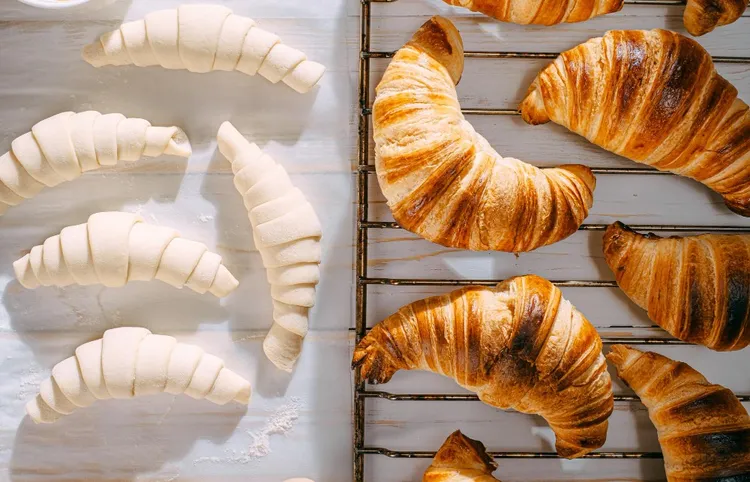
A full batch of croissant dough makes more pastries than most households eat fresh in a single sitting, and the good news is that both the raw dough and the baked croissants freeze well when handled at the right stage of the process.
Freezing Shaped, Unbaked Croissants
This is the most useful freezing option for most home bakers, since it means fresh croissants are available with minimal morning effort whenever you want them.
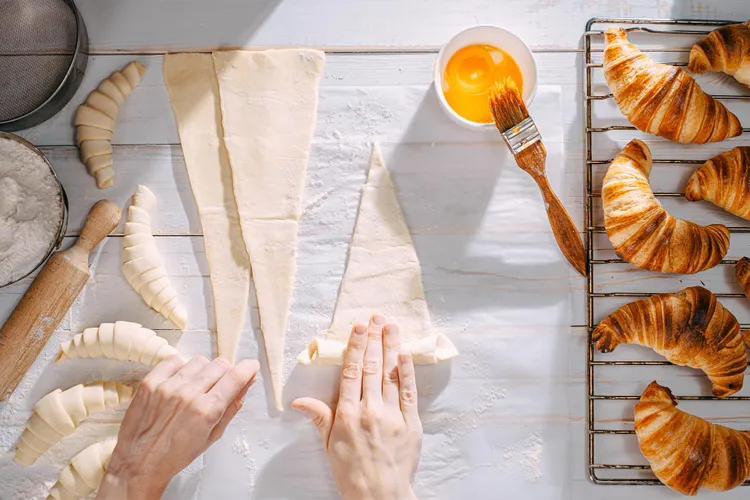
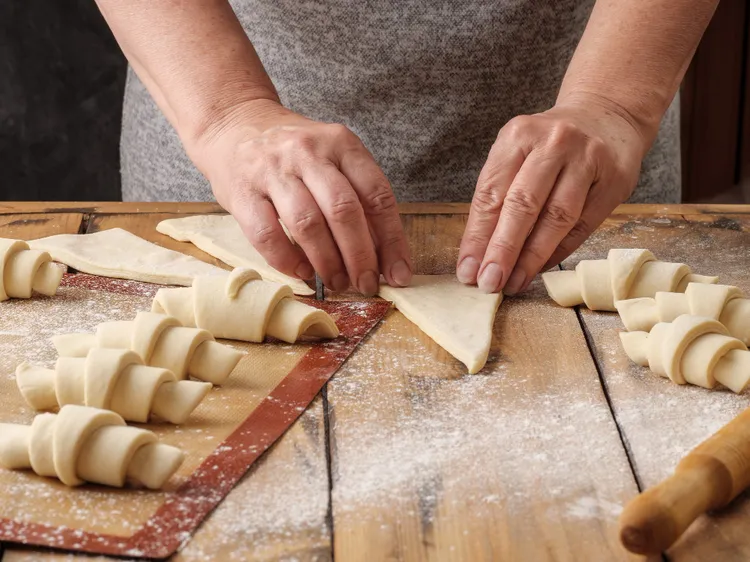
- Shape the croissants as usual, following our shaping guide, but stop before proofing.
- Arrange the shaped, unproofed croissants on a parchment-lined baking sheet, spaced apart, and freeze uncovered for about 2 hours, until firm.
- Once firm, transfer to a freezer bag or airtight container, removing as much air as possible. They'll keep well for up to a month.
- When ready to bake, arrange the frozen croissants on a parchment-lined baking sheet, spaced well apart, and let them thaw and proof at warm room temperature - this takes considerably longer than proofing fresh dough, often 6 to 8 hours, so plan accordingly, typically overnight in the refrigerator followed by a shorter room-temperature proof, or a full day at room temperature if you have the time.
- Apply egg wash and bake as usual once fully proofed - see our egg wash guide.
This method is genuinely close to a bake-from-frozen setup for a special morning, though it does require planning the proof time in advance rather than being truly instant.
Freezing Laminated Dough Before Shaping
If you'd rather freeze the dough at an earlier stage and decide on shapes later, laminated dough (after the final fold, before shaping) can be frozen as a flat, wrapped block. Wrap it very tightly in plastic wrap, then in a layer of foil or a freezer bag, to prevent freezer burn and any absorbed odors from the freezer. It keeps for up to a month this way. Thaw it in the refrigerator overnight before rolling and shaping - trying to shape dough straight from the freezer will crack the butter layers, since they'll be far too cold and brittle to roll smoothly.
Freezing Baked Croissants
Fully baked and cooled croissants also freeze reasonably well, though the texture on reheating won't be quite as good as either fresh-baked or the bake-from-frozen shaped dough method above.
- Let baked croissants cool completely to room temperature.
- Wrap individually in plastic wrap, then place in a freezer bag, removing excess air.
- Freeze for up to a month.
Reheating Baked Croissants
From frozen
Unwrap and place directly in a 300°F oven for 10 to 12 minutes, until warmed through and the exterior has re-crisped. This direct-from-freezer method works better than thawing first, since it minimizes the time the pastry spends at a temperature where moisture can make the exterior soggy.
From the refrigerator or day-old at room temperature
A shorter stint in a 300°F oven, about 5 to 7 minutes, is usually enough to refresh the texture. Avoid the microwave for this - it heats unevenly and tends to make the exterior soft and slightly chewy rather than restoring any crispness, since it heats moisture inside the pastry faster than it can evaporate at the surface.
What Reheating Can and Can't Fix
Reheating brings back warmth and re-crisps the exterior to a real degree, but it won't fully restore the exact texture of a croissant fresh out of the oven on baking day - some of that first-day airiness is genuinely gone once the pastry has fully cooled and been frozen or stored. This isn't a sign you're doing something wrong; it's simply a limitation of reheating any laminated pastry, professional bakeries included.
Storage Without Freezing
Freshly baked croissants keep at room temperature, loosely wrapped or in a paper bag (not airtight plastic, which traps moisture and softens the crust), for about a day. Beyond that, freezing is a better option than continued room-temperature storage, since the texture degrades meaningfully by day two or three even without freezing.
Making the Most of Extra Croissants
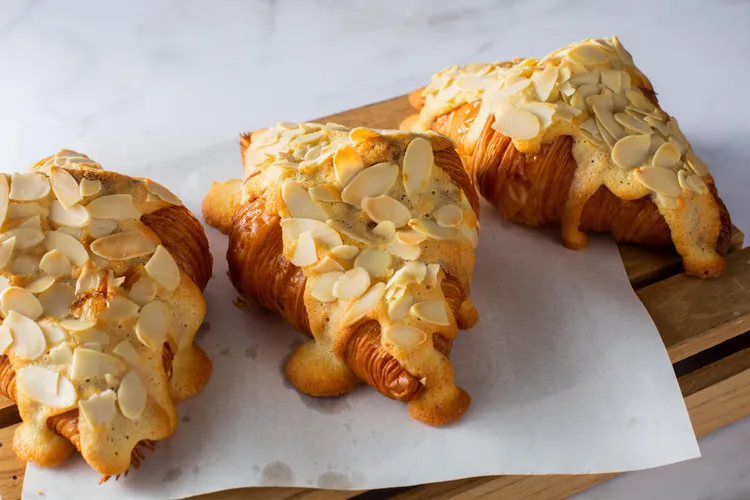
If you have croissants that are a day or two old and not headed for the freezer, they don't need to be eaten plain - our almond croissant guide covers turning slightly stale croissants into a genuinely different, arguably even better pastry using simple syrup and frangipane, which is often a better outcome than trying to freshen up day-old croissants as-is.
Planning a Batch With Storage in Mind
Since a full batch makes more than most households eat in one sitting, it's worth deciding in advance how many to bake fresh versus freeze shaped and unbaked. Freezing half the batch after shaping, rather than baking everything at once, is usually the better call if you're not planning to eat or share the whole batch within a day or two.
Why Freezer Burn Matters More With Laminated Dough
Laminated dough is especially vulnerable to freezer burn compared to a plain bread dough, because the thin butter layers throughout have a lot of exposed surface area if air reaches them, and butter absorbs off-flavors from the freezer environment more readily than a denser dough would. This is why the wrapping step deserves real care rather than a quick, loose wrap - double-wrapping in plastic followed by a layer of foil or a dedicated freezer bag with the air pressed out makes a meaningful difference in how well the dough holds its flavor and texture over a full month of storage.
Labeling for Future You
It's easy to lose track of exactly what's in the freezer and when it went in, especially if you're freezing multiple batches or multiple stages (shaped dough, laminated blocks, baked pastries) at once. A simple label with the date and contents - "shaped croissants, frozen [date]" - saves real confusion later and helps you use older items before they approach the edge of their reasonable freezer life.
Thawing Times at a Glance
- Shaped, unproofed croissants: Overnight in the fridge, then several hours at room temperature to complete proofing, or a full day at room temperature if starting straight from the freezer without a fridge stage first.
- Laminated dough block, unshaped: Overnight in the refrigerator before rolling and shaping.
- Baked croissants: No thawing needed - reheat directly from frozen for the best texture.
Can You Refreeze?
Refreezing dough that's already been thawed once is not recommended - the yeast has already started working during the thaw, and a second freeze-thaw cycle tends to weaken its performance noticeably, along with degrading the texture of the butter layers further. It's better to only thaw the specific quantity you plan to use in the near term, keeping the rest frozen until needed, rather than thawing a full batch and refreezing the leftover portion.
Traveling With Frozen or Baked Croissants
If you're bringing croissants somewhere - a family gathering, a gift for a neighbor - baked and fully cooled croissants travel reasonably well at room temperature for a few hours, especially in a single layer in a sturdy container rather than stacked, which can crush the delicate layers. Frozen shaped dough is a poor choice for transport unless you have a reliable cooler and ice, since any partial thaw and refreeze along the way risks the yeast losing potency before it's even baked.
When Extra Croissants Are Genuinely a Good Problem
Between freezing options and the almond croissant technique for using up slightly stale ones, there's rarely a good reason to let extra croissants from a batch go to waste. Planning ahead for storage from the start - deciding what to freeze, what to eat fresh, and what to set aside for a next-day almond croissant treatment - makes a full batch feel like a genuinely efficient use of a multi-day baking project rather than more pastry than one household can reasonably use.
Freezing Filled Variations
The same freezing principles apply to filled shapes like pain au chocolat and ham and cheese croissants, with one small caveat for savory, cheese-filled versions: cheese can sometimes separate slightly in texture after freezing and reheating, becoming a touch more oily than when freshly baked. This is a minor cosmetic and textural difference rather than a food safety concern, and most people find it barely noticeable once the pastry is warmed through, but it's worth knowing in advance if you're freezing a large batch of the savory version specifically.
Vacuum Sealing as an Upgrade
If you bake croissants regularly enough to justify the equipment, a vacuum sealer removes air far more thoroughly than manual bag-and-press methods, which meaningfully extends how long frozen dough or baked croissants hold their quality - sometimes up to two to three months rather than the standard one-month guideline given for typical freezer bag storage. This isn't necessary for occasional baking, but it's a worthwhile investment if croissants become a regular enough project that freezer storage time adds up.
Quality Expectations
No amount of careful freezing and reheating technique will make a stored croissant taste exactly like one fresh out of the oven on baking day - that specific combination of warmth, aroma, and just-set structure is genuinely unique to the first hour or so after baking. Understanding this in advance helps set realistic expectations: frozen and reheated croissants are a very good, genuinely worthwhile way to extend a batch, not a perfect substitute for the fresh experience, and appreciating them on those terms tends to lead to less disappointment than expecting an identical result.
Refrigerating Instead of Freezing for Short-Term Storage
For storage measured in just a couple of days rather than weeks, the refrigerator is a reasonable middle ground between room temperature and the freezer, though it comes with its own tradeoff: refrigeration actually accelerates the staling process for baked goods compared to room temperature storage, due to how starch molecules recrystallize faster in a cold, non-freezing environment. For croissants specifically, this means a day or two in the fridge often leaves them staler than the same amount of time at room temperature would, somewhat counterintuitively. If you're only storing for a day or two, room temperature (well wrapped) is usually the better choice; for anything beyond that, skip the fridge and go straight to the freezer instead.
Reviving Croissants Without an Oven
If oven access isn't convenient, a toaster oven works nearly as well for reheating small quantities, using the same general temperature and timing guidance. A stovetop skillet, covered, on low heat for a few minutes per side can also revive a croissant's crispness in a pinch, though it requires more attention to avoid burning the bottom before the inside warms through. The microwave remains the least effective option across the board for any laminated pastry, since it can't replicate the dry, radiant heat needed to re-crisp butter layers.
Building a Rotation of Frozen Dough
For households that end up enjoying croissants regularly, it's worth considering a small, ongoing rotation: laminate and shape a new batch every few weeks, freezing the shaped, unbaked portions as you go, so there's always a stash on hand ready to proof and bake on short notice. This spreads the more demanding lamination work across manageable sessions rather than requiring a full multi-day commitment every single time a craving strikes, while still delivering genuinely fresh-baked results whenever you actually want to eat them.
A Quick Reference for Storage Times
- Room temperature, baked, wrapped: About 1 day
- Refrigerator, baked: Not recommended - staling accelerates
- Freezer, shaped unbaked dough: Up to 1 month
- Freezer, laminated dough block: Up to 1 month
- Freezer, baked croissants: Up to 1 month
Keeping a reference like this posted near the freezer, or jotted in a recipe notebook, saves you from guessing later whether that unlabeled bag of dough is still good to use or past its reasonable window.
Making Storage Part of the Plan From the Start
The most successful approach to a full batch of croissants isn't deciding on storage after the fact, but planning for it before you even start mixing the dough - knowing roughly how many you'll eat fresh, how many to freeze shaped, and how many day-old ones you might turn into almond croissants a day or two later. Treating storage as part of the recipe rather than an afterthought is what makes a multi-day laminated dough project feel efficient rather than wasteful.
For the full recipe and process this storage guide supports, see our classic croissant recipe, or head back to the complete croissant guide.
Latest