How to Harvest Dill Without Killing the Plant
The correct way to cut dill fronds for continuous growth, and when to let a plant go to seed instead.
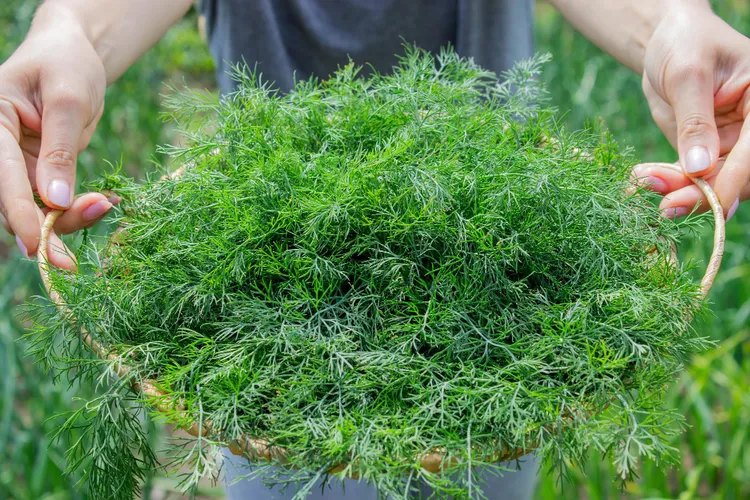
Dill doesn't behave like basil once it's cut. There's no hard-pruning trick that makes it branch out endlessly, and treating it like a bushier herb usually just stresses the plant without extending the harvest the way gardeners expect.
How Dill Actually Grows
Dill grows from a central stem with feathery fronds branching off at intervals, eventually sending up a tall central stalk that flowers and sets seed. Unlike basil, which branches vigorously from nearly any cut point, dill's growth is more linear and time-limited. A plant has a natural lifespan from sowing to flowering, typically 8 to 10 weeks depending on temperature, and harvesting technique affects how much usable growth happens during that window rather than extending the window itself.
The Right Way to Cut
Snip whole fronds close to the main stem rather than pinching just the feathery tips. Start with the outer, lower fronds first, and work up the plant, similar to how you'd harvest lettuce leaves from the outside in. This lets the plant's central growing point keep producing new fronds for as long as possible before it commits to flowering.
Avoid cutting the central growing tip early in the plant's life; this is where new fronds originate, and removing it prematurely can stunt the plant rather than encourage more growth the way a basil pinch would.
How Much to Take at Once
Take no more than a third of a plant's total fronds in a single harvest session if you want the plant to keep producing over several more weeks. If a planting is about to bolt anyway, a heavier harvest right before flowering starts makes sense, since the plant won't have much productive time left regardless.
Reading a Plant's Stage
- Young plant, under 8 inches: avoid harvesting yet; let it establish more growth first
- Established plant, bushy with multiple fronds: regular light harvesting from outer fronds is fine
- Central stalk starting to elongate: flowering is imminent; this is the point to decide between a final fresh harvest or letting it go to seed
- Flower heads forming: frond flavor declines from here; either harvest everything remaining or let the plant finish for seed
Harvesting for Seed Instead of Fronds
If a planting has already started bolting, it may make more sense to let it flower and mature for dill seed rather than fighting for a few more fronds. Dill seed has its own culinary uses and a much longer shelf life than fresh fronds. Letting a stalk fully flower and dry on the plant, then collecting the seed heads before they shatter, is a reasonable alternative to squeezing out a final, lower-quality frond harvest.
Common Mistakes
- Treating dill like basil and cutting hard from the center. This can stunt the plant's ability to keep producing rather than encourage branching the way it would with basil.
- Harvesting too much too early from a young plant. A plant that hasn't established enough fronds yet needs time to build up growth before it can sustain repeated harvesting.
- Waiting too long once flowering starts. Frond flavor and texture decline quickly once a plant commits to flowering; harvest what you want fresh before the central stalk fully elongates.
Frequently Asked Questions
Can I harvest dill more than once from the same plant?
Yes, as long as harvesting stays light and comes from outer fronds, a single plant can be harvested several times over its 8 to 10 week lifespan before it bolts.
Does cutting dill encourage it to bolt faster?
Not directly. Bolting is driven mainly by day length, heat, and plant maturity rather than harvest frequency; see Why Dill Bolts So Fast for the full explanation.
What if my dill bolts before I've harvested much of it?
Take what fronds are still good immediately, and consider letting the rest of the plant finish flowering for seed rather than trying to salvage bitter, past-prime fronds.
Adjusting Harvest as the Season Progresses
Early in a planting's life, harvesting should be light and infrequent, taking just a few outer fronds at a time while the plant builds up enough growth to sustain repeated cutting. As a plant matures into its full productive stage, usually 5 to 7 weeks after sowing, it can handle more regular harvesting, though the total window before bolting remains short regardless of how carefully it's managed. Toward the end of a planting's life, once the central stalk begins to elongate, harvest decisions shift from "how much can I take without stressing the plant" to "how much can I get before it's gone," since the plant's remaining productive time is limited either way.
Harvesting Across Multiple Plantings
If succession sowing is already part of a garden's routine, harvest technique can differ slightly by planting age. Younger plantings warrant the light, outer-frond-only approach described above, while an older planting that's clearly approaching its final days can be harvested more heavily in one or two sessions, since there's little benefit to conserving growth on a plant that's about to bolt regardless.
Common Mistakes
- Treating dill like basil and cutting hard from the center. This can stunt the plant's ability to keep producing rather than encourage branching the way it would with basil.
- Harvesting too much too early from a young plant. A plant that hasn't established enough fronds yet needs time to build up growth before it can sustain repeated harvesting.
- Waiting too long once flowering starts. Frond flavor and texture decline quickly once a plant commits to flowering; harvest what you want fresh before the central stalk fully elongates.
- Harvesting the same plant the same way regardless of its age. A young plant and a nearly-bolted plant call for different harvest intensity, as described above.
Frequently Asked Questions
Can I harvest dill more than once from the same plant?
Yes, as long as harvesting stays light and comes from outer fronds, a single plant can be harvested several times over its 8 to 10 week lifespan before it bolts.
Does cutting dill encourage it to bolt faster?
Not directly. Bolting is driven mainly by day length, heat, and plant maturity rather than harvest frequency; see Why Dill Bolts So Fast for the full explanation.
What if my dill bolts before I've harvested much of it?
Take what fronds are still good immediately, and consider letting the rest of the plant finish flowering for seed rather than trying to salvage bitter, past-prime fronds.
Should I harvest dill differently depending on whether I want fronds or seed?
Yes. For fronds, harvest regularly and lightly from outer growth. For seed, hold back on harvesting a particular plant and let it flower and mature fully instead, treating that plant as a dedicated seed source rather than a fresh-frond source.
Tips for Success
Harvest dill in the morning once dew has dried, when its essential oils are most concentrated, the same as most other soft herbs. Since a single planting has a limited productive window, working expected harvests into a short-term meal plan helps you use fronds at their best rather than letting them sit until flavor fades. Lining up harvest timing with a simple weekly meal plan is often what actually keeps a productive planting from turning into wasted dill.