Braising for Meal Prep: Batch-Cook Once, Eat All Week
A single large braise - lamb shoulder, beef chuck, pork shoulder - can anchor 4-6 meals across the week. Here's how to scale the cook, portion the yield, and reheat without drying out.
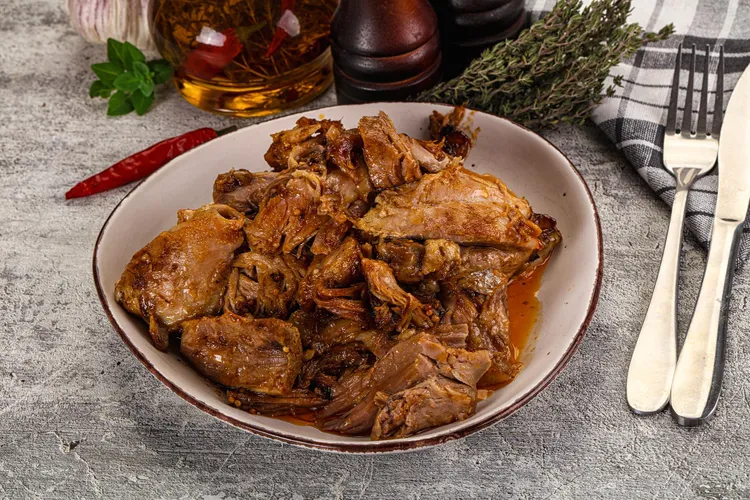
A 2kg bone-in lamb shoulder produces roughly 700-800g of usable meat after braising - about 4-5 substantial portions at 150-200g each. The braising liquid, portioned separately, extends to 6-8 servings of sauce. One cook on Sunday - Dutch oven or slow cooker doing most of the work - and you have the foundation for Monday's grain bowl, Wednesday's flatbread, and Friday's pasta. The economics of braising for batch cooking are hard to match with any other technique.
Choosing Cuts for Batch Braising
Not all braisable cuts work equally well for meal prep. The best are the ones that shred or slice cleanly, reheat without drying out, and adapt to different preparations across the week:
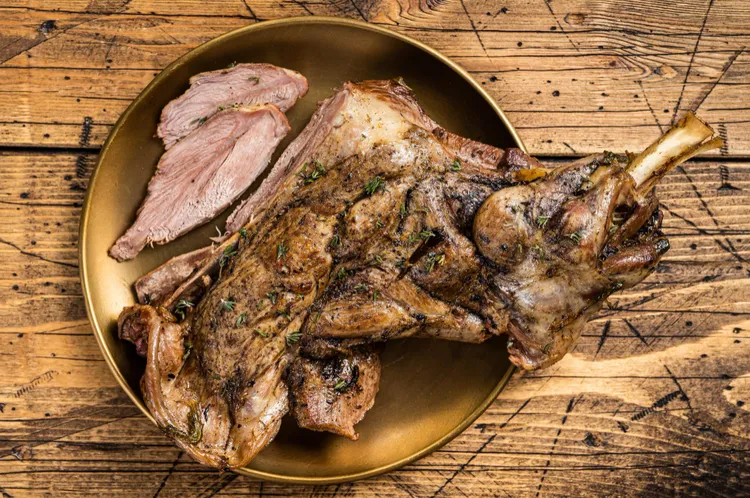
- Lamb shoulder: Shreds into generous, flavourful pieces. Absorbs reheating liquid well. Works in Mediterranean grain bowls, flatbreads, pasta ragu, and couscous dishes. See the full braised lamb shoulder guide.
- Beef chuck or brisket: Slices or shreds cleanly. Reheats very well in its braising liquid. Works in tacos, grain bowls, sandwiches, and as a ragu base for pasta.
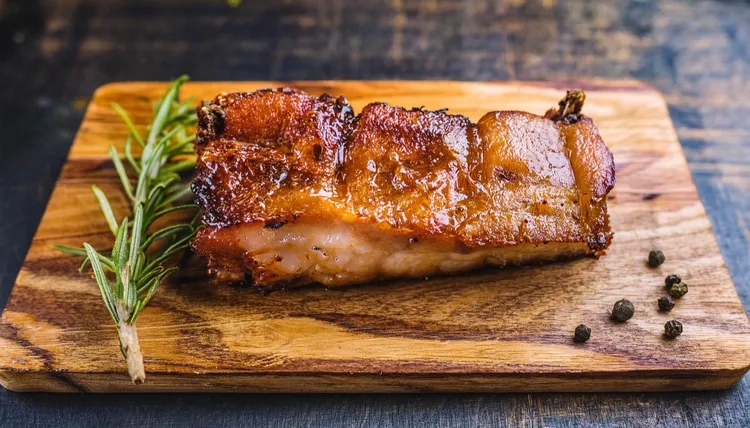
- Pork shoulder: The classic pulled meat cut. A 2kg shoulder produces enough for 6-8 generous servings. The braising liquid reduces to a concentrated glaze that works on everything.
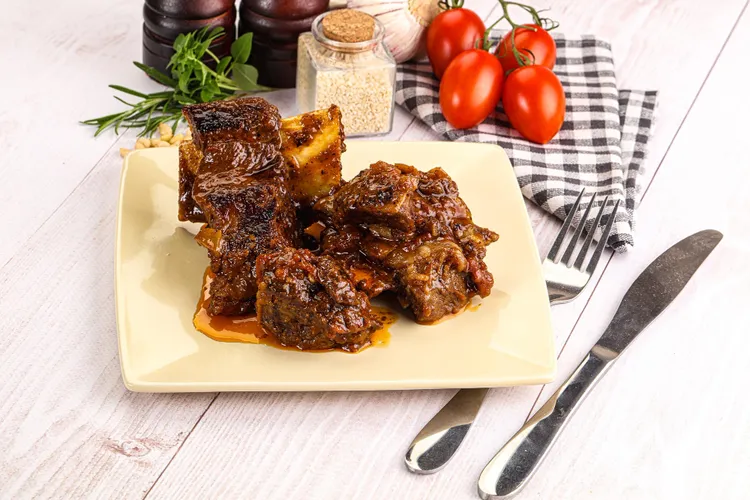
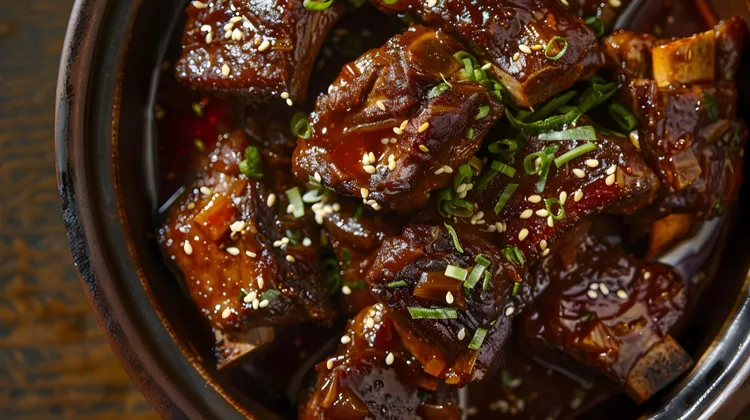
- Beef short ribs: Better for plated meals than for shredded prep - they hold their shape and are impressive served on the bone. Still excellent for batch cooking. See the short ribs guide.
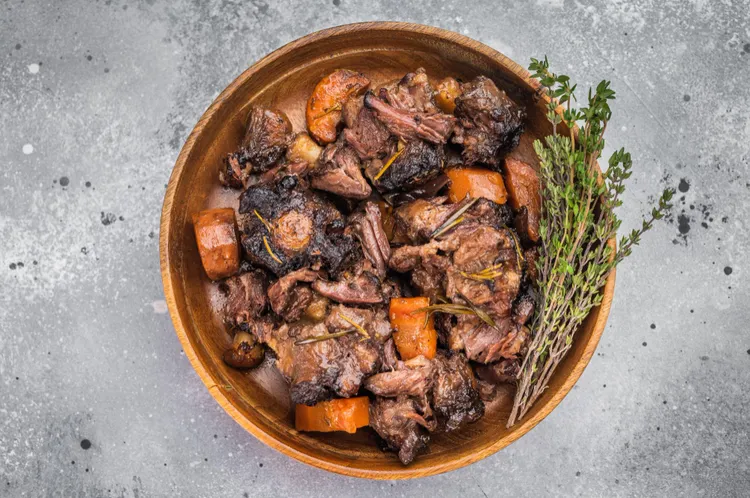
- Oxtail: The picked meat is intensely flavoured - a small amount as a pasta or polenta topping goes a long way. The braising liquid is arguably more valuable than the meat for meal prep purposes. See the oxtail guide.
Scaling the Cook
Most braise recipes are written for 1-1.5kg of meat. Scaling to 2-2.5kg for batch cooking requires proportional liquid adjustment but not proportional aromatics - a 2kg shoulder doesn't need double the onions, just 20-30% more. The liquid ratio remains the same: cover the bottom third of the meat, not the whole cut.
Check that the meat fits in a single layer with some space around it in your vessel. Crowded pots lower the cooking temperature and produce steaming rather than braising. For a Dutch oven, this usually limits you to around 1.8-2kg in a standard 6-litre pot. For a slow cooker: a 6-litre oval handles a 2-2.5kg bone-in shoulder comfortably.
Scale the braising liquid proportionally: if the original recipe calls for 500ml for 1.5kg, use 650-700ml for 2kg. The ratio of stock to wine or other liquid stays the same.
Portioning and Storage
Let the braise cool to room temperature before portioning. Pulling apart meat when it's piping hot tears the fibres less cleanly than working with slightly cooled meat - and handling a very hot Dutch oven to portion is impractical. Plan to portion within 30-45 minutes of coming out of the oven or slow cooker.
Two storage strategies:
- Together, in sauce (best for flavour and shelf life): Pack meat portions into containers and spoon braising liquid over each one to just cover. The sauce protects the meat from drying out during refrigeration and adds moisture during reheating. The gelatin in a good braising liquid sets around the meat like a protective coating. Keeps for 4 days refrigerated.
- Separated (more flexible): Portion the meat and freeze some immediately. Reduce all the braising liquid to a concentrated sauce and freeze separately in ice cube trays or small containers. Use the sauce portions during the week to season grains, beans, or pasta sauces, or to add flavour when reheating the frozen meat portions.
Freeze braise portions for up to 3 months. Freeze in the portion size you'll actually use - defrosting a 800g batch to eat 200g wastes the rest. Label clearly with the cut, date, and weight.
Reheating Without Drying Out
The most common mistake when reheating braised meat is using too much heat with too little added moisture. High heat drives out the moisture that braising put back into the fibres, and within minutes you have dry, stringy meat regardless of how perfectly the original braise was cooked.
- Stovetop (best method): Place the meat in a small pan with 2-3 tablespoons of braising liquid or water. Cover with a lid. Reheat over low-medium heat for 8-12 minutes, turning once halfway. The steam created by the small amount of liquid keeps the meat moist throughout. Add more liquid if the pan looks dry.
- Oven: Place meat in a baking dish with braising liquid or a splash of stock to cover the base. Cover tightly with foil. Reheat at 160°C for 20-25 minutes. Remove the foil for the last 5 minutes if you want any surface caramelisation.
- Microwave (acceptable for speed): Place meat in a covered microwave-safe dish with a tablespoon of liquid. Microwave at 60-70% power in 60-second intervals, checking between each. Full power dries out braised meat noticeably - the reduced power is worth the extra time.
Never reheat from frozen. Defrost overnight in the fridge first, then apply whichever reheating method suits.
Making Multiple Meals from One Braise
A 2kg braised lamb shoulder covers more ground than most people use it for. The same batch across a week:
- Day 1 (serving fresh): Whole piece, lightly pulled, with reduced braising sauce over mashed potato or soft polenta.
- Day 2: Shredded and warm, stuffed into flatbreads with yogurt, cucumber, and fresh herbs.
- Day 3: Pulled and stirred through couscous with preserved lemon, dried apricots, and toasted almonds.
- Day 4: Rough-chopped and folded through pasta with the braising liquid reduced further to a ragu consistency. Add a Parmesan rind to the sauce during the final reduction - see our Parmesan rind guide.
- Day 5 (from frozen batch): Reheated into a grain bowl with roasted vegetables and tahini dressing.
Plan the week's meals before you cook: decide which preparations need sauce and which don't. Reserve enough braising liquid for the saucy meals and reduce the rest to a concentrate for seasoning grains or boosting soups.
Macro Estimates Across a Batch
A 2kg bone-in lamb shoulder braise (cooked, sauce included across the full batch): approximately 3200-3800 kcal total, 280-320g protein, 4-8g carbs (from aromatics only), 200-240g fat. Per 200g meat portion with 50ml sauce: approximately 600-700 kcal, 42-48g protein, 1-2g carbs, 46-54g fat. Fat is high because lamb shoulder is a fatty cut - adjust portion size if you're in a calorie deficit or working toward specific macro targets. For help calculating daily calorie needs and planning a week of meals around a batch braise, try Consillar's meal planner and macro calculators.
This article is part of the complete slow cooker and braising guide.
Calculating Yield Before You Shop
The gap between raw weight and edible yield in braising is significant and varies by cut. Knowing the yield in advance prevents under-buying and ensures you have enough for the planned meals.
Bone-in lamb shoulder: approximately 40-45% yield. A 2kg shoulder produces 800-900g of usable meat. For 4 people at 200g portions, buy at least 1.8kg. For 6 people, buy 2.5kg.
Boneless beef chuck: approximately 65-70% yield after cooking and trimming large fat deposits. A 1.5kg piece produces around 1kg of usable meat.
Oxtail: approximately 35-40% yield. A 1.5kg braise produces 525-600g of picked meat - plan smaller portions of 150g and let the sauce carry the dish.
Bone-in short ribs: plan 350g raw bone-in ribs per person for individual serving portions, accounting for the significant bone weight.
Integrating Batch Braises into Weekly Meal Planning
The most efficient use of a batch braise is planning the week's meals before you cook, not after. Deciding on day one that the lamb shoulder will become flatbreads on day two, couscous on day three, and pasta on day four means you reserve appropriate amounts of meat and sauce for each preparation rather than eating the same dish repeatedly.
Sauce is the limiting factor in most planning. The braising liquid is richer and harder to replace than the meat - once it's gone, reheated meat without sauce is noticeably drier. Plan which days use meat with sauce (pasta, grain bowls, direct reheating) and which use the meat more dryly (flatbreads, sandwiches, salads). Portion the sauce accordingly at the start of the week rather than using it all on day one.
For tracking macros across a week of meals from a single braise, Consillar's meal prep tool calculates portions and nutritional breakdowns from the raw ingredient quantities - useful when cooking a large batch and you want to know exactly how each day's meal fits your targets.
Cross-Freezing: Building a Meal Prep Reserve
The most efficient batch cooking approach is not cooking one large braise per week but building a reserve across several weeks. Cook a large pork shoulder one Sunday, freeze half in portions. The following Sunday, cook a beef chuck braise and freeze half. Within a month you have a freezer with four different braised proteins available at any time, each requiring only reheating and an accompaniment to become a meal.
Label everything with cut, date, and weight. Use the oldest portions first. Reserve a small amount of the braising liquid with each portion - it's essential for reheating without drying and adds significant flavour back to what might otherwise taste slightly flat after freezing.
This approach produces significantly less cooking fatigue than cooking every week and eating the same braise for five days. The variety comes from the freezer reserve rather than from cooking a different dish every time.
When the Braise Becomes Multiple Dishes
The most practical use of batch braising is treating the braised meat as a semi-finished ingredient rather than a finished dish. Shredded pork shoulder becomes: tacos with pickled onions and salsa, fried rice with egg and spring onion, a filling for savoury pastries, a topping for jacket potato with soured cream, or a quick pasta sauce with the braising liquid and tinned tomatoes. The same 800g of meat covers five genuinely different meals without repetition.
The braising liquid, frozen in ice cube trays, is separately useful: stir one or two cubes into a pan sauce, a soup base, or a bean braise to add instant depth from the original cook. This is the habit that separates genuinely efficient batch cooking from simply making a lot of the same thing.
The Economics of Batch Braising
Braising cuts are among the most economical proteins available precisely because they're the cuts that require the most time and technique to cook well. Lamb shoulder costs significantly less per kilo than lamb leg. Beef chuck costs a fraction of ribeye or fillet. Pork shoulder is one of the cheapest cuts in the case. The investment required is time, not money - and a slow cooker or Dutch oven does most of the work.
The economic advantage compounds with batch cooking. One 2kg shoulder producing 800g of usable meat, portioned across 5 meals, means the meat cost per meal is very low. Add the cost of vegetables, aromatics, wine, and stock (much of which can be homemade at minimal cost), and the per-meal cost of batch-braised protein competes with any other approach to weekday cooking. For anyone thinking about how to eat well on a meaningful weekly food budget, batch braising is one of the most effective strategies available.
The habit of batch braising once a week or fortnight changes the baseline quality of weekday eating more than almost any other cooking practice. It reduces the decision fatigue of daily cooking by making good protein available without active preparation, it uses the cheapest and most flavourful cuts available, and it builds a reserve of braising liquid that improves everything else you cook with it. Start with one large braise, see how it fits into the week, and adjust from there.
The infrastructure of good weekday eating is mostly invisible. People who consistently eat well at home without significant daily effort are usually doing a small amount of high-leverage cooking - a single batch braise, a pot of grains, a large salad - that removes the pressure of daily preparation. Braising is the highest-leverage of those practices because the hands-off time is so long and the results are so varied in how they can be used. Build the habit and most of the work of weekday eating takes care of itself.
Latest