Why Does Cilantro Taste Like Soap to Some People?
For some people cilantro tastes fresh and bright, and for others it tastes like dish soap. The cause is a mix of aroma chemistry, a receptor gene and habit, and there are ways to work around it.
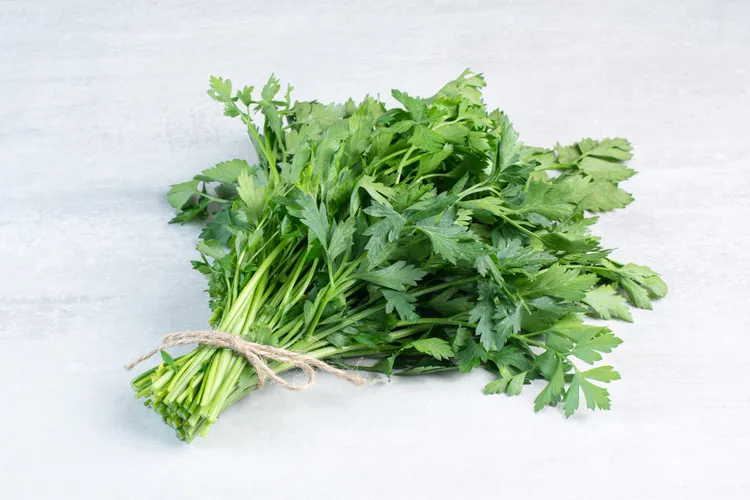
A quarter cup of chopped cilantro has about 1 kcal. It is one of the lightest things you can put on a plate, and it still splits dinner tables down the middle. Some people taste fresh, citrusy brightness. Others taste a mouthful of dish soap. Both groups are describing their experience accurately, and the explanation sits in chemistry, genetics and a bit of habit.
What People Who Dislike Cilantro Actually Taste
The descriptions are remarkably consistent. People who dislike cilantro report soap, detergent, lotion, metal or "bug-like" flavors. These are not exaggerations or picky-eater habits. It is a real, repeatable difference in how the herb registers in the nose and mouth.
Even the name hints at the history. The word coriander is often traced to a Greek word for bedbug, which suggests people have been noticing the odd smell for a very long time. In the United States, the leaves are called cilantro, from the Spanish word for coriander. In the UK, Europe and Australia, "coriander" usually means the fresh leaves too, and the seeds are called coriander seeds.
The Chemistry: Aldehydes
Fresh cilantro leaves contain a group of aroma compounds called aldehydes. Several of them, including decanal and related unsaturated aldehydes, are also found in soaps, lotions and some cleaning products. The same family of compounds turns up in the defensive secretions of certain insects, which is part of why the "bug" description comes up so often.
To someone who tastes cilantro as fresh and green, those same compounds register as part of a pleasant herbal, citrus-like aroma. To someone who tastes soap, the same molecules are being read differently. The herb has not changed. The way the person detects it has.
The Genetics: A Receptor Variant
A 2012 genetic study of tens of thousands of people looked for DNA differences linked to disliking cilantro. It found a variant near a cluster of olfactory receptor genes on chromosome 11, including one called OR6A2. That receptor is known to respond to aldehydes, including the ones found in cilantro.
That fits the pattern. People with the variant were more likely to report a soapy taste. But the effect was modest. Plenty of people with the variant like cilantro, and plenty of people without it dislike it. Twin studies also suggest cilantro preference is partly inherited, but not entirely. Genetics is one factor among several, not a switch.
How Common Is It?
Estimates vary by study and by population. Surveys suggest the soapy reaction ranges from a few percent of people in some groups to roughly one in five in others. Reported rates are higher in some East Asian and European-ancestry populations and lower in some Middle Eastern, Hispanic and South Asian populations, which lines up loosely with how heavily each region uses fresh coriander in everyday cooking.
That pattern is worth reading carefully. It does not prove that eating more cilantro causes people to like it, since genetics also differ between groups. But it hints that culture, exposure and genes all play a part.
It Is Mostly Smell, Not Taste
Most of what we call flavor comes from smell. When you chew, aroma molecules travel from the back of your mouth up into your nasal passages, where olfactory receptors detect them. Your tongue handles only the basics: sweet, salty, sour, bitter and umami. The soapy note in cilantro is an aroma, so it is the nose, not the tongue, doing the work.
That is why a stuffy nose changes how cilantro tastes, and why the same herb can seem milder in a cooked dish than in a fresh salsa. The aroma is the whole story.
Can You Learn to Like It?
Possibly. Taste preferences shift with exposure, and many people who dislike cilantro report that they warmed up to it after repeated, small encounters. The brain learns to treat the unfamiliar aroma as part of a food it associates with good meals. That does not work for everyone, and nobody should force it, but it is a real effect.
Preparation helps more than willpower. Food scientists, including Harold McGee, have noted that crushing or finely chopping the leaves breaks open the cells and releases enzymes that convert some of the aldehydes into other compounds. The result is less of the soapy note and more of a mellow green flavor. That fits what many cooks report: pesto-like sauces and blended salsas are easier to tolerate than a whole leaf on top of a taco.
Tricks to Reduce the Soapy Flavor
- Crush it. Grind the leaves in a mortar or blend them into a sauce. Crushing releases enzymes that convert some of the aldehydes.
- Chop it very fine. Fine mincing does some of the same job, and spreads the flavor thin.
- Add acid and fat. Lime juice and avocado, as in guacamole, change how the herb tastes. Many people tolerate cilantro in salsa and guacamole better than raw on a plate.
- Cook it. Heat mellows the aroma. Cilantro stirred into a hot curry or soup tastes noticeably softer than the same herb sprinkled on top.
- Use less. A pinch blended into a sauce is a very different experience from a handful on top of a dish.
- Try it in small, repeated doses. A little at a time, in dishes you already like.
Why Coriander Seeds Taste Different
Coriander seeds come from the same plant but taste nothing like the leaves. The seeds are dominated by aroma compounds such as linalool, which smell floral, warm and slightly citrusy. They contain much less of the soapy aldehydes. Many people who dislike fresh cilantro have no problem with ground coriander in curry powder, spice rubs or pickling blends.
The reverse is also true. Someone who loves fresh cilantro may find the seeds muted or even odd on first taste. Treat them as two different ingredients that happen to share a plant.
What to Use Instead
If cilantro is a problem for you or for someone at your table, these swaps come close to the role it plays in a dish.
- Flat-leaf parsley with lime zest or juice: the closest general replacement for fresh, green, citrusy brightness. Works in salsa, guacamole, rice, soups and marinades.
- Mint: good in Vietnamese and Middle Eastern dishes, salads, yogurt sauces and cold noodles.
- Thai basil or sweet basil: suits Southeast Asian soups, stir-fries and noodle bowls.
- Green onion tops or chives: add freshness and bite to tacos, rice bowls and eggs.
- Dill: works well in yogurt, fish and cucumber dishes.
- Lime juice and zest on their own: sometimes the acid is what the dish actually needs.
Avoid culantro and Vietnamese coriander, also called rau ram. They are different plants with a similar flavor profile and share some of the same compounds, so they are likely to bother the same people. Culantro in particular is often used as a stronger substitute for cilantro.
In specific dishes:
- Guacamole: use parsley and extra lime, or leave the herb out and rely on onion, lime and salt.
- Salsa and pico de gallo: parsley or a little extra green onion.
- Tacos: finely chopped green onion, a squeeze of lime and thin-sliced radish.
- Pho and Vietnamese noodle soups: Thai basil and mint.
- Chimichurri: parsley is the base already, and oregano carries the flavor.
- Chutneys and curries: mint, curry leaves or parsley, depending on the dish.
- Tabbouleh: flat-leaf parsley and mint are the classic combination.
Other Foods Where Genes Shape the Flavor
Cilantro is the best-known example, but it is not the only one. Variants in a bitter taste receptor gene called TAS2R38 change how strongly people perceive bitterness in vegetables like Brussels sprouts, broccoli, cabbage and kale. Someone with a sensitive version may find a roasted Brussels sprout sharp and unpleasant, while someone with a less sensitive version finds it mild and nutty.
Asparagus is another. Many people notice a distinct smell in urine after eating it, while others, because of differences in smell detection, never do. Even something as ordinary as how sweet or fatty a food tastes shifts between people. If you and a dinner guest disagree about a dish, the difference may not be taste or technique at all. It may simply be that the two of you are running different hardware.
A Quick Cilantro-Free Green Sauce
This is a drop-in replacement for cilantro-lime sauces on tacos, grilled chicken, rice bowls and roasted vegetables. Blend one cup of flat-leaf parsley, a quarter cup of mint leaves, the zest and juice of one lime, one small garlic clove, two tablespoons of olive oil, a pinch of salt and a splash of water until smooth. It makes about half a cup, with roughly 30 kcal per tablespoon, almost all from the oil. Keep it in the fridge for up to three days.
Where Cilantro Shows Up Around the World
Fresh coriander leaves are a staple across a huge range of cuisines. Mexican food uses it in salsa, tacos and rice. Indian cooking adds it to chutneys, curries and garnishes. Thai and Vietnamese cooking use the leaves, stems and even the roots, which are pounded into curry pastes. Chinese cooking scatters it over soups and noodles. Middle Eastern and North African cooking uses it in sauces, salads and herb pastes.
That wide reach is part of why the topic gets so heated. If your family uses cilantro in nearly every meal, a person who tastes soap in it is cut off from a lot of food. If your cuisine rarely uses it, nobody notices.
Cooking for a Mixed Table
- Serve it on the side. A small bowl of chopped cilantro lets each person add what they want.
- Ask before you garnish. The herb is usually a topping, so leaving it off is easy.
- Cook it, don't sprinkle it. If it must go in, add it to a sauce or paste rather than on top.
- Offer parsley or mint. It gives the dish a similar fresh finish without the issue.
- Do not hide it. Blended cilantro can be detected by sensitive tasters, and surprising people with it is unkind.
Buying and Storing Cilantro
Buy bunches with bright green, perky leaves and no slime or yellowing at the base. Trim the bottom of the stems and stand the bunch in a jar with an inch of water, loosely covered with a bag, in the fridge. Changing the water every couple of days helps it last a week or two. Wash and dry it just before using, since extra moisture speeds spoilage.
For longer storage, chop the leaves and freeze them in ice cube trays covered with a little oil or water. They lose their crisp texture but keep much of their flavor for stirring into soups, curries and sauces. Dried cilantro is mild and loses most of what people like about it, so fresh or frozen is the better option.
Calories and Nutrition
- 100g of raw cilantro: about 23 kcal, 2g protein, 4g carbs and 0.5g fat.
- A quarter cup of chopped cilantro (about 4g): about 1 kcal.
- Two tablespoons of chopped fresh herbs: small enough to ignore in daily totals.
Cilantro itself is not a number worth tracking. What matters is what it goes on, such as guacamole, rice or a taco filling. The macro calculator sets your targets, the meal planner places those meals across your week, and the meal prep tool turns a big batch of salsa, rice or taco filling into portions. If someone in your house avoids cilantro, a simple swap changes nothing in the nutrition.
Common Myths
- "People who dislike it are just picky." It is a real difference in how the aroma is detected, with a partly genetic basis.
- "You can't change it." Exposure and preparation do change how many people experience it.
- "It tastes like soap because it is dirty." Washing does not change it. The aldehydes are part of the herb.
- "Coriander and cilantro are different plants." They are the same plant. The names differ by region, and the seeds taste different from the leaves.
- "Only some cultures have it." People who dislike cilantro exist everywhere. The proportion varies, but it is never zero.
Quick Reference
- Why soap: aldehydes in the leaves, detected through olfactory receptors that differ between people
- Is it genetic: partly, through a receptor variant, but also shaped by exposure and culture
- Easiest fix: crush or blend it, or cook it
- Best substitute: flat-leaf parsley with lime
- Seeds: usually fine for people who dislike the leaves
- For guests: serve it on the side
The prevalence figures and the chemistry in this article summarize published research and common cooking guidance. Exact percentages vary between studies and populations, so treat them as approximate.
Latest