Foods Named After Places, People or Accidents
Sandwiches, nachos and Caesar salad carry a person's name, while Cheddar and hamburgers carry a place's. Nine foods whose names and origin stories are messier than the legends say.
Nachos were invented, according to the usual telling, because a group of military wives showed up at a restaurant in Piedras Negras after the kitchen had closed, and the maitre d' threw together what was left. It is a great story and it may even be true. Plenty of other food origin stories are not. Below are nine foods named after places, people or accidents, with what the records support and where the legend runs ahead of the evidence.
Foods Named After Places
A place name on a food usually tells you where it was first made or first became famous. The catch is that the food and the place tend to drift apart as the recipe travels.
Is Cheddar Cheese Really From Cheddar?
Yes, but almost none of the cheddar you buy comes from there. The cheese is named after the village of Cheddar in Somerset, in southwest England, and has been tied to that area for centuries.
The name is slippery because it also describes a method. In cheddaring, the curds are cut, stacked and turned so the whey drains slowly, and that step is what gives aged cheddar its dense, firm, sharp character. The method is named after the village, or possibly the other way round. Nobody owns the word, either. "Cheddar" on its own is not a protected name, so makers in any country can use it.
What is protected is West Country Farmhouse Cheddar, a name registered in 2007 that requires local milk and traditional methods in Somerset, Dorset, Devon or Cornwall. Only around a dozen producers make it. The only cheesemaker actually inside the village, the Cheddar Gorge Cheese Company, matures its wheels in the local caves. If you want the original, look for that label. If you want a sharp cheese that melts well in a sauce, an aged block from almost anywhere does the job.
Why Is a Hamburger Called a Hamburger When There Is No Ham?
It is named after Hamburg, Germany, and has nothing to do with ham. The word "Hamburger" originally meant a person from Hamburg, and it was applied to the meat as "Hamburg steak" by 1880.
How the dish connects to the city is less clear than the name suggests. One standard etymology source notes that no certain link has ever been shown, and that the connection may simply be that Hamburg was a major port for German emigrants heading to the United States. What the written record does show is that early Hamburg steak was a minced beef patty eaten with a knife and fork. A recipe in a Boston cookbook from 1884 had no bun at all. The hamburger sandwich in a bun appears in print by 1902, "cheeseburger" by 1938 and the shortened "burger" by 1939.
If you log your food, remember that a patty loses water and fat as it cooks, so the weight on the packet is not the weight on the plate. Our guide to raw vs. cooked weight explains how to handle that for meat.
Is a Frankfurter From Frankfurt or Vienna?
Both cities claim it, and each one uses the other's name. "Frankfurter" means from Frankfurt, and "wiener" means from Vienna, which is Wien in German. In Germany the sausage is usually called a Wiener Würstchen. In Vienna it is called a Frankfurter.
Frankfurt celebrated the sausage's 500th birthday in 1987, which assumes an origin around 1487. Vienna points to its own sausage-making tradition, and even the American hot dog industry's trade body says the argument is too hard to settle. The American name is no clearer. One theory says German immigrants sold long thin "dachshund sausages" that turned into "hot dogs." Another traces it to 1890s college students at Yale who joked that the carts sold dog meat. Neither has been proved, and the sausage contains no dog.
Foods Named After People
When a food carries a person's name, there are two possibilities: the person invented it, or the person made it famous. It is more often the second.
Who Was the Sandwich Named After?
John Montagu, the 4th Earl of Sandwich, though he almost certainly did not invent the idea. The earliest known use of the word for meat between slices of bread is in a journal kept by the historian Edward Gibbon in 1762.
The famous story has Montagu refusing to leave a gambling table for 24 hours and asking for cold beef between bread so he could keep playing. That account comes from a French travel writer and is widely considered apocryphal. Bread with a filling is far older than the Earl. The rabbi Hillel the Elder is often cited as an early example, from the Passover tradition. What the evidence does support is that the dish was named for Montagu, and that there is no plausible alternative. He also gave his name to the Sandwich Islands, now Hawaii, which Captain Cook named in 1778. The family title comes from the town of Sandwich in Kent, whose name means roughly "sandy harbor."
A sandwich is only as good as its bread, and if yours always seems to go hard by day two, why bread goes stale explains what is happening and what you can do about it.
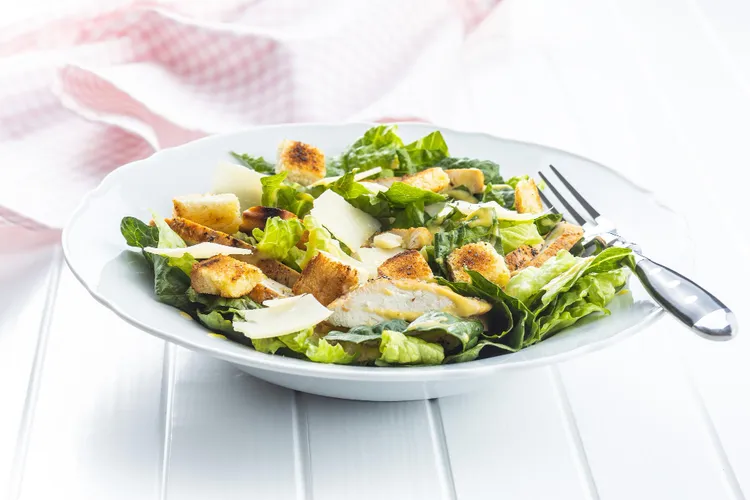
Who Invented Caesar Salad?
Not Julius Caesar. The salad is named after Caesar Cardini, an Italian-born restaurateur who ran a restaurant in Tijuana, Mexico. Tijuana was a popular stop for Americans during Prohibition, and Cardini had a home in San Diego.
The legend dates the salad to July 4, 1924, when a rush of customers strained his kitchen and he made something from what was on hand, tossing it at the table. Others claim the credit. His brother Alex said he made it first and called it the Aviator salad, and a Cardini employee named Livio Santini said it was his mother's recipe. The original is usually described as romaine, garlic, croutons, Parmesan, a coddled egg, olive oil and Worcestershire sauce, with no whole anchovies. The savory note came from the Worcestershire, which itself contains anchovies. Julia Child said she ate the salad at Cardini's restaurant as a child, and in 1948 Cardini began selling bottled dressing.
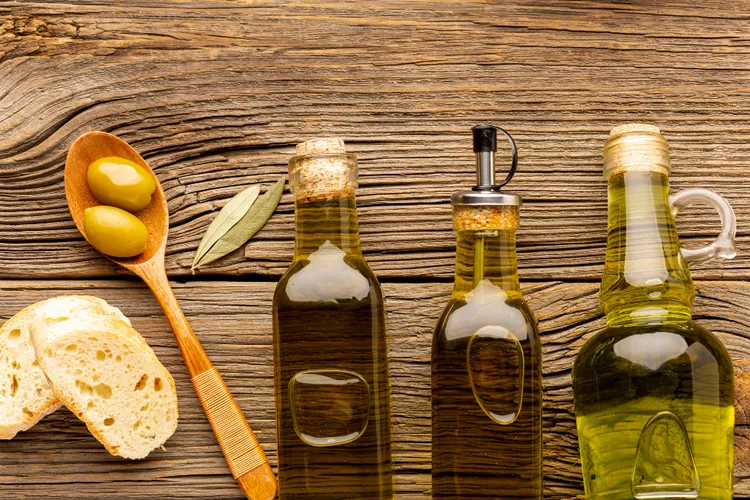
Because the original leans so heavily on olive oil, our guide to the types of olive oil helps you pick one that suits a raw dressing.
Who Invented Nachos?
Ignacio "Nacho" Anaya, a maitre d' in Piedras Negras, Mexico, around 1943. The restaurant was the Victory Club, just across the border from Eagle Pass, Texas.
The usual account says the wives of US Army officers from Eagle Pass crossed the border on a shopping trip and arrived after the kitchen had closed. With the cook gone, Anaya fried tortilla triangles, covered them in melted cheese, and topped them with sliced jalapeños. Local accounts say the cheese was Colby, which was easy to find in a border town. Asked what the dish was called, he named it "Nacho's especiales," and the name was later shortened to nachos. He eventually opened his own restaurant, died in 1975, and has a bronze plaque in Piedras Negras. The town now holds a nacho festival every October that draws tens of thousands of visitors.
Nachos spread through Texas and then the rest of the United States, helped in the 1970s by the sports journalist Howard Cosell, who promoted them. The pump-dispensed cheese sauce at ballparks is a different story entirely. It came from a Texas businessman who started selling concession-stand nachos at a baseball stadium in 1976, a year after Anaya died.
Foods Born From Accidents
Accident stories deserve the most suspicion because they flatter everyone involved. Three of the best known hold up very differently.
Was the Chocolate Chip Cookie an Accident?
Probably not. Ruth Wakefield, who created it, insisted she did it on purpose. She and her husband ran the Toll House Inn in Whitman, Massachusetts, and the cookie dates to around 1938.
The accident versions vary. In one she ran out of nuts, in another she was out of baker's chocolate, and in another a chocolate bar fell into the bowl. In each she expected the chocolate to melt into a chocolate cookie, and it stayed in pieces instead. Wakefield was an experienced baker and trained dietitian, and she said she deliberately chopped up a Nestle chocolate bar to make a cookie with distinct pieces of chocolate. She published the recipe as the Toll House Chocolate Crunch Cookie in the 1938 edition of her cookbook. Soldiers overseas wrote home asking for them, and demand grew from there.
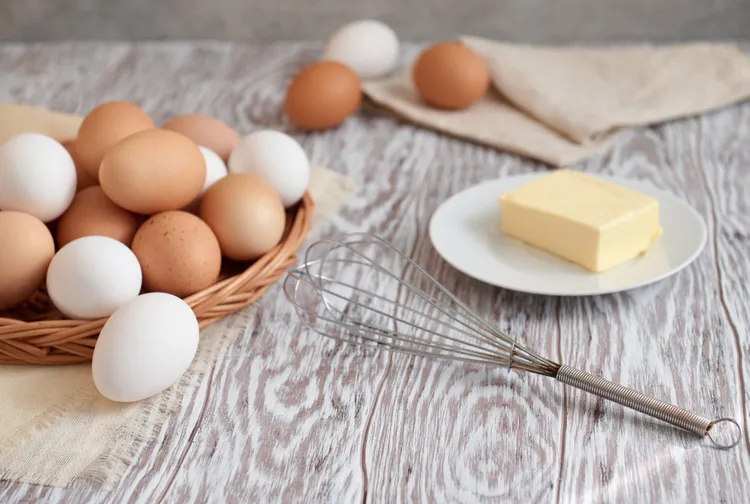
Nestle then struck a deal with her. The usual account is that she gave the company the right to print her recipe and use the Toll House name in exchange for one dollar and a lifetime supply of chocolate. Nestle began selling chips made for baking, with the recipe on the bag. Wakefield also shared a tip in a later edition of her cookbook that still works: chill the dough overnight and the cookies spread less and taste deeper. Cookie dough is also where it matters most that your butter and eggs are the right temperature, which is the subject of why recipes ask for room temperature eggs and unsalted butter.
Was the Popsicle Really Invented by an 11-Year-Old?
According to its inventor, yes, though the story rests mostly on his own account. In 1905, an 11-year-old named Frank Epperson mixed soda powder and water, left the cup on a porch with the stirring stick in it, and woke to find it frozen on a cold San Francisco night.
He ate it off the stick, called it an Epsicle, and sold the idea to friends. It took until 1923 for him to sell them at Neptune Beach, an amusement park in Alameda, California. He applied for a patent that year for a frozen confection that could be eaten without touching it, and the patent was granted in August 1924. The name Popsicle came later, when his own children called it a "Pop's 'sicle." Epperson ran into money trouble in the 1920s and sold the rights to the Joe Lowe Company of New York, which grew it into a national brand. He died in 1983. The delay between the accident and the patent is the strangest part, but he told the story consistently for decades, which is why most accounts treat it as true.
Did George Crum Invent the Potato Chip?
No. The popular legend is a myth, though Crum did help make potato chips famous. In the story, Crum was a cook at Moon's Lake House in Saratoga Springs, New York, who sliced potatoes paper-thin in 1853 to punish a customer who kept sending back his fries as too thick.
The problems with it are well documented. Cornelius Vanderbilt, who is named as the customer in some versions, was reportedly in Europe at the time. The Moon family did not buy the Lake House until the following year. And crispy fried potatoes were already known in Saratoga. A recipe for "Potatoes fried in Slices or Shavings" appears in an 1822 edition of the English cookbook The Cook's Oracle, and a New York newspaper in 1849 noted a Saratoga cook named Eliza for her potato frying. What scholars do agree on is that Crum popularized the chips, which were sold as Saratoga Chips well into the 20th century, and that he opened his own restaurant in 1860. The potato itself has an origin story just as surprising as the chip's, which we cover in the surprising origin of everyday foods.
What These Food Stories Have in Common
A few patterns repeat. Place names tend to start as a mark of where a food came from or where it was best, then fade into a style as the recipe spreads, which is why most cheddar has never been near Somerset. Names attached to people tend to belong to whoever made the food famous rather than whoever first made it. And accident stories are usually told by the inventor years later, so they deserve a second look before you repeat them.
There are a few practical takeaways. Check for protected names like West Country Farmhouse Cheddar when you want the real thing. Weigh raw meat before you cook it if you track macros. And if a recipe calls itself traditional, it is worth asking when the traditional version was actually written down.
Quick Answers
Is Caesar salad named after Julius Caesar?
No. It is named after Caesar Cardini, an Italian-born restaurateur who ran a restaurant in Tijuana, Mexico, and is credited with creating it around 1924.
Is cheddar cheese named after a place?
Yes. It is named after the village of Cheddar in Somerset, England, but the name "Cheddar" is not legally protected. Only West Country Farmhouse Cheddar is.
Why is a hamburger called a hamburger?
It is named after Hamburg, Germany, through the dish "Hamburg steak." The name has no connection to ham.
Was the chocolate chip cookie invented by accident?
The popular story says so, but Ruth Wakefield said she created it deliberately at the Toll House Inn in Massachusetts around 1938.
Who invented the potato chip?
Not George Crum. A recipe for fried potato slices appears in an English cookbook in 1822, decades before the 1853 Saratoga Springs legend, though Crum helped popularize chips.
Why is a sandwich called a sandwich?
It is named after John Montagu, the 4th Earl of Sandwich. The word is first recorded in 1762, though the gambling-table story behind it is considered doubtful.
Where did nachos come from?
Nachos were created around 1943 in Piedras Negras, Mexico, by Ignacio "Nacho" Anaya, who named the dish after his own nickname.
Is a hot dog the same as a frankfurter?
Not exactly. A frankfurter is a German-style sausage named after Frankfurt, while "hot dog" is the American name for a sausage served in a bun, and the origin of the term is disputed.
Latest