Why Does Bread Go Stale, and Can You Reverse It?
Bread goes stale because its starch recrystallizes, not just because it dries out. Here is why the fridge makes it worse, how to revive a loaf, and what to make when it is past saving.
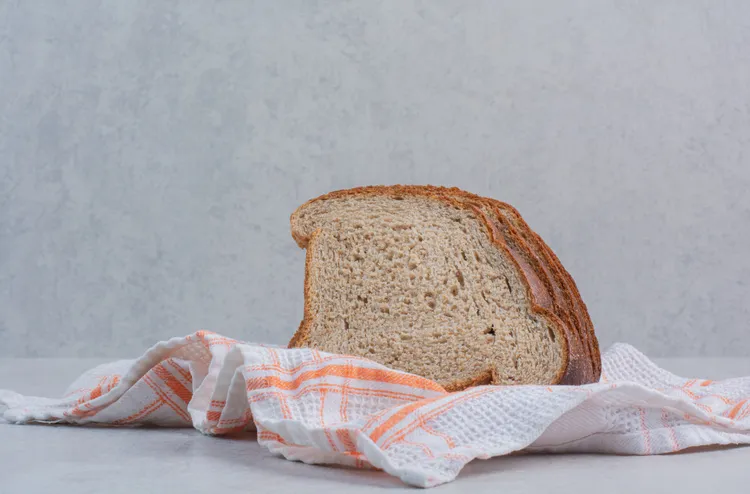
A slice of sandwich bread is about 75 kcal on day one and about 75 kcal on day four. Stale bread has the same energy as fresh bread. What changes is the texture, and the cause is not what most people assume. Bread does not go stale mainly because it dries out. It goes stale because the starch inside it slowly rearranges itself, and that is the reason you can often reverse it with a few minutes of heat.
What Staling Actually Is
Flour is mostly starch. In the oven, the starch granules soak up water and swell, a change called gelatinization. That is what turns a wet dough into soft, springy crumb. Once the bread cools, the starch starts to change back.
- During baking, starch granules absorb water and swell, and the starch molecules loosen into a soft gel.
- As the loaf cools, those molecules begin to line up and bond to each other again. This is called retrogradation.
- The molecules in the starch known as amylose set within hours. The branched amylopectin molecules take days to firm up.
- As the starch recrystallizes, it holds water differently and the crumb turns firm, crumbly and dry-feeling, even though the water is still in the loaf.
That slow recrystallization is the real mechanism behind the loss of softness. It is one of the best-studied problems in food science, because commercial bakers lose a lot of product to it.
It Isn't Just Drying Out
Moisture does matter, but it is not the main story. Freshly baked bread has a dry, crisp crust and a moist crumb. Over time, water migrates from the crumb toward the crust, which is why the crust of an old loaf turns soft and leathery while the inside feels dry.
The proof that staling is more than drying is simple. A loaf sealed in an airtight bag loses almost no water to the air and still goes stale. The crumb still firms up. Sealing the loaf slows the crust from drying and can keep the loaf from turning hard, but it cannot stop the starch from changing.
Why the Fridge Makes It Worse
This is the most counterintuitive part. Starch retrogradation happens fastest at cool temperatures, with the peak speed somewhere just above freezing, around the temperature of a refrigerator. That means a loaf kept in the fridge goes stale faster than one left on the counter, even though the cold keeps mold at bay.
Freezing works for the opposite reason. At freezer temperatures, the water in the bread is locked up and the starch molecules barely move, so staling nearly stops. Bread kept below about -7°C (20°F) holds its texture for weeks.
- Room temperature: staling happens at a moderate pace, and mold becomes the limit after a few days.
- Refrigerator (about 0 to 5°C, or 32 to 41°F): staling is at its fastest.
- Freezer (-18°C, or 0°F): staling is almost paused.
- Hot (above about 60°C, or 140°F): the starch structure loosens and the process reverses.
How Fast Different Breads Stale
Not all bread goes stale at the same speed. What is in the dough, and how it is made, makes a big difference.
- Lean crusty breads (baguette, ciabatta, rustic loaves): flour, water, salt and yeast only. They taste best within hours and are noticeably stale by the next day or the day after.
- Sourdough: usually stays fresher longer. The acids from fermentation and a typically higher water content slow the process, so a sourdough loaf often holds well for several days.
- Enriched breads (brioche, challah, milk bread): fat, sugar, eggs and milk interfere with starch recrystallization and keep the crumb soft for longer.
- Supermarket sandwich bread: often lasts a week or more, thanks to added emulsifiers, enzymes and preservatives that slow staling and mold.
- High-hydration loaves: wetter doughs tend to hold their softness longer than dry ones.
- Whole grain breads: the bran and extra fiber hold water well, so they often stay moist, though they firm up in their own way.
It is the same chemistry in every case. Some doughs just have ingredients that get in the starch's way.
Can You Reverse It? Yes, Once
Because retrogradation is a physical rearrangement and not a permanent chemical change, heat can undo much of it. When stale bread is warmed above roughly 60°C (140°F), the recrystallized amylopectin loosens and releases the water it was holding. The crumb softens again and the loaf tastes close to fresh.
There is a catch. Reheated bread goes stale again faster than it did the first time, often within hours. Treat reviving as something you do right before you eat the bread, not as a way to save it for tomorrow.
How to Revive Stale Bread
A Whole Crusty Loaf
- Heat the oven to about 175 to 200°C (350 to 400°F).
- Run the loaf quickly under the tap, or sprinkle it generously with water, so the crust is damp but not soaked.
- Place it directly on the oven rack, or on a tray, and bake for 6 to 12 minutes, depending on size.
- The crust should crisp up and the crumb soften. Eat it right away.
The water turns to steam inside the oven, which rehydrates the crust and helps the crumb reheat evenly. A very large loaf may need a bit longer, or a loose wrap of foil for the first half of the time.
Slices and Sandwich Bread
- Toast them. Toasting dries the surface and crisps the edges, which hides the staleness and gives good texture.
- Use the microwave carefully. A slice wrapped in a lightly damp paper towel for 10 to 20 seconds softens quickly. Eat it right away, because microwaved bread turns tough as it cools.
Rolls and Baguette Pieces
Sprinkle them with water and bake at 175°C (350°F) for 5 to 8 minutes. Cut baguettes into sections first, since they heat through faster.
Baked Goods Like Bagels and Muffins
Slice and toast, or warm briefly in a hot oven. A sprinkle of water on the crust helps bagels.
When Revival Won't Work
- The bread is moldy. Never try to revive it. Throw it away.
- The loaf is rock hard. Bread that has dried all the way through will not return. Use it in cooking instead.
- It has been revived already. A second round gives a worse result.
- The bread is very lean and old. It may crisp up but stay chewy. Turn it into croutons or breadcrumbs.
How to Slow Staling
- Do not refrigerate. The fridge speeds up staling. The exception is hot, humid weather where mold arrives within a day or two. In that case the fridge is a reasonable trade, and you can toast the slices.
- Store a crusty loaf cut side down on a board for the first day, or wrap it loosely in paper or a cloth bag. This keeps the crust crisp while protecting the crumb.
- Use a bread box or a loosely closed paper bag for a loaf you will finish in two or three days.
- Use a plastic bag for soft sandwich bread. It keeps the crumb soft, although it also softens the crust and speeds up mold.
- Cut only what you need. A whole loaf stays fresher than cut slices, since the crust protects the inside.
- Freeze the rest early. Do not wait for the bread to turn. Freeze the day you buy it.
Freezing Bread Properly
- Slice the loaf first, so you can take out only what you need.
- Wrap it tightly, or place the slices in a freezer bag with as much air pressed out as possible.
- Freeze it flat so slices do not stick together.
- Toast slices straight from the freezer, or thaw at room temperature for an hour for sandwiches.
- Use within about three months for the best texture. It stays safe longer, but freezer burn eventually dries it out.
Whole loaves can be frozen too. Thaw them at room temperature, then refresh in a hot oven for 5 to 10 minutes to bring back the crust.
Is Stale Bread Safe to Eat?
Yes. Stale bread is a texture problem, not a food safety problem. It is not spoiled and it will not make you ill. Mold is a different matter.
- Stale: firm, dry, perhaps crumbly. Smells like bread. Safe.
- Moldy: fuzzy spots in white, green, gray or black, sometimes a musty smell. Throw out the whole loaf.
Do not cut the mold off and eat the rest. Bread is porous, and mold threads can run through the loaf well beyond the visible spots. When you see mold, discard the bag along with the bread, and avoid sniffing it closely, since mold spores can irritate the airways.
What to Make With Stale Bread
Stale bread is a good ingredient, and a lot of classic dishes were built around it. Its firmness is an advantage, because it soaks up liquid without turning to mush.
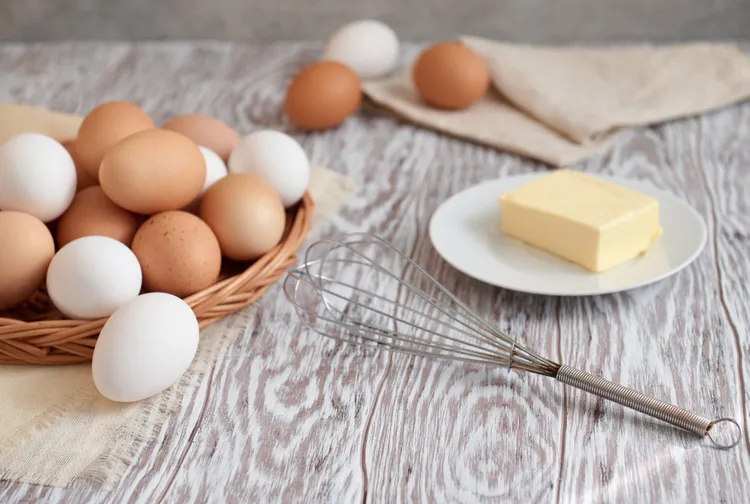
- French toast: beat 2 eggs with 1/2 cup of milk, a pinch of salt and a little vanilla. Soak 6 thick slices for about 30 seconds per side and pan-fry. Stale bread holds up better than fresh.
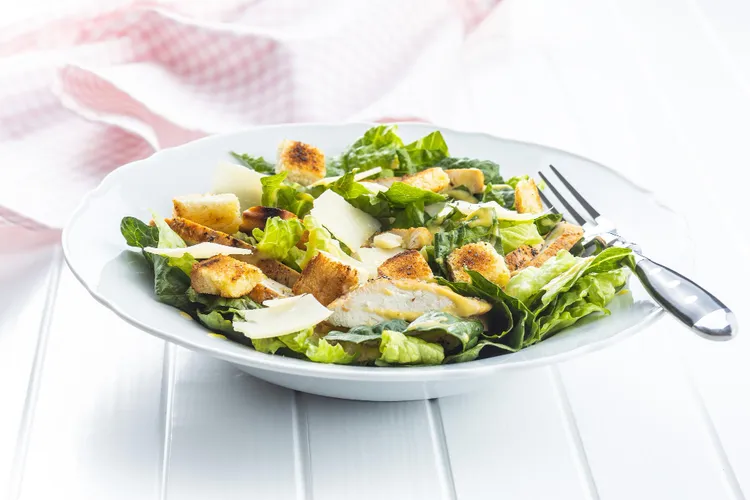
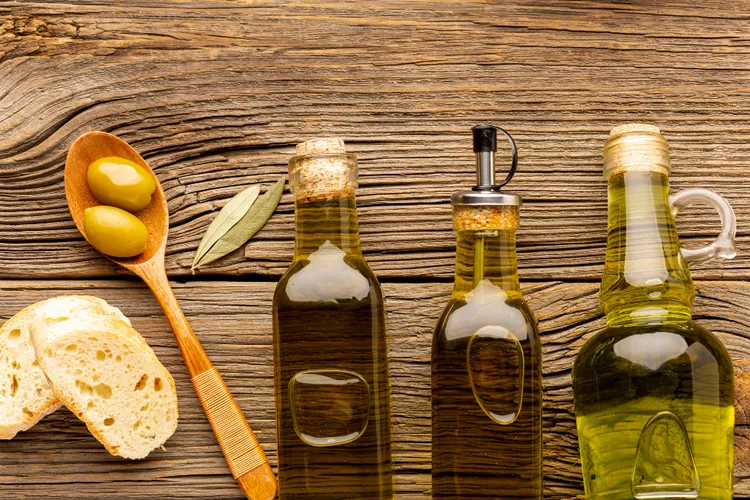
- Croutons: cut into 1.5cm (1/2 inch) cubes, toss 4 cups of cubes with 3 tablespoons of olive oil and a pinch of salt, and bake at 190°C (375°F) for 10 to 15 minutes, stirring once.
- Breadcrumbs: dry the bread fully in a low oven, then pulse in a food processor. Store in a jar or freeze.
- Bread pudding or strata: cubes soaked in a custard of eggs, milk and sugar or cheese, then baked.
- Panzanella: torn stale bread with ripe tomatoes, cucumber, onion, basil and olive oil.
- Stuffing and dressing: dried cubes mixed with stock, herbs and onions.
- Soup thickener: blended into gazpacho or tomato soup for body.
- Meatballs and meatloaf: soaked in milk as a binder that keeps the meat tender.
Stale Bread Around the World
Many food traditions grew up around not wasting bread. The French call French toast pain perdu, "lost bread," because it rescues bread that would otherwise be lost. Tuscan cooking has panzanella, ribollita and pappa al pomodoro, all built on day-old loaves. Spain has migas, with fried breadcrumbs, and gazpacho, historically thickened with bread. Portugal has açorda, a bread soup flavored with garlic and herbs. Panko, the light crumb used in Japanese frying, is made from bread baked in a way that produces an airy, crustless crumb.
In each case, the cook treats stale bread as an ingredient and not as a failure. The same attitude works in any kitchen.
Calories and Tracking
- One slice of white sandwich bread (about 28g): roughly 75 kcal, 2.5g protein, 14g carbs and 1g fat.
- 100g of white bread: about 265 kcal.
- 100g of sourdough: about 270 kcal.
- One tablespoon of olive oil in croutons or French toast: about 120 kcal.
Staling does not change the calories in a slice. What can change is the weight, because bread loses a little water over time and toast loses more. Weigh bread the same way every time, ideally before toasting, and log the matching entry. Use the macro calculator to set your daily targets, the meal planner to place bread-based meals across the week, and the meal prep tool to portion batches of French toast, bread pudding or breadcrumbs.
Common Myths
- "Stale bread has dried out." Mostly, it has not. The starch has recrystallized. Even sealed bread goes stale.
- "The fridge keeps bread fresh." The fridge speeds staling. Use the freezer instead.
- "Stale bread is unsafe." It is safe. Mold is the risk, not staleness.
- "Revived bread stays fresh." It goes stale again quickly. Eat it right away.
- "Cutting off the moldy part is fine." It is not. Throw out the loaf.
- "Plastic bags make bread go stale faster." Plastic keeps the crumb soft, though it softens the crust and can speed mold.
Quick Reference
- Why it happens: starch recrystallizes after baking, starting within hours
- Worst place to store it: the refrigerator
- Best long-term storage: sliced and frozen
- How to revive a loaf: dampen the crust and bake at 175 to 200°C (350 to 400°F) for 6 to 12 minutes
- How to revive slices: toast them
- When to throw it out: any mold, slime or off smell
- Best second life: French toast, croutons, breadcrumbs, panzanella
The temperature ranges, timings and shelf-life figures in this article summarize common food science and baking guidance. Exact results depend on the bread, the climate and how it was stored, so treat them as general guidance.
Latest