Why Does Garlic Turn Blue or Green? Is It Safe?
Garlic can turn blue or green from a harmless reaction between its sulfur compounds and amino acids. Here is what triggers it, how to tell it from mold, and how to prevent it or use it on purpose.
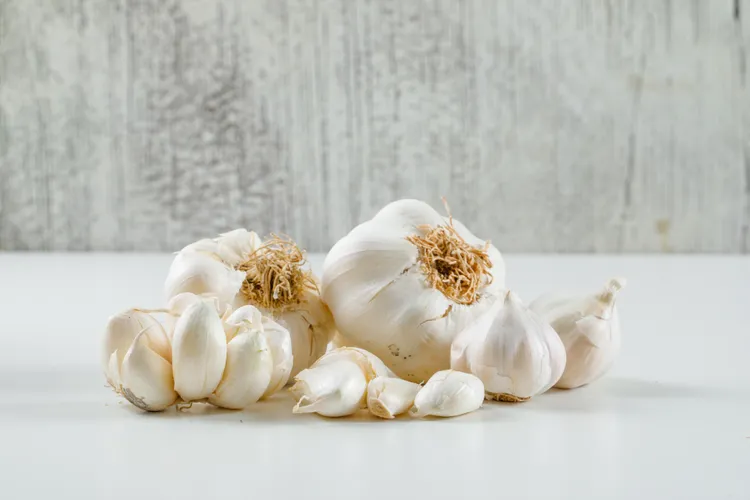
A single garlic clove is only about 4 kcal, but it can still give you a scare. You chop a few cloves for a lemon dressing, come back ten minutes later and find a jar of teal-speckled garlic. Or you open a jar of homemade pickles and the garlic inside has turned a startling blue-green. It looks like something went wrong. In almost every case, nothing did.
What the Color Change Looks Like
The discoloration shows up in a few recognizable ways. Chopped or minced garlic develops pale blue, teal or green patches, usually in the cut surfaces. Whole pickled cloves turn blue, turquoise or deep jade, sometimes evenly and sometimes in spots. Garlic cooked in a sauce can take on a faint green tint. In each case the garlic still smells like garlic, the texture looks normal, and the color sits in the flesh as a tint and not as a fuzzy growth on top.
Is It Safe to Eat?
Yes. Blue or green garlic is a harmless chemical reaction, not a sign of spoilage. It does not make the garlic unsafe, and in most cases it does not change the flavor in a way that most people notice. Commercial producers see it all the time, especially in pickled and processed garlic, and it is a known cosmetic issue, not a safety one.
The important part is making sure the color is really a pigment and not something else. Garlic can also go bad, and the signs are different.
- Pigment change (safe): blue, teal or green tint in the flesh, no fuzz, no slime, normal garlic smell.
- Mold (discard): fuzzy or powdery spots, usually white, gray, black or green, often on the surface or at the base of the bulb, sometimes with a musty smell.
- Rot (discard): soft, slimy or mushy cloves, brown or black wet patches, and a sour or unpleasant smell.
- Sprouting (usually fine): a green shoot growing from the center of the clove. Not a pigment reaction. See the section below.
If you are unsure, trust your nose and your eyes together. A clove that looks tinted but smells like garlic is fine. A clove that looks tinted and smells off is not.
The Chemistry Behind It
Garlic is rich in sulfur compounds, which give it its pungent smell and bite. Intact cloves keep those compounds locked up and separated from an enzyme called alliinase. When you cut, crush or chew garlic, the cells break and the two meet. That reaction creates reactive sulfur compounds, and those are what you smell and taste.
- You damage the garlic by chopping, pressing or crushing it.
- Alliinase converts a stable compound in the garlic into reactive sulfur compounds.
- Some of those reactive compounds react with amino acids, the building blocks of protein, that are already present in the garlic.
- The reaction produces small ring-shaped molecules called pyrroles.
- Pyrroles link together into larger molecules that absorb light in a way that looks blue or green to the eye.
The result is a pigment that forms right in the garlic. It is the same general type of chemistry that causes browning in some foods, just with a different set of ingredients and a very different color.
What Makes It More Likely
The reaction can happen in any garlic, but a few conditions make it far more common.
- Acid: lemon juice, lime juice and vinegar speed it up. This is the most common trigger in home cooking, and it is why garlic in vinaigrettes, marinades and pickles so often changes color.
- Young garlic: freshly harvested, uncured garlic tends to have more of the reactive compounds and is more likely to turn than older, well-cured bulbs.
- Cold storage: garlic that has been kept very cold for a long time and then warmed up before use is reported to be more prone to it.
- Copper: trace amounts of copper, from copper pots, from some water supplies or from certain pipes, can encourage the color change.
- Crushing: finely minced, pressed or puréed garlic has far more damaged cells than whole cloves, so it has more chances to react.
- Time and warmth: the color often develops slowly over hours or days, and warm conditions generally speed chemical reactions.
It varies from bulb to bulb. Two heads from the same store can behave differently in the same jar, which is why the color change can seem random.
Where You Are Most Likely to See It
- Pickled garlic: the classic case. Peeled cloves in vinegar often turn blue or green over days or weeks.
- Lemon or vinegar dressings: minced garlic sitting in an acidic vinaigrette can tint within hours.
- Pesto, hummus and garlic sauces: puréed garlic with lemon juice can turn blue-green, especially after a day in the fridge.
- Aioli and garlic mayonnaise: made with raw garlic and lemon juice, they sometimes show small green flecks.
- Garlic in honey: fermenting garlic in honey can produce blue or green cloves.
- Stir-fries and soups in copper cookware: occasionally, with young garlic.
A Quick Kitchen Experiment
You can see the effect for yourself in a day. Mince three small piles of garlic from the same head and put each in a small glass bowl.
- Leave the first bowl plain.
- Stir a teaspoon of lemon juice or white vinegar into the second.
- Saute the third in a little oil for a minute, let it cool, then place it in the third bowl.
Cover all three loosely and leave them on the counter for a few hours, then check again the next day. The acid bowl is the one most likely to show blue or green flecks. The plain bowl may show a little. The cooked garlic usually stays pale, since the heat deactivated the enzyme before the color could form. Try the same test with a young head of garlic and an older one to see how much the bulb matters. Discard the bowls after the test and do not store the garlic.
Black Garlic Is a Different Thing
Black garlic is another color change that gets mixed up with this one. It is made by holding whole bulbs at a controlled warm temperature for weeks, which slowly turns the cloves dark, soft and sweet through browning reactions between sugars and amino acids. It is a deliberate, slow process and has nothing to do with the blue-green pigment, which forms in raw cut garlic within hours or days.
Laba Garlic: Green on Purpose
In northern China, the color change is a tradition. Laba garlic is made around the Laba festival, which falls on the eighth day of the twelfth lunar month. Peeled garlic cloves are packed into a jar, covered with rice vinegar and left for several weeks. As the garlic sits, it slowly turns a vivid jade green. It is usually served with dumplings at the new year, and the sharp, sweet-sour cloves are eaten alongside the meal.
A simple home version looks like this: peel three or four heads of garlic, pack the cloves into a clean jar, and cover them completely with rice vinegar. Close the jar and keep it in the fridge. The color can start to show within a couple of weeks, though the timing and intensity vary by garlic. Some cooks add a little salt or sugar, but plain vinegar is the traditional method.
How to Prevent the Color Change
If you want your garlic to stay white, a few habits help.
- Use mature, well-cured garlic. Firm bulbs with dry papery skins are less likely to react than fresh spring garlic.
- Add garlic last. In dressings and marinades, mix it in shortly before serving, not hours ahead.
- Keep acid and cut garlic apart until needed. Store minced garlic separately from lemon juice or vinegar.
- Cook it. Heat deactivates the enzyme and sets the color. Garlic that is sauteed or roasted before it goes into a sauce rarely turns.
- Blanch before pickling. A short dip of peeled cloves in hot water before they go into the vinegar reduces the reaction, since heat inactivates alliinase.
- Avoid copper. Use stainless steel, glass or ceramic containers for pickles and acidic mixtures.
- Use whole or lightly crushed cloves. Fewer damaged cells means less of the starting reaction.
Does It Change the Flavor?
Usually very little. Most cooks who taste blue or green garlic next to the white version report that it tastes the same. In some pickled garlic, the cloves taste a little sharper or more intense, but that can come from the vinegar and time in the jar. The pigment molecules themselves are present in tiny amounts and are not known to add a distinct flavor.
The main effect is on appearance. If you are serving guests or selling food, the color can look alarming even though it is harmless. If you are cooking for yourself, you can ignore it.
The Green Sprout in the Middle
Sometimes the green you see in garlic is not from the pigment reaction at all. Older bulbs can sprout, and the sprout appears as a pale green shoot running through the middle of a clove. It is safe to eat, but it often tastes bitter or harsh and can make a dish taste sharper than expected. Slice the clove in half and flick out the green shoot with the tip of a knife. The rest of the clove is fine.
A Safety Note on Garlic in Oil
Do not confuse a harmless color change with a real safety issue. Garlic stored in oil is a genuine food safety concern. Garlic is low in acid, and oil creates an oxygen-free environment, which is exactly the setting where the bacterium that causes botulism can grow. Never keep garlic in oil at room temperature.
- Refrigerate homemade garlic in oil and use it within a few days.
- Freeze it if you need to keep it longer.
- Do not leave jars of garlic in oil on the counter or in a warm pantry.
- Store-bought garlic in oil is made with added acid or other controls, so follow the label.
The blue-green color is not a warning sign about this. The risk is invisible, which is why the storage rules matter.
Buying and Storing Garlic
- Choose firm heads. The cloves should feel solid, with tight dry skin. Avoid soft, shriveled or sprouting bulbs.
- Store whole heads in a cool, dry, dark place with good airflow. A basket or a small bowl in a pantry works better than the fridge, which can promote sprouting and softness.
- Use within a few weeks once you break the head. Separated cloves dry out faster.
- Peeled cloves: keep them in the fridge in a sealed container and use them within a week or so.
- For long storage: freeze peeled or minced garlic in small portions, or roast a batch and freeze it.
Calories and Nutrition
- One clove (about 3g): roughly 4 kcal.
- One tablespoon of minced garlic (about 9g): roughly 13 kcal.
- 100g of raw garlic: about 149 kcal, 6g protein, 33g carbs and 0.5g fat.
Garlic itself barely moves your daily totals, since you use so little of it. What matters is what it goes into, such as the oil in a dressing or the vinegar and sugar in a pickle. The macro calculator sets your daily targets, the meal planner places those meals across your week, and the meal prep tool helps you scale sauces and dressings into portions so the oil, garlic and acid are all counted once.
Common Myths
- "Blue garlic is moldy." Mold is fuzzy or slimy. A blue or green tint in smooth flesh is a pigment.
- "It means the garlic is toxic." It does not. The reaction is harmless.
- "You did something wrong." Usually not. It is common, and it depends as much on the garlic as on your method.
- "It only happens with pickled garlic." It can happen in any dish where cut garlic meets acid, copper or time.
- "Green garlic is always sprouted." Sprouts and pigment reactions are two separate things.
- "Garlic in oil is safe if it looks fine." It is not. Botulism risk cannot be seen or smelled.
Quick Reference
- Cause: sulfur compounds in garlic reacting with amino acids to form blue and green pigments
- Safe: yes, if there is no mold, slime or off smell
- Common triggers: acid, copper, young garlic, crushed garlic
- Prevent: use cured garlic, cook it, blanch before pickling, keep it away from copper
- Embrace it: make laba garlic in rice vinegar
- Never: keep garlic in oil at room temperature
The chemistry, timing and storage figures in this article summarize common food science and kitchen guidance. Exact results vary with the garlic, the acid and the conditions, so treat them as general guidance and use your senses when judging a jar.
Latest