Dill and Egg Recipes: Deviled Eggs to Egg Salad
Recipes that pair dill's classic partner, eggs, using a full bunch of dill across a batch at once.
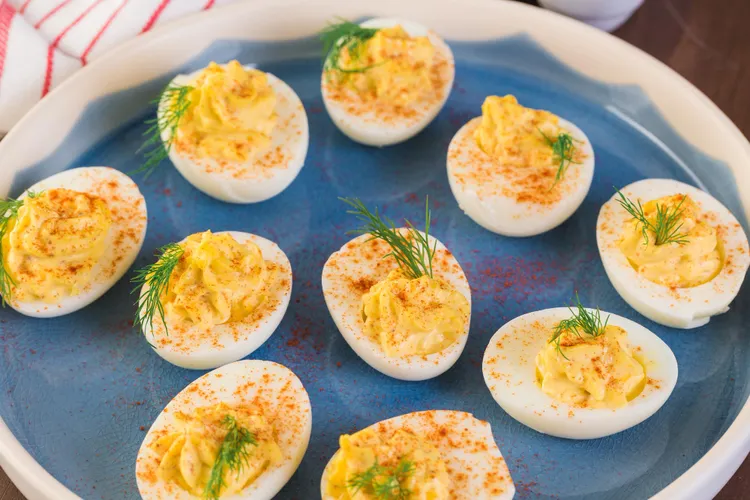
Eggs and dill are one of the more reliable pairings in home cooking, and because eggs are usually cooked by the dozen, these recipes are a good way to use a full bunch of dill across a single session.
Classic Dill Deviled Eggs
Halve 6 hard-boiled eggs and mash the yolks with 3 tablespoons mayonnaise, 1 teaspoon Dijon mustard, 2 tablespoons finely chopped fresh dill, and salt to taste. Pipe or spoon back into the egg white halves and garnish each with a small dill frond. The dill's brightness cuts through the richness of the yolk mixture better than most other herb choices.
Dill Egg Salad
Chop 6 hard-boiled eggs and combine with 1/4 cup mayonnaise, 1 tablespoon Dijon mustard, 2 tablespoons finely chopped fresh dill, a small squeeze of lemon juice, and salt and pepper to taste. This works as a sandwich filling, a lettuce-wrap filling, or served over toast. A full bunch of dill can go into a larger batch of egg salad meant for several days of lunches.
Dill and Egg Breakfast Scramble
Whisk eggs with a generous handful of finely chopped fresh dill and a splash of milk or cream before scrambling gently over low heat. Fold in a little crumbled feta or goat cheese if wanted. Adding dill directly to the raw egg mixture, rather than as a garnish afterward, integrates the flavor throughout rather than leaving it just on top.
Dill Pickled Eggs
Follow the base quick-pickle brine method, using plenty of fresh dill sprigs packed into the jar alongside the peeled, hard-boiled eggs. See Dill Pickles That Aren't Just for Cucumbers for the full brine recipe and timing; a longer soak, 3 to 4 days, gives the eggs the most pronounced flavor.
Open-Faced Egg and Dill Sandwich
Spread a thick layer of the creamy dill sauce from Creamy Dill Sauce for Salmon, Potatoes, and More onto dense rye or pumpernickel bread, then top with sliced hard-boiled egg, a sprinkle of flaky salt, and a few extra fresh dill fronds. This is a quick, open-faced take inspired by Scandinavian smørrebrød traditions.
Common Mistakes
- Adding dill too early to a hot scramble. Its flavor is best preserved by mixing it into the raw eggs before cooking rather than adding it partway through, which can dull the flavor from prolonged heat exposure.
- Overcooking hard-boiled eggs. A greenish-gray ring around the yolk, from overcooking, doesn't affect flavor much but looks less appealing in deviled eggs or egg salad where the yolk is visible.
- Under-seasoning egg-based dishes. Eggs need a fair amount of salt to taste balanced against dill's brightness; season in stages and taste as you go.
Frequently Asked Questions
Can I use dried dill in these egg recipes?
Yes, in a pinch, at about a third of the fresh quantity, though fresh dill's brighter flavor and appearance are generally preferred in dishes like deviled eggs where color and freshness both matter.
How far ahead can I make dill egg salad?
It keeps well refrigerated for up to 3 days, making it a good make-ahead lunch option across a work week.
Can these recipes use up a large dill surplus at once?
Yes, particularly the egg salad and scramble, both of which use dill fairly generously and can be scaled up alongside a larger batch of eggs.
Cooking Eggs for the Best Base Result
Regardless of which recipe above is the destination, a consistent hard-boil method makes a real difference: place eggs in a single layer in a pot, cover with cold water by about an inch, bring to a boil, then remove from heat, cover, and let sit for 10 to 12 minutes before transferring to an ice bath. This produces a fully set yolk without the greenish-gray ring that comes from overcooking, which matters more in dishes like deviled eggs where the yolk's color is on display.
Planning a Batch Across Multiple Recipes
Cooking a full dozen eggs at once and splitting them across two or three of the recipes above, some for deviled eggs, some for a pickled batch, some for a quick scramble, uses both a substantial amount of dill and a full dozen eggs efficiently in a single session, rather than repeating the hard-boiling process multiple times across a week.
Common Mistakes
- Adding dill too early to a hot scramble. Its flavor is best preserved by mixing it into the raw eggs before cooking rather than adding it partway through, which can dull the flavor from prolonged heat exposure.
- Overcooking hard-boiled eggs. A greenish-gray ring around the yolk, from overcooking, doesn't affect flavor much but looks less appealing in deviled eggs or egg salad where the yolk is visible.
- Under-seasoning egg-based dishes. Eggs need a fair amount of salt to taste balanced against dill's brightness; season in stages and taste as you go.
- Peeling eggs too soon after boiling. Letting eggs cool fully in an ice bath before peeling makes the shells come off much more cleanly than trying to peel them warm.
Frequently Asked Questions
Can I use dried dill in these egg recipes?
Yes, in a pinch, at about a third of the fresh quantity, though fresh dill's brighter flavor and appearance are generally preferred in dishes like deviled eggs where color and freshness both matter.
How far ahead can I make dill egg salad?
It keeps well refrigerated for up to 3 days, making it a good make-ahead lunch option across a work week.
Can these recipes use up a large dill surplus at once?
Yes, particularly the egg salad and scramble, both of which use dill fairly generously and can be scaled up alongside a larger batch of eggs.
What's the best way to store deviled eggs for a gathering?
Keep them covered and refrigerated until close to serving time, and consider piping the filling rather than spooning it just before the eggs go out, for the cleanest presentation.
Tips for Success
Cook a full dozen eggs at once if planning to use several of these recipes across a week, Splitting the batch between deviled eggs, egg salad, and a pickled batch is an efficient way to use both the eggs and a substantial amount of dill in one cooking session, particularly when it's planned as part of a full week of lunches ahead of time.