How Everyday Foods Changed Over Time
Broccoli and kale are one species, strawberries began as an accidental cross, and chickens grow four times bigger than in the 1950s. Seven everyday foods and how they became what we eat today.
There is no such thing as wild broccoli. Broccoli, kale, cabbage and cauliflower are all the same species, and every one of them was shaped by people choosing which plants to keep. Many of the foods we think of as natural are the end of a very long process of selection, accident and, more recently, machinery. Below are seven everyday foods and how they changed, from a 9,000-year-old grass that became corn to a chicken that grows four times larger than it did in the 1950s.
Foods Reshaped by Farmers' Choices
The slowest changes happened by selection. Farmers saved seed from the plants they preferred, year after year, until the crop looked nothing like its ancestor.
What Did Corn Look Like Before Farmers Changed It?
It was a wild grass called teosinte, with a handful of small kernels locked inside hard shells. Genetic evidence points to a single domestication event roughly 9,000 years ago in the Balsas River valley of southern Mexico.
Each teosinte kernel sits inside a hard case made of silica and lignin, and the kernels fall off the plant when ripe so the seeds scatter. Early farmers kept the plants whose kernels stayed attached and were easier to harvest. Over time the cob thickened and the number of kernel rows rose from two to twenty or more. Because the kernels no longer fell off, the plant could not spread its seeds without human help. Researchers have found that a small number of genes account for much of the difference between teosinte and modern maize. One of them, called tb1, suppresses branching, which is why a corn plant is a single tall stalk and teosinte is bushy. Farmers did not add any new genes. They simply kept selecting. Charred kernels and cob fragments at least 6,500 years old have been found whose size, hardness and popping ability resemble popcorn, and ancient cobs show major changes by that time. Some of the genes that shape modern maize were already common in Mexican cobs 4,400 years ago.
Why Are Broccoli, Kale and Cabbage the Same Plant?
Because they all come from one wild plant, Brassica oleracea, a cabbage that grows on coastal cliffs in southern and western Europe. People selected for different parts of it.
Kale and cabbage were selected for leaves, kohlrabi (its name combines the German words for cabbage and turnip) for the swollen stem, Brussels sprouts for the buds along the stalk, and broccoli and cauliflower for the flower clusters. Cauliflower is an unusual case: it is a flower head that never fully opens and keeps growing. Greek and Roman writers described leafy Brassica vegetables as far back as 400 BC, including some very large cabbages. Breeders in China and Southeast Asia independently developed their own relative of broccoli, the leafy kai-lan, sometimes called Chinese broccoli. Spontaneous crossing with other wild Brassica plants may also have played a part. How and where each type first appeared is still debated, and recent genetic work suggests the Middle East played a bigger role than once thought. Cauliflower is the odd one out genetically: every other vegetable in the group is closer to the wild cabbage than cauliflower is. What is not debated is that the species is one of the most dramatic examples of selection in the vegetable aisle. Broccolini, for instance, is a modern cross between broccoli and Chinese kale.
Were Watermelons Always Sweet and Red?
No. Wild watermelons in Africa are small, round, white-fleshed and bitter. The sweetness and the red color are the result of mutations that farmers kept.
Wild fruits contain bitter compounds called cucurbitacins. The closest wild relative of the domesticated watermelon is the Kordofan melon from Sudan, which has pale, non-bitter flesh that can be eaten raw. Its genome carries the same bitterness-loss trait as modern watermelon, but not the red color, which only became fixed after domestication. Another close relative grows in West Africa, where its large, soft seeds are used in egusi stew, and its pulp is bitter in about 80 percent of fruits. Researchers also managed to read part of the DNA from watermelon leaves found in a 3,500-year-old Egyptian tomb. They contained disabled versions of the bitterness gene and the gene that normally converts lycopene, the red pigment also found in tomatoes. That means ancient Egyptians probably ate a sweet, red-fleshed watermelon. Tomb paintings from more than 4,000 years ago also show watermelon-like fruits on trays with grapes and other sweet foods. Genome studies suggest sweetness increased gradually over the course of domestication.
Foods Created by Accident or Hybridization
Some foods did not slowly change at all. They appeared when two plants happened to meet.
Where Did the Modern Strawberry Come From?
It came from an accidental cross between two American strawberries in 18th-century France. The garden strawberry is a hybrid that never would have formed in the wild, because its two parents grow on different continents.
European cooks had long used small woodland strawberries, and Charles V of France reportedly grew 1,200 strawberry plants in his royal garden in the 14th century. In the early 1600s the Virginia strawberry arrived from eastern North America. In 1714 the French engineer Amedee-Francois Frezier brought Chilean strawberry plants, long grown by the Mapuche and Huilliche peoples, to France, impressed by their large fruit. Only five survived the six-month voyage. At first they produced no fruit in Europe, because the plants that survived the trip bore only female flowers. Gardeners in Brittany planted Virginia strawberries nearby, bees did the rest, and by about the 1750s the first hybrids with big, fragrant fruit appeared. The botanist Antoine Nicolas Duchesne later worked out that the new plant was a hybrid and named it ananassa, for its pineapple-like flavor. Essentially all modern strawberry varieties descend from that cross.
Where Do Apples Come From?
From wild forests in Kazakhstan, by way of the Silk Road. The ancestor of the domesticated apple is a wild species, Malus sieversii, that grows in the Tian Shan mountains.
Wild sieversii apples were already larger than other wild apples, which gave early growers a head start. Travelers carried seeds from the choicest fruit along the Silk Road, discarded cores sprouted into new trees, and those trees crossed with local wild apples, including the very sour European crabapple. Genome studies suggest roughly 46 percent of the domestic apple genome comes from the Kazakh wild apple and about 21 percent from the European crabapple. Because apple seeds produce unpredictable trees, named varieties are maintained as clones, by grafting a cutting onto a rootstock. That is why every Honeycrisp is, in effect, a continuation of the same original tree. A second population of the wild apple grows across the mountains in China's Xinjiang region and was never domesticated, so researchers think it may hold traits that could help improve apples today.
Foods Changed by Modern Breeding and Machines
The newest changes happened fast, and some of them happened in a single lifetime.
Are Chickens Really Bigger Than They Used to Be?
Yes, dramatically. A University of Alberta study found that a modern broiler is more than four times heavier at 56 days than one from 1957. The study raised chickens from three strains, one preserved from 1957, one from 1978 and a 2005 commercial strain, under identical conditions and on the same feed.
At 56 days the 1957 birds weighed an average of 905 grams, the 1978 birds 1,808 grams, and the 2005 birds 4,202 grams. The researchers said the difference came from genetics, not hormones. Chickens were domesticated thousands of years ago, but a poultry geneticist at Virginia Tech notes that breeding programs designed specifically for meat were a 20th-century development. Chickens that once took around 70 days to reach market weight now take about 47, and breast size has grown by roughly 80 percent since 1950, while the amount of feed needed to produce a given amount of breast meat has fallen to about a third. The same study noted that breeders have had to pay attention to side effects, and modern programs now also select for leg strength and resistance to metabolic problems. The average American now eats about three times as much chicken as their grandparents did, from roughly 15 kilograms a year in 1965. If you cook it, a larger bird means thicker cuts, which is worth keeping in mind with our guide to chicken cuts compared.
When Did Bread Start Coming Sliced?
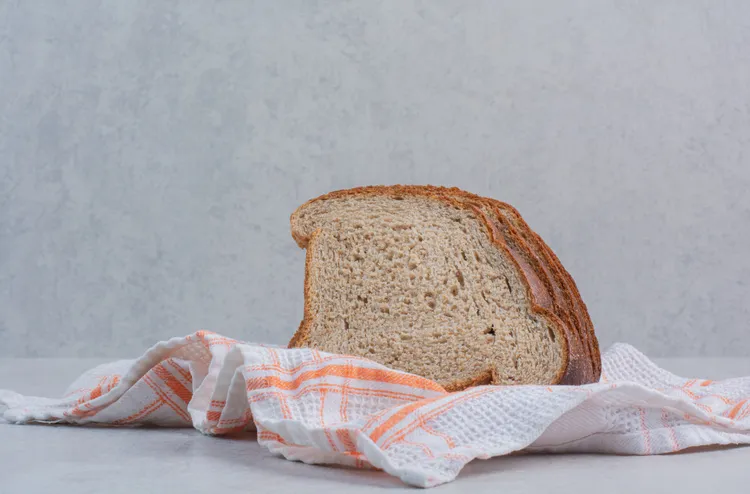
In 1928, when a bakery in Chillicothe, Missouri, sold the first loaves cut by machine. The inventor, Otto Rohwedder, a trained jeweler, had been working on a bread slicer since 1912, and a fire destroyed his early prototype. He eventually held seven patents on slicing bread.
Bakers were at first reluctant because sliced bread goes stale faster once more of it is exposed to air. Rohwedder inserted pins to hold the slices together in the wrapper and give the loaf the look of a whole one. A St. Louis baker named Gustav Papendick bought his second machine and worked out a way to keep the slices together long enough to wrap the loaf. The product was sold as Kleen Maid Sliced Bread on July 7, 1928, and Wonder Bread took pre-sliced loaves national in 1930. By 1933, about 80 percent of the bread made by American bakeries was sliced. That sat on top of a larger change: in 1890 about 90 percent of American bread was baked at home, and by 1930 factories had taken over. In 1943, the US government banned sliced bread as a wartime measure starting January 18, and lifted the ban by March 8 after an outcry. If you have ever wondered why a sliced loaf seems to go hard so fast, see why bread goes stale.
What These Changes Have in Common
A few patterns repeat. Foods changed in the direction of what people wanted at the time: bigger kernels, less bitterness, sweeter fruit, faster growth, more convenience. Some of the most familiar foods are accidents, such as the strawberry and the apple, where the useful result was noticed and kept. And the changes are continuous. The corn, watermelon and chicken of today are not an endpoint but a snapshot of a process that has been running for thousands of years.
It is also true that change has costs. Foods bred for a single purpose can lose variety or become fragile, as the story of the banana shows in the surprising origin of everyday foods. One practical way to appreciate the history is to try an older or less common variety when you see one, whether that is a heritage apple, a woodland strawberry or a bitter wild green.
Quick Answers
Are broccoli, cabbage and kale the same plant?
They are the same species, Brassica oleracea, and all descend from a wild cabbage that grows on European coasts. Different parts were selected for each.
What did corn look like originally?
It was a wild grass called teosinte with a few kernels in hard cases. Farmers in Mexico domesticated it roughly 9,000 years ago.
Were watermelons always sweet and red?
No. Wild watermelons are small, bitter and white-fleshed. Sweetness and red color came from mutations that farmers kept.
Where did modern strawberries come from?
They came from an accidental cross in Brittany, France, in the 1750s between the Virginia strawberry and the Chilean strawberry.
Where do apples come from?
Wild apple forests in Kazakhstan. Silk Road travelers spread the seeds, and the trees crossed with other wild apples along the way.
Are chickens really bigger than they used to be?
Yes. A 2005 broiler at 56 days weighed about 4.6 times as much as a 1957 one raised on the same feed, and researchers attribute that to genetics.
Why was sliced bread banned in 1943?
The US government banned it as a wartime measure on January 18, 1943, with officials citing the heavier wrapping sliced loaves need. The ban was lifted on March 8 after public protest.
When was sliced bread invented?
The first commercially sliced loaves were sold on July 7, 1928, in Chillicothe, Missouri, using a machine built by Otto Rohwedder.
Latest