How the World Eats Breakfast
How breakfast works in 15 countries, from Japanese miso soup to Mexican chilaquiles to a full English, with estimated calories and protein for nine plates and what each one does well.
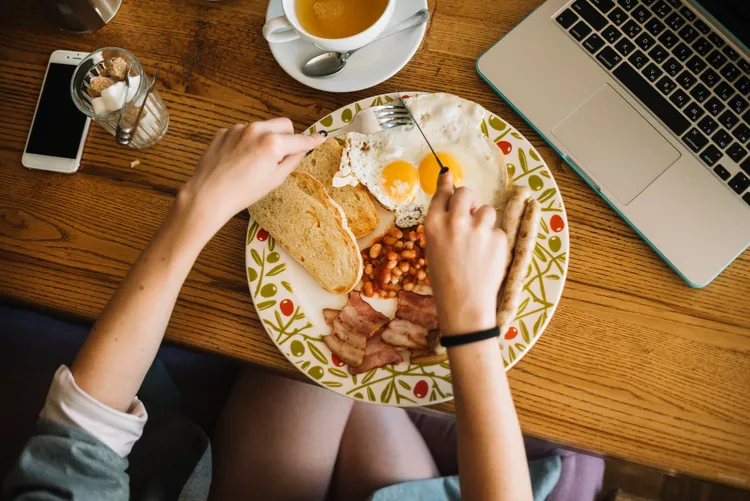
Of the nine breakfasts compared below, the one with the most protein per calorie is a Japanese set meal of rice, miso soup, grilled salmon and rolled omelet. The biggest plate on the list, the full English, comes second on that measure. A croissant with milky coffee comes last. These are estimates, but the ranking says a lot about how breakfast works around the world: the plates that look most like dinner tend to do the most for you.
This tour covers breakfast in Japan, China, Vietnam, India, Turkey, Egypt, Israel, France, Spain, the UK, Germany, Switzerland, Mexico, the US and Nigeria. Then it puts the numbers side by side and shows how to turn any of them into a plate that fits your own targets.
What Counts as Breakfast, and Why It Is Rarely Sweet
Breakfast is the first meal after the overnight fast. In much of Asia, the Middle East, Africa and Latin America it is savory: rice, soup, beans, eggs, cheese, bread. The sweet breakfast of cereal, pastry and jam is the exception, and it is strongest in the US, France and parts of northern Europe.
Languages keep landing on the same idea. English says it outright: break the fast. Spanish says desayuno, literally undoing the fast. The French petit déjeuner is a little version of a word that once meant breaking the fast and now means lunch. Turkish kahvaltı translates roughly as "before coffee", which tells you what the meal is for.
In Japan, Korea and much of China, breakfast is not a separate food category at all. Rice, soup, pickles, eggs and fish that would be perfectly normal at dinner show up at 7 a.m. too. The idea that breakfast needs its own special foods is a fairly narrow one. If you like how meals carry habit as well as calories, our piece on kitchen traditions and rituals follows the same thread from the Sunday-lunch end of the table.
Asia: Rice, Soup and Fermented Batters
Japan: One Soup, Three Sides
A traditional Japanese breakfast follows the ichiju-sansai pattern: one soup, three dishes, plus rice. The usual lineup is miso soup, grilled fish such as salmon or mackerel, tamagoyaki (a rolled, lightly sweet omelet) and pickles. Some households add natto, fermented soybeans with a sticky texture and a strong smell that divides people.
The macros work because every part pulls its weight. Fish and egg supply the protein, rice supplies the energy, and the soup and pickles add volume and salt for very few calories. One cup of cooked short-grain rice is about 200 kcal, and the whole set lands near 620 kcal with roughly 41g of protein.
China and Vietnam: Congee, Dough Sticks and Noodle Soup
Congee, or zhou, is rice simmered in a large amount of water until the grains break down into a thick porridge. Plain, a 250g bowl is only about 100 to 150 kcal with 2 to 3g of protein, so the toppings do the work: a salted or boiled egg adds about 6g, and shredded pork, scallion and a few drops of sesame oil add flavor. Many people eat it with youtiao, a fried dough stick, torn up and dropped in or dipped. Soy milk, steamed buns and, in the north, jianbing (a thin crepe wrapped around egg and crisp cracker) fill out the street-breakfast map.
In Vietnam, phở is as much a breakfast as a lunch. A standard beef bowl is somewhere around 400 to 500 kcal and delivers 25g of protein or more, which is why it is a workable breakfast for anyone chasing a protein target. The other common option is bánh mì ốp la, a crusty roll with fried eggs, pâté and herbs.
India: Idli, Dosa, Paratha and Poha
India has no single breakfast, which is the point. In the south, idli (steamed cakes) and dosa (crisp crepes) are made from a fermented batter of rice and urad dal, a black lentil. They arrive with sambar, a lentil and vegetable stew, and coconut chutney. In the north, stuffed paratha with yogurt and pickle is typical. In Maharashtra it is poha, flattened rice cooked with turmeric, mustard seeds and peanuts, or upma, a savory semolina porridge.
Three idli with sambar and chutney come to roughly 375 kcal and 13g of protein, nearly all of it from grain plus lentils. That pairing is the quiet engine of vegetarian cooking everywhere, and our vegetarian plan for 120g of protein shows how to stack meals built on it across a whole day.
The Middle East and North Africa: Small Plates, Eggs and Beans
Turkey: The Spread
A Turkish breakfast is a table of small dishes: white cheese, olives, sliced tomatoes and cucumbers, boiled eggs, honey with kaymak (a thick clotted cream), jam, and simit, a sesame-crusted bread ring, all with endless glasses of tea. Cooked dishes join in on weekends, including sucuk (spiced beef sausage with eggs) and menemen, eggs scrambled slowly with tomatoes and green peppers.
Menemen also splits households over a single question: does onion go in or not? It is one of those dishes where the disagreement is part of the identity, and we collected more of them in classic dishes people argue about. A reasonable plate of egg, cheese, olives, vegetables and half a simit lands near 450 kcal and 18g of protein.
Egypt: Ful Medames
Ful medames is fava beans cooked very slowly until soft, mashed lightly and dressed with olive oil, lemon, cumin and often chopped tomato or a boiled egg. It is eaten with flatbread and sold from street carts early in the morning. It is also one of the most efficient plant-based breakfasts anywhere: a cup of cooked fava beans carries about 13g of protein and around 9g of fiber for under 200 kcal before the oil and bread.
Israel and North Africa: Shakshuka
Shakshuka is eggs poached in a spiced sauce of tomato and peppers, usually served in the same pan with bread for scooping. It is generally traced to Tunisia and the wider Maghreb, where the name is understood to mean a mixture, and it became a fixture of Israeli breakfast tables through North African Jewish communities. Israeli breakfast tends to include a chopped cucumber and tomato salad, labneh and soft cheeses alongside it.
Shakshuka is also younger than it feels. Tomatoes and peppers reached the Mediterranean only after contact with the Americas, so the dish could not exist in its current form before the 1500s. If that kind of food-history surprise appeals, the surprising origin of everyday foods has plenty more.
Europe: From a Croissant to a Full Fry-Up
France and Spain: Light and Bread-Based
The French breakfast is deliberately small: a tartine (bread with butter and jam) or a croissant with café au lait. A medium butter croissant is about 230 to 280 kcal and carries only 5g of protein. French cooking also has a clever use for bread that has gone hard. Pain perdu, literally "lost bread", is what English speakers call French toast. If you want to know why bread goes stale in the first place and whether you can reverse it, why bread goes stale answers both questions.
Spain's classic is tostada con tomate: toasted bread rubbed with or topped with grated tomato, drizzled with olive oil and salted. It is a finishing use for olive oil, so the oil matters more than anything else on the plate. One tablespoon is about 120 kcal, which is worth knowing before you pour freely, and our guide to the types of olive oil and which to cook with and which to finish with helps you pick the right bottle.
The UK and Ireland: The Full English
The full English or Irish breakfast is a cooked plate: bacon, sausages, fried or poached eggs, baked beans, grilled tomato, mushrooms, black pudding and toast or fried bread. A full plate with buttered toast can reach 1,000 kcal and more than 55g of protein, while a grilled version without fried bread drops nearer 700 kcal. It is an occasion breakfast in most homes, but it is still the reference point for what "a big breakfast" means.
The eggs and butter in a fry-up are exactly the sort of ingredients recipe writers have strong opinions about, and we explain the reasoning in why recipes ask for room temperature eggs and unsalted butter.
Germany, Switzerland and Scandinavia
German breakfast usually means fresh rolls with cheese, cold cuts, jam and a soft-boiled egg. Scandinavian breakfast leans on dense rye bread with cheese, smoked fish or cold cuts, with porridge as the warm option.
Switzerland gave the world muesli. Physician Maximilian Bircher-Benner developed it around 1900 for his patients in Zurich: rolled oats soaked with grated apple and milk or yogurt. It is a direct ancestor of overnight oats, and it is a reminder that a lot of the "modern" breakfast foods we treat as new are well over a century old.
The Americas and West Africa: Corn, Beans and Fritters
Mexico: Chilaquiles and Huevos Rancheros
Mexican breakfast is built on corn and beans. Chilaquiles are fried tortilla pieces simmered in red or green salsa and topped with crema, cheese, onion and usually an egg or shredded chicken. Huevos rancheros are fried eggs on tortillas under a warm tomato-chili sauce, served with refried or whole beans. Both exist partly to use up tortillas that are no longer fresh, the same instinct as pain perdu on the other side of the Atlantic.
Chilaquiles with two eggs run about 550 kcal with 22g of protein, and most of the fat comes from frying the tortillas. Salsa verde and the garnish often rely on fresh cilantro. If it tastes like soap to you, there is a well-studied reason, covered in why cilantro tastes like soap to some people.
The United States: Sweet, Savory, and Cereal
American breakfast is the one that mixes columns most freely: eggs, bacon and potatoes beside pancakes with syrup, plus the cereal bowl. Breakfast cereal itself has a specific origin. In the 1890s, brothers John Harvey Kellogg and Will Keith Kellogg created flaked cereal at a health sanitarium in Battle Creek, Michigan, and corn flakes were sold commercially from 1906. The sweet, boxed breakfast became the default for much of the century. How other staples shifted in the same period is the subject of how everyday foods changed over time.
Nigeria: Akara and Pap
Akara is a fritter made from peeled black-eyed peas whipped into a batter with onion and pepper, then deep-fried. It is typically served with pap (also called ogi), a smooth fermented maize porridge, or with bread. Akara is a legume-based breakfast with real protein, even if the frying adds fat. The same dish traveled across the Atlantic with enslaved West Africans and survives in Bahia, Brazil, as acarajé.
Nine Breakfasts, Side by Side
These are estimates for a typical home portion. Real values shift with brand, oil used and how generous the serving is.
- Japanese set (1 cup rice, miso soup, 100g grilled salmon, 2-egg tamagoyaki): about 620 kcal, 41g protein, 50g carbs, 27g fat
- Full English (2 bacon rashers, 2 sausages, 2 fried eggs, beans, tomato, mushrooms, 2 buttered toast): about 1,050 kcal, 58g protein, 65g carbs, 62g fat
- Porridge with milk (50g dry oats cooked in 200 ml milk): about 300 kcal, 14g protein, 43g carbs, 8g fat
- Ful medames (1 cup beans, 1 tbsp olive oil, 1 pita, 1 egg): about 550 kcal, 24g protein, 68g carbs, 21g fat
- Turkish plate (egg, 40g white cheese, olives, vegetables, half a simit, 1 tbsp honey): about 450 kcal, 18g protein, 50g carbs, 20g fat
- Chilaquiles with 2 eggs (3 tortillas, salsa, cotija, crema): about 550 kcal, 22g protein, 42g carbs, 34g fat
- Shakshuka (2 eggs in tomato-pepper sauce, 1 pita): about 520 kcal, 20g protein, 52g carbs, 26g fat
- Idli with sambar and chutney (3 idli): about 375 kcal, 13g protein, 59g carbs, 10g fat
- Croissant with milky coffee and jam: about 320 kcal, 8g protein, 42g carbs, 13g fat
Divide protein by calories and the order is Japanese set, full English, porridge, ful, Turkish plate and chilaquiles (roughly tied), shakshuka, idli, then croissant. The Japanese set wins because fish and egg are protein-dense and the rice portion is modest. The full English is high in protein but pays for it in fat. The croissant is not a bad food, it just does very little for fullness at 8g of protein.
The legume-based plates, ful and idli with sambar, sit lower on protein per calorie but bring fiber that the croissant and the fry-up largely lack. That trade is worth weighing rather than ranking blindly. For individual ingredients, protein per 100 kcal: common foods ranked uses the same measure.
Patterns That Repeat Across Cuisines
- The porridge belt. Oatmeal in Scotland and Ireland, congee in China, ogi in Nigeria, grits in the American South, polenta in northern Italy: grain plus a lot of liquid, cooked until soft. The weight of the grain changes enormously on cooking, so 50g of dry oats becomes roughly 250g of porridge. Our guide to raw vs. cooked weight for rice, pasta, meat and vegetables shows how to track that correctly.
- Eggs are nearly universal. A large egg is about 70 kcal and 6g of protein, and it appears in shakshuka, menemen, tamagoyaki, huevos rancheros, the fry-up and the Vietnamese bánh mì.
- Fermentation shows up everywhere. Idli and dosa batter, ogi, natto, yogurt and kefir all rely on it, which is partly about flavor and partly about keeping food in warm climates.
- Leftovers get rescued. Pain perdu, chilaquiles and Iberian migas all turn yesterday's bread or tortillas into today's breakfast.
Turning Any of These Into Your Own Breakfast
Start with a daily target. If you are working toward something like 150g of protein, a 35 to 40g breakfast makes the rest of the day much easier, and our look at what 150g of protein looks like in a day shows how the meals add up. You can set your own numbers with the Consillar calculators.
Next, check how breakfast fits the rest of the day. In a 2,000 calorie day with three meals and two snacks, a 1,050 kcal fry-up leaves little room, which is why splitting 2,000 calories across 3 meals and 2 snacks is worth a look first. To go from targets to an actual plate, macros to meals walks through the process.
Then build the week. The Consillar meal planner can slot a breakfast like ful or shakshuka against your lunch and dinner. Several of these hold well for batch cooking, and the meal prep tool scales the quantities. Shakshuka sauce keeps 3 to 4 days in the fridge, ful reheats well, idli batter can be made ahead, and steamed idli freeze well. Congee thickens as it sits, so loosen it with a splash of water when you reheat.
Simple swaps help too. Add an egg to the croissant plate, add yogurt to the porridge, or add a side of beans to any bread-based breakfast to lift the protein without changing the character of the meal. Nutrition figures here are approximate and general; if you have a medical condition or specific dietary needs, check portion and macro targets with your doctor or a registered dietitian.
Frequently Asked Questions
What do people eat for breakfast around the world?
It varies by region, but savory breakfasts are the norm outside the US and northern Europe. Typical examples are rice, miso soup and fish in Japan, congee in China, idli and sambar in southern India, a cheese-and-olive spread in Turkey, ful medames in Egypt, shakshuka in Israel, chilaquiles in Mexico and akara with pap in Nigeria.
What is the healthiest breakfast in the world?
No single one wins, because it depends on your goals. On the numbers above, the Japanese set meal has the most protein per calorie, while ful medames and idli with sambar add fiber from legumes. Plates that combine protein, some fiber and a moderate amount of fat tend to keep people full longest.
Which country has the biggest breakfast?
The full English or Irish breakfast is usually the benchmark for a large cooked plate, at around 1,000 kcal when served with buttered toast. Large American diner breakfasts can match or exceed it, and Turkish spreads can be big in volume while moderate in calories per person.
Why is breakfast sweet in some countries and savory in others?
Mostly because of local staples and history. Rice, beans, legumes and eggs are everyday foods across much of the world, so they show up at breakfast. Sweet breakfasts spread with industrial cereal and bakery culture in the US and parts of Europe, in the late 1800s and the 20th century.
How much protein should breakfast have?
There is no universal rule. A commonly cited range is 25 to 30g per meal for people who are active or trying to spread protein across the day, but your own target depends on body size, activity and goals. Use the calculators to set a daily number, then divide it across your meals.
Latest