How to Dry Dill Without Losing the Flavor
Air, oven, and dehydrator methods for drying dill, and why it needs gentler handling than sturdier herbs.
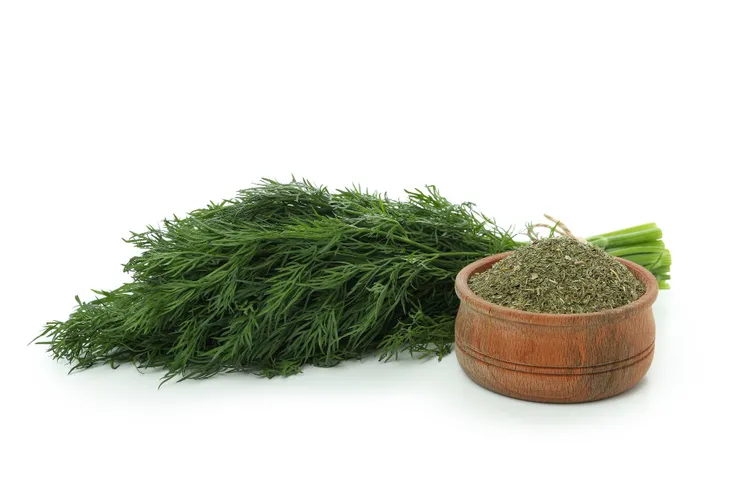
Dried dill from the grocery store often tastes like almost nothing, which sets expectations low for home drying too. Done carefully, home-dried dill holds noticeably more flavor than most store-bought jars, but it needs gentler handling than a sturdier herb like rosemary or oregano.
Why Dill Is Prone to Flavor Loss When Dried
Dill's aromatic character comes from volatile oils that are especially sensitive to heat and light. Any drying method that runs too hot or takes too long gives those oils more opportunity to evaporate before the leaf itself has fully dried, which is why a lot of commercially dried dill tastes flat, the drying process prioritized speed and shelf stability over flavor retention.
Method 1: Air Drying
Bundle small groups of stems loosely and hang them in a warm, dry, well-ventilated spot away from direct sunlight. Dill's fine, feathery fronds dry faster than a denser herb, typically within 4 to 7 days rather than the 1 to 2 weeks basil needs. Check often since it's easy to over-dry past the point of good flavor retention without noticing.
Method 2: Oven Drying
Set the oven to its lowest setting, ideally under 170°F (77°C), and spread fronds in a single layer on a parchment-lined baking sheet. Prop the door open slightly to let moisture escape. Dill's delicate fronds dry fast in the oven, often in 30 to 60 minutes, so check every 10 to 15 minutes to avoid scorching, which happens quickly given how thin and fine dill fronds are compared to sturdier herbs.
Method 3: Dehydrator
Set the dehydrator to a low herb setting, around 95 to 100°F (35 to 38°C), and arrange fronds without overlap. Dill typically finishes in 1 to 2 hours, faster than most herbs due to its fine texture. This method offers the most consistent results and the best flavor retention of the three, since the low, steady heat evaporates moisture gently.
Method Comparison
- Air drying: 4 to 7 days, no equipment, moderate flavor loss
- Oven drying: 30 to 60 minutes, needs close attention to avoid scorching given how fast dill dries
- Dehydrator: 1 to 2 hours, most consistent, best flavor retention
Storing Dried Dill
Once fully dry and cooled, crumble by hand and store in an airtight, opaque container away from heat and light. Properly dried dill holds decent flavor for 6 to 9 months, a bit shorter than sturdier dried herbs, reflecting how quickly its aromatic oils fade even after drying is complete.
Common Mistakes
- Using the same time and temperature settings as sturdier herbs. Dill dries much faster than rosemary or oregano; using their timelines risks over-drying and scorching.
- Drying in direct sun. This accelerates the loss of dill's already-fragile aromatic oils faster than indirect drying.
- Storing dried dill too long expecting it to hold flavor like a sturdier herb. Dried dill has a shorter useful shelf life than many other dried herbs; label and use it within the 6 to 9 month window for best results.
Frequently Asked Questions
Is dried dill weed the same as dill seed?
No, they come from different parts of the plant and have different flavors and uses. See Dill Seed vs Dill Weed for the distinction.
How much dried dill should I use in place of fresh?
Roughly a third of the fresh amount is a reasonable starting point, adjusted to taste, similar to the substitution ratio used for other dried herbs.
Why does my home-dried dill still taste weaker than I expected?
This usually means the drying process ran too slowly or too hot. A dehydrator on a low herb setting generally gives the best result if flavor retention is the priority.
Knowing When Dill Is Fully Dry
The correct test is a crumble test, not a touch test: a frond that feels dry but still bends rather than snapping has residual moisture that can support mold in storage. Because dill's feathery fronds are thin, this stage arrives faster than with a denser herb, sometimes deceptively so; check a few pieces from different parts of the batch rather than assuming uniform dryness throughout.
Rehydrating and Cooking With Dried Dill
Dried dill weed is best added earlier in a cooking process than fresh dill, since it benefits from a little moisture and heat to release its flavor. Adding it near the start of a simmering soup or sauce, rather than at the very end the way fresh dill is used, gives the dried fronds time to soften and distribute their flavor through the dish.
Common Mistakes
- Using the same time and temperature settings as sturdier herbs. Dill dries much faster than rosemary or oregano; using their timelines risks over-drying and scorching.
- Drying in direct sun. This accelerates the loss of dill's already-fragile aromatic oils faster than indirect drying.
- Storing dried dill too long expecting it to hold flavor like a sturdier herb. Dried dill has a shorter useful shelf life than many other dried herbs; label and use it within the 6 to 9 month window for best results.
- Crumbling the fronds into a fine powder immediately. Keeping dried dill in slightly larger crumbled pieces rather than a fine powder preserves flavor a bit longer, since less surface area is exposed to air during storage.
Frequently Asked Questions
Is dried dill weed the same as dill seed?
No, they come from different parts of the plant and have different flavors and uses. See Dill Seed vs Dill Weed for the distinction.
How much dried dill should I use in place of fresh?
Roughly a third of the fresh amount is a reasonable starting point, adjusted to taste, similar to the substitution ratio used for other dried herbs.
Why does my home-dried dill still taste weaker than I expected?
This usually means the drying process ran too slowly or too hot. A dehydrator on a low herb setting generally gives the best result if flavor retention is the priority.
Can I dry dill flower heads the same way as the fronds?
Yes, and dried flower heads hold their flavor a bit better than fronds over time, making them a good addition to a pickling brine even months after drying; see What to Do With Dill Stems and Flower Heads.
Tips for Success
Only dry fully dry, unwashed or thoroughly dried fronds to avoid mold risk during the process. A jar of dried dill is easy to forget about in the back of a cabinet, so working it into a regular meal-planning routine helps it actually get used before flavor fades, the same as any other pantry preservation project.