How to Store Fresh Dill So It Doesn't Wilt in a Day
Damp-towel and water-jar storage methods for fresh dill, compared with real shelf-life numbers.
Fresh dill bought at a store or harvested from the garden often looks wilted within a day if it's just tossed loose into the fridge. Dill is delicate, and a little setup at the start makes a meaningful difference in how long it stays usable.
Why Dill Wilts So Quickly
Dill's feathery fronds have a high surface-area-to-volume ratio compared to broader-leafed herbs, which means it loses moisture to the air faster than something like parsley or basil. Left loose in a fridge drawer, especially in a plastic bag that traps and then releases humidity unevenly, dill fronds dry out and go limp within a day or two.
Method 1: Damp Paper Towel
Wrap fresh dill loosely in a slightly damp, not soaking wet, paper towel, then place it in a partially sealed plastic bag or container in the fridge. The damp towel keeps humidity around the fronds without direct water contact that would encourage rot. Check every couple of days and re-dampen the towel if it's dried out.
This method typically keeps dill usable for about 5 to 7 days, noticeably longer than dill left loose or in a fully sealed bag with no added moisture.
Method 2: Water Jar (Similar to Basil, With One Difference)
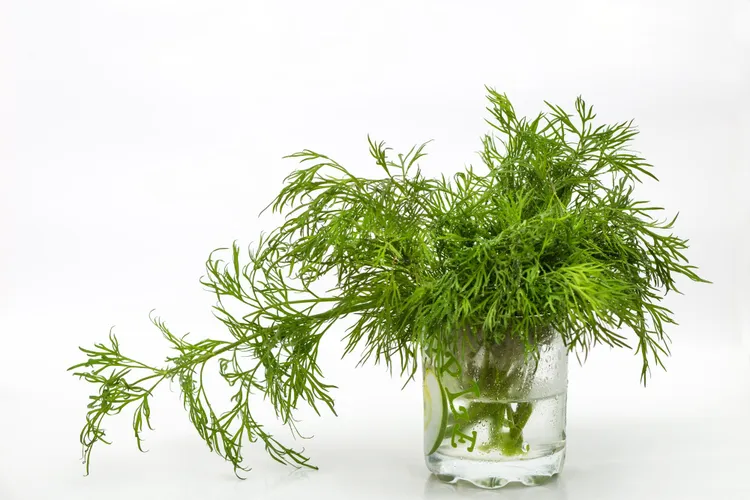
Trim the stem ends and stand dill upright in a jar with an inch or two of water, similar to the method used for basil. Unlike basil, dill actually tolerates the fridge well with this method, so keep the jar refrigerated rather than on the counter. Loosely cover the top with a plastic bag to maintain humidity around the fronds.
This method often extends usable dill to 7 to 10 days, sometimes longer, and is generally the better choice if fridge space allows for a jar.
Shelf Life Comparison
- Loose in a fridge bag, no added moisture: 1 to 2 days before noticeable wilting
- Damp paper towel, fridge: 5 to 7 days
- Water jar, refrigerated: 7 to 10 days, sometimes longer
Signs Dill Is Past Its Best
Yellowing fronds, a slimy texture, or a sour smell rather than dill's characteristic bright, slightly grassy aroma all signal it's time to use what's left in a cooked dish or move to a preservation method rather than a raw application like a salad or garnish.
Common Mistakes
- Sealing dill in an airtight bag with no moisture. This traps whatever humidity is present unevenly and can actually accelerate rot in spots while the rest of the bunch dries out.
- Washing dill before storing rather than before using. Extra surface moisture from an early wash speeds up spoilage; wash right before you cook or garnish with it instead.
- Storing dill near ethylene-producing produce. Apples, bananas, and similar fruit can speed up wilting in nearby herbs, dill included.
Frequently Asked Questions
Does dill store the same way as basil?
Not exactly. Basil is damaged by cold and does best at room temperature; dill tolerates the fridge well and actually benefits from it. See How to Harvest Dill Without Killing the Plant for how storage needs connect to harvest timing.
Can I store dill in the freezer instead if I know I won't use it fresh?
Yes, and this is often the better choice if a large amount needs to be preserved rather than kept fresh a few extra days; see How to Freeze Dill for methods.
Is wilted dill still safe to eat?
Yes, wilting is a texture and flavor issue, not a safety one, as long as there's no sliminess, mold, or off smell. Wilted dill is fine in cooked dishes even if it's no longer ideal for a fresh garnish.
Setting Up Either Method for Best Results
For the damp towel method, use a paper towel that's wrung out well rather than dripping; too much moisture pressed directly against the fronds can encourage rot rather than prevent wilting. A single layer of dill wrapped loosely, rather than a tightly packed bundle, allows a little airflow that helps prevent the moldy patches that can develop in an overly compressed bundle.
For the water jar method, a tall, narrow container supports stems better than a wide bowl, and trimming a fresh half-inch off the stems before starting helps the fronds take up water more effectively, the same principle used for basil storage.
Reviving Slightly Wilted Dill
Dill that's started to go a little limp, but hasn't yellowed or turned slimy, can sometimes be revived with a fresh stem trim and a stint in ice water for 10 to 15 minutes before being returned to proper storage. This won't work on fronds that have already crossed into genuine spoilage, but it's worth trying on a bunch that's simply lost some crispness after a day or two without ideal storage.
Common Mistakes
- Sealing dill in an airtight bag with no moisture. This traps whatever humidity is present unevenly and can actually accelerate rot in spots while the rest of the bunch dries out.
- Washing dill before storing rather than before using. Extra surface moisture from an early wash speeds up spoilage; wash right before you cook or garnish with it instead.
- Storing dill near ethylene-producing produce. Apples, bananas, and similar fruit can speed up wilting in nearby herbs, dill included.
- Forgetting to refresh the water or towel. Whichever method is used, stale water or a fully dried-out towel stops doing its job after a couple of days; refresh on a schedule rather than only when problems appear.
Frequently Asked Questions
Does dill store the same way as basil?
Not exactly. Basil is damaged by cold and does best at room temperature; dill tolerates the fridge well and actually benefits from it. See How to Harvest Dill Without Killing the Plant for how storage needs connect to harvest timing.
Can I store dill in the freezer instead if I know I won't use it fresh?
Yes, and this is often the better choice if a large amount needs to be preserved rather than kept fresh a few extra days; see How to Freeze Dill for methods.
Is wilted dill still safe to eat?
Yes, wilting is a texture and flavor issue, not a safety one, as long as there's no sliminess, mold, or off smell. Wilted dill is fine in cooked dishes even if it's no longer ideal for a fresh garnish.
Which method holds up longer, damp towel or water jar?
The water jar method generally holds up a few days longer on average, but the damp towel method takes up less fridge space, which can matter if space is tight.
Tips for Success
Trim stems fresh before starting either storage method, a clean cut helps the plant material take up water more effectively. If a bunch is bigger than what will be used within the storage window, moving part of it straight to the freezer preserves quality better than letting the whole bunch decline in the fridge waiting to be used. Planning out which meals a stored bunch is going toward over the next several days helps make sure the freshest fronds get used before quality starts to slip.