What Is a Flexitarian Diet? A Practical Guide for Beginners
A plain-English explanation of flexitarian eating - what it means, what it does not mean, and how to build a practical framework that reduces meat without requiring rigid rules.
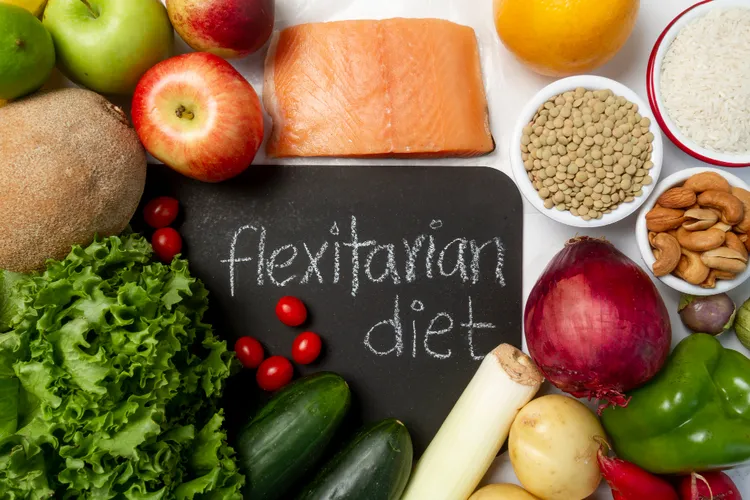
Flexitarian is not a strict diet with a fixed rule set. It is a description of eating behavior: mostly plants, occasionally meat. The flexibility is the point. Unlike vegetarianism or veganism, there is no binary pass/fail. A week where you eat meat twice instead of seven times is a flexitarian week, and so is a week where meat appears once at a family dinner and nowhere else.
This makes it the most sustainable dietary shift available for most people. It does not require reading ingredient labels at restaurants. It does not create social friction at dinner parties. It does not demand you throw out half your existing recipe repertoire.
Where the Term Comes From
Dietitian Dawn Jackson Blatner popularized the term in her 2009 book, though the eating pattern itself is older. The original framework proposed five days of mostly vegetarian eating per week, with two days allowing meat. That structure is one interpretation - there is no universal standard. The core principle across all interpretations is the same: shift the default from meat-centered to plant-centered, without eliminating meat entirely.
The Spectrum of Flexitarian Eating
Think of it as a dial rather than a switch. On one end: typical omnivore eating, meat at most meals. On the other end: vegetarian (no meat) or vegan (no animal products). Flexitarian sits in the middle, with plenty of room to position yourself wherever works for your life.
Common interpretations:
- Light flexitarian: Meat at 3-4 meals per week, down from daily
- Moderate flexitarian: Meat at 1-2 meals per week, typically dinner only
- Heavy flexitarian / near-vegetarian: Meat a few times per month, used more as a flavoring than a main protein
None of these is more valid than another. The one that sticks is the right one. For a week-by-week plan for moving down the spectrum gradually, see the guide on how to reduce meat gradually.
What Flexitarian Eating Is Not
A few common misconceptions worth clearing up early:
It is not automatically healthy. A diet of chips, cheese, and pasta with no meat is technically flexitarian. The health benefits come from replacing meat with legumes, whole grains, and vegetables - not simply from removing meat.
It is not low protein. This is the most common concern and the most misplaced. A cup of cooked lentils provides 18g of protein. Three eggs provide 18g. Half a cup of cottage cheese provides 14g. Protein is abundant in a well-designed flexitarian diet. See the full guide to flexitarian protein sources for a ranked breakdown.
It is not expensive. Legumes are among the cheapest foods in the supermarket. The cost-per-gram-of-protein from lentils is a fraction of the equivalent from chicken. Flexitarian eating on a budget covers the numbers in detail.
It is not vegan-adjacent. Eggs, dairy, and fish are all normal parts of a flexitarian diet. The reduction is specifically in meat (particularly red meat and processed meat), not animal products broadly.
Why People Make the Switch
The three most common motivations, in order of frequency in surveys:
- Health: Reduced red meat intake is associated with lower cardiovascular risk, lower rates of type 2 diabetes, and lower rates of certain cancers in large observational studies. The association is strong enough that the WHO has classified processed meat as a Group 1 carcinogen.
- Cost: Plant proteins are substantially cheaper than meat. Reducing meat consumption is one of the most effective ways to reduce a food budget without sacrificing nutrition or satiety.
- Environment: Meat production - particularly beef and lamb - is resource-intensive. Beef produces roughly 60kg of CO2-equivalent per kilogram of protein, compared to 3.5kg for legumes. Reducing consumption is one of the highest-impact individual dietary changes for emissions.
You do not need to hold any particular view on any of these to benefit from the change. The practical case for eating more legumes and fewer steaks stands on nutrition and economics alone.
How to Start: The Minimum Viable Change
The most effective entry point for most people is Meatless Monday - one evening per week where dinner is plant-based. This adds no complexity to the rest of the week and builds the habit of cooking a satisfying meal without meat as the centerpiece.
Once that feels normal, add a second meatless dinner. Then a meatless lunch. The reduction compounds. For seven specific Meatless Monday recipes worth adding to your rotation, see meatless Monday dinner ideas. For the full week plan with macros, see the complete flexitarian meal plan.
What to Cook Instead
The default answer to "what do I make instead of meat?" is legumes, eggs, or a combination of both. These are the most protein-efficient, cost-effective, and versatile substitutes available. Tofu and tempeh expand the repertoire further once you know how to prepare them. For a guide to making both worth eating, see tofu and tempeh for beginners.
The flexitarian pantry staples article covers the 12 ingredients that make plant-forward cooking reliable and fast: flexitarian pantry staples.
A Realistic Expectation
You will have weeks where you eat more meat than intended. That is not failure - it is a normal part of changing a habitual behavior. The goal is a better average over time, not a perfect record every day. Flexitarianism's built-in flexibility is its primary advantage over more rigid frameworks. Use it.
Latest