How to Roast Nuts for Nut Butter (And Why It Matters)
Exact roasting temperatures and times by nut type, and why roasting makes such a big difference in flavor and blend time.
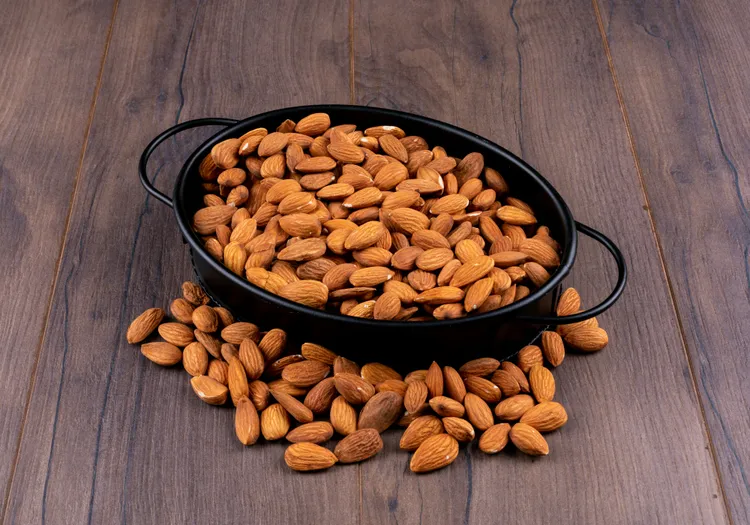
Roasting isn't strictly required to make nut butter, but skipping it produces a noticeably flatter, less complex flavor and a longer blend time in almost every case. Understanding roasting temperatures and timing by nut type is the difference between a batch that tastes deliberately made and one that tastes like raw nuts that happened to get pureed.
Why Roasting Matters
Heat breaks down the cell walls inside nuts that hold their natural oil in place, which is why roasted nuts release oil faster and blend into a smooth butter in less time than raw nuts of the same type. Roasting also triggers the Maillard reaction, the same browning process responsible for a seared steak's crust, which develops deeper, nuttier, slightly caramelized flavor compounds that raw nuts simply don't have, and it's this same reaction that gives roasted nuts their distinctly darker color compared to their raw starting point.
Roasting Times by Nut
- Peanuts: 350F for 12 to 15 minutes if raw. Most store-bought peanuts are pre-roasted and can be used directly without any additional oven time.
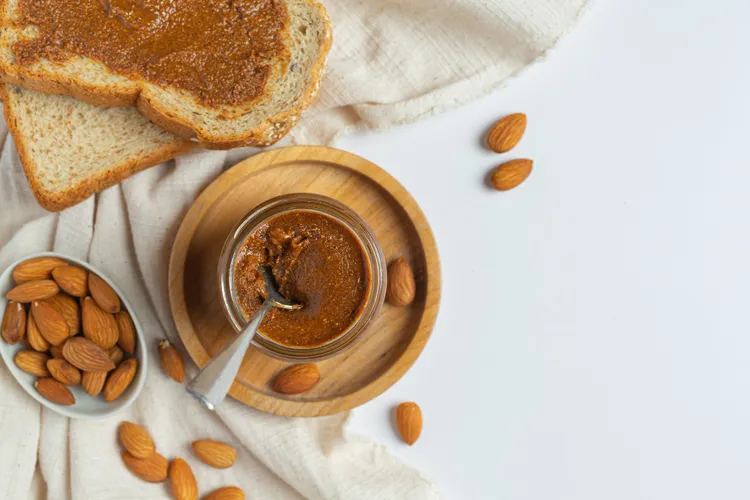
- Almonds: 350F for 10 to 12 minutes, stirring once. Watch closely past 12 minutes, since almonds turn bitter quickly once over-roasted.
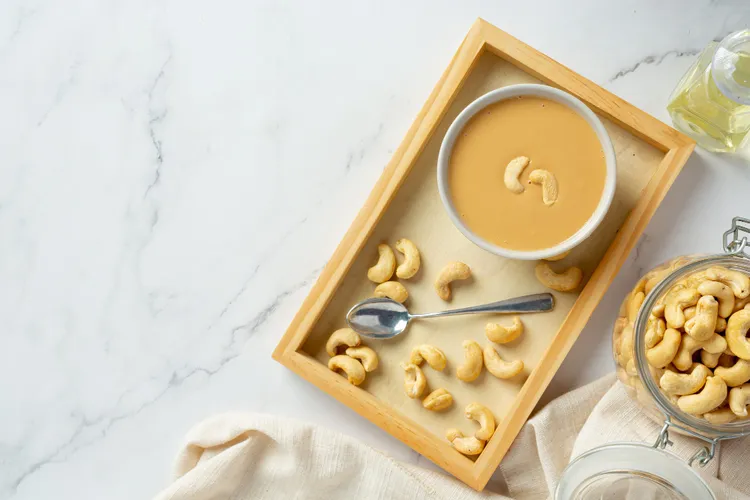
- Cashews: 300F for 8 to 10 minutes. Cashews have a narrow window and burn faster than other nuts due to their higher natural sugar content.
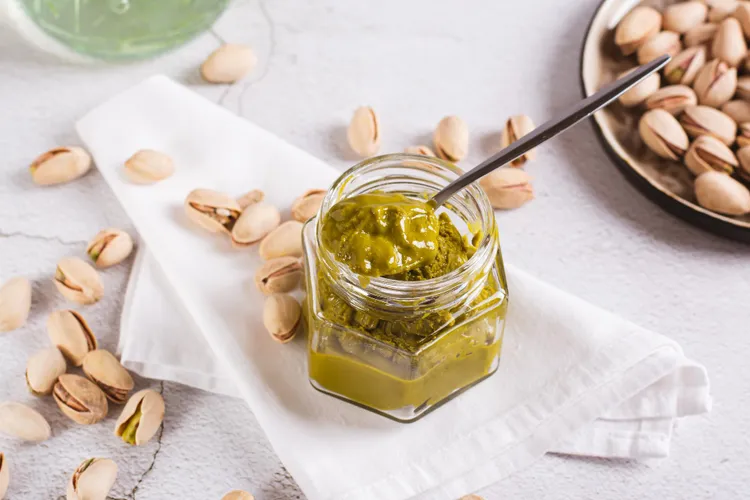
- Pistachios: 300F for 8 to 10 minutes. Roast gently to preserve their green color, which fades and browns considerably with heavier roasting.
- Hazelnuts: 350F for 12 to 15 minutes, until the skins crack and can be rubbed off easily in a clean towel.
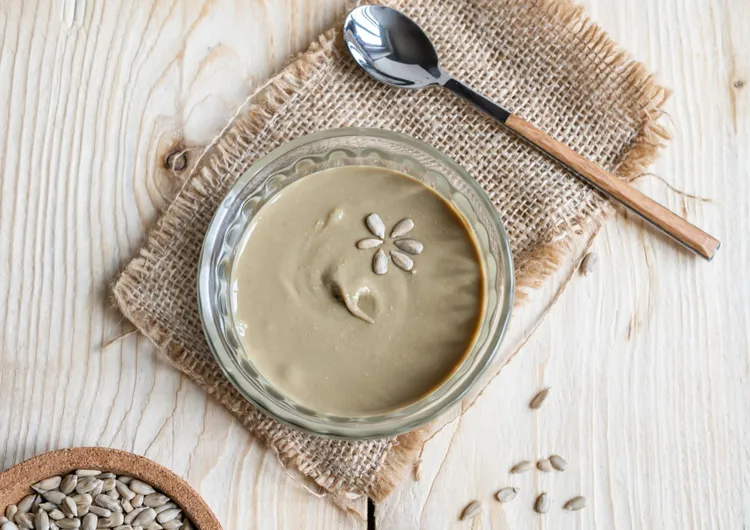
- Sunflower seeds: 325F for 10 to 12 minutes, stirring once.
How to Tell When Nuts Are Properly Roasted
Color change is the most reliable visual cue - nuts should look one to two shades darker than raw, not deeply browned. Fragrance is an even better signal than color: properly roasted nuts smell distinctly nutty and slightly toasted the moment the oven door opens, rather than just warm. If you can't smell a clear difference from raw, they likely need a bit more time in the oven.
Oven vs Stovetop Roasting
Oven roasting on a sheet pan is the most reliable method, since it heats nuts evenly and gives a predictable, repeatable timeframe. Stovetop roasting in a dry skillet works too and is faster for small batches, but requires near-constant stirring and closer attention, since the heat is less even and nuts can go from perfectly toasted to burnt in under a minute of inattention.
Why Some Recipes Say to Skip Roasting
A few nut butter styles intentionally use raw nuts - particularly when a milder, less assertive flavor is the goal, as with some cashew butter and certain baking applications where a strong roasted-nut flavor would compete with other ingredients. Raw nut butter also blends slightly faster for naturally oily nuts like cashews, though slower for lower-fat nuts like almonds, since roasting is typically what speeds up oil release most for those particular nuts.
Cooling Before Blending
Let roasted nuts cool for at least 10 minutes before adding them to a food processor. Warm nuts can cause the processor's motor to run hotter than intended over a long blend time, especially with slower-blending nuts like almonds or pistachios, which risks the motor overheating and shutting off partway through a batch, sometimes without any obvious warning beforehand.
Common Roasting Mistakes
Roasting at too high a temperature to save time is the most common mistake - it browns the outside of the nut before the inside has had a chance to properly toast, resulting in uneven flavor and a higher risk of burning the surface. Stick to the 300 to 350F range across every nut in this guide rather than pushing higher.
A second mistake is skipping the stir halfway through roasting for a full sheet pan. Nuts near the edges of the pan roast faster than those in the center, and a single stir at the midpoint evens this out considerably.
Roasting Multiple Nuts at Once
When roasting different nuts together for a mixed batch, group them by roasting speed rather than putting everything on one pan for the same amount of time. Fast-roasting nuts like cashews and pistachios can go in partway through if slower nuts like almonds or hazelnuts are already roasting, or roast each type separately and combine them afterward for the most reliable, evenly-roasted result. See our mixed nut butter guide for more on combining nuts with different roasting needs.
Pan Selection and Layering
A rimmed baking sheet, not a flat cookie sheet, keeps nuts from rolling off during the stir partway through roasting. Spread nuts in a genuinely single layer rather than piling them - overlapping nuts roast unevenly, since the ones underneath are shielded from direct heat while the ones on top can overroast before the bottom layer catches up. If a full 2-cup batch doesn't fit in a single layer on one pan, simply use two pans rather than crowding everything onto one.
Roasting From Frozen
Nuts stored in the freezer (a good practice for extending their shelf life before they're turned into butter) can be roasted directly from frozen without thawing first, though expect to add 2 to 3 minutes to the standard roasting time listed above for each nut, and check a bit more frequently near the end since frozen starting temperature makes the process slightly less predictable.
Does Roasting Temperature Affect Final Texture?
Within the 300 to 350F range recommended throughout this guide, roasting temperature has a bigger effect on flavor than on how quickly the final butter smooths out - that's driven more by total roasting time and the nut's own natural fat content. Roasting at a lower temperature for a longer time versus a higher temperature for a shorter time, within reason, produces a fairly similar final result, though very low, very slow roasting (below 275F) can leave nuts under-toasted in flavor even after a long time in the oven.
A Quick Reference Table
- Peanuts (raw): 350F, 12-15 min
- Almonds: 350F, 10-12 min
- Cashews: 300F, 8-10 min
- Pistachios: 300F, 8-10 min
- Hazelnuts: 350F, 12-15 min
- Sunflower seeds: 325F, 10-12 min
Why Oven Temperature Consistency Matters
Many home ovens run hotter or cooler than their displayed temperature by a meaningful margin, sometimes 15 to 25 degrees off in either direction. If nuts consistently seem to burn faster or roast more slowly than the times in this guide suggest, an inexpensive oven thermometer left inside during roasting can reveal whether the oven itself is the source of the discrepancy, rather than anything about technique.
The Smell Test in More Detail
Learning to roast nuts well by smell alone takes a batch or two of paying close attention, but it becomes one of the most reliable tools once it clicks. Raw nuts smell mild, faintly starchy, and not particularly distinct. Properly roasted nuts smell warm, toasted, and specifically nutty in a way that's noticeably more pronounced than the raw starting point. Over-roasted nuts cross into a sharper, slightly acrid smell that's usually obvious once you've smelled it happen once - opening the oven a minute or two before the timer to check by smell, not just by the clock, catches this before it goes too far.
Roasting in Batches for a Large Project
If preparing several different nut butters in one cooking session, roasting each nut type separately, even if it means running the oven multiple times, gives more reliable, individually-tuned results than trying to roast several different nuts together on mismatched timelines. This takes more total oven time but produces a more consistent result across each individual batch.
A Note on Pre-Roasted, Store-Bought Nuts
Pre-roasted nuts sold specifically for snacking are a legitimate shortcut for skipping the home-roasting step, though it's worth checking the ingredient label first - many pre-roasted snack nuts are roasted in oil rather than dry-roasted, which changes the amount of any additional oil this recipe might need. Dry-roasted, unsalted versions are the closest match to home-roasted nuts and the safest substitute across every recipe in this guide.
Putting It Into Practice
With roasting dialed in, there's genuinely nothing standing between a first attempt and a finished, smooth batch beyond the patience to let the process play out fully, whichever nut or seed happens to be on the counter that day. The times and temperatures above cover every single recipe in this guide without exception, making this the one reference worth bookmarking above all the others, and worth returning to any time a new batch is planned, even after the basic technique has become second nature.
Once roasting is dialed in, the actual blending technique is identical across every nut - see our complete nut butter guide for the universal method, or jump directly to a specific nut: peanut butter, almond butter, cashew butter, pistachio butter, or chocolate hazelnut spread.
Roasting as a Standalone Snack vs Roasting for Butter
Nuts roasted for snacking purposes are sometimes taken further, to a deeper color and more pronounced crunch, than what's ideal for turning into butter afterward. If repurposing already-roasted snacking nuts for a butter recipe, taste one first - if it already tastes deeply roasted or borderline bitter, it may be past the ideal point for this specific use, even if it made a perfectly good snack on its own.
Roasting and Food Safety
Roasting nuts to the temperatures and times described throughout this guide is primarily about flavor and blend time rather than food safety - raw nuts sold for consumption are already safe to eat without roasting. The one exception worth knowing is raw cashews, which in their true raw, unprocessed state contain an irritant compound; the "raw cashews" sold commercially in stores have already been steamed or processed to remove this during production, so no additional safety step is needed at home.
Roasting Larger or Smaller Quantities
The times listed throughout this guide assume roughly 2 cups of nuts spread in a single layer on a standard rimmed sheet pan. A noticeably smaller quantity, such as a half batch, may roast a touch faster since there's less total mass absorbing the oven's heat, while a larger quantity spread thinly across two pans roasts on roughly the same timeline as a single 2-cup batch, since the single-layer thickness, not the total quantity, is what mainly governs roasting speed.
Why This Guide Exists Separately From Each Recipe
Roasting is covered in its own dedicated guide, rather than only inside each individual nut recipe, because the underlying principles - heat breaking down cell walls, the narrow line between toasted and bitter, the importance of cooling before blending - apply across every nut and seed in this collection. Understanding it once, in full, makes every individual recipe easier to follow with confidence rather than treating each one as an entirely separate set of instructions to memorize.
If Things Still Aren't Smoothing Out
Roasting is usually the first thing worth double-checking whenever a batch is taking longer than expected to smooth out, since it's the single factor with the biggest effect on blend time across every nut in this guide. If roasting time and temperature both check out against the reference table above and a batch still isn't cooperating, the issue more likely lies with equipment or scraping frequency - see our troubleshooting guide for the next steps to work through.
Properly roasted nuts that still won't blend smooth after a reasonable processing time usually point to an equipment or technique issue rather than a roasting one. See our troubleshooting guide for what to check next, including specific fixes for graininess, over-thin batches, and a motor that stalls partway through a long blend, plus a quick reference table for diagnosing exactly where in the process a batch has gone off track, and when it's better to simply start over with a fresh batch rather than trying to rescue one that's genuinely gone wrong beyond the point of no return.
Nuts are common allergens. Always check ingredient labels for potential allergens and cross-contamination. If you have a nut allergy, avoid handling or consuming nuts and nut-based products, including homemade nut butter.
Latest