Types of Rice and Which One for Which Dish
How the main types of rice differ, from basmati and jasmine to arborio, bomba and sticky rice, with the best dish for each, water ratios and calories per 100g.
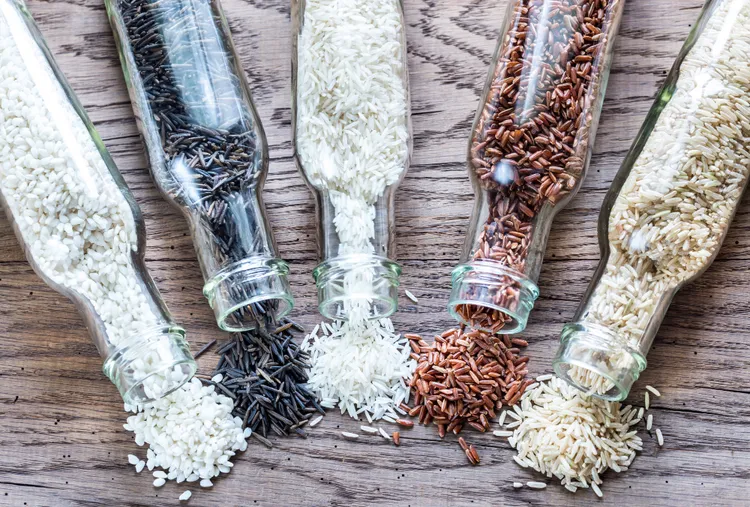
Dry, almost every white rice lands close to 350 to 370 kcal per 100g. What separates a fluffy biryani from a creamy risotto is not calories. It is starch. Two rices with the same macros can cook into separate, springy grains or into a soft, clingy mass, and picking the wrong one is the most common reason a rice dish disappoints.
What Makes One Rice Different From Another
Four things explain nearly everything:
- Starch type. Rice starch comes in two forms. Amylose stays firm and keeps grains separate. Amylopectin turns gluey and sticky. Long-grain rices have more amylose, short-grain rices have more amylopectin, and glutinous rice is almost all amylopectin.
- Grain length. Long grains are at least three times as long as they are wide. Short grains are nearly round. Medium grains sit in between.
- Milling. White rice has the bran and germ removed. Brown rice keeps them, which means more fiber, a chewier bite and a longer cooking time.
- Processing. Parboiled rice is steamed in the husk before milling, which gives firmer, more forgiving grains. Aged rice, such as basmati, is dried for months before sale to firm up the grain.
The short version: long-grain rice cooks up fluffy and separate, short-grain rice cooks up soft and sticky, and medium-grain is somewhere between the two. Everything else is a refinement of that rule.
Long-Grain Rice: Basmati, Jasmine and American Long-Grain
Basmati
Basmati is a slender, aromatic long-grain rice from India and Pakistan. Its name is commonly translated as "fragrant." The grains lengthen as they cook and stay dry and separate, which is why it is the standard choice for biryani, pulao, and for serving with dal and curries. Persian cooks parboil it and then steam it to build the crisp golden crust at the bottom called tahdig.
Rinse basmati until the water runs mostly clear, then soak it for 20 to 30 minutes. Soaking helps the grains cook evenly and stretch to their full length. It generally has a lower glycemic index than jasmine or sticky rice, though how any rice affects your blood sugar varies by person and by what you eat with it.
Jasmine
Jasmine rice is a Thai long-grain rice named for the jasmine flower, whose scent it is said to echo. It has a floral aroma and cooks softer and slightly stickier than basmati, though it is not truly sticky. It is the everyday rice for Thai and much of Southeast Asian cooking, and a natural partner for coconut curries and stir-fries. Cooked jasmine also makes good fried rice once it has cooled, a point covered in dishes you're probably making wrong, according to locals.
American Long-Grain and Parboiled Rice
Standard long-grain white rice is the neutral, all-purpose option. It cooks into separate, mild grains, which makes it right for pilaf, Latin-style rice toasted in oil first, jambalaya and rice salads. In West Africa, jollof rice is traditionally made with a long-grain, often parboiled rice, because the grains stay separate in a rich tomato sauce. Rice dishes are famously contested, and classic dishes people argue about collects more of them.
Parboiled rice, sometimes sold as converted rice, is the most forgiving type. It tolerates overcooking, stays separate when reheated and holds up well in meal-prep containers. The trade-off is a slightly firmer, less delicate texture and a faint yellow tint before cooking.
Short- and Medium-Grain Rice: Sushi Rice, Calrose and Friends
Japanese Short-Grain
Japanese rice, such as Koshihikari, is short, plump and high in amylopectin. It cooks into tender grains that cling together just enough to be picked up with chopsticks, which is what you want for sushi, onigiri, rice bowls and a side of plain rice. Rinse it thoroughly, soak it, and use about equal amounts of water and rice. For sushi, season the rice with vinegar, sugar and salt after cooking and while still warm.
The rice bowl is lifted toward the mouth in Japan, while in Korea it stays on the table. Our guide to table manners around the world has more on how rice is eaten, including the upright-chopsticks taboo.
Calrose and Medium-Grain
Calrose is a medium-grain rice grown in California, and it is widely used as an accessible sushi rice. It is a bit less sticky than Japanese short-grain but clingy enough for rice bowls, Korean dishes such as bibimbap, and everyday cooking. If a recipe says "sushi rice" and you are unsure what to buy, Calrose is a reasonable and affordable choice.
Rice Built for Specific Dishes
Arborio and Carnaroli for Risotto
Italian risotto rices are short to medium grains with a high surface starch that dissolves into the cooking liquid and makes a creamy sauce while the center stays slightly firm. Arborio is named for the town of Arborio in Piedmont and is the easiest to find. Carnaroli is often preferred by cooks because it holds its shape better and forgives a minute or two of overcooking. Never rinse risotto rice, because you would wash away the starch that makes the dish. Add warm stock gradually and stir often. The naming of foods after places is a theme in foods named after places, people and accidents.
Bomba for Paella
Spanish rices such as bomba and Calasparra are short-grain varieties that soak up around three times their volume in stock while staying firm. That is why paella works in a wide, shallow pan without stirring. They also form the toasted bottom crust, the socarrat. If you cannot find bomba, a Spanish short-grain labelled for paella works, and Arborio is a last resort. Paella tips are in dishes you're probably making wrong, according to locals.
Glutinous (Sticky) Rice
Glutinous rice, also called sweet or sticky rice, contains no gluten. The name refers to its stickiness. It is nearly all amylopectin, so it cooks into a dense, chewy mass. It is the rice behind Thai mango sticky rice, Chinese zongzi, and mochi, which is pounded from a short-grain glutinous variety. In Laos and northern Thailand, sticky rice is traditionally eaten by hand, rolled into small balls and used to scoop up other food.
Do not cook it like regular rice. Soak it for several hours or overnight, then steam it in a basket for 20 to 30 minutes. Boiling it in a pot with a measured amount of water gives a gummy result.
Whole-Grain and Colored Rice: Brown, Black, Red and Wild
Brown rice is any rice with the bran left on. It is chewier, nuttier and takes 40 to 45 minutes to cook. It has more fiber and magnesium than white rice but a similar calorie count, and the bran oils mean it goes rancid faster. Store it in the fridge or freezer if you will not use it within about six months.
Black rice, sometimes called forbidden rice, gets its deep purple color from anthocyanin pigments. It is nutty and slightly sweet, cooks in 30 to 40 minutes, and works in salads and puddings. Red rice, such as Camargue red from southern France, is similarly nutty and holds its texture well in grain bowls.
Wild rice is not rice. It is the seed of an aquatic grass, native to North America, with a chewy bite and a smoky, nutty flavor. It is often sold mixed with rice and takes 35 to 45 minutes to cook.
Which Rice for Which Dish
- Biryani, pulao, rice with dal or curry: basmati
- Persian chelow with tahdig: basmati, parboiled and then steamed
- Thai curries, stir-fry sides, everyday meals: jasmine
- Pilaf, Latin-style rice, jambalaya, jollof, rice salads: long-grain, or parboiled for extra forgiveness
- Fried rice: day-old, chilled long-grain or jasmine
- Sushi, onigiri, donburi, bibimbap: Japanese short-grain or Calrose
- Risotto: Carnaroli or Arborio
- Paella: bomba or Calasparra
- Rice pudding and kheer: short-grain, Arborio, or basmati for kheer
- Mango sticky rice, zongzi: glutinous rice, steamed
- Congee: jasmine or short-grain, simmered in plenty of water. Our tour of breakfast around the world covers congee and other rice porridges.
- Meal prep bowls: parboiled or basmati
How to Cook Each Type: Water Ratios and Times
These are starting points for the absorption method, with a lid on and the heat low. Brands differ, so adjust to your bag and your pot. Let any rice rest, covered, for 5 to 10 minutes after cooking.
- Basmati (rinsed, soaked 20 to 30 minutes): about 1.5 parts water to 1 part rice, 10 to 15 minutes
- Jasmine: about 1.25 to 1.5 parts water to 1, 12 to 15 minutes
- American long-grain: package directions usually say 2 to 1, but many cooks find 1.5 to 1.75 parts water gives firmer grains, 15 to 18 minutes
- Parboiled: about 2 to 1, 20 to 25 minutes
- Japanese short-grain (rinsed, soaked): about 1 to 1.1 parts water to 1, 12 to 15 minutes
- Brown rice: about 2 to 2.25 parts water to 1, 40 to 45 minutes
- Risotto rice: about 3 to 4 parts warm stock to 1, added gradually, 18 to 20 minutes
- Bomba: about 3 parts stock to 1, 18 to 20 minutes uncovered, without stirring
- Glutinous rice: soak for 4 hours or overnight, steam 20 to 30 minutes
Rinse rice when you want separate, fluffy grains, such as basmati, jasmine and sushi rice. Skip the rinse for risotto and paella, where the surface starch is the point.
Calories and Macros by Type
These are approximate values for cooked rice, per 100g, and they vary with how much water the rice absorbs.
- White long-grain (cooked): about 130 kcal, 2.7g protein, 28g carbs, 0.3g fat
- Brown long-grain (cooked): about 123 kcal, 2.7g protein, 26g carbs, 1g fat
- Wild rice (cooked): about 101 kcal, 4g protein, 21g carbs, 0.3g fat
- Glutinous rice (cooked): about 97 kcal, 2g protein, 21g carbs, 0.2g fat
- White rice (dry): about 360 kcal, 7g protein, 80g carbs, 0.6g fat
Per cup of cooked rice, white long-grain is about 205 kcal and 0.6g fiber, while brown is about 215 kcal and 3.5g fiber. The calories are nearly the same, so the real difference between brown and white is fiber and texture, not energy. Basmati, jasmine and parboiled rice sit close to the white long-grain numbers.
The practical point is that cooked weight is a poor guide. A wetter, stickier rice weighs more per scoop, which is why weighing dry rice is more reliable. Cooked white rice weighs roughly three times what it did dry, and our guide to raw vs. cooked weight for rice, pasta, meat and vegetables shows how to log it correctly. Oil and butter matter as well: one tablespoon of oil adds about 120 kcal, which is often more than the difference between any two rice varieties.
Rice also pairs well with beans and lentils for protein, an approach used in our vegetarian plan for 120g of protein. To set your own portion, use the Consillar calculators and the plate approach in macros to meals: turning your targets into a plate.
Cooking, Storing and Meal-Prepping Rice
Cooked rice can carry spores of Bacillus cereus, a bacterium that survives cooking and multiplies if rice sits warm. The fix is simple: cool rice quickly, ideally within an hour, spread on a tray, then refrigerate. Official guidance on how long it keeps varies, from about one day in UK health advice to three to four days for leftovers under US guidance, so if you are unsure, go shorter. Reheat until steaming hot throughout, and do it only once. Cooked rice also freezes well in portions.
Chilled rice turns firm and dry, a change related to the starch behavior that makes bread stale, which we explain in why bread goes stale and whether you can reverse it. A splash of water and a covered reheat softens it again. Plan your week in the Consillar meal planner, then scale a batch of rice with the meal prep tool.
Frequently Asked Questions
What is the best rice for fried rice?
Day-old, chilled long-grain rice, such as jasmine, basmati or standard long-grain. Cooling dries the grain surface, so the rice fries and separates in a hot pan instead of steaming into mush.
What is the difference between basmati and jasmine rice?
Both are aromatic long-grain rices. Basmati, from India and Pakistan, cooks drier and more separate, with a nutty fragrance. Jasmine, from Thailand, cooks softer and slightly stickier, with a floral aroma. Use basmati for biryani and dal, and jasmine for Thai dishes and stir-fries.
Can you use regular rice for sushi?
Long-grain rice will not hold together, so it is a poor choice. Use Japanese short-grain or Calrose, which are sticky enough to shape. Rinse it, cook it, and season it with sushi vinegar while warm.
Is brown rice healthier than white rice?
Brown rice has more fiber, magnesium and other nutrients because the bran is kept. Calories are about the same. Brown rice also tends to contain more inorganic arsenic than white because it accumulates in the bran, so varying your grains and rinsing rice are common recommendations. If you have a medical condition, check with a doctor or dietitian about what fits you.
Do you need to rinse rice?
For fluffy, separate rice, yes. Rinse basmati, jasmine and sushi rice until the water is mostly clear. Do not rinse risotto or paella rice, where you want the surface starch.
Why is my rice mushy or sticky?
Usually too much water, overcooking, or lifting the lid and stirring, which releases starch. Use the right rice for the dish, measure the water, keep the lid on, and let the rice rest for 5 to 10 minutes before fluffing.
Latest